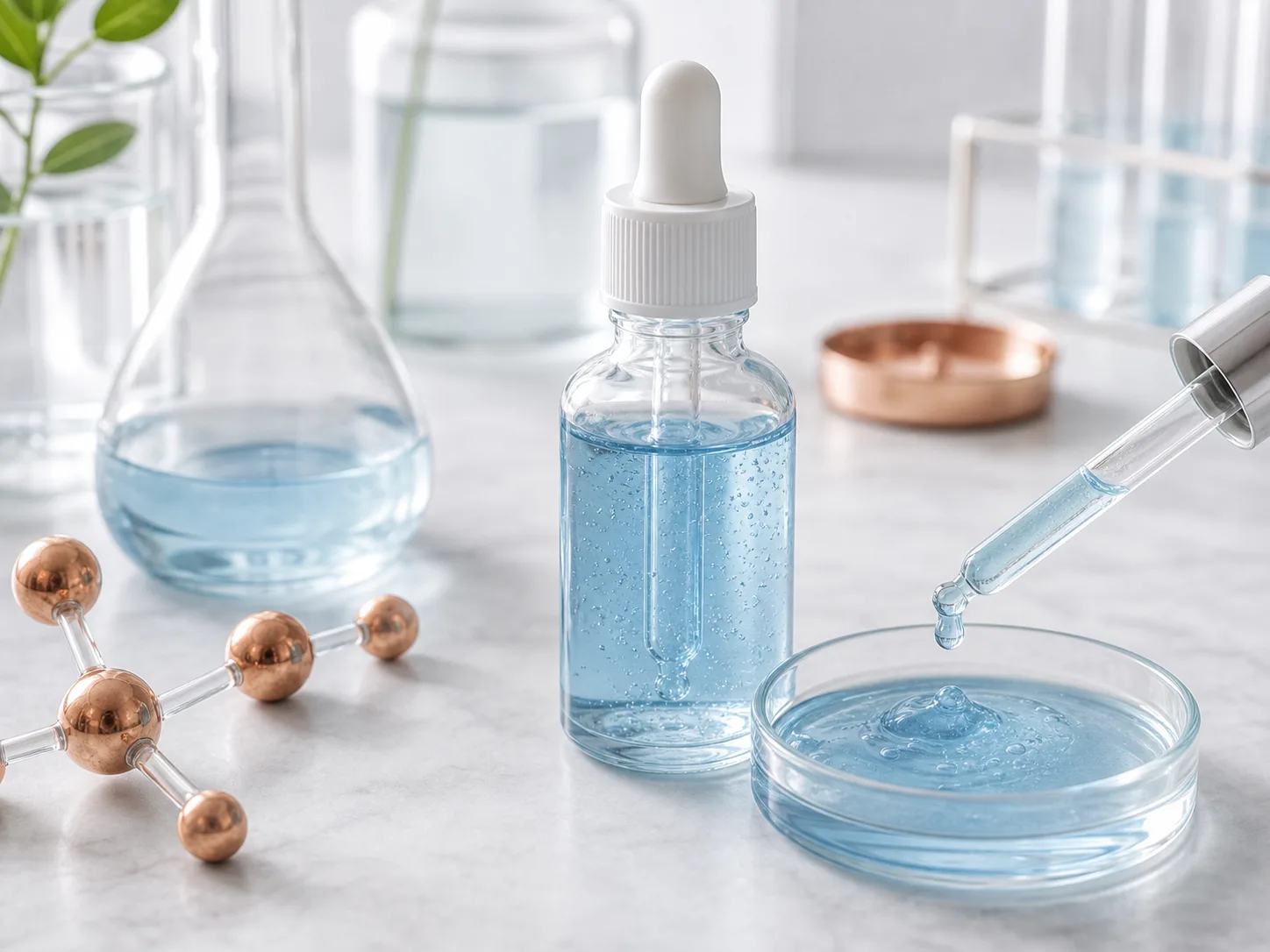
The peptide behind the blue serum
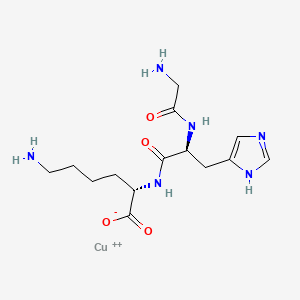
Most copper peptide serums use Copper Tripeptide-1, better known as GHK-Cu. GHK is a short chain of glycine, histidine, and lysine; it binds a copper ion to form the active complex. That copper coordination can give a formula a pale blue color. A deeper blue is not proof of a stronger or better serum, since concentration, base ingredients, and added color all affect appearance.
GHK-Cu is studied as a signaling peptide. Laboratory and clinical literature connects it with processes involved in collagen, elastin, glycosaminoglycans, and extracellular-matrix remodeling. This makes it relevant to skin that looks thin, creased, or less resilient with age.
What a serum may improve
The serum is intended to improve firmness and smoothness over time. Fine lines may look softer, texture may become more even, and well-hydrated skin can appear less fragile. Copper peptides are also discussed in repair and wound-healing research, but a retail face serum should not be presented as a treatment for wounds, scars, or disease.
Why formulation matters
A peptide must remain stable in the bottle and reach the skin in useful form. An ingredient-list mention does not reveal purity, concentration, or how much intact GHK-Cu remains at the end of shelf life. Airless or opaque packaging and brand-provided stability or finished-product testing are more informative than dramatic blue color or a long peptide list.
For dry skin, look for glycerin, ceramides, or squalane alongside the peptide. For oily skin, a water-gel base offers a lighter finish. A longer list of peptides does not establish greater efficacy.
Combining it with other actives
Use the serum morning or evening according to its instructions. Compatibility with acidic vitamin C or exfoliants depends on the finished formulas and their stability; low-pH products also add potential irritation. Splitting them between morning and night is an easy solution.
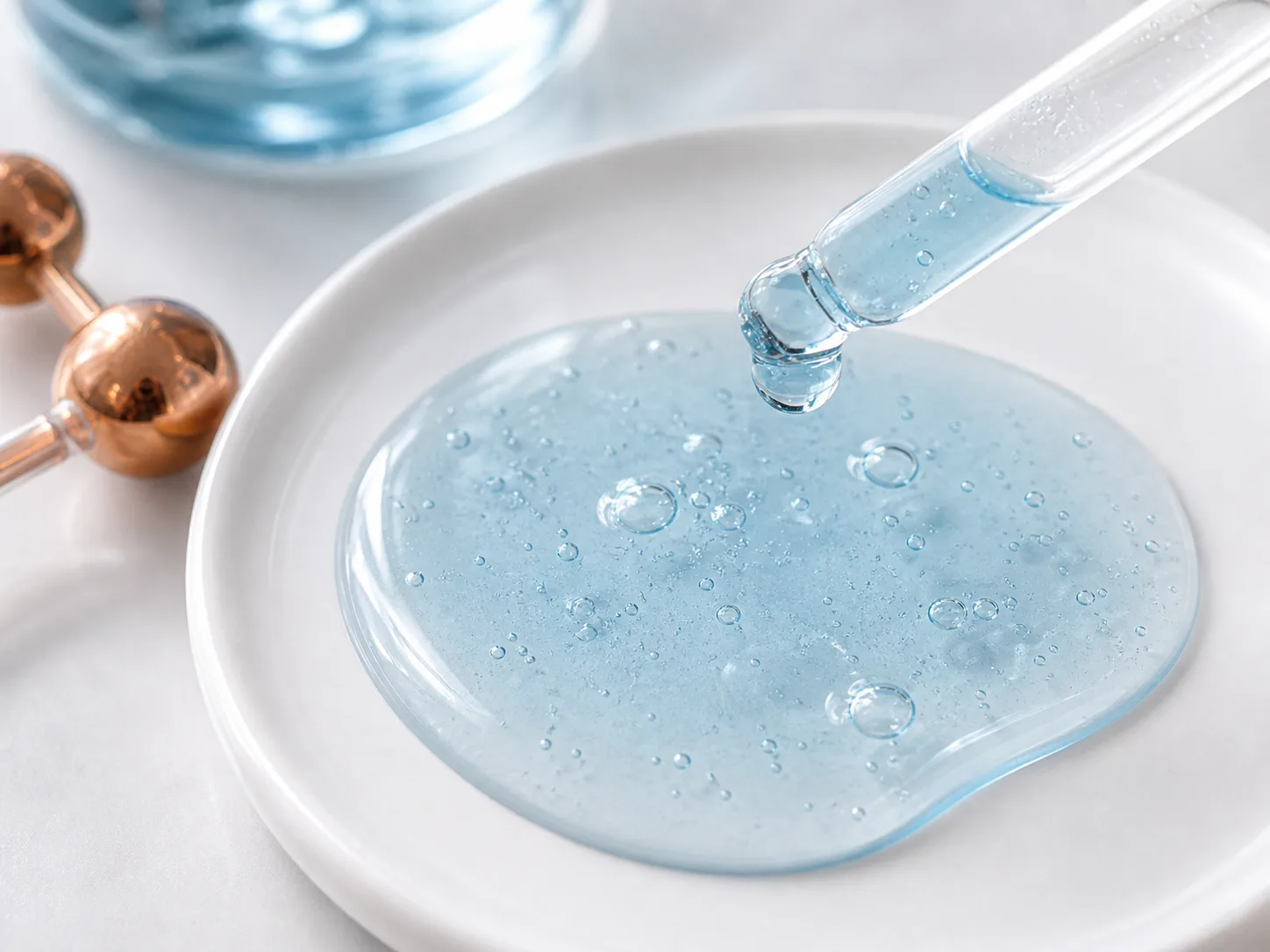
Retinol and copper peptide products do not have to be excluded from the same routine. Start on alternating nights if your skin is reactive, then increase only if comfortable. Hydration may be noticeable quickly because of the serum base; firmness and fine-line changes require consistent use and should be assessed over several weeks.
Copper coordination and formula stability
The histidine residue in GHK helps coordinate copper. This differs from depositing free copper on skin: the peptide complex is studied as a regulated carrier and signal. Cell and tissue work reports changes related to matrix remodeling, antioxidant enzymes, and inflammatory regulation, but those conditions do not equal a large trial of a retail serum on intact faces.
A humectant base can plump dehydration lines within days. Changes attributed to extracellular-matrix signaling should be judged after eight to twelve weeks. GHK-Cu coordination can also be influenced by pH, chelators, and strongly reducing or oxidizing environments, making finished-formula stability important. Store it closed away from sun and bathroom heat, and check use-after-opening guidance after a major color or odor change.
Sources used
- GHK-Cu consumer guideconsumer expectations and product variability
- Topical peptide treatments reviewstructure and skin research
- Cosmeceuticals in dermatology overviewphotoaging use context