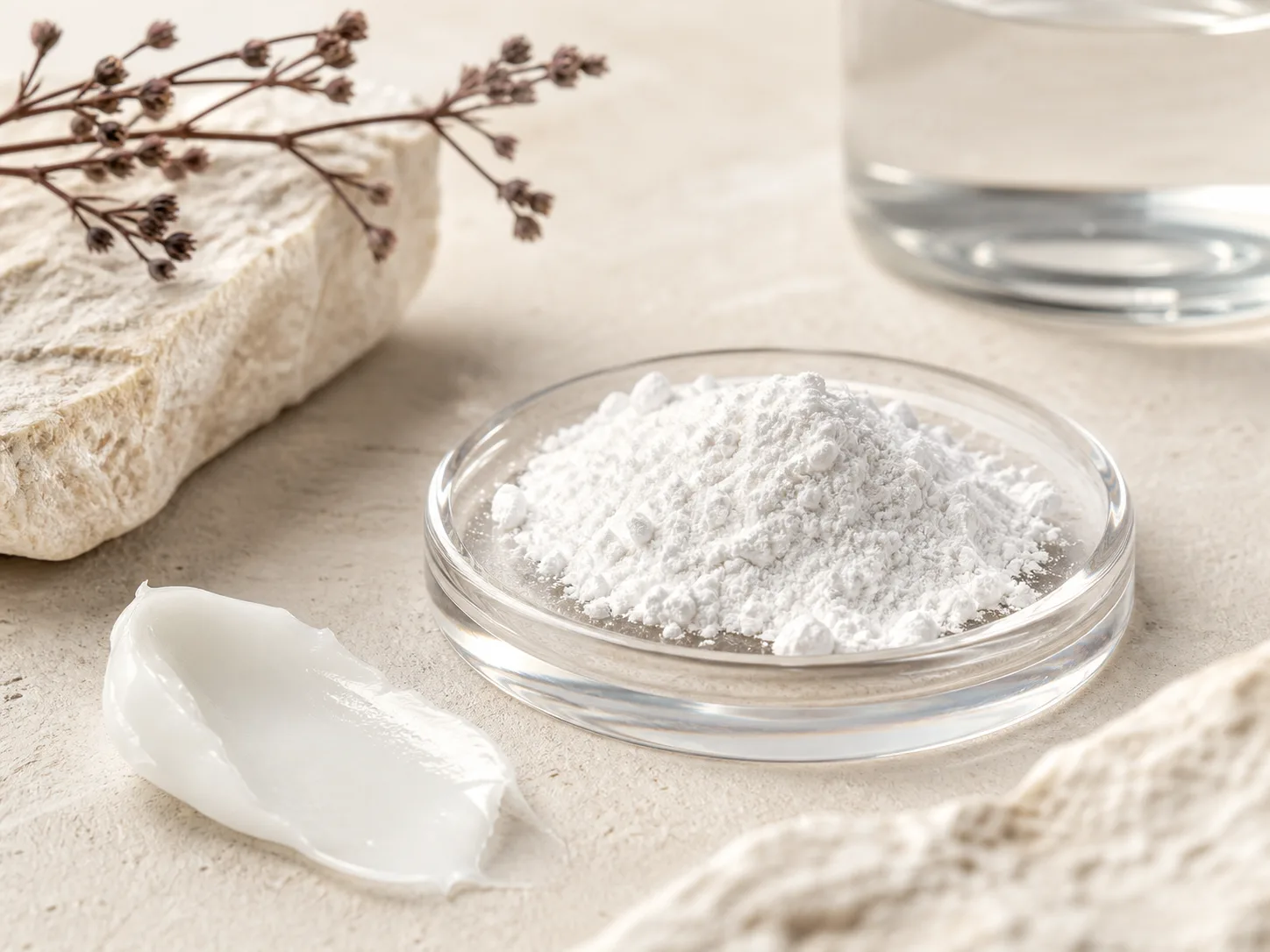
What adenosine is
Adenosine is a purine nucleoside made from adenine attached to a ribose sugar. It occurs naturally in living organisms and forms part of molecules involved in nucleic acids and cellular energy processes. Cosmetic adenosine has the molecular formula C10H13N5O4. It is a small organic compound, not a protein or peptide.
In skincare it is used as a skin conditioner and wrinkle-care ingredient. Laboratory research has explored how adenosine receptors may influence fibroblast behavior and collagen-related pathways. The human trial below measured changes around the eyes and between the brows over several weeks.
Why adenosine is prominent in Korean wrinkle-care products
The Korea Cosmetic Association lists adenosine as both a skin-conditioning ingredient and an ingredient used in functional cosmetics for wrinkle improvement. A common notified concentration in Korean functional formulas is 0.04%. That number looks small, and adenosine may therefore sit low on an INCI list, but list position alone does not show that a compliant functional formula is under-dosed.
An ingredient list that contains adenosine is not, by itself, proof that the product has Korean functional-cosmetic status. A product must follow a notified ingredient, amount, dosage form, and testing route or pass a separate review to carry the claim. On Korean packaging, look for the wrinkle-improvement functional-cosmetic statement rather than relying on the ingredient name alone. The regulated wording is closer to “helps improve the appearance of skin wrinkles” than to erasing or permanently removing them.
What the human study actually found
A frequently cited trial enrolled 126 women aged 45 to 65 in a blinded, randomized, placebo-controlled design. Each participant used two of three products, an adenosine cream, an adenosine dissolvable film, or placebo, on opposite eye areas twice daily for two months. Instrument measurements showed improved periorbital skin smoothness from week three, with the effect still present at week eight. The adenosine cream also improved measured glabellar frown lines in the participants assessed for that area.
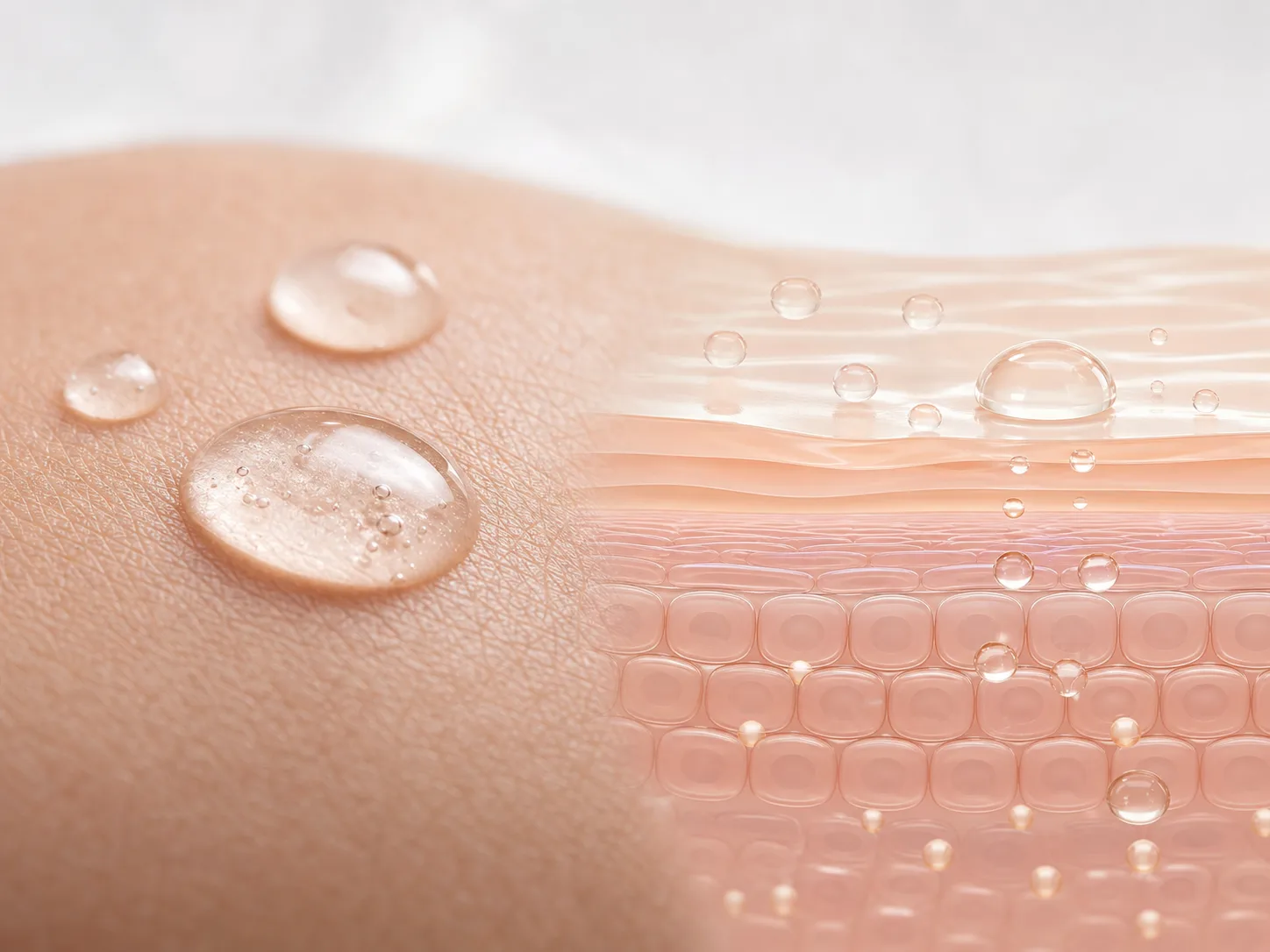
The result supports adenosine as a real fine-line ingredient, but it was a test of finished formulas rather than loose adenosine powder. Hydration from the cream base and the longer-term contribution of adenosine may both have affected the measurements. The timeline matters as well: changes were assessed over weeks, not minutes. A reasonable target is a smoother-looking eye or brow area with consistent use, not the depth change expected from an injectable filler or an in-office procedure.
Who may find it useful
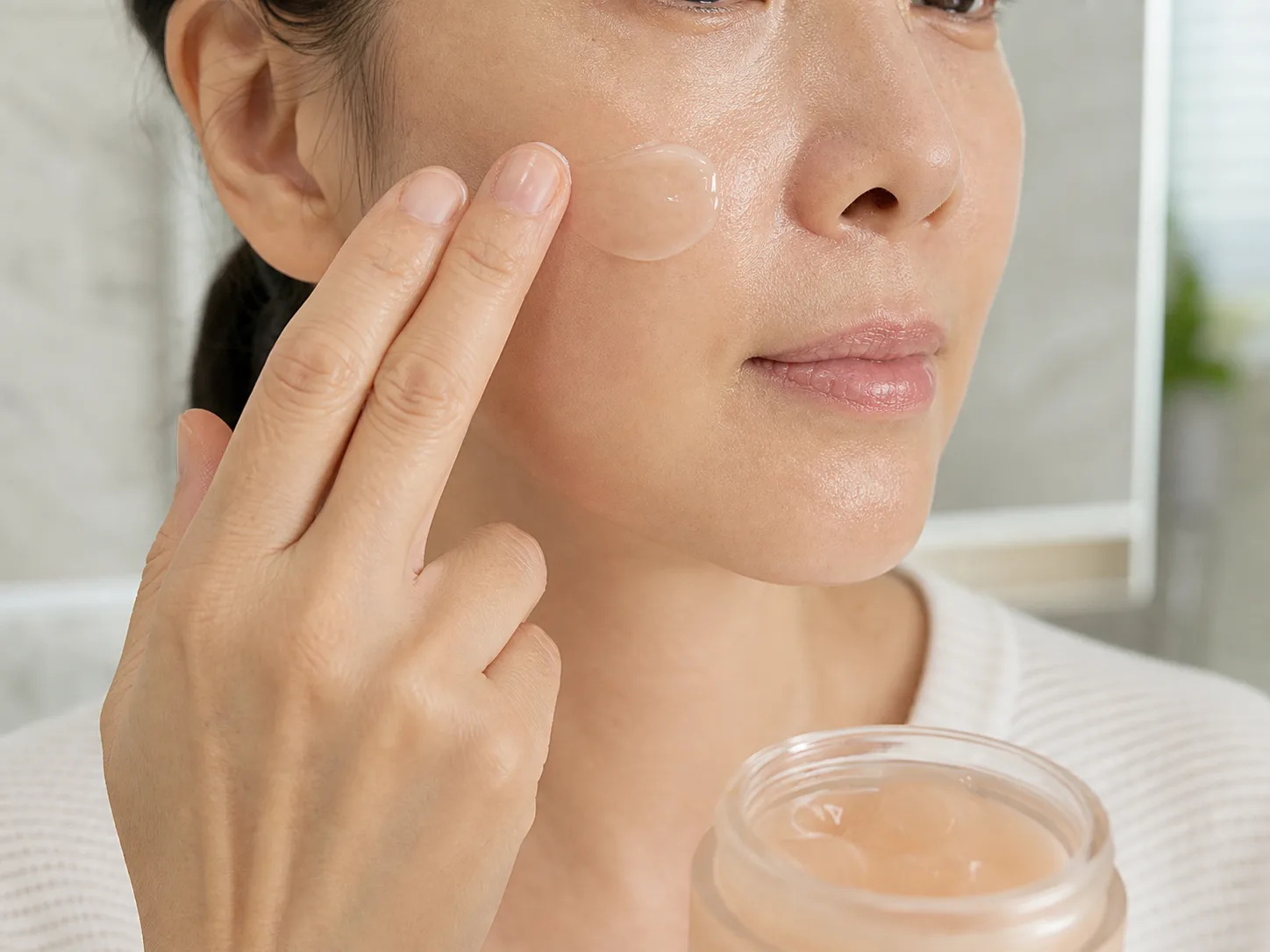
Adenosine fits routines aimed at fine lines that look sharper when skin is dry, especially around the eyes, mouth, and neck. It appears in eye creams, face serums, moisturizers, ampoules, and sleeping masks. It can be appealing to someone who wants a low-fuss wrinkle-care step or who cannot comfortably use a retinoid every night.
Adenosine is not a rich moisturizer on its own. For dry skin, a formula is more useful when it also contains humectants such as glycerin, hyaluronic acid, or panthenol and ingredients such as ceramides, squalane, or fatty acids that slow water loss. If uneven tone is the main concern, adenosine is not the primary brightening ingredient; look for a formula that separately includes niacinamide, a vitamin C derivative, or another evidence-based tone-care ingredient.
Adenosine versus retinol
Both appear in anti-wrinkle products, but they work and feel different. Retinol is a retinoid that affects cell differentiation and turnover. It has a larger evidence base for photoaging and discoloration, but it can cause dryness, peeling, stinging, and increased sun sensitivity while skin adjusts.
Adenosine does not exfoliate the skin, so an adenosine moisturizer can suit someone who wants fine-line care without adding another exfoliating step. It works differently from retinol and is not an equivalent substitute. Outside pregnancy-related restrictions, the two can be used together, but adenosine does not prevent irritation from a retinoid.
If you are pregnant or planning a pregnancy, avoid retinoids, including retinol, and discuss your products with your clinician. Adenosine is not a retinoid, but that distinction does not establish the pregnancy safety of a finished adenosine product. The American Academy of Dermatology advises avoiding retinoids during pregnancy.
Application order and when to assess results
Use an adenosine serum or ampoule after toner and before moisturizer. Eye creams and face creams go later in the routine. No special waiting period is needed between adenosine and niacinamide, vitamin C, peptides, or retinoids. Adenosine is suitable for morning use and is not known to make skin photosensitive. Sunscreen still matters because preventing daily UV-related collagen damage does more for long-term wrinkle care than any single leave-on serum.
The randomized study detected change from about three weeks and followed participants through eight weeks. If the formula is comfortable, use it consistently for one to two months before judging the longer-term result. Compare photos under the same lighting and facial expression; otherwise temporary hydration and shadows can look like a structural change.
Side effects and sensitivity
The Cosmetic Ingredient Review Expert Panel concluded that adenosine and related ingredients are safe in cosmetics under the current practices and concentrations of use. In a small 48-hour human patch test with a material containing 0.2% adenosine, one participant had slight redness shortly after patch removal, but no reaction remained at 24 or 48 hours. Overall irritation risk appears low, not nonexistent.
Eye-area formulas may sting because of fragrance, essential oils, alcohol, preservatives, or other actives in the product. Patch test a new formula along the jaw or behind the ear if your skin reacts easily. Stop using it if redness, itching, or swelling persists, and keep the product out of the eyes.
Sources used
- Korea Cosmetic Association - AdenosineStandard name, molecular formula, skin conditioning, and Korean functional-cosmetic classification
- Korean functional-cosmetic review and notification guideThe common 0.04% adenosine concentration in notified wrinkle-improvement formulas
- 2025 Korean cosmetics FAQFunctional-product notification conditions and permitted benefit wording
- CIR Safety Assessment of AdenosineSafety conclusion and irritation and sensitization evidence
- Randomized adenosine wrinkle studyHuman finished-product evidence for periorbital smoothness and glabellar lines
- Medical News Today adenosine guideConsumer use, safety, and evidence context
- American Academy of Dermatology: Dermatologist-approved pregnancy skin careGuidance to avoid retinoids during pregnancy; this is not a study establishing adenosine's pregnancy safety.