The first benefit is a water-holding film
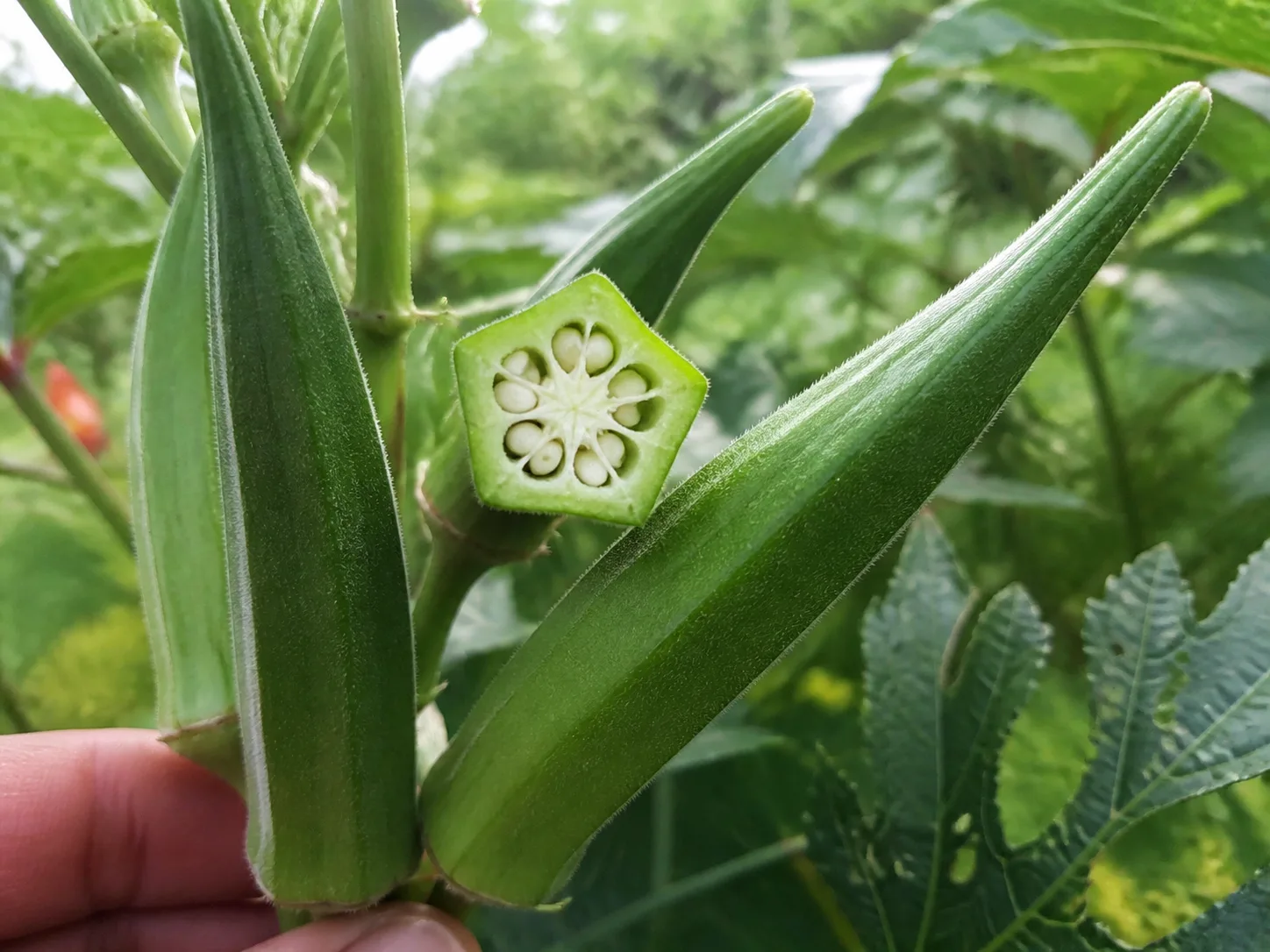
Hibiscus Esculentus Fruit Extract comes from the fruit of okra, now botanically classified as Abelmoschus esculentus. Cut an okra pod and you see long, slippery strands of mucilage. Those water-loving polysaccharides help a watery formula leave skin feeling smoother and less tight after cleansing.
You may see okra called “plant hyaluronic acid.” That nickname is misleading. Okra polysaccharides and hyaluronic acid are different molecules. Both interact with water, but they have different structures, specifications, and evidence.
How okra mucilage holds water
Okra mucilage contains long sugar chains built from units such as galactose, rhamnose, and galacturonic acid. The chains have many hydrophilic sites that can form hydrogen bonds with water. In a serum, water sits around and between those chains. After application, part of that network remains as a thin, flexible film on the stratum-corneum surface.
This is not the same as the strong water-loss barrier created by petrolatum. Okra mucilage sits somewhere between a humectant and a film former. It can improve immediate slip and hydration, but it may not be enough on its own in cold, dry air or on a badly compromised barrier. Glycerin and betaine can add water-binding capacity, while ceramides, fatty acids, and squalane help slow evaporation.
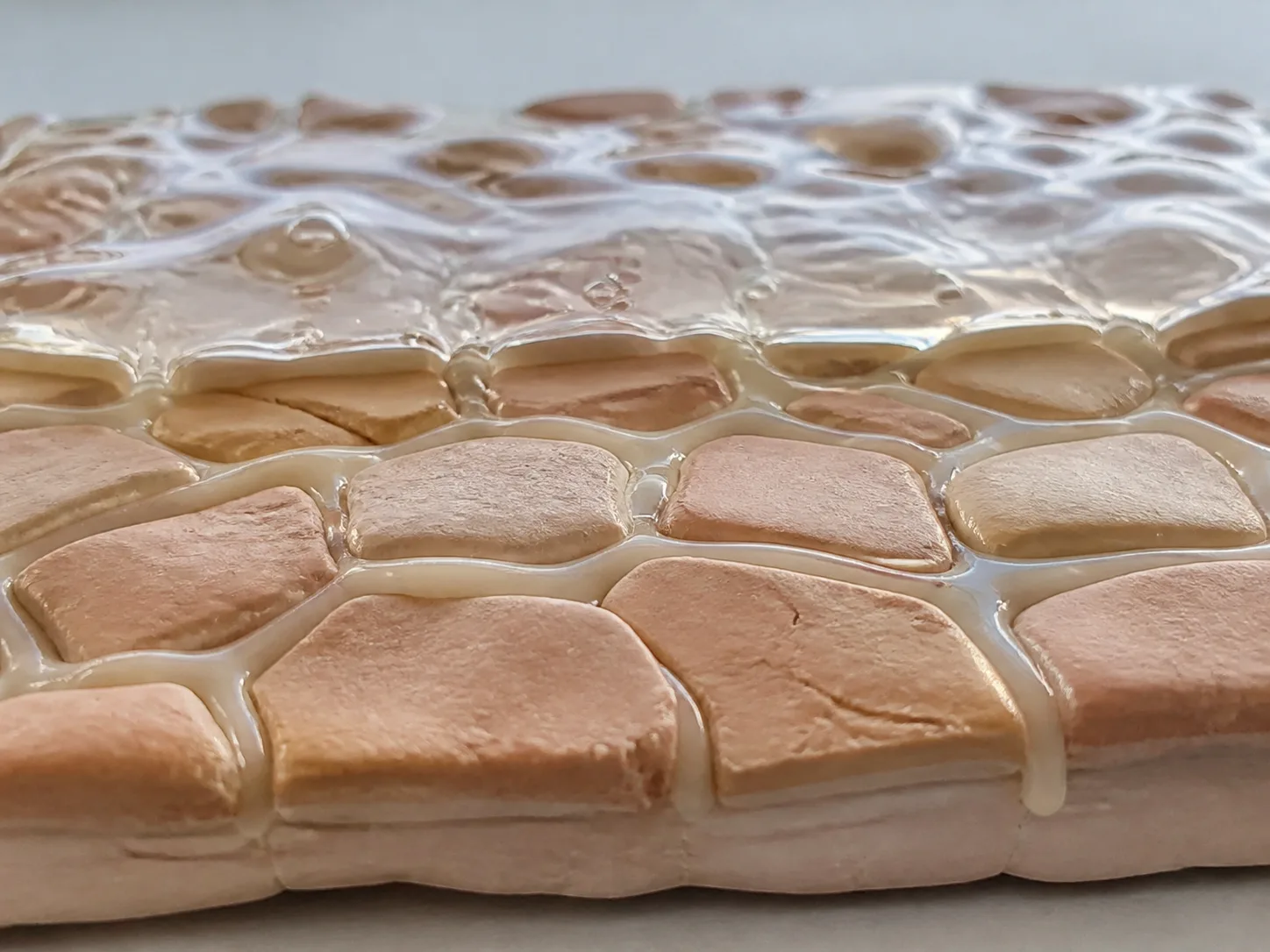
The first noticeable change is usually a smoother surface feel. A mucilage-rich serum can spread with a wet slip and dry to a soft, flexible film. Too many layers can turn tacky or make sunscreen pill. Reducing the amount is more useful in that situation than treating the texture problem as proof that the ingredient does not work.
What the human hydration studies show
One study added okra polysaccharide to an alcohol-based hand rub. Researchers compared several concentrations and found that the selected okra formula produced significantly higher skin hydration than the control 30 minutes after use. That is a practical result: the polysaccharide partly offset the drying feel of an alcohol-heavy format.
A separate sheet-mask study compared 3%, 5%, and 7% okra extract formulas used over four weeks. The 7% mask produced the largest changes in measured water content and smoothness. The study was limited, and the occlusive effect of a wet mask also contributes to hydration. These results support a formula-level moisturizing role; they do not establish a universal percentage that works the same way in every toner or cream.
Why researchers measured hyaluronic acid
In a 2024 Korean laboratory study, hot-water and 70% ethanol okra extracts were applied to keratinocytes. Hyaluronic-acid production rose as the extract concentration increased. Hyaluronic acid helps maintain a hydrated extracellular environment in and around the epidermis, so this observation suggests a second route beyond the physical mucilage film.
Cells in culture receive direct exposure. Intact stratum corneum changes how much of an extract reaches living cells, and the study did not establish which fraction drove the response. The finding supports a mechanism hypothesis; it does not prove that a low-positioned okra extract “refills hyaluronic acid deep in skin.”
The soothing hypothesis involves NO, iNOS, and COX-2
Stressed skin cells increase inflammatory signals. Nitric oxide, or NO, participates in that response. The inducible enzyme iNOS can raise NO production sharply under inflammatory conditions, while COX-2 helps generate lipid mediators associated with inflammation and discomfort.
The Korean study found lower NO production and lower iNOS and COX-2 protein expression with increasing concentrations of specific okra extracts. DPPH and ABTS assays also showed radical-scavenging activity. Together, these results provide a plausible explanation for a soothing claim: the extract may buffer oxidative stress and reduce amplification of selected inflammatory pathways.
That remains preclinical evidence. It does not make Okra Fruit Extract a treatment for eczema, acne, or persistent facial redness. Fragrance, alcohol, preservatives, pH, and the rest of the formula can matter more to comfort than a small amount of botanical extract.
Fruit, seed, and hydrolyzed okra are not interchangeable
This article concerns Hibiscus Esculentus Fruit Extract. Okra seed extract has a different balance of oil, sterols, and polyphenols. Hydrolyzed okra ingredients and okra-derived peptides have also been processed into different molecular mixtures. A tyrosinase assay on seed extract or an elasticity study on a peptide system cannot be assigned to the fruit extract on your label.
How mucilage texture changes application
For tight, dehydrated skin, apply a thin layer of serum before the face is completely dry and follow with moisturizer.
Patch test a new botanical leave-on along the jaw or behind the ear for several days. Persistent sting, itch, swelling, or redness is a reason to stop, not a sign that the product is beginning to work.
Sources used
- Source from cosbot.helpcosmetic.or.kr
- Health Canada NHPID: Hibiscus Esculentus Fruit Extract
- COSMILE Europe: Hibiscus Esculentus Fruit Extractfruit pulp solvent extract, plant origin, skin-conditioning function
- Moisturizing effect of alcohol-based hand rub containing okra polysaccharideBenefit evidence, study conditions, and what the research actually shows.
- Source from kci.go.kr
- Preparation and evaluation of moisturizing sheet mask of Lady Finger extract
- Paula's Choice ingredient dictionary: Hibiscus Esculentus Fruit Extract