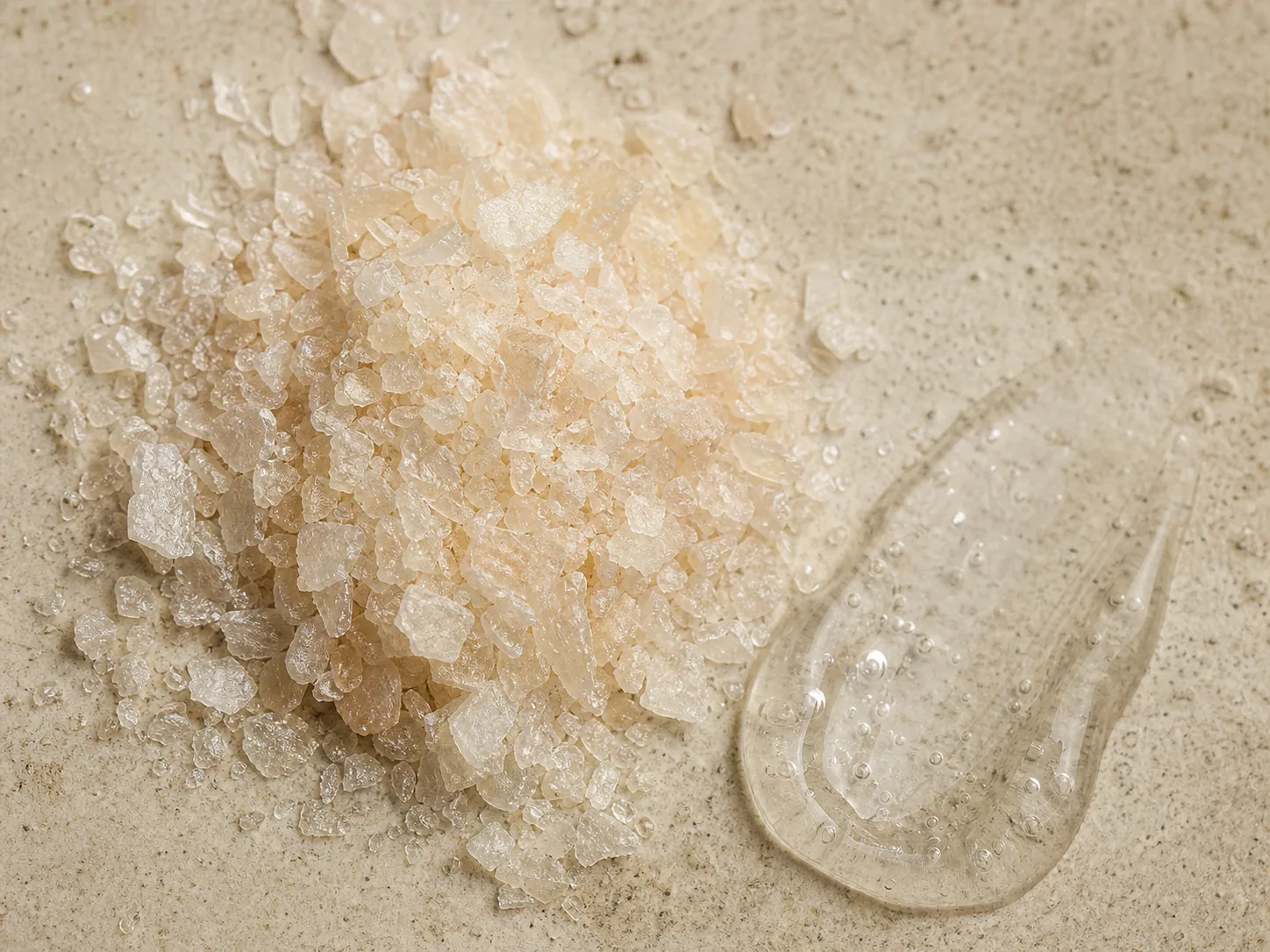
What ferulic acid does in skincare
Ferulic acid is a phenolic antioxidant found in the cell walls of many plants. Cosmetic formulators use it to limit oxidation and to support other antioxidants that can degrade in light, heat, or air. In a well-designed serum, it may help reduce the visible effects of environmental stress, including dullness, roughness, and the gradual appearance of fine lines.
It is not an instant pigment eraser or wrinkle filler. Any improvement in brightness or firmness comes from sustained antioxidant care and the complete formula, often including vitamin C, vitamin E, niacinamide, or other tone-supporting ingredients. The immediate smoothness of a serum is more likely to come from its solvents, humectants, and emollients.
Why it is paired with vitamins C and E
The best-known evidence comes from a formula containing 15% L-ascorbic acid and 1% alpha-tocopherol. Adding 0.5% ferulic acid improved chemical stability and increased measured protection under solar-simulated radiation in that specific study. The combination makes chemical sense: vitamin C works in water-compatible environments, vitamin E helps protect lipids, and ferulic acid can complement both antioxidant systems.
Those exact results do not transfer automatically to every product labeled “C + E + ferulic.” Vitamin C derivatives do not behave exactly like pure L-ascorbic acid, and many labels do not disclose the ferulic acid level. Packaging, pH, oxygen exposure, and solvent choice can be as important as the ingredient names on the front of the bottle.
Structure, solubility, and formula behavior
Ferulic acid has the molecular formula C10H10O4. Its aromatic ring and phenolic hydroxyl group help stabilize reactive intermediates during oxidation. It is not highly soluble in plain water, however, so formulators need suitable solvents and pH control to keep it evenly dissolved and useful throughout the product’s shelf life.
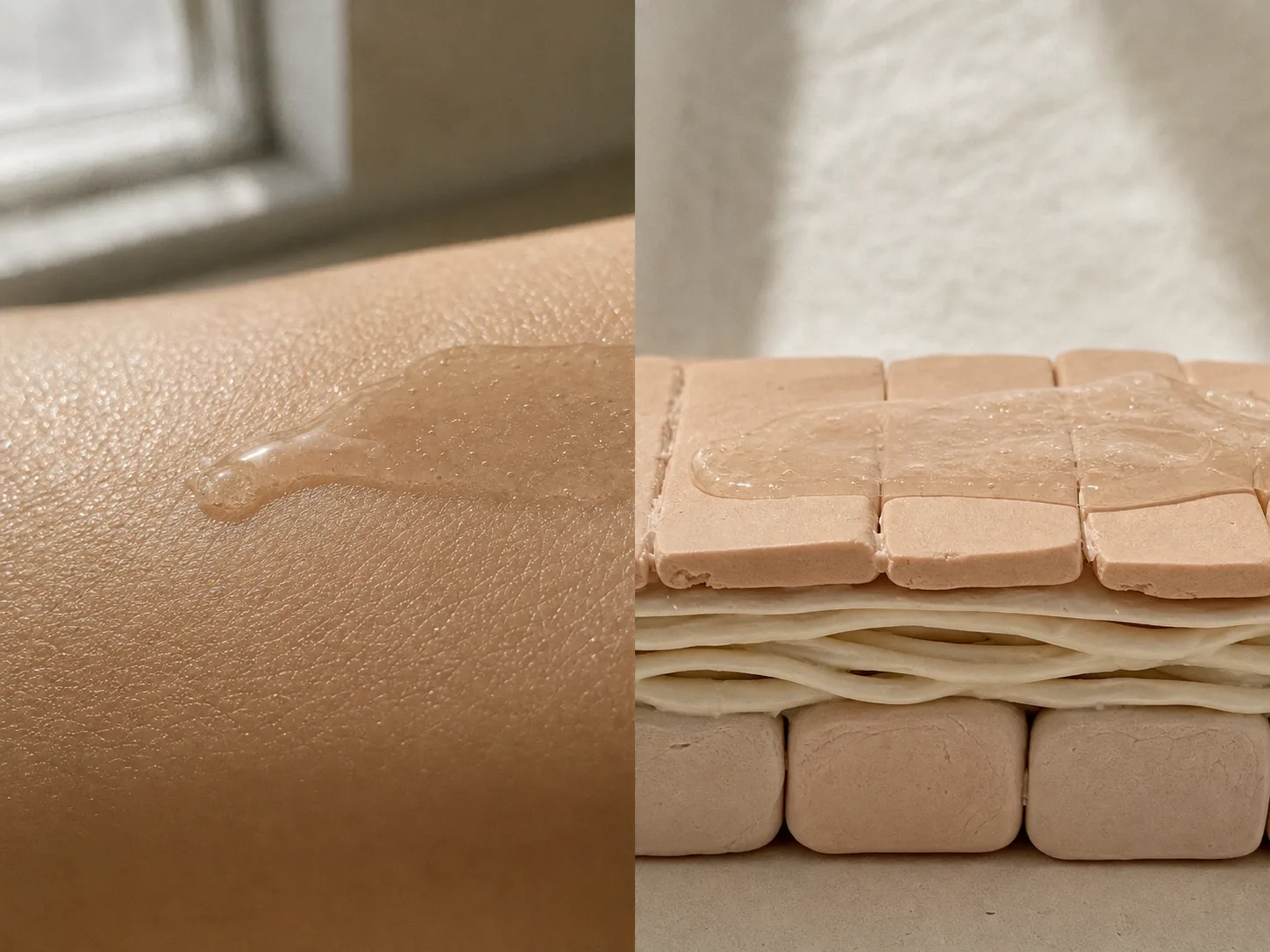
This creates two common serum styles. A low-pH water-based serum may combine ferulic acid with pure L-ascorbic acid. It has strong vitamin C context but can sting or feel drying. An anhydrous serum may use propanediol or another solvent to carry ferulic acid with fewer water-driven stability concerns, although the finish can feel oily and may pill when layered heavily.
Brightness, discoloration, and fine lines
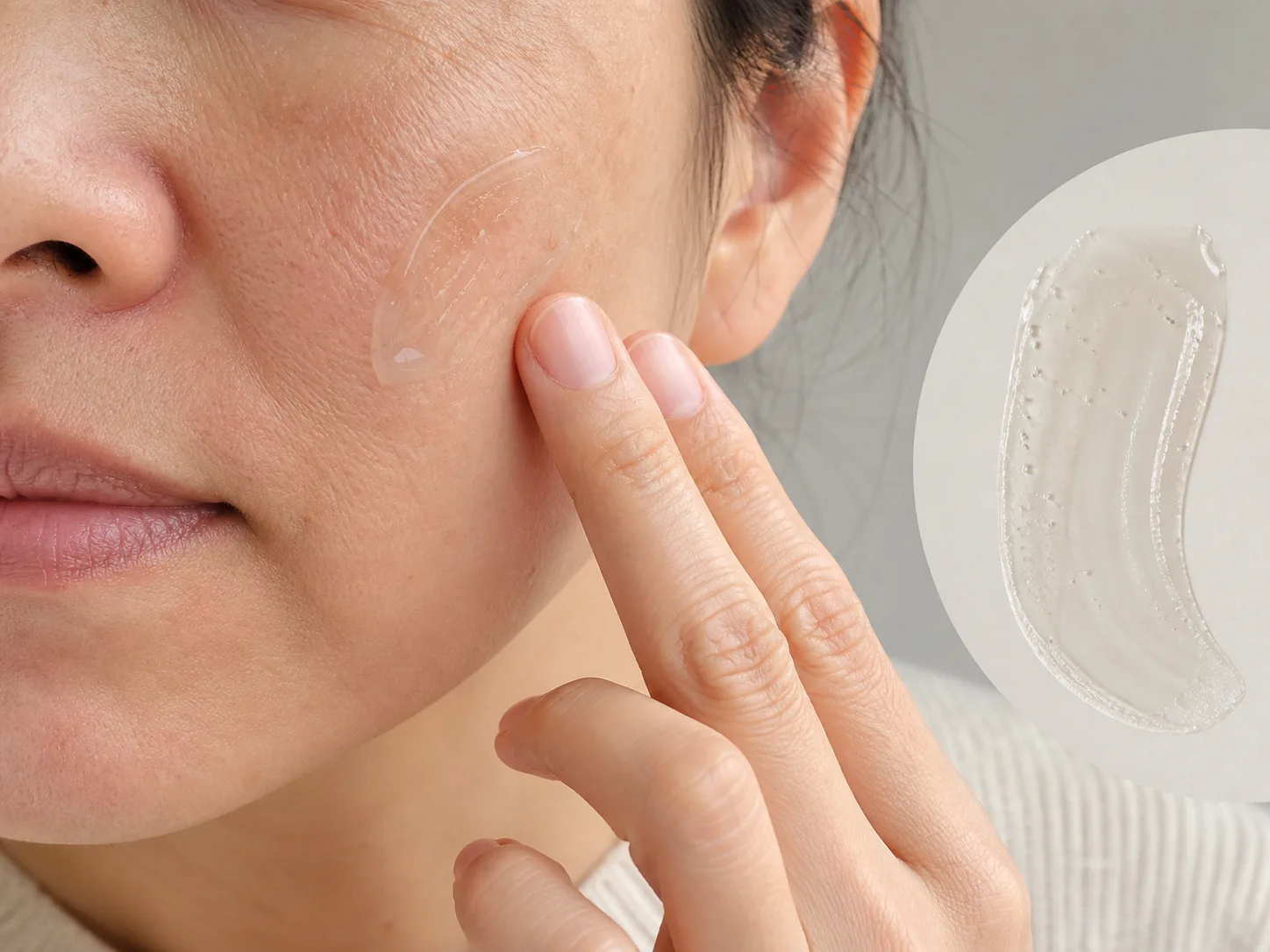
UV exposure and pollution increase reactive oxygen species that participate in pigment signaling and collagen breakdown. By lowering oxidative stress, ferulic acid may help skin look less dull and may reduce conditions that make fine lines become more noticeable over time. This is preventive and supportive care, not the same as directly removing established deep wrinkles or dark patches.
In a brightening serum that also contains tranexamic acid, niacinamide, or several vitamin C derivatives, visible tone changes belong to the full active system. Ferulic acid contributes antioxidant support and can help protect the formula, while other ingredients may act more directly on pigment production or transfer. A disclosed concentration and finished-product testing provide more useful evidence than ingredient presence alone.
A practical morning routine
Apply a thin layer after cleansing, then use moisturizer and a broad-spectrum sunscreen. Ferulic acid may support the skin against oxidation associated with UV exposure, but it is not a UV filter and has no standalone SPF. Sunscreen remains the step that directly reduces UV exposure.
If the serum contains 10% to 15% or more pure L-ascorbic acid at a low pH, begin once a day or three to four mornings a week. Brief tingling can occur, but persistent burning, redness, or scaling is a reason to reduce frequency or stop. Separating a strong vitamin C serum from retinoids or exfoliating acids between morning and evening can make irritation easier to identify and control.
Color and packaging can reveal stability problems
Vitamin C and ferulic acid formulas may start pale yellow or amber. A major shift to dark orange or brown, especially with a changed odor or texture, can signal oxidation. Follow refrigeration directions when the manufacturer provides them. Otherwise, close the cap promptly and keep the product away from direct sun and high heat. Opaque or air-restrictive packaging generally protects a sensitive antioxidant formula better than a clear, wide-mouth container.
A raw-material safety sheet may classify concentrated ferulic acid powder as an irritant, but that is not a finished-product irritation rate. Tolerability depends on concentration, pH, solvents, fragrance, and the other active ingredients. Patch test when you have reactive skin, and pay extra attention when a low-pH antioxidant serum also contains multiple essential oils or fragrance components.
What the evidence does and does not establish
The frequently cited vitamin C, E, and ferulic acid study used a defined test formula. It does not prove identical results for a product with a trace amount of ferulic acid, a different vitamin C derivative, or unstable packaging. Even so, the ingredient’s antioxidant function and its formula-specific ability to support vitamins C and E make it a meaningful part of a carefully formulated antioxidant serum rather than a decorative label claim.
Sources used
- PubChem - Ferulic AcidChemical identity and molecular formula
- 대한화장품협회 성분사전 - 페룰릭애씨드Ingredient characteristics and cosmetic use
- FERULIC ACID - COSMILE EuropeIngredient characteristics and cosmetic use
- Ferulic acid stabilizes vitamins C and E and doubles photoprotectionPublished evidence and study scope
- Topical vitamin C - DermNetIngredient characteristics and cosmetic use
- What is Ferulic Acid? - Paula's ChoiceIngredient characteristics and cosmetic use