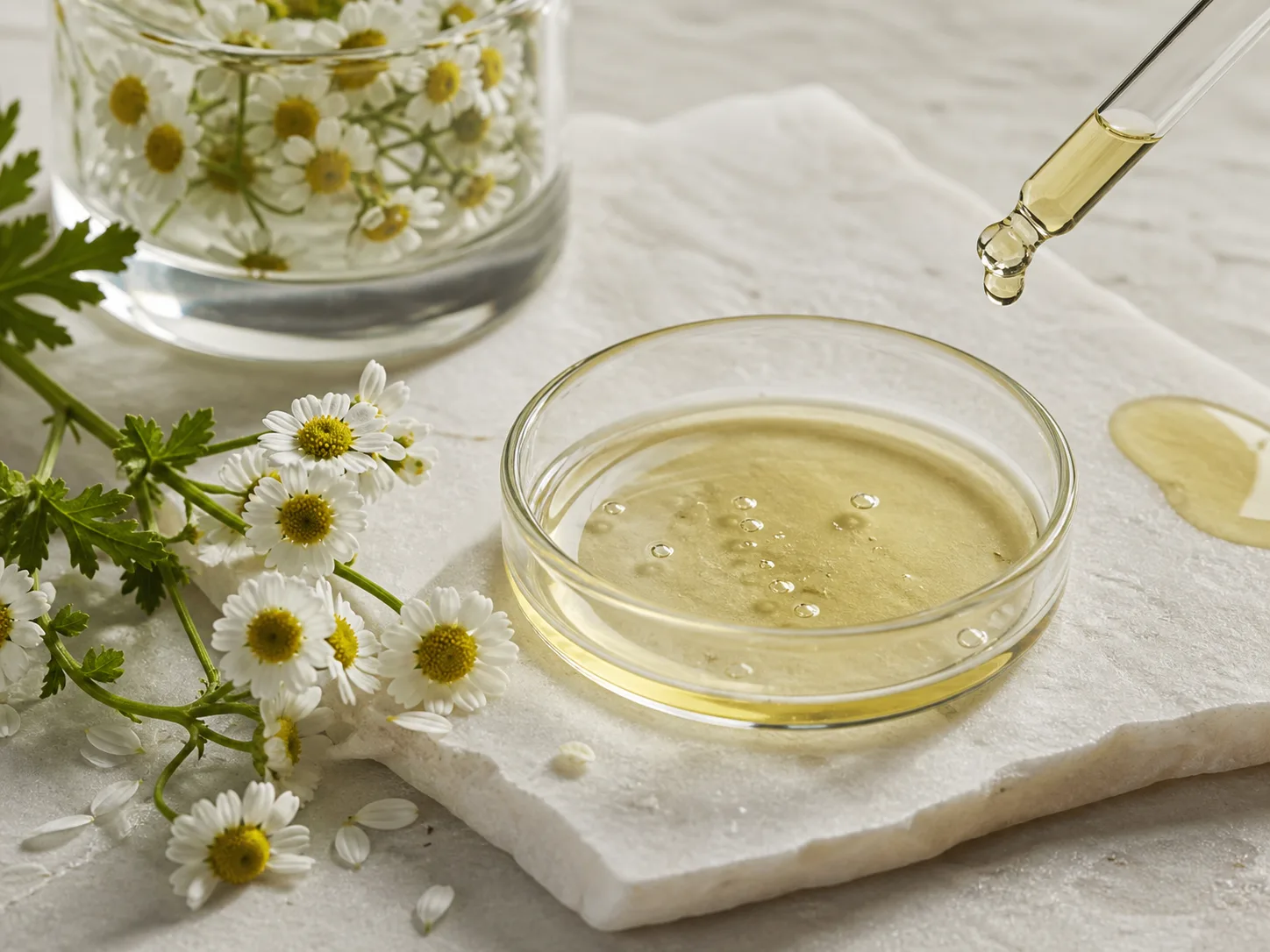
Feverfew is not another name for chamomile
Feverfew Extract comes from Tanacetum parthenium, also listed in cosmetics as Chrysanthemum Parthenium (Feverfew) Extract. The daisy-like flower and older botanical synonyms can make it sound like German chamomile, but it is a different Asteraceae plant. Skincare products use it in antioxidant and soothing formulas aimed at skin that looks temporarily flushed, dry, or stressed by the environment.
An important consideration with feverfew is parthenolide, a sesquiterpene lactone found in the plant. It is an important marker in herbal feverfew materials, yet it is also associated with contact sensitization when applied to skin. That tension led to the development of purified topical extracts in which parthenolide is removed or reduced to very low levels.
What the purified-extract research shows
A study of parthenolide-depleted feverfew found inhibition of inflammatory enzymes including 5-lipoxygenase and lower release of mediators such as PGE2 and TNF-α. That means less production of substances that sustain inflammation after a stimulus. The researchers also reported reduced redness in a human test using chemically induced vasodilation. These findings concern the purified research extract, not every feverfew ingredient.
The study does not turn an ordinary feverfew serum into sunscreen, and it does not show that a cosmetic repairs DNA damage in the way a medical treatment would. The tested material was a particular purified extract used under defined conditions. A label that only says Chrysanthemum Parthenium Extract does not reveal its parthenolide level, extraction method, or concentration. A manufacturer statement such as purified feverfew, parthenolide-depleted, or parthenolide-free makes the connection to the topical research more meaningful.
What you may notice on red-looking, stressed skin
Feverfew fits best when dryness and environmental exposure make skin look more unsettled than usual. A compatible serum or cream may reduce the tight, rough sensation that exaggerates a flushed appearance and help the surface look calmer over time. It is not expected to bleach redness away on contact or correct every cause of persistent facial redness.
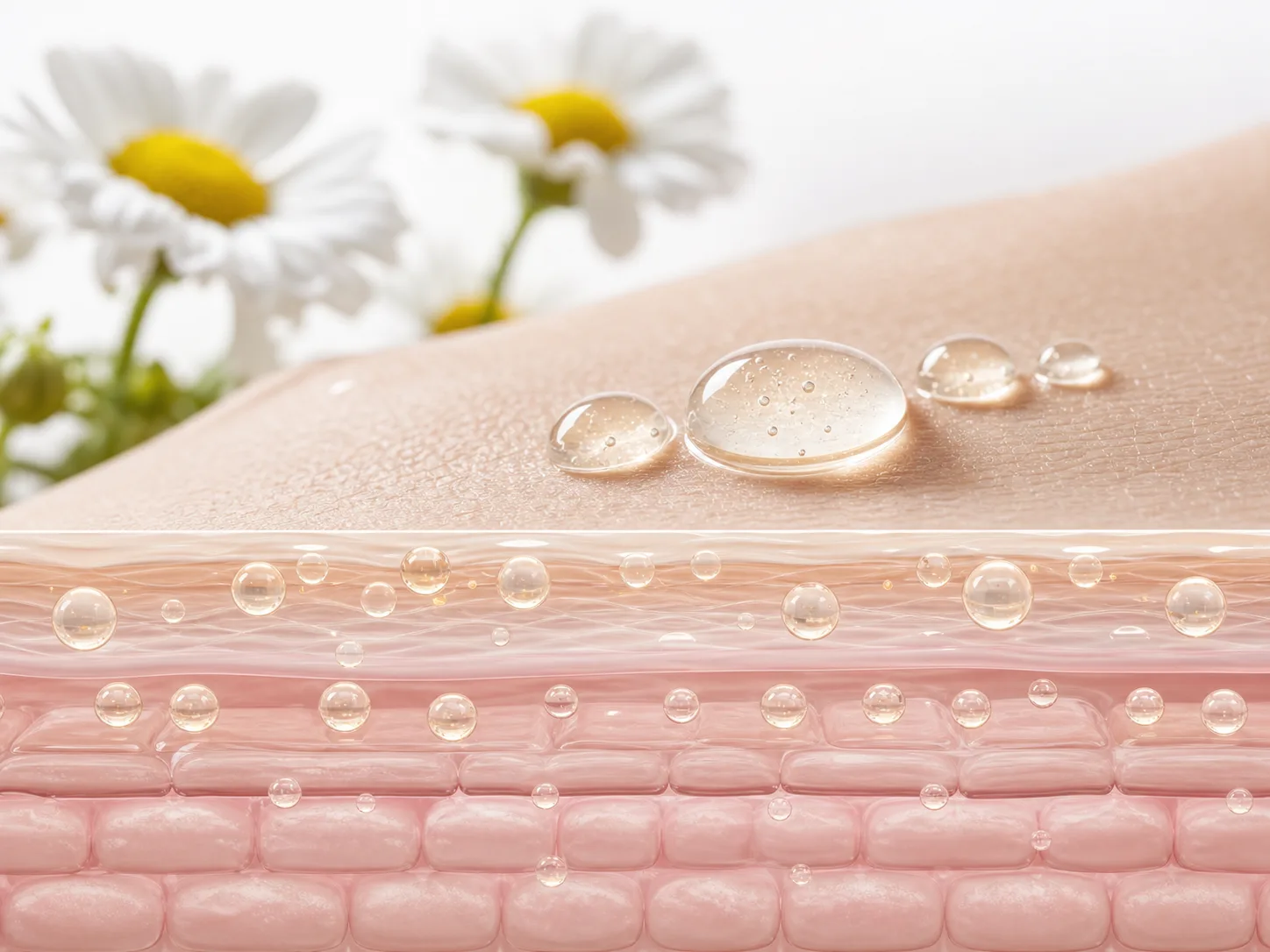
Much of the immediate comfort still comes from the supporting base. Glycerin, betaine, and panthenol bind water near the surface. Ceramides, cholesterol, fatty acids, squalane, and other emollients slow moisture loss and improve flexibility. A heavily fragranced or high-alcohol formula can undermine that goal even when feverfew is the highlighted botanical.
Toner, serum, or cream
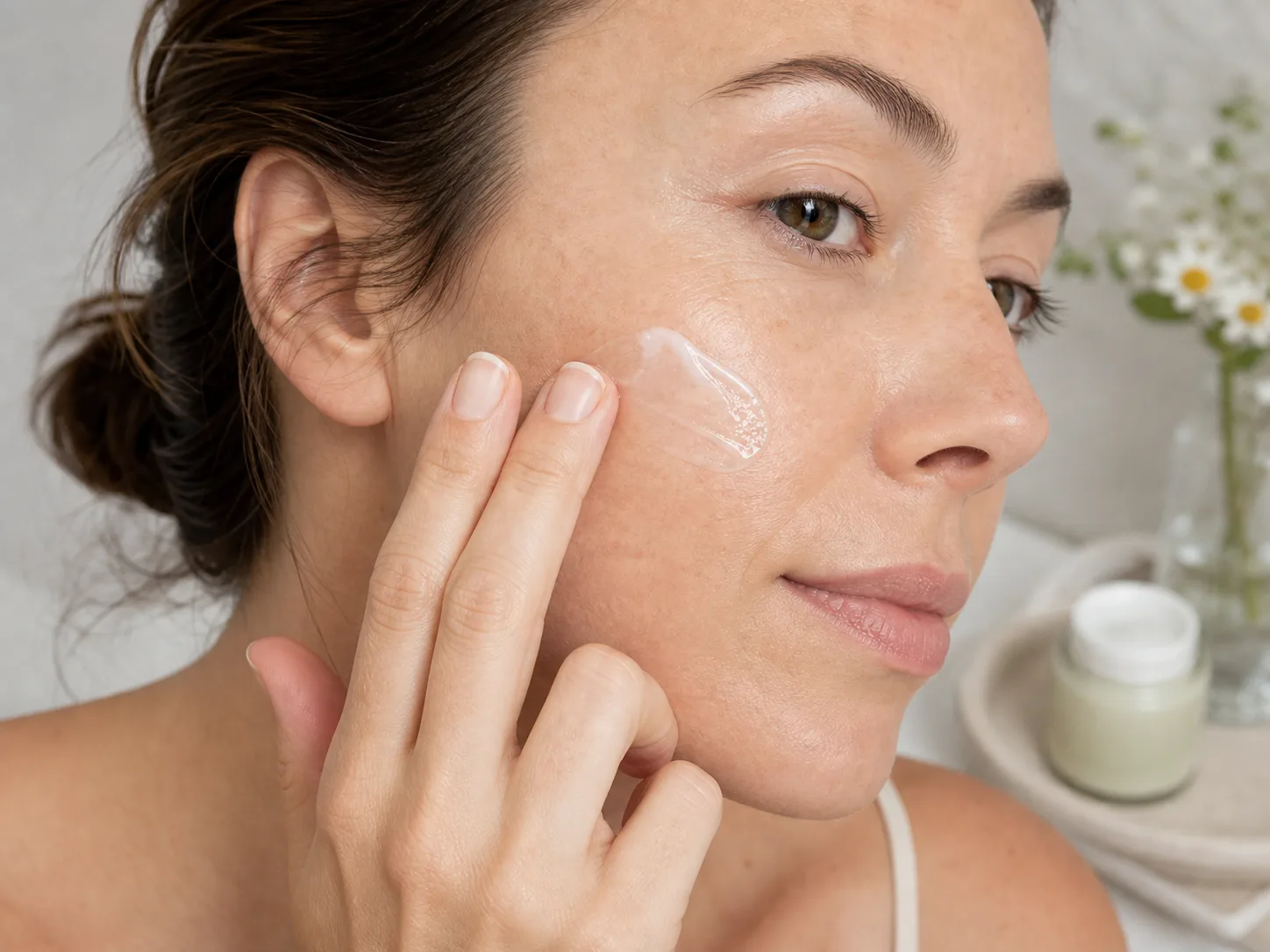
A mist or watery toner is convenient for a light hydration step after heat or exercise, but evaporation can leave dry skin tight again. A fragrance-light cream with barrier lipids is more practical when comfort needs to last through the day. Oily skin may prefer a gel serum with fewer waxes and oils so that sunscreen layers without pilling.
Feverfew should not be used as an antidote to an irritating retinoid, acid peel, or scrub. If skin is burning or peeling, reduce the triggering active and return to a simple moisturizer first. Introduce the botanical only after the surface has settled; otherwise it becomes impossible to tell whether the new serum helps or simply adds another variable.
How to lower the chance of a reaction
Look for language such as purified, parthenolide-depleted, or parthenolide-free in the product or raw-material description. The absence of that wording does not prove that a formula is unsafe, but it removes one useful piece of information about how the feverfew was prepared. Contacting the manufacturer is reasonable when the extract is a major reason you are considering the product.
If you have had an allergic reaction to Asteraceae plants, avoid the product that caused it and ask a clinician before using feverfew. Repeated itching, burning, swelling, or rash is a reason to stop rather than push through.
Sources used
- Korean cosmetic ingredient dictionaryKorean standard name and INCI identity
- Parthenolide-depleted feverfew skin studyAntioxidant and environmental-stress evidence for a purified extract
- DermNet FeverfewParthenolide sensitization and purified-extract selection context
- NCCIH Feverfew safety overviewPlant names, promoted topical uses, and what the published studies actually tested
- Parthenolide-depleted feverfew anti-inflammatory studySpecific study material and mechanism; linked in body
- mskcc.orgContact dermatitis and product-use caution context.