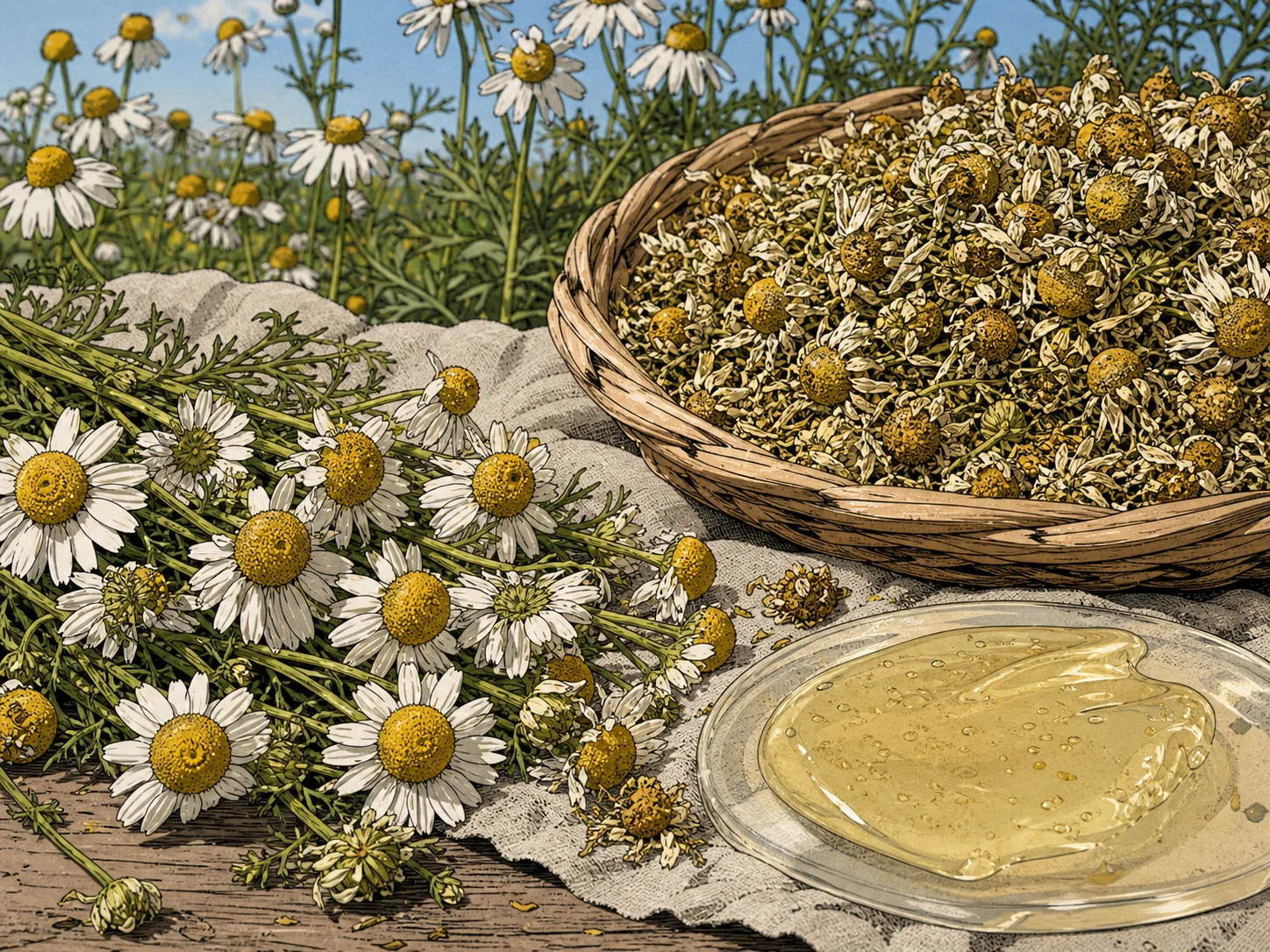
Matricaria means German chamomile
Chamomilla Recutita (Matricaria) Extract comes from German chamomile. The familiar word chamomile is useful, but it covers more than one plant. Roman chamomile, often listed as Anthemis Nobilis, is a different species. Ingredient lists also distinguish whole-plant extract, flower extract, flower water, and flower oil. Those materials can share a botanical origin without having the same composition or sensory profile.
A floral water is mostly a water-based aromatic material, while an essential oil concentrates volatile fragrance compounds. A conventional extract may use water, glycerin, glycols, or another solvent to carry a broader mixture of plant constituents. That is why a fragrance-free moisturizer containing Matricaria Extract can behave very differently from a strongly scented chamomile face oil.
Why chamomile became a soothing ingredient
Chamomile flowers contain flavonoids including apigenin-related compounds. In an aqueous-extract study, chamomile reduced COX-2 activity and expression, lowering release of the inflammatory mediator PGE2. The experiment used stimulated mouse immune cells in culture, not people applying a face cream. It explains a possible soothing mechanism: reducing the production of substances that sustain inflammation.
It does not mean that every bottle listing Matricaria Extract delivers the effect of a concentrated research material. Extraction method controls which plant compounds enter the raw material, and the finished cosmetic may contain only a small amount of that extract. Clinical work involving a particular chamomile cream also cannot be converted into a treatment promise for an unrelated toner. The extract can support a formula that leaves a rough, stressed surface feeling calmer and looking less flushed while the moisturizing base handles most of the hydration.
What it contributes in toner and masks
In a toner or essence, glycerin, betaine, panthenol, and glycols usually create the immediate hydrated feel. Matricaria Extract adds conditioning and soothing benefits to that base. A formula can still feel drying if alcohol is prominent, and it can still sting if fragrance or essential oils do not suit your skin. The presence of chamomile cannot neutralize every other choice in the formula.
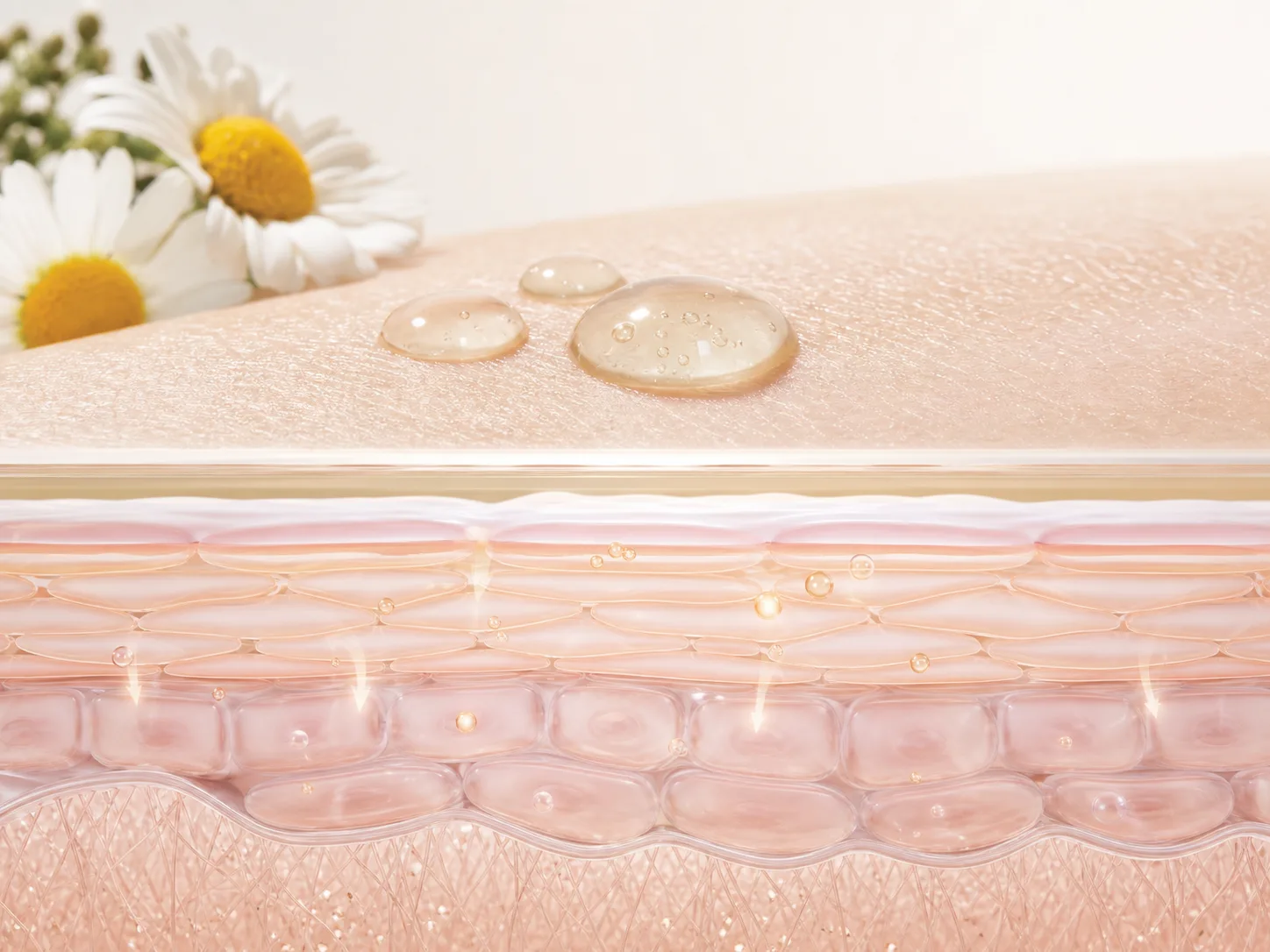
Sheet masks and pads keep a water-rich serum against the surface, which can make skin look temporarily smoother and more plumped. With pads, friction may matter more than the extract. Pressing the liquid onto reactive skin is gentler than repeated wiping. If a pad also contains AHA, BHA, or PHA, its exfoliating frequency should be judged separately; chamomile does not turn a daily acid pad into a universally mild product.
How a cream changes the result
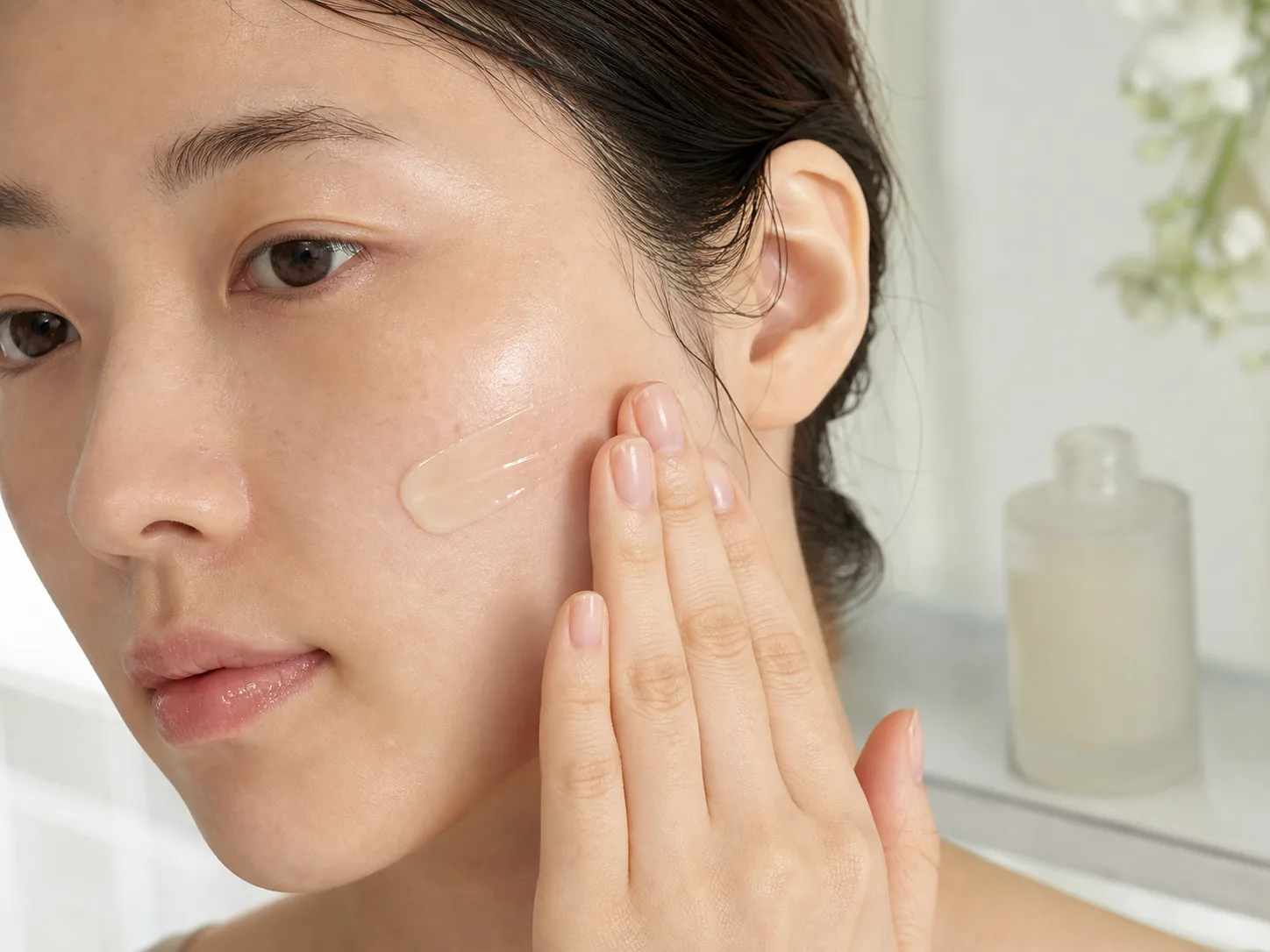
For dry skin that also looks easily flushed, look past the chamomile percentage claim and examine the moisturizing structure. Glycerin and panthenol attract water, while ceramides, squalane, fatty alcohols, and other emollients help the comfortable finish last. A cream with those supporting ingredients is more likely to prevent tightness from returning than a botanical mist used alone.
Oily skin may prefer an essence or gel cream with fewer heavy oils and waxes, especially under sunscreen. Color is not a reliable shortcut. A blue product may contain an azulene-derived color, another blue ingredient, or added pigment; it does not prove a high amount of chamazulene. Strong fragrance likewise says more about the scent system than about how much useful chamomile extract the formula contains.
Who should be cautious
Matricaria belongs to the Asteraceae family. If you have had an allergic reaction to chamomile or related plants, avoid the product that caused it and ask a clinician before trying a related product. Essential-oil products deserve separate consideration because their volatile components are more concentrated than those in a simple water-based extract.
Repeated itching, burning, swelling, or rash is not a soothing phase. Stop the product and check fragrance, essential oils, preservatives, exfoliating acids, and other recently introduced products rather than assuming the botanical needs time to work.
Sources used
- Korean cosmetic ingredient naming updateKorean standard and former chamomile ingredient names
- CIR Chamomilla recutita-derived ingredients safety assessmentINCI distinctions, cosmetic functions, and safety context
- Review of medicinal plants used in inflammatory skin conditionsResearch context for bisabolol, apigenin, and chamazulene
- Systematic review of Matricaria recutita chamomileMajor flavonoids and terpene constituents of chamomile
- Aqueous chamomile extract COX-2 and PGE2 studySpecific study material and mechanism; linked in body
- corp.tonymoly.comConsumer-facing cosmetic context and common Korean naming.