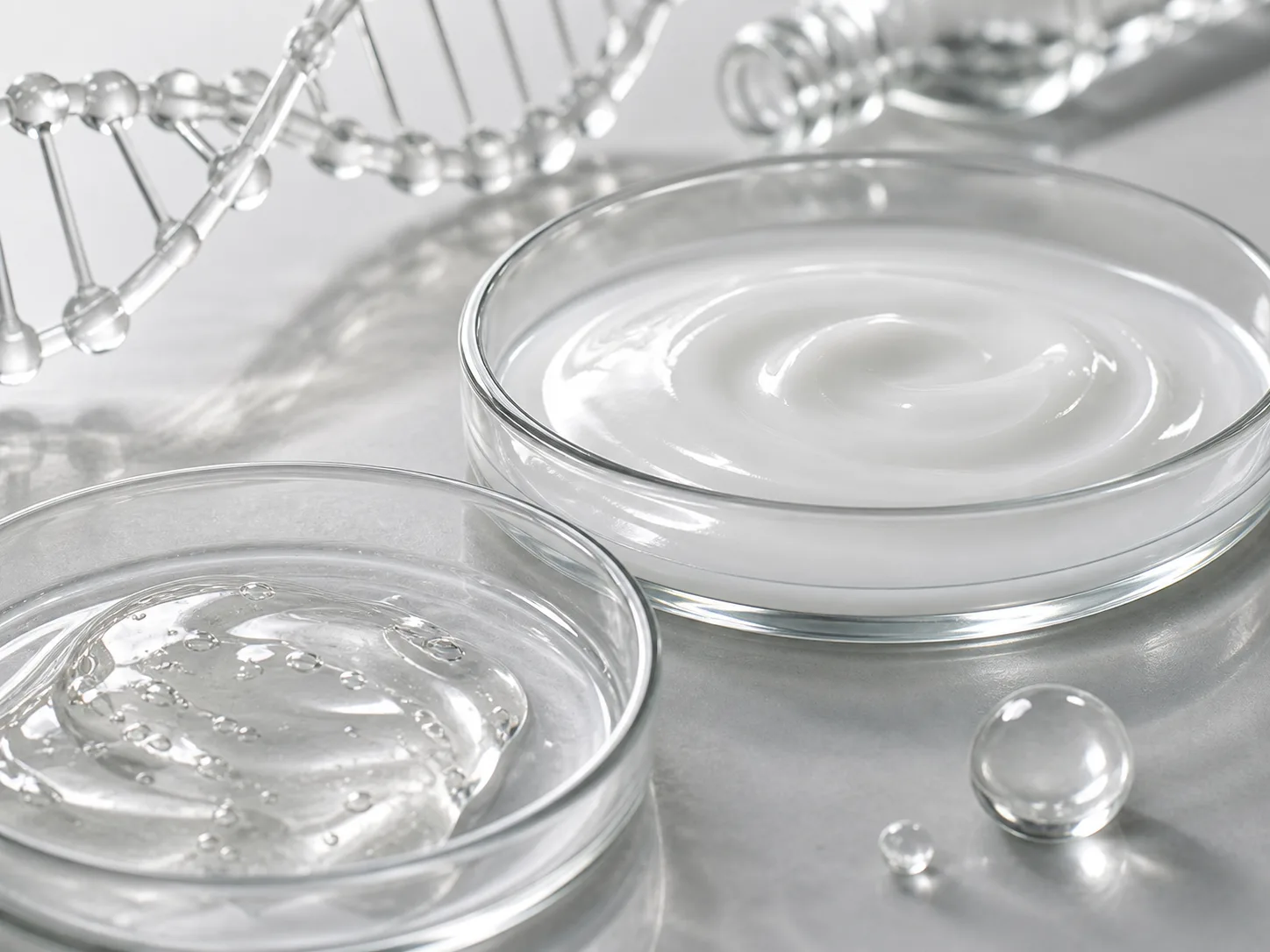
PDRN creams are studied for skin repair and fine lines
A PDRN cream targets the recovery process that follows UV and environmental stress. Its distinctive promise is better collagen and elastic-fiber maintenance, smoother wrinkles, and firmer-looking texture.
In a 2026 split-face study, 31 women used a 0.1% PDRN-850K eye cream on one side and an otherwise matched 0.1% retinol cream on the other for 28 days. The PDRN side showed larger improvements in periocular wrinkles, dermal thickness and density, elasticity, firmness, eye-bag volume, and tear-trough measurements. These findings apply to the PDRN-850K eye cream tested in that study.
Check the raw-material specification before the ppm figure
PDRN is a mixture of DNA chains. Molecular weight, purity, and concentration influence delivery and biological activity. The material in the recent trial was salmon-derived PDRN with at least 96% purity and an average molecular weight no higher than 850 kDa.
One thousand ppm equals 0.1% of a finished formula, but only when the figure refers to the PDRN material itself. If a brand counted a diluted raw-material solution, the amount of purified DNA is lower. Ask which number the label represents.
Low molecular weight, liposomal, and nano are useful descriptions only when the brand provides a size range, penetration result, or finished-formula study. A delivery term on the front of a jar is not a measurement.
How repair signaling can change skin structure
Research on PDRN-850K examined changes in PI3K-Akt and TGF-β/Smad signaling. PI3K-Akt helps fibroblasts survive stress and maintain protein synthesis. TGF-β/Smad regulates collagen and extracellular-matrix production. PDRN breakdown products also supply nucleotides that cells can reuse, while adenosine A2A-related signaling is linked with inflammatory control and tissue recovery.
In UV-damaged human skin tissue, 0.1% PDRN-850K increased several collagen types, elastin, and fibrillin-1. In the 28-day human trial, crow’s-feet wrinkle area and number fell by about 20% to 23%, and ultrasound and biomechanical measurements showed changes in dermal structure and firmness. Those are the repair and elasticity outcomes a PDRN cream is trying to deliver.
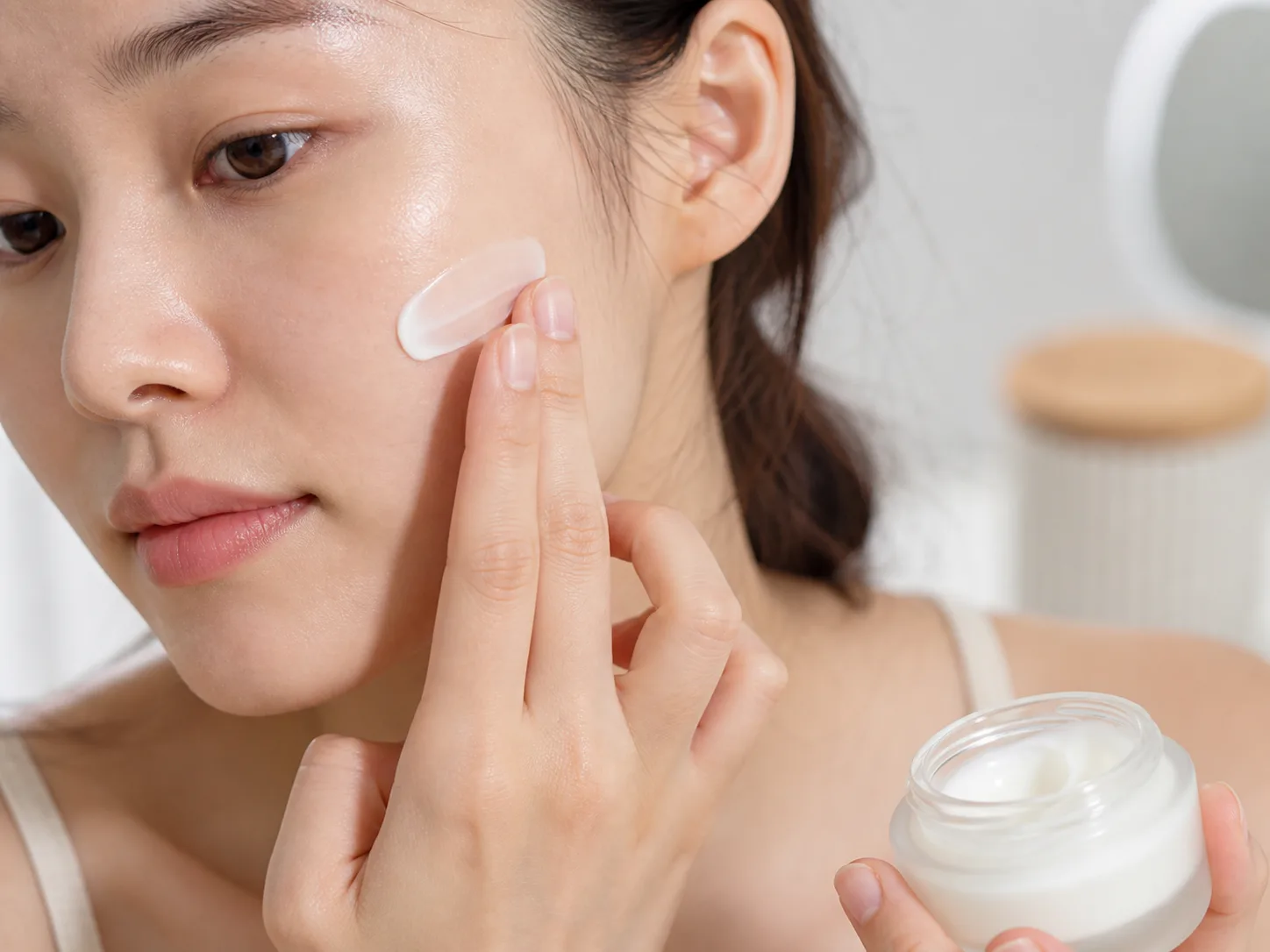
Moisturizing ingredients help keep the skin comfortable
Glycerin and hyaluronic acid keep water in the outer skin, while ceramides, cholesterol, fatty acids, squalane, and dimethicone slow evaporation. A comfortable base makes consistent use possible and can soften dehydration lines while longer-term changes develop.
Dry skin may prefer a cream with ceramides and richer emollients. Oily skin may do better with a lighter gel cream. Fragrance and essential oils can cause stinging regardless of the PDRN percentage.
What should you look for in a PDRN cream?
- Does the ingredient list contain a DNA material such as Sodium DNA or Hydrolyzed DNA?
- Does the brand state purified PDRN concentration and average molecular weight?
- Is there a penetration study or a trial of the finished cream?
- Did that trial measure wrinkles, elasticity, or dermal density instead of satisfaction alone?
A cream without those details may still be a good moisturizer. It simply gives you less information about the size of its repair effect. A high PDRN number also means little if the formula leaves your skin tight or irritated.
Apply PDRN cream after watery serums and finish with sunscreen in the morning. Compare wrinkle texture and firmness after at least four weeks under similar lighting. If retinoids or exfoliants cause persistent burning and peeling, pause the irritating product first. PDRN does not make an overloaded routine harmless.
Sources used
- COSMILE Europe: Sodium DNAINCI skin-conditioning function for Sodium DNA and naming boundary
- COSMILE Europe: Hydrolyzed DNAHydrolyzed DNA naming and distinction from PDRN wording
- Topical medium-length PDRN and photodamaged skin0.1% PDRN-850K 28-day split-face trial and collagen, elasticity, and wrinkle endpoints
- Conformational compaction of PDRN for transdermal deliveryHow molecular conformation and delivery can change skin delivery and outcomes
- Exosome-encapsulated PDRN and skin recoveryExperimental exosome delivery evidence kept separate from ordinary cream efficacy
- PDRN effects in keratinocytes and fibroblastsDifferent ERK, inflammatory, and collagen-related effects in keratinocytes and fibroblasts
- Polynucleotide and PDRN in dermatologyPN versus PDRN terminology and separation of procedural evidence from cosmetic claims