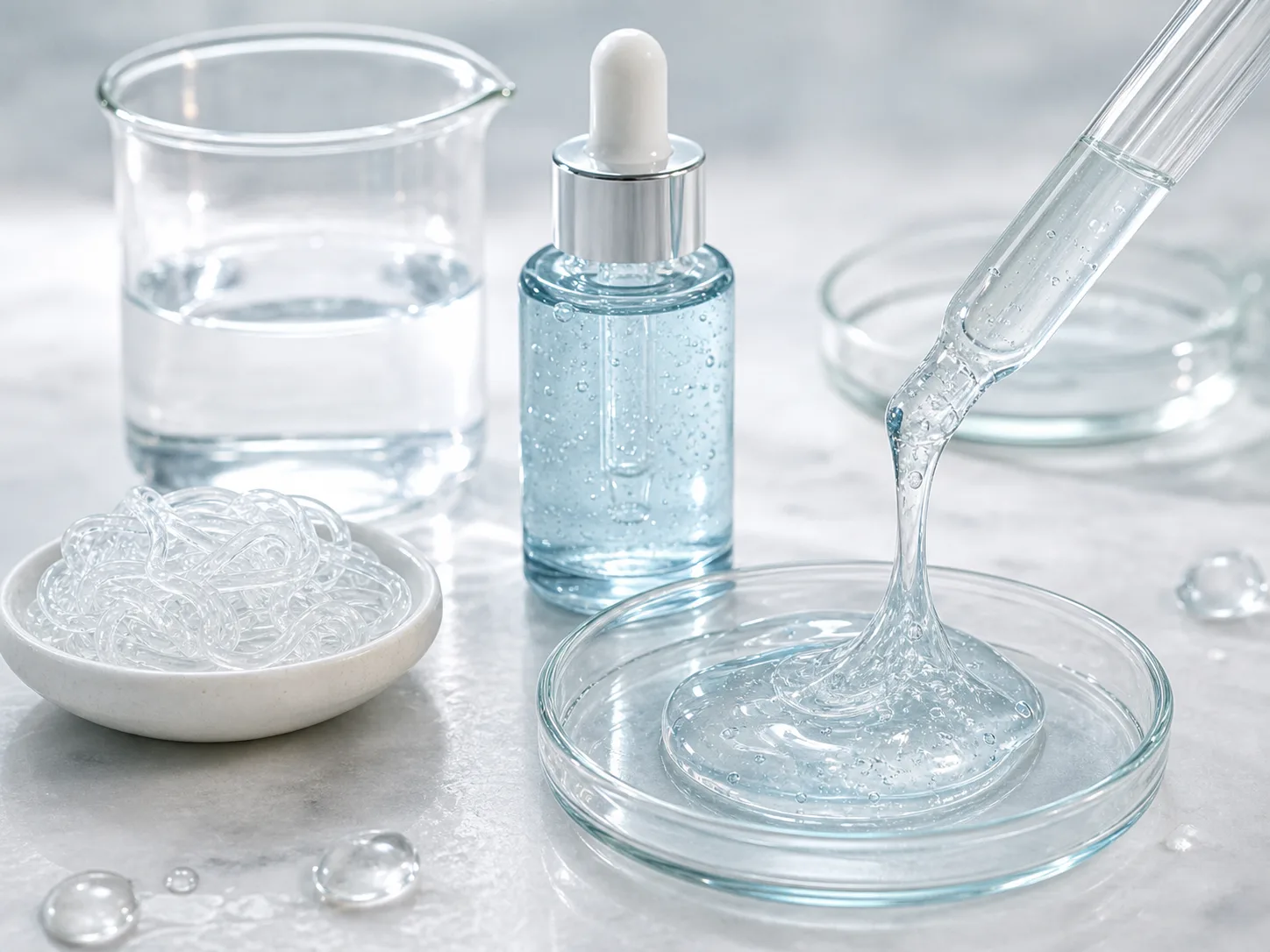
How polyglutamic acid holds moisture
Polyglutamic acid (PGA) is a polymer made from repeating glutamic acid units. Its water-attracting groups hold moisture around the chains, producing a flexible film on the skin surface. It does not exfoliate like glycolic acid.
The fastest visible effect is a smoother, more cushioned surface. Dehydration lines may look softer because the outer layer contains more water. Since much of this large polymer remains near the surface, it can leave a dewy, slightly tacky, or even tightening film as it dries. That sensory result is not the same in every formula.
Is it really five times more hydrating than hyaluronic acid?
Claims that PGA holds thousands of times its weight in water are based on particular materials and test conditions. They do not prove that a finished serum hydrates a person’s face several times better than every hyaluronic-acid product. Molecular weight, concentration, humidity, and the rest of the formula all change the outcome.
PGA and hyaluronic acid are both polymeric water binders, and formulators often combine them. Multi-weight hyaluronic acid can create different layers of hydration and texture, while PGA contributes surface film and slip. The useful comparison is how a product feels hours later—tight, comfortable, sticky, or prone to pilling—not which ingredient wins a marketing number.
Can a PGA serum replace moisturizer?
A humectant serum supplies water-binding support but may contain little oil or occlusive material. In a dry environment, that may not be enough to prevent later moisture loss. Apply a thin layer to slightly damp skin, then seal it with lotion or cream. For dry skin, follow with a moisturizer containing ceramides, squalane, shea butter, or dimethicone. For oily skin, start with a light gel cream and adjust if tightness returns.
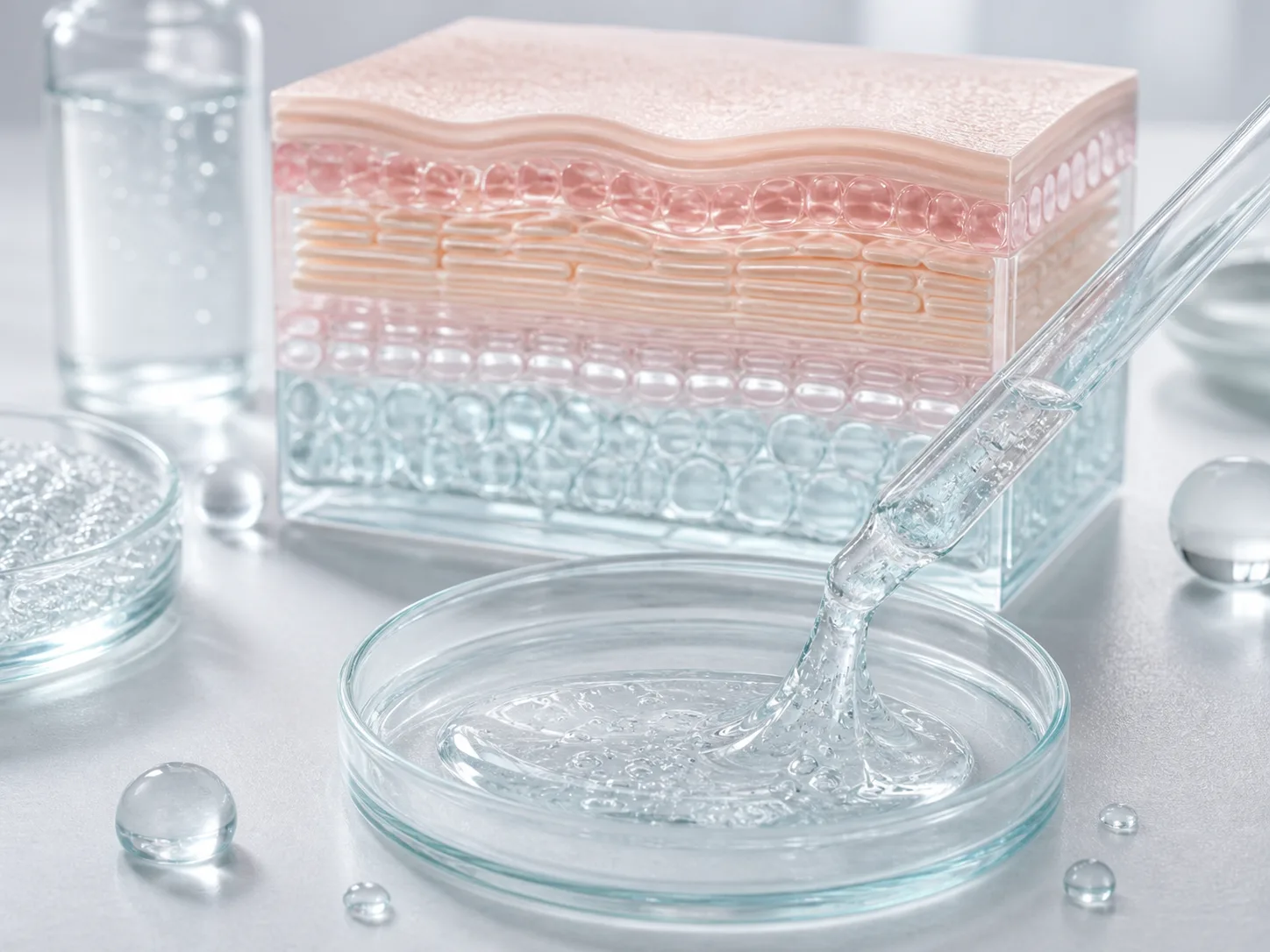
In humid weather, an oily complexion may find a PGA serum sufficient. If it makes skin feel tighter during a heated winter, the issue is more likely an incomplete moisturizing layer or a poor formula match than the simple idea that the humectant “stole” water from the skin.
Reading the label
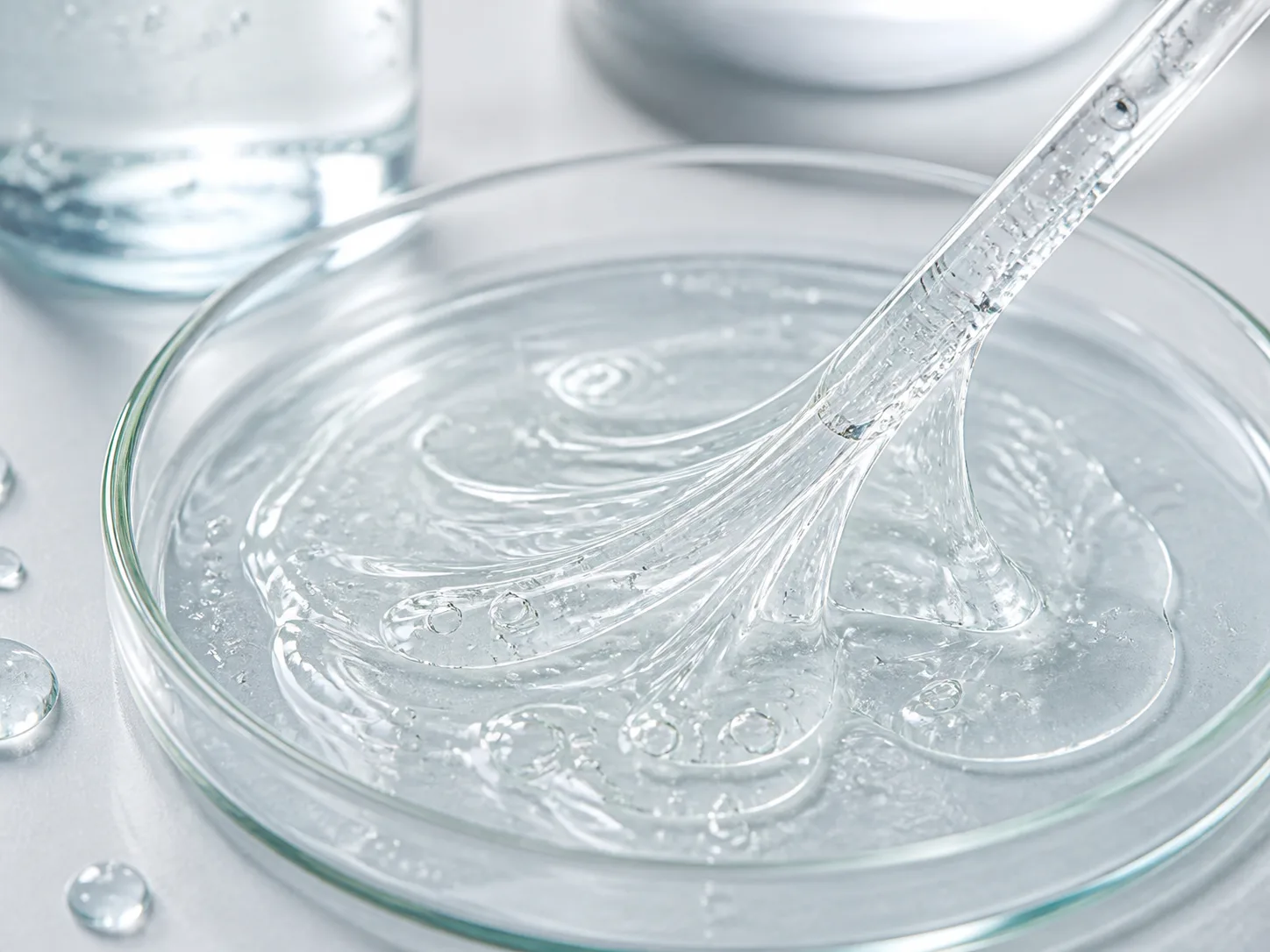
Ingredient lists use names such as Polyglutamic Acid, Sodium Polyglutamate, or Hydrolyzed Polyglutamic Acid. Hydrolysis and molecular-weight differences can affect texture and how the material interacts with the upper skin, but the INCI list rarely provides those specifications. Finished-product hydration testing is more informative when a brand publishes it.
For daytime use, test whether the serum pills under sunscreen and foundation. Spread a small amount rather than rubbing for a long time, allow it to settle, and then add the next layer. Products stacking several gums, hyaluronic acids, and film formers can feel richly hydrated yet become tacky.
Who may like it
PGA is worth trying for dehydration without a desire for heavy oil, temporary softening of fine dry lines before makeup, or dissatisfaction with the texture of a previous hyaluronic-acid serum. The main caution is formula-specific: fragrance, preservatives, or other components can still cause a reaction, while a very film-forming serum may pill or feel tight.
PGA helps keep water near the surface, where it improves comfort and smoothness. Judge it by afternoon tightness and makeup wear, not only by the wet feel of the first minute.
Sources used
- Polyglutamic Acid Skin Care BenefitsConsumer concerns and routine use
- Polyglutamic Acid for SkinMolecular-weight and HA comparison
- Poly-gamma-Glutamic Acid: Strengthening the Skin BarrierReconstructed-skin hydration evidence boundary