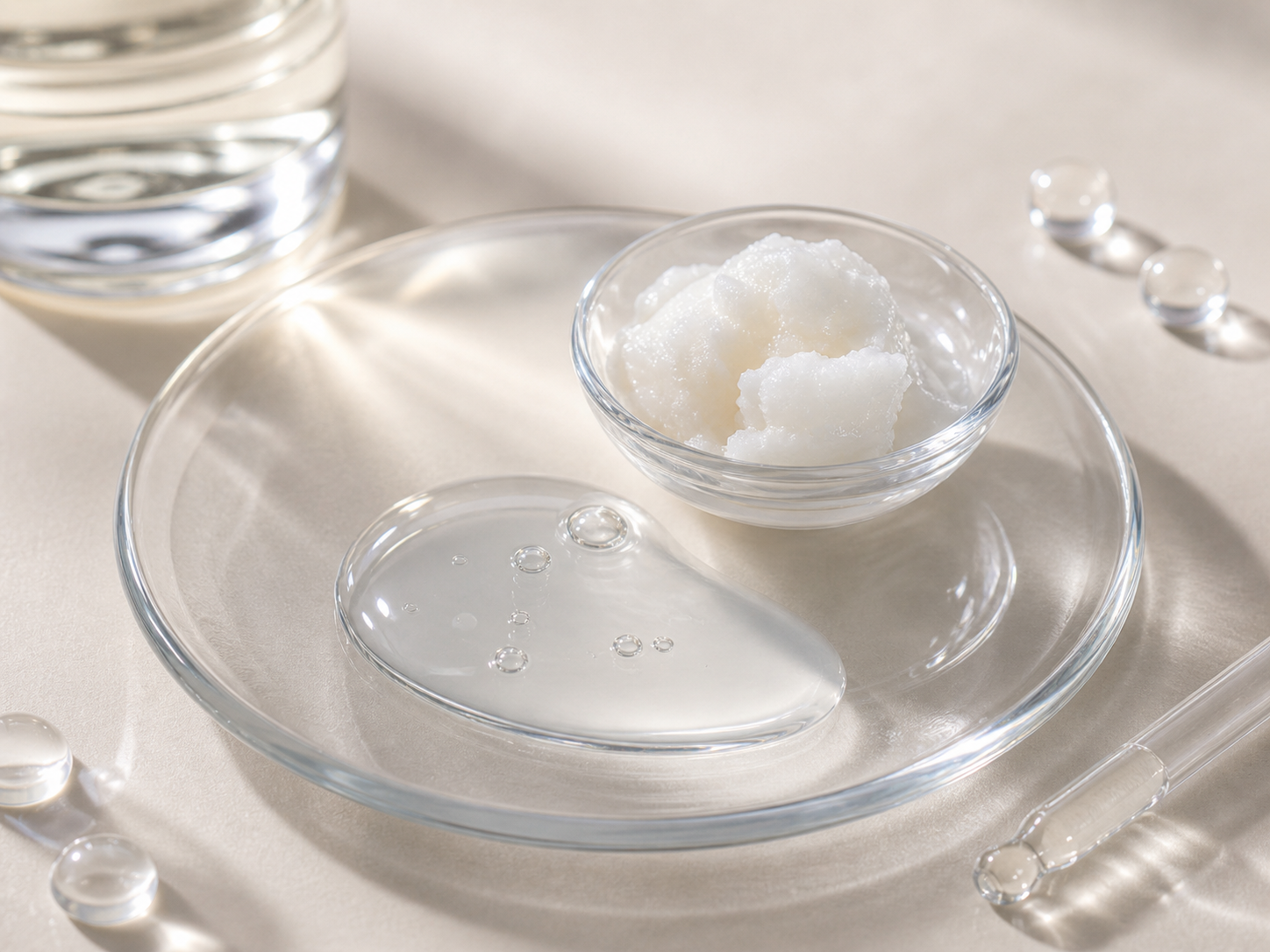
What an ampoule can do that a cream may not
A ceramide ampoule is designed for skin that feels tight after cleansing but dislikes the weight of a thick moisturizer. It spreads in a thin, watery or milky layer, adding humectants and a small amount of barrier-supporting lipid before sunscreen or cream. When the formula suits you, cheeks feel less papery, rough patches look smoother, and the skin does not dry out as quickly between washing and the next moisturizing step.
This format is particularly useful for combination skin, humid weather, or routines with several layers. It can also make retinoid or exfoliant nights more comfortable by placing hydration and lipids beneath the final moisturizer. An ampoule is not a concentrated medical repair treatment simply because the bottle is small. Its advantage is elegant layering: useful ingredients in a texture that is easy to apply evenly.
What ceramides do in the outer skin
The stratum corneum is made of flattened skin cells surrounded by organized lipids. Ceramides, cholesterol, and free fatty acids form much of this intercellular lipid structure, helping slow excessive water loss and maintain a flexible outer layer. Ceramide NP is one cosmetic ceramide built from a phytosphingosine base linked to a fatty acid. Its long lipid chains help explain why it belongs in barrier-focused formulas rather than behaving like a simple water-binding serum ingredient.
Cleansing, cold or dry air, aging, and frequent use of strong actives can leave the outer surface feeling depleted and rough. A topical ceramide product adds lipids at the surface and can improve the way dry skin holds and loses water. It does not permanently reconstruct every layer overnight, but it can make daily moisturization more effective and comfortable.
Ampoule versus cream
An ampoule usually contains more water and fewer waxes or heavy occlusives. It delivers a quick hydrated feel and fits beneath other products with less shine. A cream contains more emollient and occlusive structure, so it is better at slowing evaporation for hours. Think of the ampoule as a flexible first lipid layer and the cream as the protective top layer.
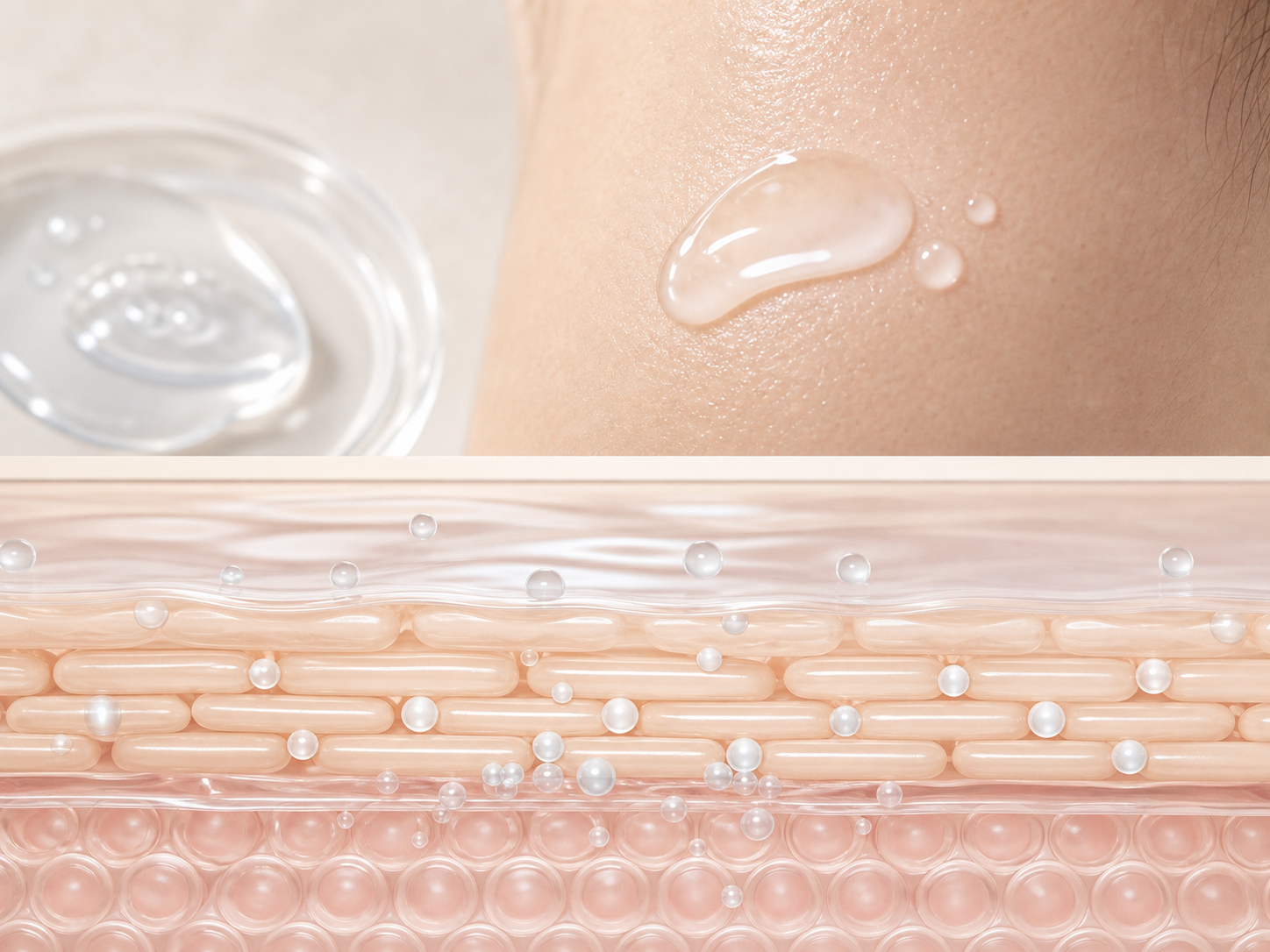
Oily skin may find that an ampoule followed by sunscreen is enough on a humid morning. Combination skin can use it over the whole face and add cream only around the mouth and cheeks. Very dry skin often needs both. Repeating five layers of a watery ampoule may create tackiness without matching the moisture retention of one sensible cream layer.
Read the supporting ingredients, not only Ceramide NP
Ceramides work within a formula. Cholesterol and free fatty acids are important companion lipids because they also occur in the stratum corneum and help form organized lipid layers. Other ceramide classes such as AP and EOP, phytosphingosine, and sphingolipids may appear in the same product. A blend can be thoughtful, but a long list does not automatically prove a superior result.
Glycerin, betaine, panthenol, and hyaluronic acid bind water and provide much of the immediate plump feel. Squalane, dimethicone, lightweight esters, and plant oils soften the surface and slow evaporation. If the ampoule contains little to seal moisture, plan to place a moisturizer above it. Fragrance-free or low-fragrance formulas are preferable when the skin is already stinging from an active routine.
Ceramides are often used at low levels and can be challenging to disperse in water. Liposomes, capsules, and lamellar-emulsion language may describe how a brand handles that problem. Those terms are not guarantees, but a stable, evenly spreading formula matters. Ingredient-list order alone cannot tell you the exact ceramide level or whether it is delivered well.
How to layer it without pilling
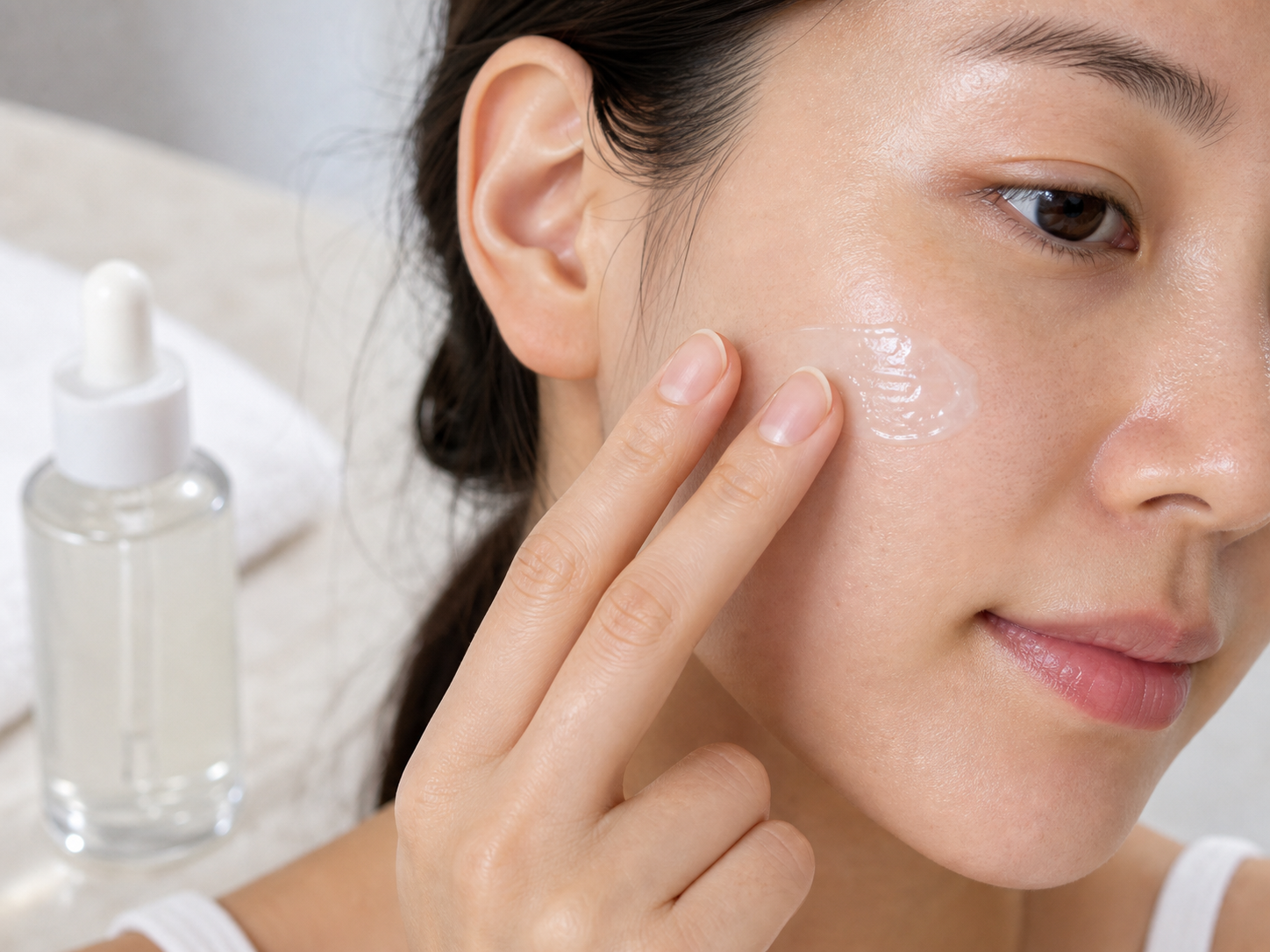
After cleansing, apply watery toner or essence first. While the skin is slightly damp, spread one or two drops of the ampoule over the face and press rather than rubbing until it foams. Add a second small drop only to areas that still feel tight. Give the layer a moment to settle before applying cream or sunscreen. Too much product is a common reason for stickiness and pilling.
In the morning, keep layers thin and let sunscreen provide some of the final film. At night, follow the ampoule with a cream, especially after a retinoid or acid. If your skin is actively burning or peeling, pause the irritating active rather than expecting the ceramide ampoule to neutralize it. Barrier support works best alongside a routine that stops creating new irritation.
Patch test if the formula is new, particularly when it contains ferments, botanical extracts, or fragrance. Ceramide itself is generally used for compatibility, but any complete product can cause a reaction.
Who benefits most
A ceramide ampoule suits someone who has post-cleansing tightness, seasonal roughness, or dehydration under makeup but finds traditional barrier creams greasy. It is also useful for distributing hydration across the whole face while reserving richer cream for dry zones. The clearest signs of success are not a dramatic overnight glow. They are less tightness later in the day, fewer dry flakes around makeup, and a routine that remains comfortable after regular cleansing.
If skin is cracked, intensely itchy, or persistently inflamed, an ampoule may be too light and the problem may need professional care. For ordinary dryness, judge the product as part of a system: water-binding ingredients below, compatible lipids in the formula, and enough cream above to retain them. That combination matters more than the prestige of the ampoule label.