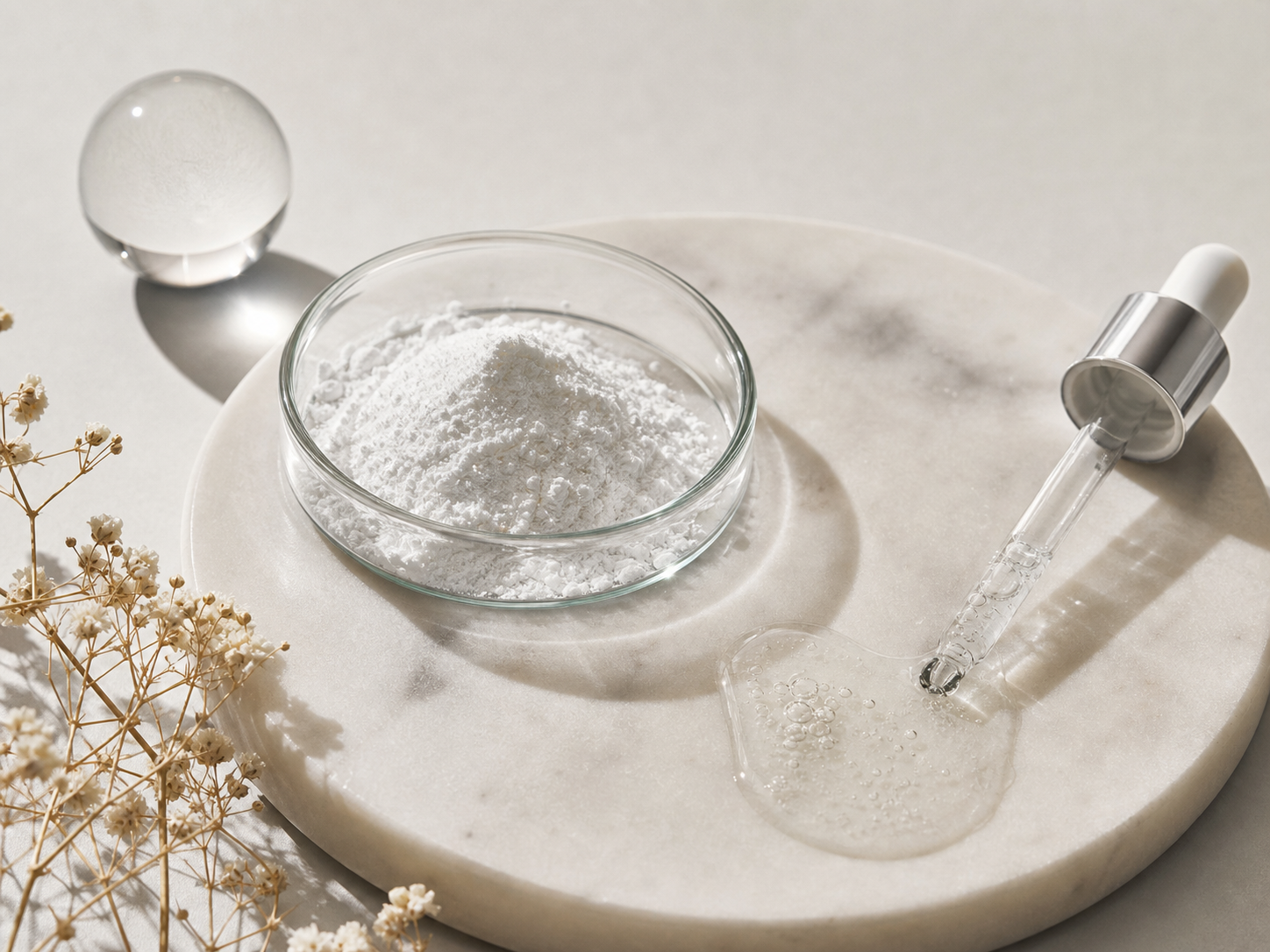
Why glutathione appears in tone-care serums
Glutathione is a small tripeptide made from glutamate, cysteine, and glycine. It is well known for its role in antioxidant systems, which is why cosmetic formulas use it in products aimed at skin that looks dull, uneven, or tired. You may also see the names GSH or glutathione on product information.
There is more behind the tone-care association than a catchy label. In a small split-face, placebo-controlled study, a 2% oxidized glutathione lotion used for ten weeks was associated with changes in brightness-related measurements. That is useful context, not a promise that every serum will fade dark spots. The study used one form, one concentration, and one lotion format.
What it may add to a routine
The most realistic goal is a complexion that gradually looks less dull and more even, not an overnight change in skin colour. Sun exposure, dryness, and irritation can all make tone look less uniform. An antioxidant serum can be one supportive step while sunscreen prevents the same triggers from undoing that work.
Glutathione is often combined with vitamin C, niacinamide, or tranexamic acid. Vitamin C is a common choice for a light antioxidant routine. Niacinamide is often useful when tone care and barrier comfort are both priorities. Tranexamic acid appears in more targeted discoloration formulas. The combination tells you more about a product than one hero ingredient alone.
Choosing the texture
A watery spray or fluid serum can be easy under sunscreen and makeup, especially for oily or combination skin. Check whether it contains enough humectants to avoid a tight finish, and pay attention to alcohol or fragrance if your skin stings easily. A cushioned ampoule can suit dry skin, but it should still layer cleanly under SPF rather than pill.
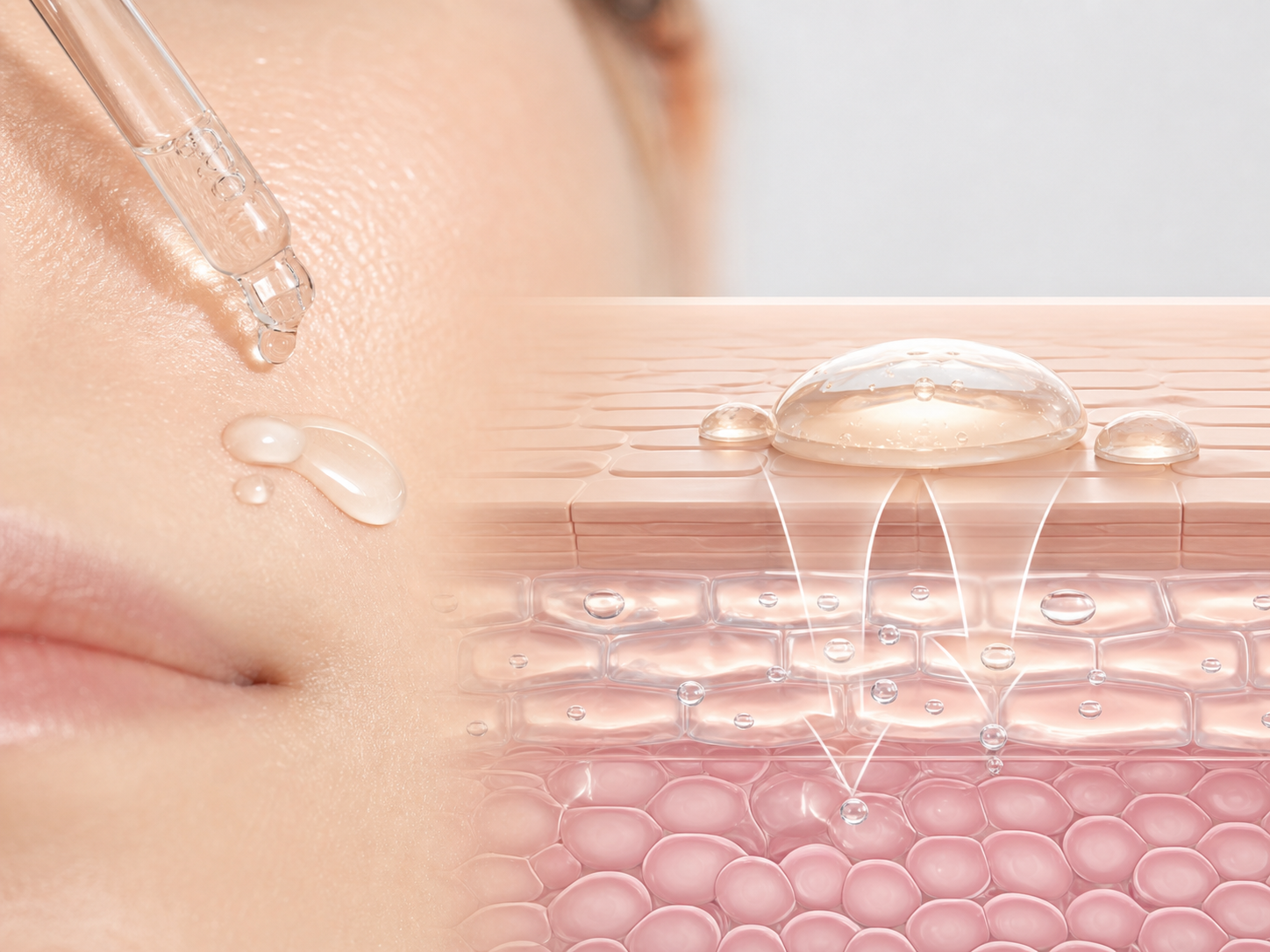
Look for supportive ingredients such as glycerin, panthenol, or hyaluronic acid alongside glutathione. Those ingredients do not make a serum more glamorous, but they often decide whether you can use it consistently.
How to use it
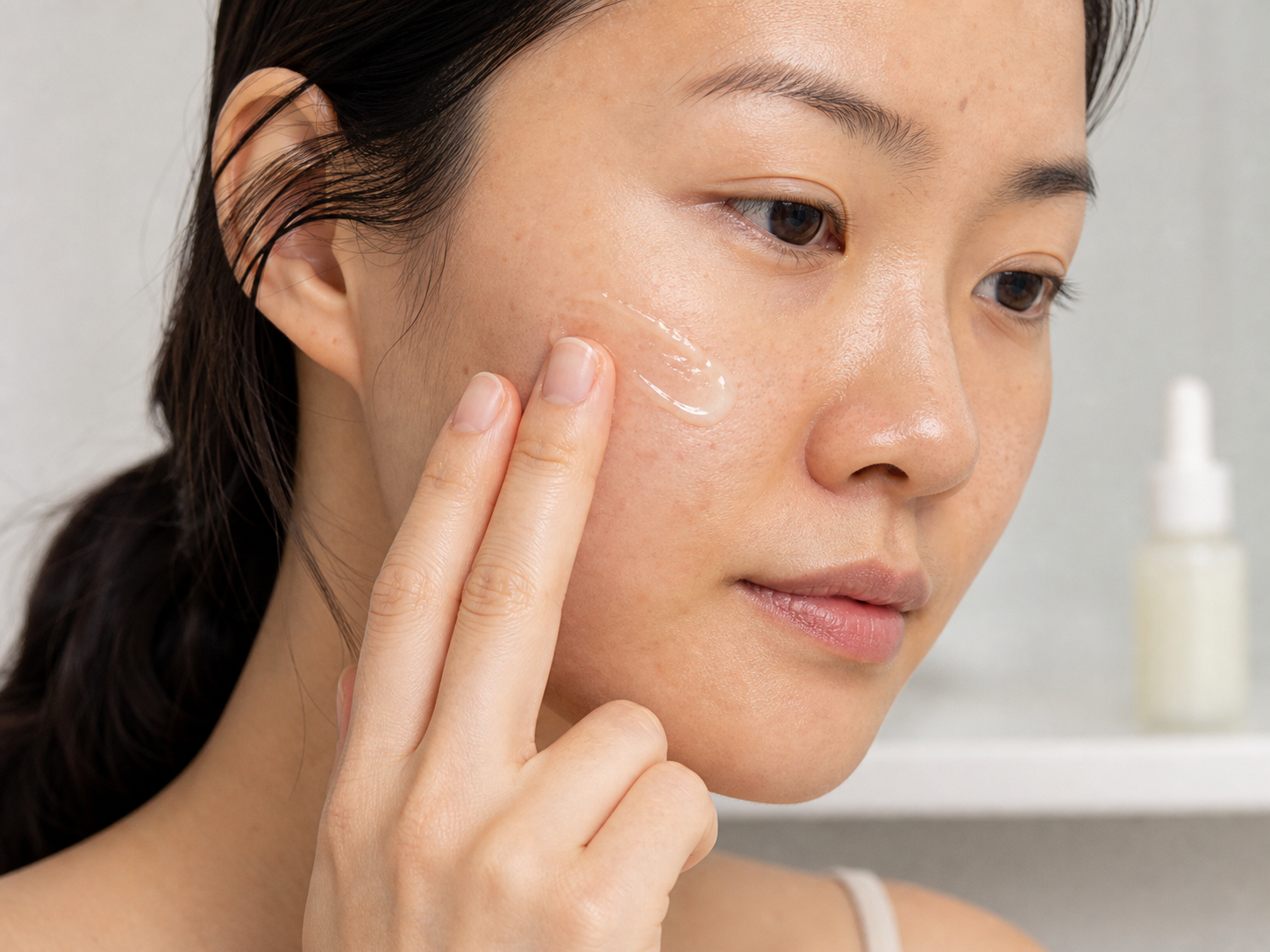
Apply after cleansing and any watery toner, then use sunscreen in the morning. If you already use vitamin C or exfoliating acids, introduce the glutathione serum on its own first. Once your skin is comfortable, decide whether the formulas layer well; starting several active products at once makes irritation much harder to trace.
Repeated burning or itching is a reason to stop and reassess the formula. It may be fragrance, alcohol, another active, or the overall combination rather than glutathione itself.
Keep the claim in proportion
This article is about a topical cosmetic serum, not injections or oral supplements. A glutathione serum can be a sensible antioxidant and tone-care addition, but sunscreen, the rest of the formula, and steady use matter far more than a dramatic ingredient promise.
Sources
- 2% oxidized glutathione lotion study: https://pmc.ncbi.nlm.nih.gov/articles/PMC4207440/
- Evidence review on glutathione and skin lightening: https://pubmed.ncbi.nlm.nih.gov/27088927/
- Consumer cosmetic context: https://www.paulaschoice.com/expert-advice/skincare-advice/ingredient-spotlight/glutathione-for-skin.html