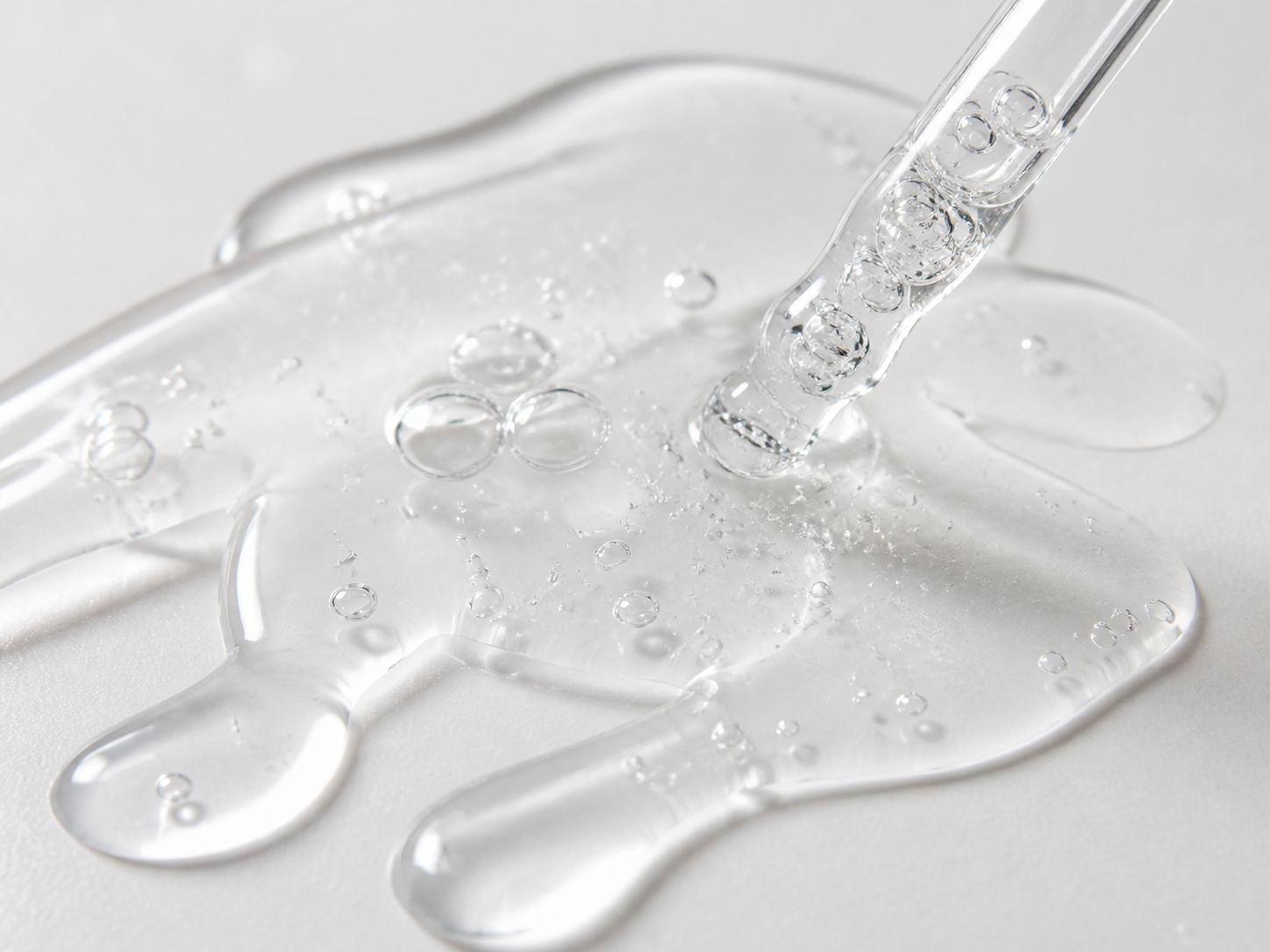
What an ampoule can change
A hyaluronic acid ampoule is most useful when skin feels tight after cleansing, looks papery under makeup, or becomes uncomfortable in heated and air-conditioned rooms. It binds water in the outer skin layer, so rough edges of dry skin cells lie flatter and the surface reflects light more evenly. The immediate result can be softer skin, less obvious dehydration lines, and a temporarily fuller look. It does not rebuild lost facial volume or erase a deep wrinkle, but the improvement in dry texture is real and often visible within minutes.
Ampoules sit between watery toners and creams. They deliver a concentrated humectant layer without much oil, which suits combination skin that feels dehydrated but dislikes heavy balms. A good formula should leave the cheeks comfortable later in the day, not merely create a glossy film for the first ten minutes.
What the ingredient is doing
Hyaluronic acid is a glycosaminoglycan made from repeating sugar units. It occurs naturally in the body and has a strong affinity for water. Cosmetic labels may list Hyaluronic Acid, Sodium Hyaluronate, Hydrolyzed Hyaluronic Acid, Sodium Acetylated Hyaluronate, or several of these together. Larger polymers tend to form a flexible hydrating film on the surface. Smaller or hydrolyzed forms are designed to distribute through the outer skin layer more readily, although a low-molecular-weight label does not prove deep delivery.
Claims such as eight types or multi-molecular hyaluronic acid can describe a thoughtful blend, but the number is not a performance score. Glycerin, propanediol, betaine, panthenol, and beta-glucan may contribute as much to daily comfort. Preservatives, thickeners, and the amount of polymer also determine whether the ampoule feels silky, stringy, tacky, or prone to pilling.
Why it can feel tight after drying
Hyaluronic acid attracts and holds water; it is not an occlusive oil layer. In dry air, a watery ampoule used alone can dry down to a taut film while moisture continues to evaporate from the skin. Applying more and more serum may increase stickiness without solving the tightness. The practical answer is to use a thin layer and follow with a moisturizer that contains emollients or occlusives. Ceramides, squalane, fatty alcohols, dimethicone, and plant oils can help slow water loss.
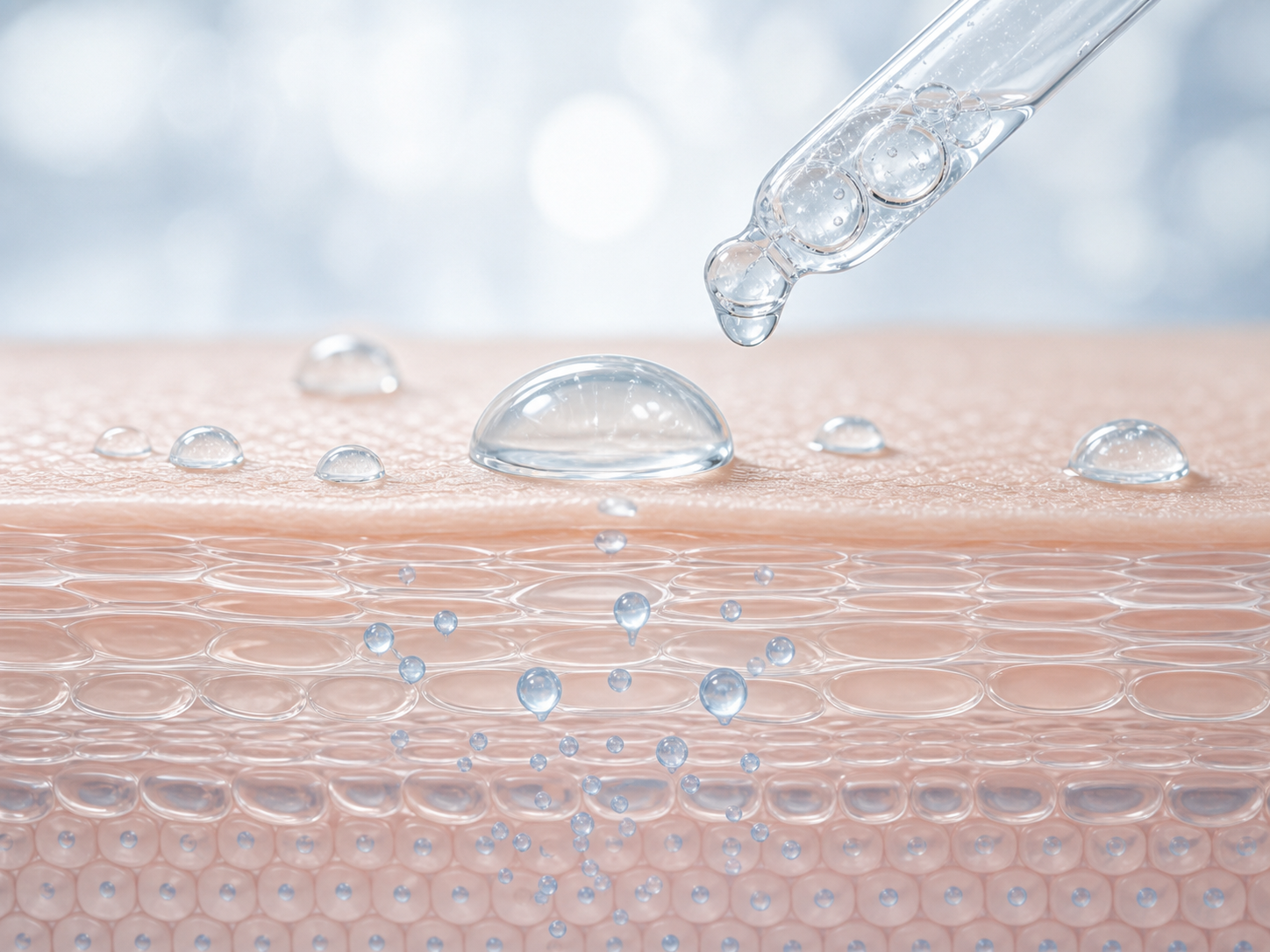
Apply two or three drops while the face is slightly damp rather than dripping wet. Press the product over the face instead of repeatedly rubbing it. Oily skin may need only a light gel cream on top; dry skin usually does better with an emulsion or cream containing both humectants and lipids. If the cheeks are the only dry area, add a second drop there instead of coating the entire T-zone.
Choosing the right texture
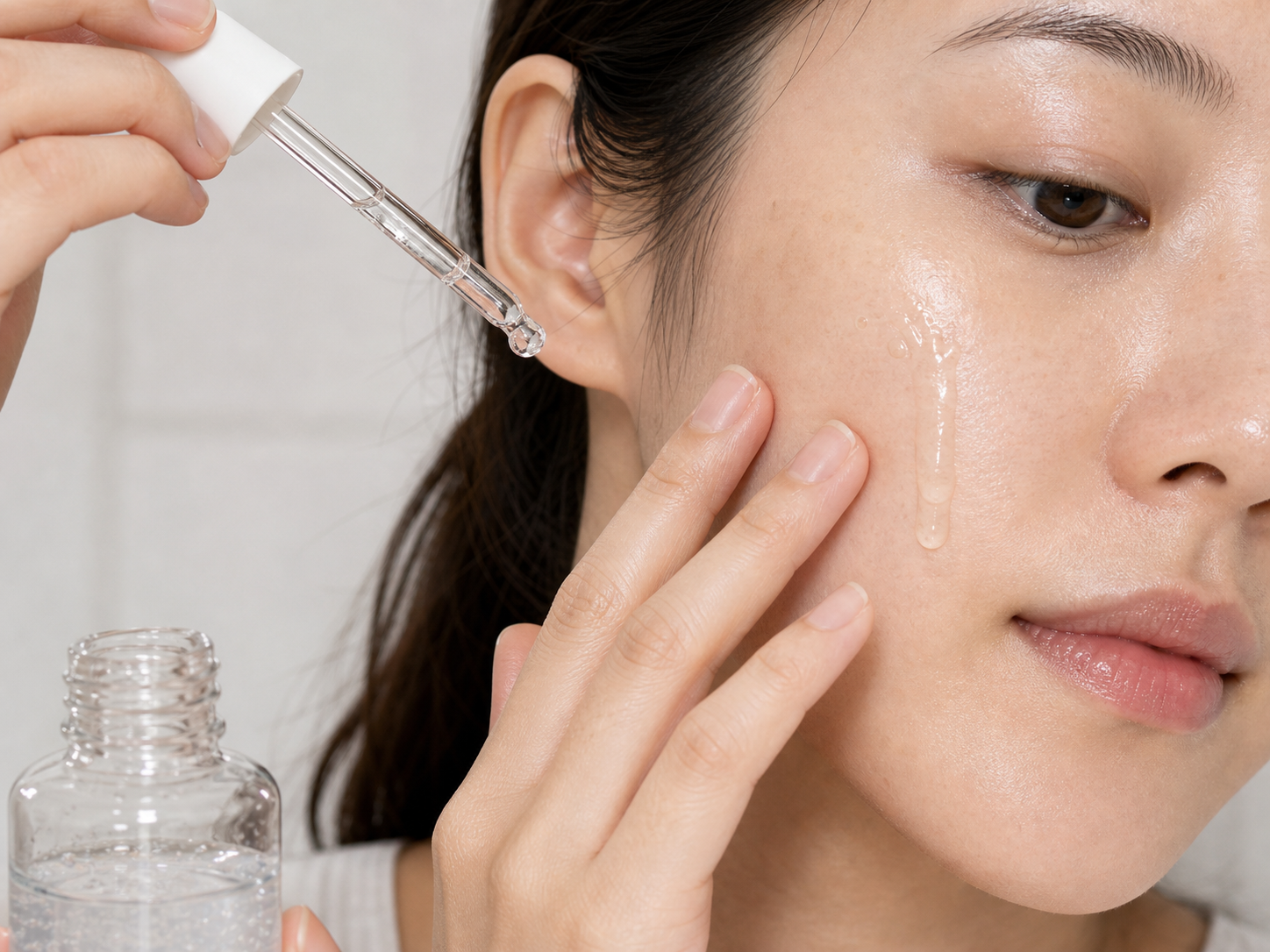
A fluid ampoule layers easily under sunscreen and is less likely to roll into flakes. It may, however, feel too brief for very dry skin. A thick, elastic serum creates a more noticeable surface film and instant plumping effect, but too much can make sunscreen or foundation pill. This is usually a film-load problem rather than a dangerous ingredient conflict. Reduce the amount, remove a redundant toner, and allow each layer to settle.
Look beyond the hero ingredient. A formula with glycerin, panthenol, and a modest amount of squalane may stay comfortable longer than a clear gel built mostly around polymer thickeners. Alcohol-rich formulas can feel refreshingly weightless but may not suit skin that is already flaky. Fragrance is not necessary for hydration and is easy to avoid if reactive skin is a concern.
Fitting it into a routine
In the morning, use ampoule, moisturizer, then broad-spectrum sunscreen. If makeup rolls off, cut the ampoule amount in half before replacing the whole routine. At night it can be used after a retinoid or exfoliant to add water, followed by cream. It can reduce the dry feel of an active routine, but it cannot repair ongoing irritation while the irritating product is still being overused. Persistent burning, scaling, or redness is a reason to pause the active product and simplify the routine.
Judge the ampoule after a week of consistent use. Useful signs are less tightness after washing, fewer dry patches catching foundation, and cheeks that remain comfortable through the afternoon. A shiny, sticky finish without those changes is not better hydration; it is simply a texture that may not suit your routine.