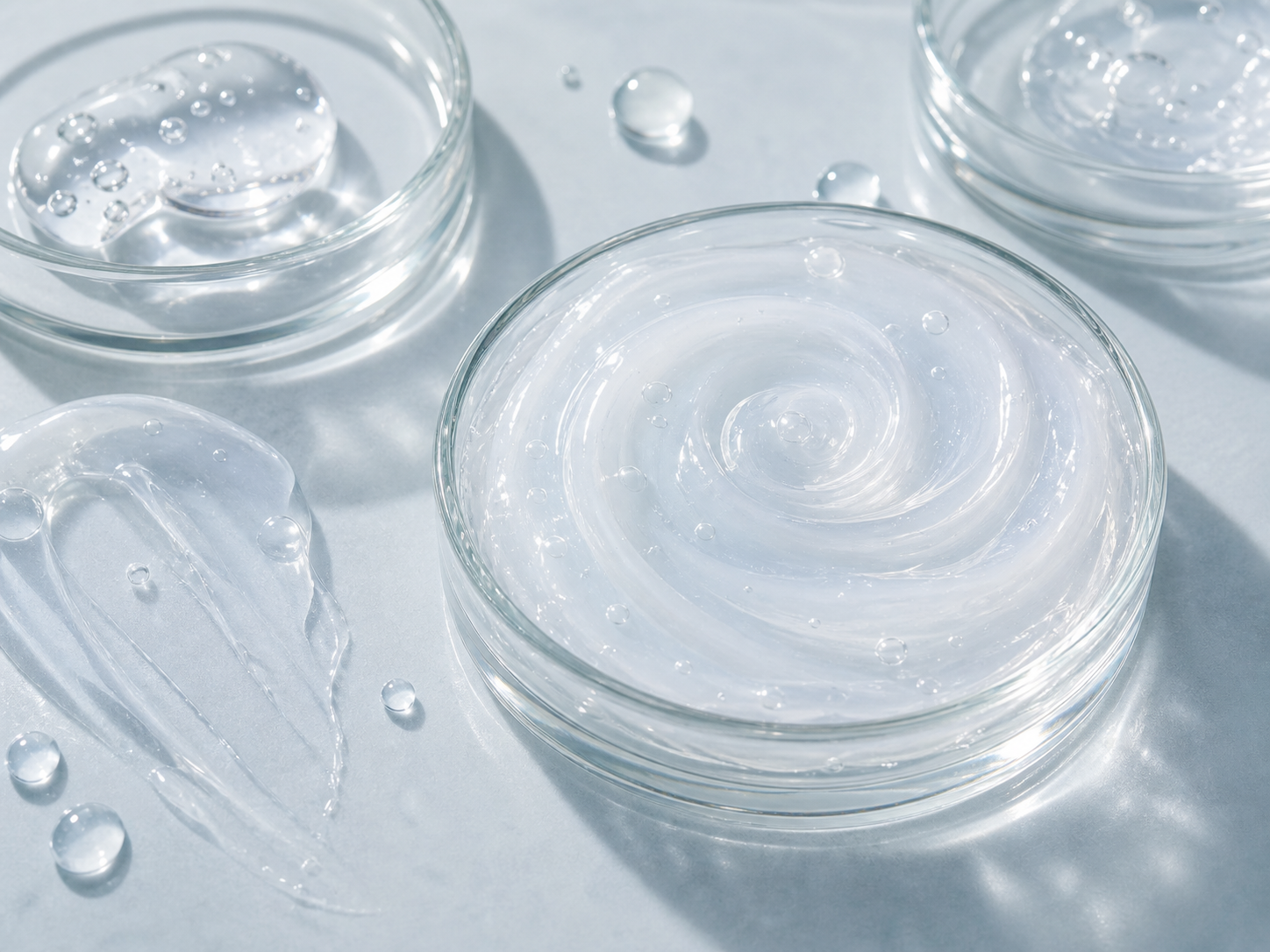
Why a cream can work better than a serum alone
A hyaluronic acid cream handles two parts of moisturization at once. Humectants such as hyaluronic acid and glycerin bind water in the outer skin layer, while oils, silicones, fatty alcohols, and waxes reduce how quickly that water escapes. This matters when a serum feels pleasant at first but the cheeks become tight again by lunchtime. A well-balanced cream can leave dry skin softer for longer and reduce the rough, crinkled look caused by dehydration.
When the outer layer contains more water, it becomes more flexible and reflects light more evenly. Fine dehydration lines around the eyes and mouth may look less sharp, and foundation is less likely to catch on flakes. This is temporary plumping from moisture, not replacement of collagen or correction of deep wrinkles. Even so, it is a meaningful cosmetic benefit for skin that looks tired primarily because it is dry.
Hyaluronic acid inside an emulsion
Hyaluronic acid is a repeating sugar polymer with a strong ability to associate with water. High-molecular-weight forms are used mainly for surface film formation and immediate hydration; smaller and hydrolyzed forms are intended to spread through the outer skin layer. A jar may advertise multiple molecular weights, but the cream base often has a greater effect on comfort and wear time than the number of hyaluronic acid variants.
Glycerin, urea, betaine, and panthenol expand the humectant system. Ceramides, cholesterol, fatty acids, squalane, shea butter, petrolatum, and dimethicone affect softness and moisture retention. The best formula is therefore not necessarily the one with the most dramatic hyaluronic acid claim. It is the one that keeps skin comfortable without cloggy heaviness, pilling, or an unpleasant film.
Gel cream, lotion, or rich cream
A transparent gel cream contains a high water phase and relatively little oil. It spreads quickly, feels cooling, and works well for oily or combination skin, humid weather, and daytime wear under sunscreen. Some gels rely heavily on polymer thickeners; they can feel tacky or allow dry cheeks to tighten again after a few hours. A gel with a little dimethicone, squalane, or lightweight ester often lasts better than a water-only texture.
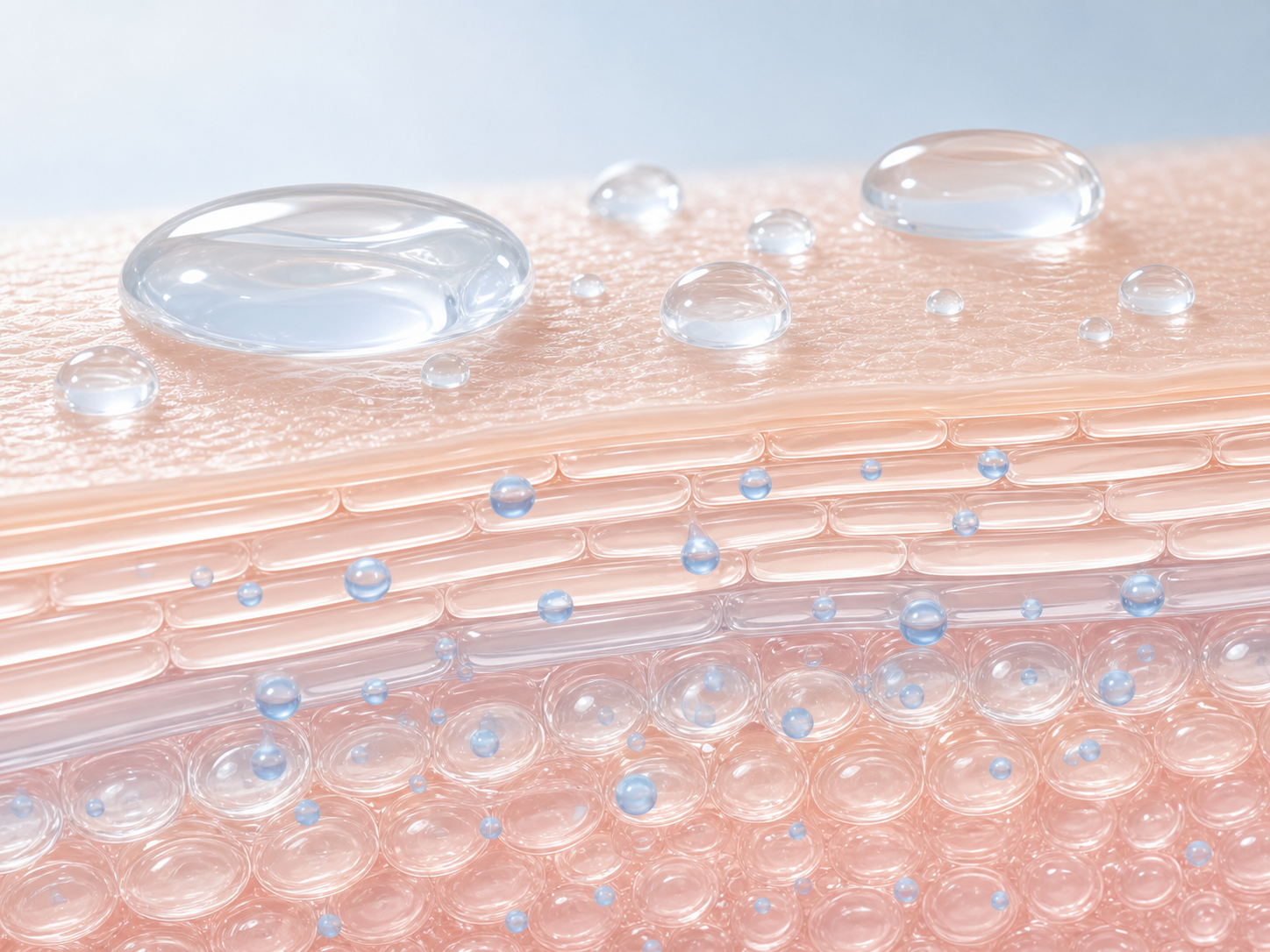
A lotion or soft emulsion offers a middle ground. It provides more emollience than a gel but is easier to layer than a dense cream. This is often a useful choice for dehydrated, acne-prone skin that needs water and a modest lipid layer. Rich opaque creams and balms contain more occlusive material and suit very dry skin, winter weather, or nighttime use. They can be too shiny on the T-zone, so applying them only to the cheeks is a reasonable option.
Dry skin should look for a combination of hyaluronic acid with ceramides, cholesterol, fatty acids, squalane, or occlusive silicones. Oily skin does not have to avoid all oils; a light emulsion may control tightness better than repeatedly layering a sticky gel. Reactive skin may benefit from fragrance-free formulas without exfoliating acids or essential oils. Hyaluronic acid itself is generally well tolerated, but the complete formula determines the experience.
How much to apply
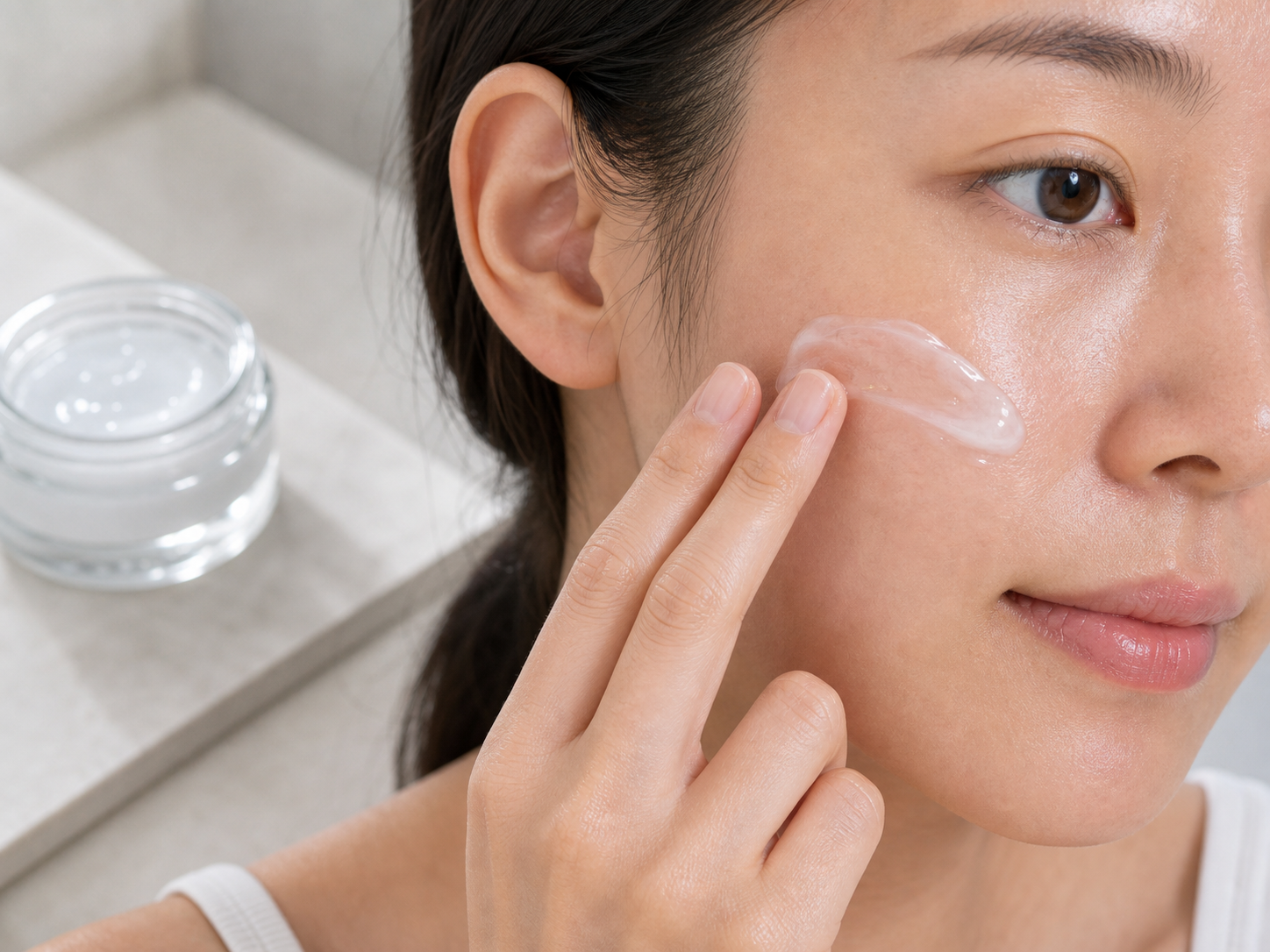
Use enough to form a thin, even layer rather than a visible mask. On slightly damp skin, a small amount spreads farther and traps some of the water left after cleansing. If a hydrating toner or serum is already in the routine, the cream does not need to repeat every step at maximum quantity. Too many products containing similar gums and film formers can create pilling without adding lasting moisture.
In the morning, allow the cream to settle before sunscreen. If sunscreen slides or balls up, reduce the cream amount or reserve the rich formula for nighttime. At night, apply it after a retinoid or exfoliant to reduce dryness. For very dry patches, a small amount of petrolatum over the cream can further reduce evaporation; acne-prone users may prefer to limit this to the lips, nose corners, or flaky spots.
How to tell whether it is working
Do not judge only by the glow immediately after application. Notice whether the face feels less tight after cleansing, whether the cheeks remain flexible in the afternoon, and whether makeup sits more evenly. A suitable cream should improve these practical signs without causing persistent itch, burning, or a crop of new clogged bumps.
If the skin still feels dry beneath a greasy layer, the formula may have plenty of occlusion but not enough water-binding ingredients, or the routine may be irritating the barrier faster than moisturizer can compensate. If a gel feels fresh but dryness returns quickly, move to an emulsion with a modest lipid phase. Hyaluronic acid is useful, but the water, lipids, and texture surrounding it determine whether that usefulness lasts.