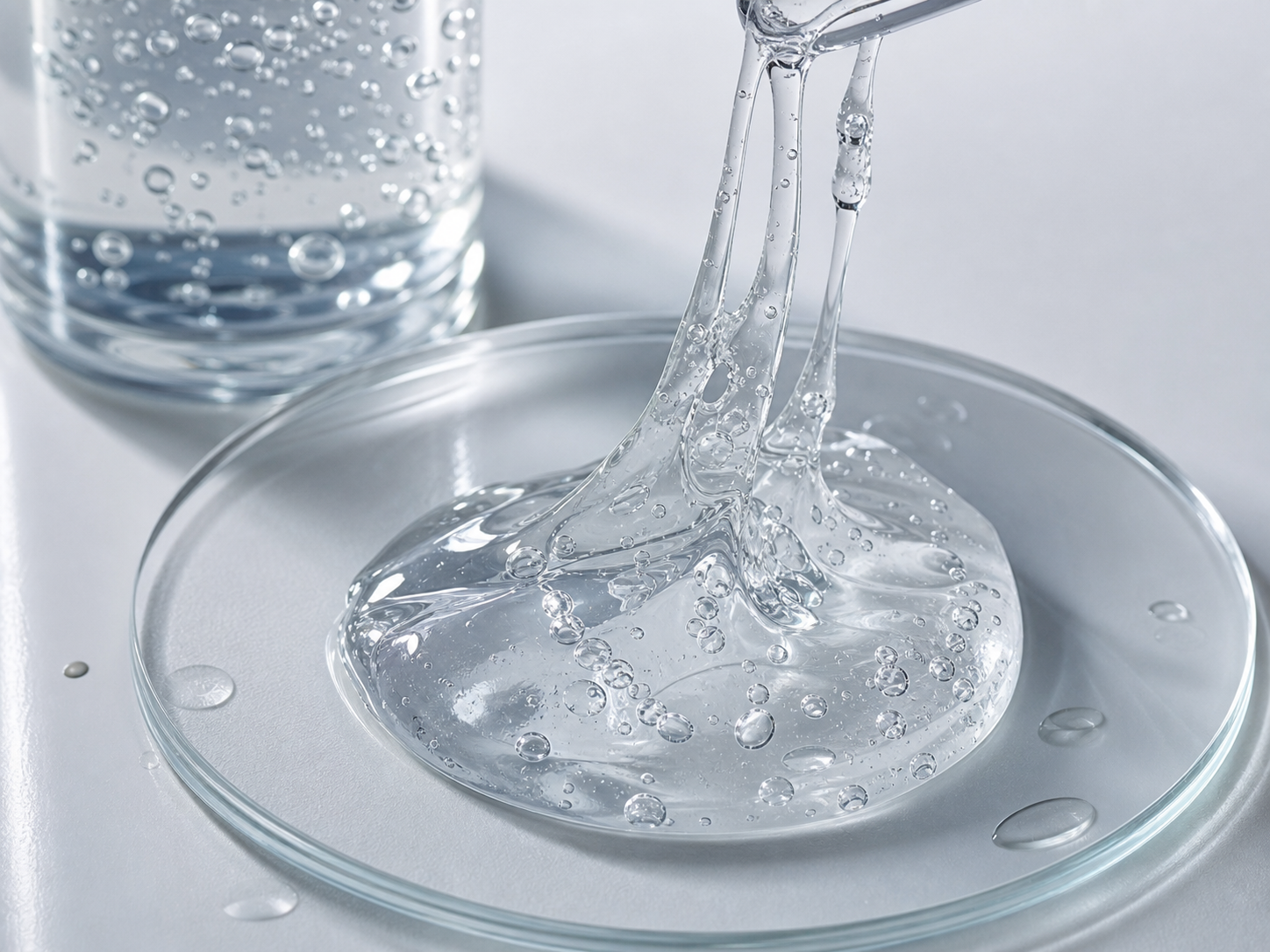
What a hydrating toner is good at
A hyaluronic acid toner is a fast way to replace some of the water that begins evaporating after cleansing. Used before the face becomes tight, it softens the outer layer, makes dry flakes less rigid, and helps the next serum or cream spread evenly. The effect is straightforward rather than transformative: skin feels less stiff, looks smoother under makeup, and may remain more comfortable if the water is sealed in with moisturizer.
Most of the work comes from the complete water-based formula. Hyaluronic acid is joined by humectants such as glycerin, propanediol, betaine, panthenol, or beta-glucan. Hyaluronic acid itself is a repeating sugar polymer that associates with water and forms a flexible surface film. Sodium Hyaluronate is its salt form; Hydrolyzed Hyaluronic Acid refers to smaller fragments. Multiple forms can improve the feel of a formula, but the count on the bottle does not tell you how hydrating the finished toner will be.
Hydrating toner is not exfoliating toner
The word toner covers very different products. An exfoliating toner uses acids to loosen dead surface cells, while a hydrating toner mainly supplies water and humectants. A product containing glycolic, lactic, or salicylic acid should not be treated like a bland hyaluronic acid essence and layered repeatedly. Alcohol-heavy or strongly fragranced formulas may also feel fresh at first but become uncomfortable on dry, reactive skin.
For hydration, wiping the face over and over with a cotton pad offers little advantage. Friction can make the cheeks and sides of the nose red, especially after cleansing. Pour a small amount into the palm and press it over the face. If a pad is preferred, saturate it well and press briefly rather than scrubbing. Toner pads with textured embossing are convenient, but the rough side is unnecessary when the goal is simply adding moisture.
One layer, three layers, or seven
One thin layer can do the job. If it disappears immediately and the cheeks still feel tight, add a second light layer. Beyond that, additional toner often increases tackiness more than lasting hydration. Hyaluronic acid and thickening gums dry into films; several films stacked together can cause sunscreen and foundation to roll into crumbs. This is especially common with viscous essence toners.
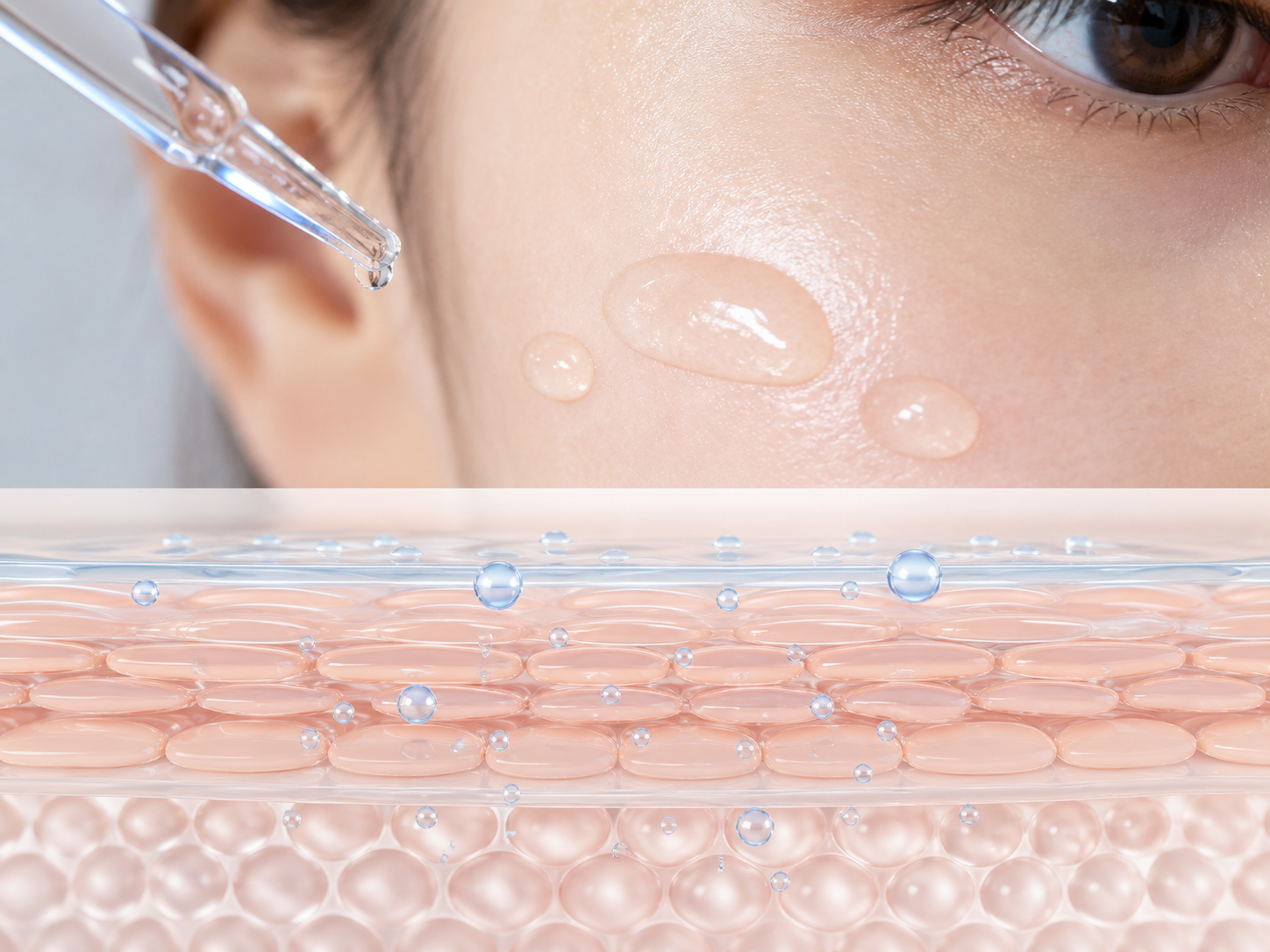
Instead of applying seven layers, stop after one or two and add an appropriate moisturizer. Hyaluronic acid binds water but does not create the same evaporation-resistant layer as oils, silicones, or waxes. Combination skin may need only a gel cream. Dry skin often needs an emulsion containing ceramides, squalane, fatty acids, or dimethicone. This shorter routine is usually more comfortable and less likely to pill.
Choosing between watery and essence textures
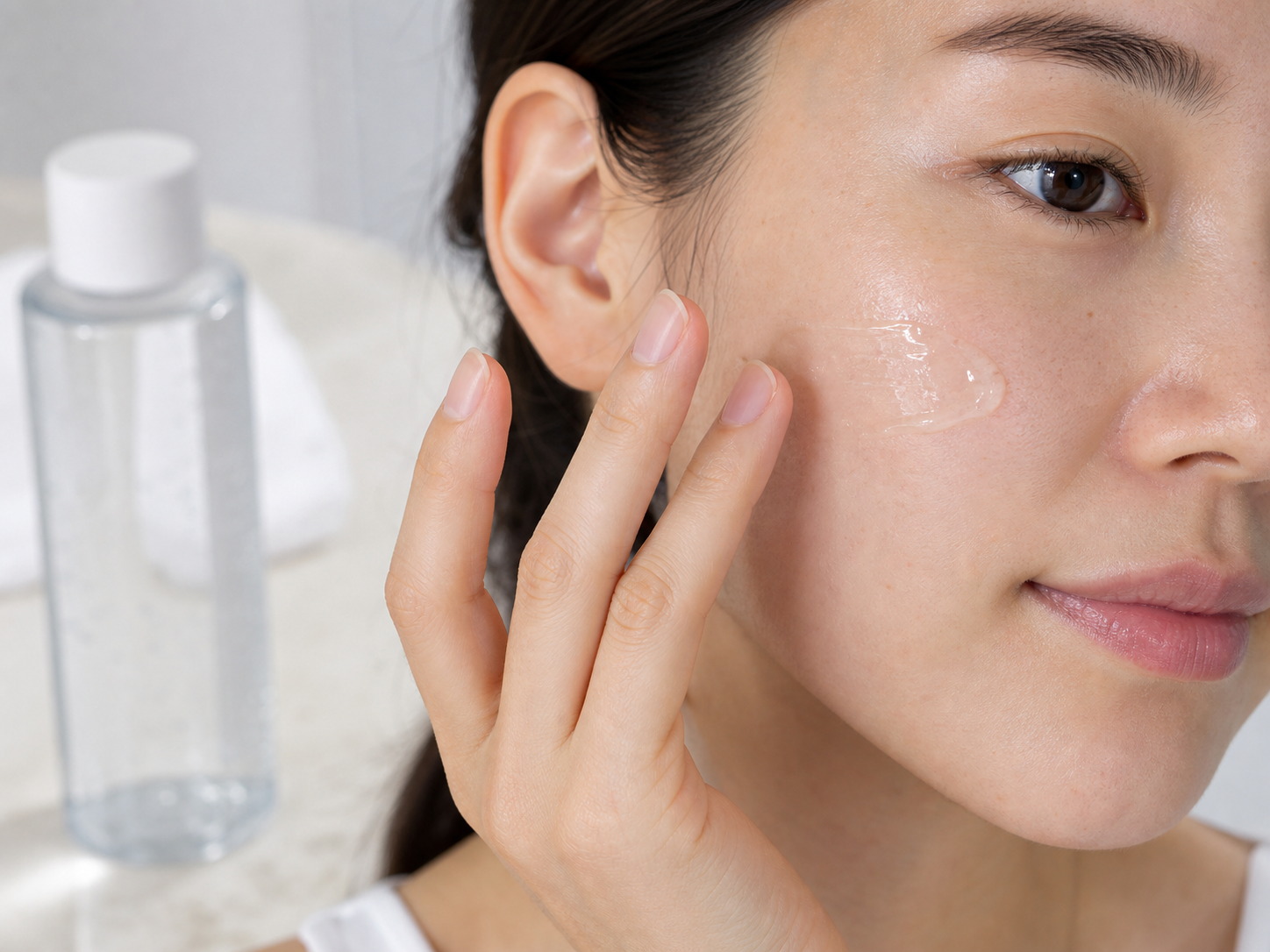
A watery toner spreads quickly, layers easily, and leaves little residue under sunscreen. It is practical for oily skin and humid weather, though a formula with few humectants may feel too fleeting for dry skin. A thicker essence toner leaves a more noticeable cushioning film and can replace a separate serum. It is useful at night or in dry climates, but applying too much can feel sticky. Texture is not evidence that one product penetrates more deeply than another.
Dry skin can look for glycerin, betaine, panthenol, beta-glucan, and several compatible humectants rather than hyaluronic acid alone. Oily skin may prefer a low-residue formula and use more moisturizer only on the cheeks. Reactive skin should start with fragrance-free toner without acids or essential oils. If even water and bland products sting, adding more toner is unlikely to help; simplify the routine and allow irritation to settle.
Using it morning and night
In the morning, apply toner to clean or lightly rinsed skin, follow with a small amount of moisturizer if needed, and finish with broad-spectrum sunscreen. If makeup pills, reduce the toner quantity and let each layer settle. At night, toner can precede a treatment serum and cream. It can be used on retinoid or exfoliation nights, but it will not cancel irritation caused by using those products too often.
Facial mists behave similarly. Spraying water onto the face and allowing it to evaporate does not provide lasting hydration. Press the mist in and follow with a thin emollient layer in very dry conditions. A toner is working when cleansing tightness decreases, the next product spreads without dragging, and dry patches are less visible later in the day—not merely when the skin looks wet immediately after application.