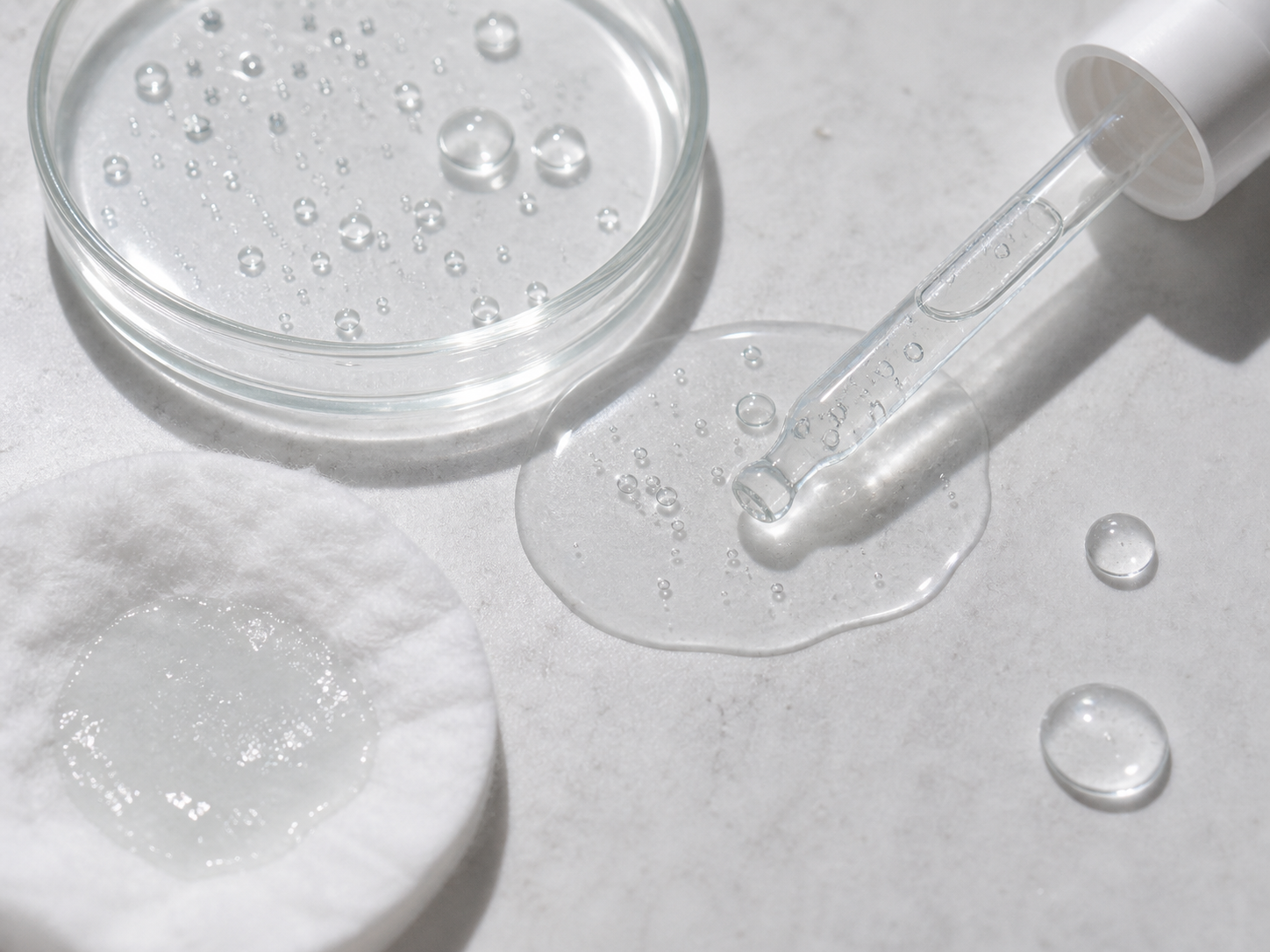
The marks it is meant to address
Tranexamic acid serum is designed for brown post-acne marks, sun-triggered patches, and areas where excess pigment makes the complexion look uneven. It does not exfoliate the surface for an instant brightening effect. Instead, topical tranexamic acid is studied for reducing signals that encourage melanin production after ultraviolet exposure or inflammation. Existing pigment must still move upward with normal skin turnover, so the change is gradual.
Brown and red marks need to be distinguished. A flat brown or gray-brown spot after a breakout is more consistent with post-inflammatory hyperpigmentation. A pink, red, or purple mark often has a stronger vascular component and may not respond in the same way. New acne also needs its own treatment; a brightening serum cannot keep pace if fresh inflamed lesions continually create new marks.
How tranexamic acid affects pigmentation
Tranexamic acid can interfere with the conversion of plasminogen to plasmin and with downstream communication between skin cells and melanocytes. This is relevant because ultraviolet exposure and inflammation can amplify signals involved in pigment production. The ingredient does not bleach melanin already sitting in the skin. It is better understood as helping reduce repeated overproduction while existing pigment gradually clears.
Studies of topical products report improvement in melasma and post-inflammatory pigmentation, but formulas, concentrations, treatment periods, and companion ingredients vary. Many serums also contain niacinamide, alpha-arbutin, kojic acid, or vitamin C derivatives. That can make a product useful while making it difficult to credit every result to tranexamic acid alone. Oral tranexamic acid is a prescription drug with a different exposure and safety profile; information about tablets should not be used to judge a cosmetic serum.
Concentration and formula matter
Cosmetic products commonly promote concentrations in the low single digits, often around 2% to 5%, but a higher number is not automatically more effective. A serum used consistently without burning or peeling is more useful than an aggressive formula that triggers inflammation and leaves additional pigmentation. Water-based tranexamic acid products can become tacky or develop crystallization at high loading, so stability and pleasant spread are meaningful quality signals.

Check the exact ingredient name. Tranexamic Acid is not the same material as Cetyl Tranexamate Mesylate, a lipid-soluble derivative used by some brands. A derivative may have its own rationale and brand testing, but its percentage and evidence cannot be compared directly with pure tranexamic acid. Marketing language such as delivery complex also needs finished-product data before it says anything about real performance.
Useful ingredient combinations
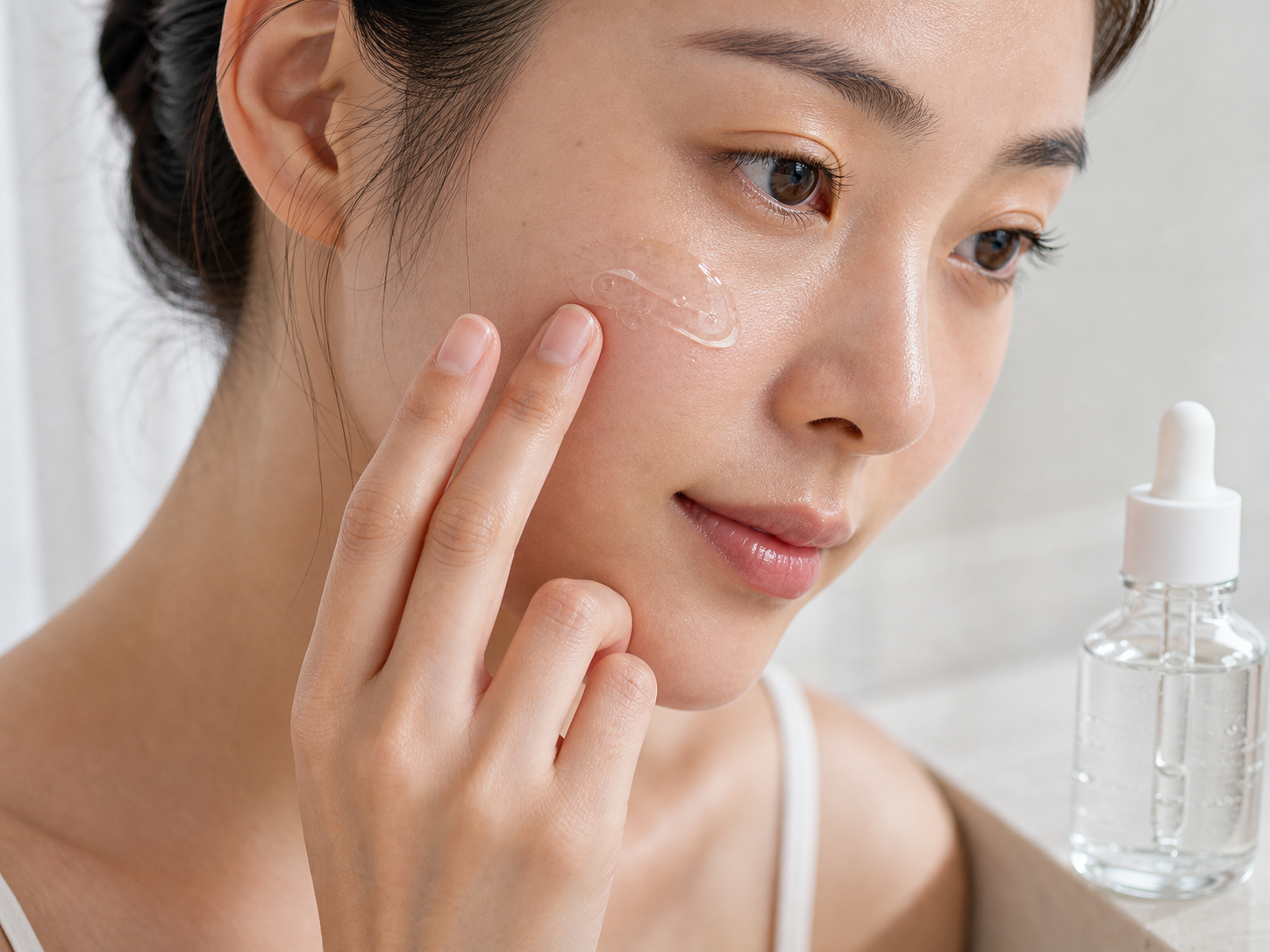
Niacinamide is often paired with tranexamic acid because it is associated with reducing transfer of melanin-containing structures to surrounding skin cells. Alpha-arbutin and kojic acid target tyrosinase-related steps, while vitamin C provides antioxidant and pigment-related support. Combining pathways can be convenient, but a long list of brightening actives is not always better for reactive skin. Glycerin, panthenol, and other supportive ingredients can make daily use easier.
Retinoids and exfoliating acids may speed surface-cell turnover or address acne, but they also increase the irritation load. There is no universal chemical ban on using them with tranexamic acid; the practical problem is tolerability. Begin with the tranexamic serum once daily or every other day. Introduce a retinoid on alternate nights rather than stacking everything immediately. If stinging, scaling, or redness continues, reduce the irritating product instead of covering the reaction with more serums.
A routine that gives it a fair test
In the morning, apply a thin layer after cleansing, then moisturizer and broad-spectrum sunscreen. Pigment can darken again with repeated light exposure, so sunscreen is part of the brightening routine rather than an optional extra. A tinted sunscreen containing iron oxides may be useful for people whose pigmentation is affected by visible light, provided the shade and texture encourage adequate application.
At night, apply the serum before cream. Keep the routine stable and compare photographs under the same lighting about every four weeks. Early changes may appear as a more even-looking complexion before individual spots look dramatically lighter. Eight to twelve weeks is a more realistic observation period than several days. Deeper gray-brown pigment can respond more slowly than superficial brown marks, and freckles, melasma, and post-acne pigmentation do not behave identically.
Stop and reassess if a spot changes shape, bleeds, becomes raised, or continues darkening independently of breakouts and sun exposure. A cosmetic serum is intended for ordinary uneven pigmentation, not for diagnosing a changing lesion. Used on the right kind of mark, in a tolerable formula, and with daily sun protection, tranexamic acid can be a practical gradual-brightening ingredient rather than an instant spot eraser.