What oat kernel extract does in skincare
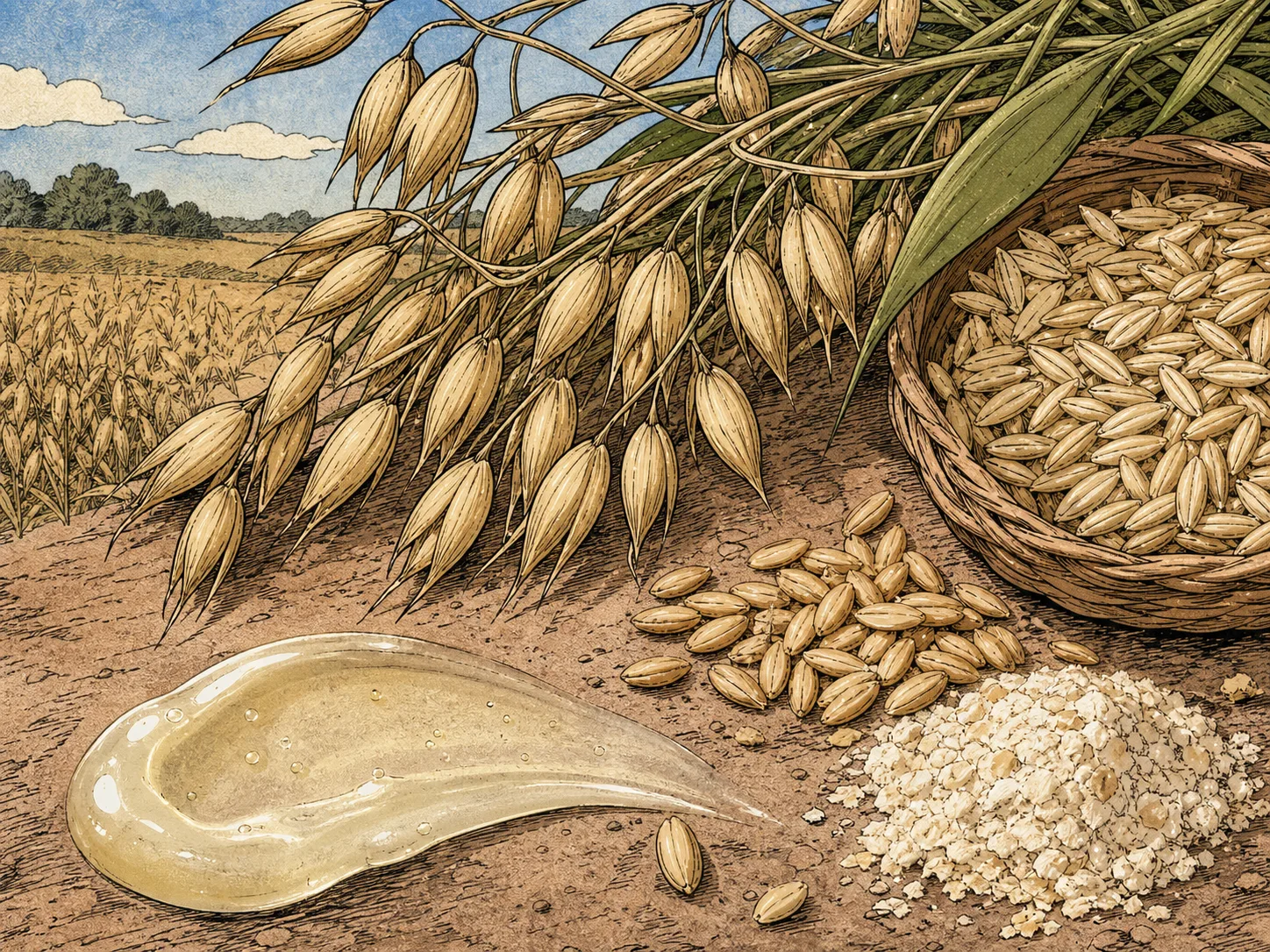
Avena Sativa (Oat) Kernel Extract is a botanical material obtained from the grain of Avena sativa. It is related to, but not identical with, colloidal oatmeal, oat kernel flour, or oat kernel oil. Those names describe different raw materials and can lead to different textures and formula roles.
The extract is also a mixture rather than one defined molecule. Plant material, solvent, and supplier processing affect its composition, so it cannot be represented by a single molecular formula or structure diagram.
Why oat appears in comfort-focused moisturizers
Oats contain avenanthramides, compounds investigated for calming inflammatory signals. In cultured keratinocytes, they reduced activation of NF-κB, a regulator that turns on inflammatory genes, and reduced release of IL-8. This gives a biological explanation for oat’s soothing reputation. The experiment used avenanthramides, however, so the result depends on how much of these compounds a particular kernel extract contains.
Colloidal oatmeal, extract, and oil are not interchangeable
Colloidal oatmeal is finely milled oat grain. Oat kernel oil concentrates a more oil-compatible portion of the grain. Oat kernel extract is made through an extraction process and may appear in a watery serum, toner, cream, or cleanser. They share a plant origin, but their immediate feel is shaped by what else is in the formula.
An oil-rich cream with oat oil, fatty alcohols, and emollients can leave a richer, more protective finish. An essence that combines oat extract with glycerin, betaine, and panthenol can feel lighter and more water-focused. Reading this distinction makes an oat claim much more useful than treating every oat ingredient as the same product.
Choosing the right format
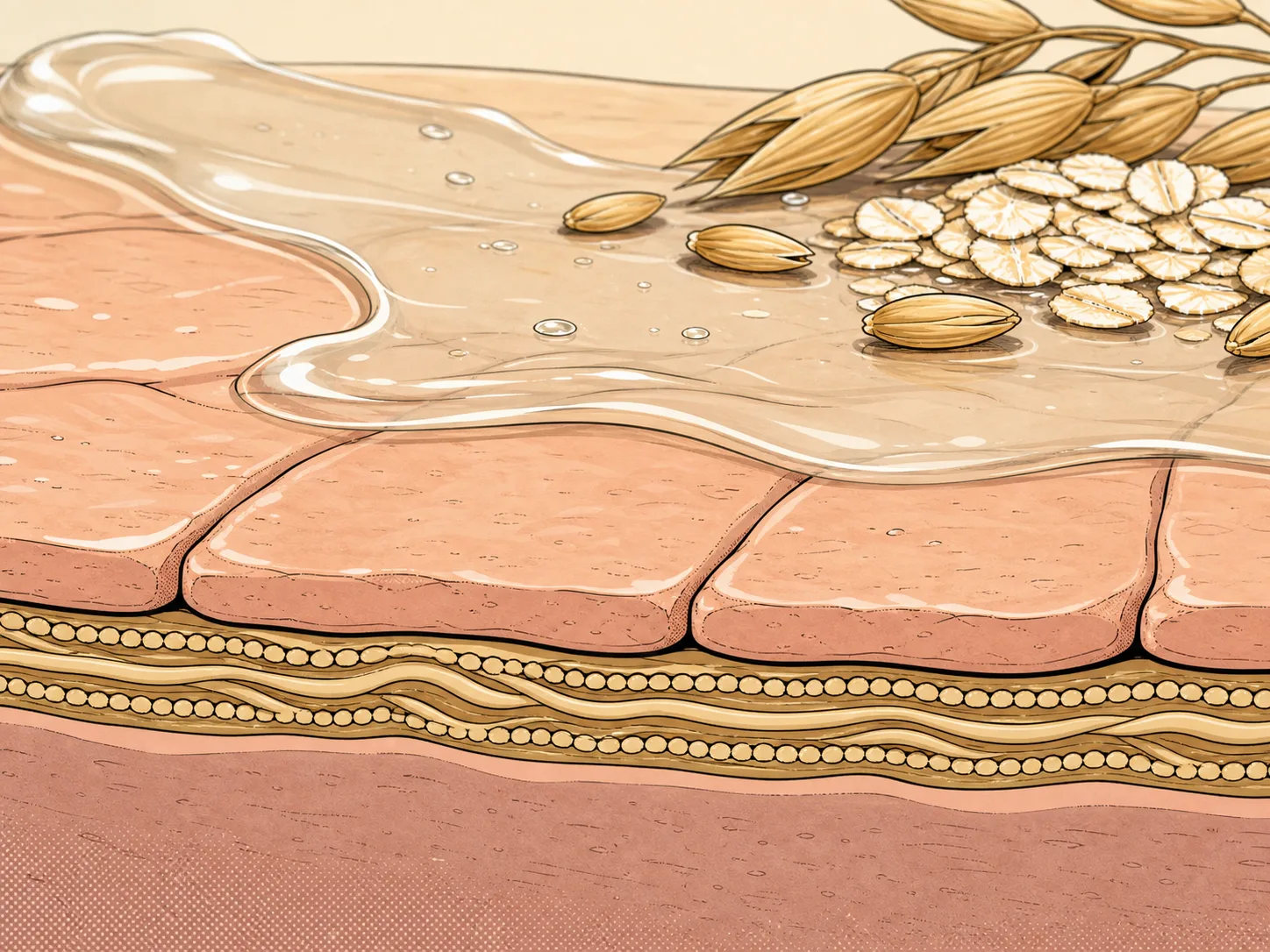
For tightness after cleansing, a lotion or cream that pairs oat extract with glycerin, panthenol, ceramides, or comfortable emollients can help with dryness. For an oilier routine, a gel cream or light essence may layer more easily. For rough body areas, a denser cream with lipids and occlusives can be more relevant than a watery toner.

In a cleanser, surfactant strength and rinse feel matter more than the oat name. Fragrance and essential oils can also change the experience considerably, so an oat ingredient does not automatically make a product gentle for every person.
Trying an oat formula: what to check before use
If you have reacted to botanical ingredients before, introduce a new product on a small area first. Continued itch, stinging, or redness is a reason to stop and consider the entire formula, including fragrance, preservatives, and acids. Oat-containing moisturizers can be useful choices for dry-feeling skin, but they are not a substitute for assessing a persistent skin condition.
Sources used
- Korea Cosmetic Association ingredient dictionary: oat kernel extractKorean ingredient name, origin, and identity
- Safety Assessment of Avena sativa-derived ingredients as used in cosmeticsCosmetic safety assessment and ingredient distinction
- Safety and efficacy of personal care products containing colloidal oatmealColloidal-oatmeal composition, product formats, and study scope
- Cleveland Clinic guide to colloidal oatmealConsumer-facing use and practical caution context
- Benton ingredient guide: oat kernel extractKorean product-format and naming context
- European Medicines Agency: Avenae fructusOat grain and colloidal oatmeal material distinction