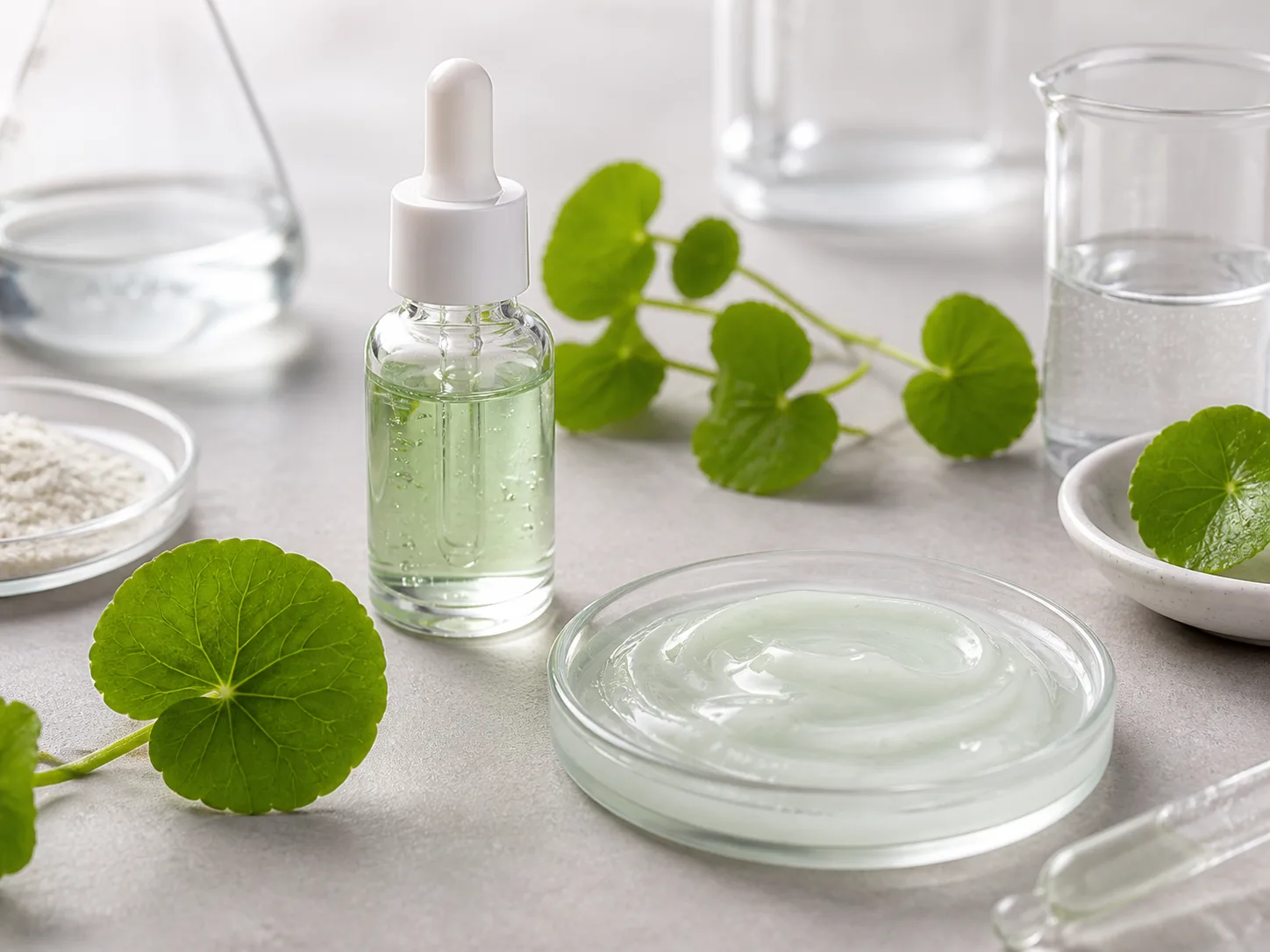
What madecassoside actually is
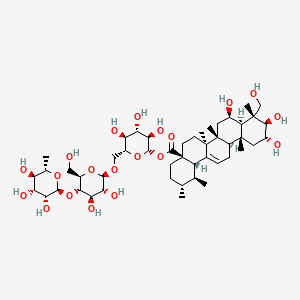
Madecassoside is one of the major triterpene saponins found in Centella asiatica, the plant behind most cica products. It sits alongside asiaticoside, asiatic acid, and madecassic acid, but each is a distinct compound. A Centella extract is a mixture whose composition depends on the plant material and extraction process; madecassoside is a named component with the molecular formula C48H78O20.
That distinction makes labels easier to read. A product listing only Centella asiatica extract may still be useful, but the amount and balance of its triterpenes are not obvious. When madecassoside appears separately in the INCI list, you know the formulator added that defined ingredient, although the list rarely tells you the exact percentage.
How madecassoside is used to soothe red, uncomfortable skin
Madecassoside is used to soothe red, uncomfortable skin. In a cell study, it reduced TLR2 and NF-κB signaling and IL-1β release in immune cells stimulated with acne-associated bacteria. In plain terms, it reduced signals that sustain inflammation. Separate skin-cell experiments found changes in water-transport and barrier-related proteins. These experiments help explain its soothing role; they did not test an ordinary moisturizer as an acne treatment.
The first-day comfort usually comes from the whole moisturizer. Glycerin, panthenol, and beta-glucan supply water-binding support, while ceramides, squalane, fatty alcohols, or shea butter reduce moisture loss and soften roughness. A product can feature madecassoside and still sting if it also contains fragrance, fragrant oils, exfoliating acids, or a high alcohol load.
Madecassoside versus “cica”
Cica is a category word, not one standardized cosmetic ingredient. One cica toner may be mostly Centella leaf water; another cream may combine a standardized extract with all four named triterpenes. Large cica percentages across different labels are therefore not directly comparable. Read the actual INCI list and decide whether you want a light botanical formula or a product that names madecassoside specifically.
For easily flushed, fragrance-sensitive skin, a short ingredient list with madecassoside and no perfume is a reasonable place to start. If flaking and persistent tightness are the bigger problem, look for ceramides, cholesterol, fatty acids, petrolatum, or richer emollients as well. Oily or combination skin may prefer a glycerin-panthenol gel serum that delivers calm without a dense film.
Should you choose a madecassoside serum or cream?
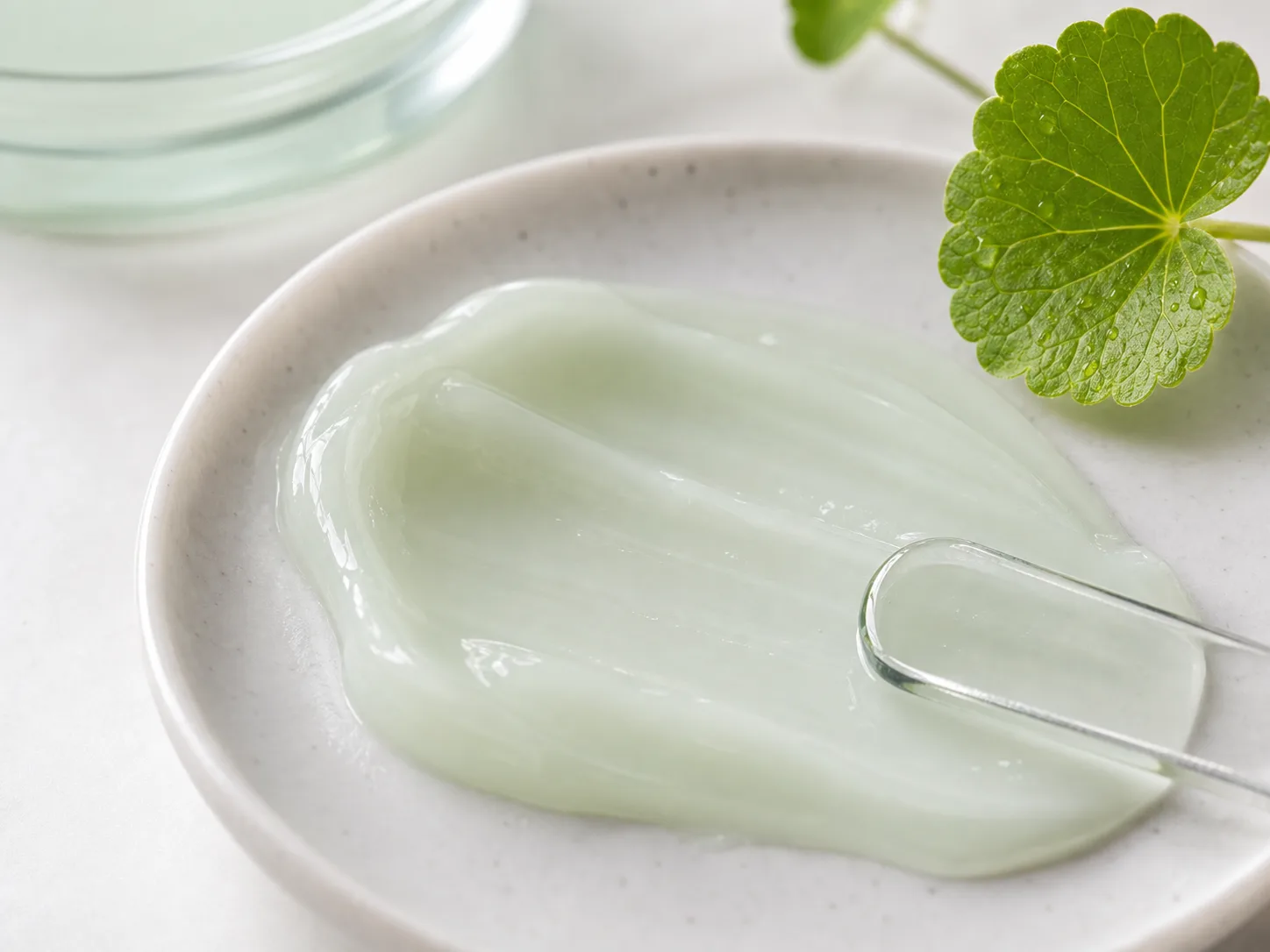
A serum layers easily and may suit humid weather, but some polymer-heavy gels dry tacky and do not prevent later tightness. A cream adds the emollient and occlusive portion that dry skin often needs. Its weight, shine, and pore-clogging potential are driven far more by the cream base than by madecassoside itself.
Judge a product a few hours after application. Notice whether tightness returns, whether redness looks less pronounced, and whether sunscreen or makeup pills over it. When skin is already reactive, a simple cleanse followed by one madecassoside moisturizer gives you a clearer answer than layering toner, essence, serum, and cream at once.
Using madecassoside with retinoids and moisturizers
Panthenol, ceramides, beta-glucan, glycerin, and squalane all fit the same comfort-first goal. Madecassoside can be used alongside retinoids or exfoliating acids, but it does not cancel irritation from overuse. If burning and peeling persist, reduce the active rather than adding more soothing layers.
Centella-derived ingredients can occasionally cause contact reactions. Stop if itching, swelling, or spreading redness appears.
Sources used
- COSMILE Europe: MadecassosideINCI identity and cosmetic functions of madecassoside
- PubChem: MadecassosideExact chemical identity and structure of madecassoside
- Therapeutic properties of asiaticoside and madecassosideSkin-related mechanisms and evidence range for Centella triterpenes
- Clinical study of vitamin C and madecassoside in photoaged skinSix-month results in 20 participants using 5% vitamin C plus 0.1% madecassoside
- Madecassoside and UV-induced pigmentationUV-induced inflammatory and melanosome-transfer mechanisms plus human-skin findings
- Madecassoside moisturizer after laser: randomized trialRedness and scaling outcomes from a multi-ingredient moisturizer and the inability to isolate madecassoside
- Cosmetic Ingredient Review: Centella-derived ingredientsDefinition and safety context for Centella-derived source materials
- Madecassoside inflammation and hydration cell studySpecific study material and mechanism; linked in body
- Korea Cosmetic Association: MadecassosideKorean ingredient name, molecular identity, and listed antioxidant and skin-protecting functions of madecassoside.