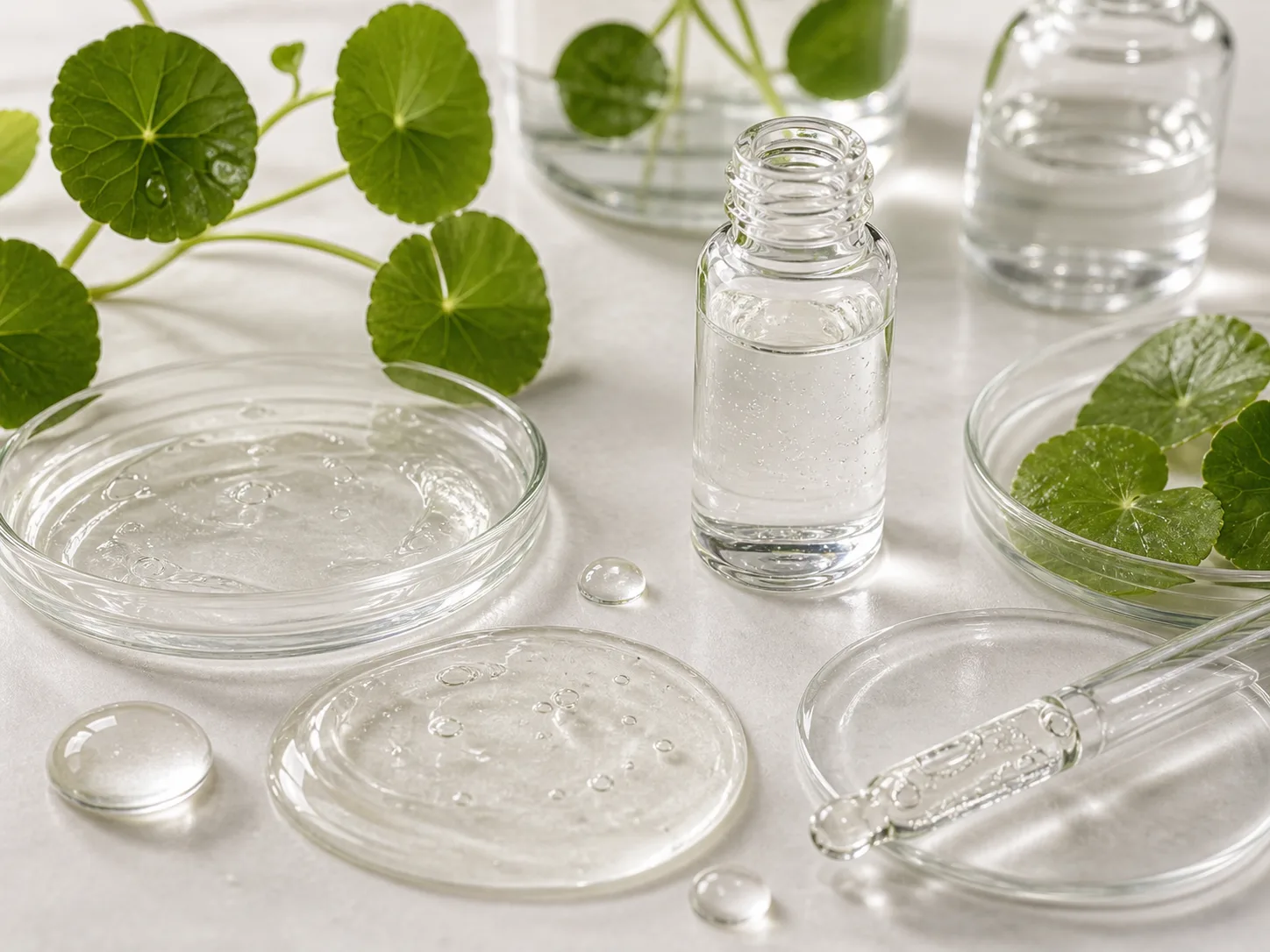
Cica calms red, stressed skin and supports barrier recovery
Cica products are mainly used to calm red, stressed skin and support the environment in which a disrupted barrier can recover. That makes them useful after dryness, friction, or a routine that has left the surface feeling reactive. The effect comes from different Centella materials, including whole extract and triterpenes such as madecassoside, rather than from one universal ‘cica molecule.’
“Cica” is shorthand derived from Centella asiatica, the botanical name for gotu kola. A cica product may contain Centella leaf water, a broad plant extract, a standardized triterpene fraction, or isolated compounds such as madecassoside. Those materials are related, but they are not identical.
Centella’s best-known triterpenes are madecassoside, asiaticoside, asiatic acid, and madecassic acid. They are studied for effects on inflammatory signaling, oxidative stress, and processes involved in collagen and tissue repair. In everyday skincare, that translates into a useful role for skin that looks flushed, feels uncomfortable, or has become dry and rough after weather, friction, or overuse of actives.
What changes can you expect from a cica moisturizer?
A good cica formula may make temporary redness look less prominent and help skin feel calmer. It can also support a better recovery environment when the surface barrier has been stressed. That is different from treating rosacea, eczema, acne, or an open wound. The medical history of Centella compounds is interesting, but a cosmetic cream used on intact skin should be judged by changes in comfort, visible redness, dryness, and texture.
The immediate cushioned feeling of many cica creams often comes from glycerin, panthenol, silicones, ceramides, and emollient oils. Centella is used for its soothing properties, while the moisturizing base helps retain water.
Centella extract and madecassoside are different ingredients
Whole Centella extract contains a variable mixture of plant constituents. A product that names madecassoside or a standardized extract such as TECA gives more specific information about the active fraction. “100% Centella” may describe the liquid base or raw material ratio; it does not mean the bottle is pure madecassoside.
For light post-cleansing comfort, a fragrance-free toner or serum built around Centella water can be pleasant. For dry, compromised-feeling skin, choose a cream that pairs madecassoside or a standardized Centella extract with panthenol, ceramides, glycerin, or squalane. If oiliness is a concern, a gel cream can deliver the same botanical without a waxy finish.
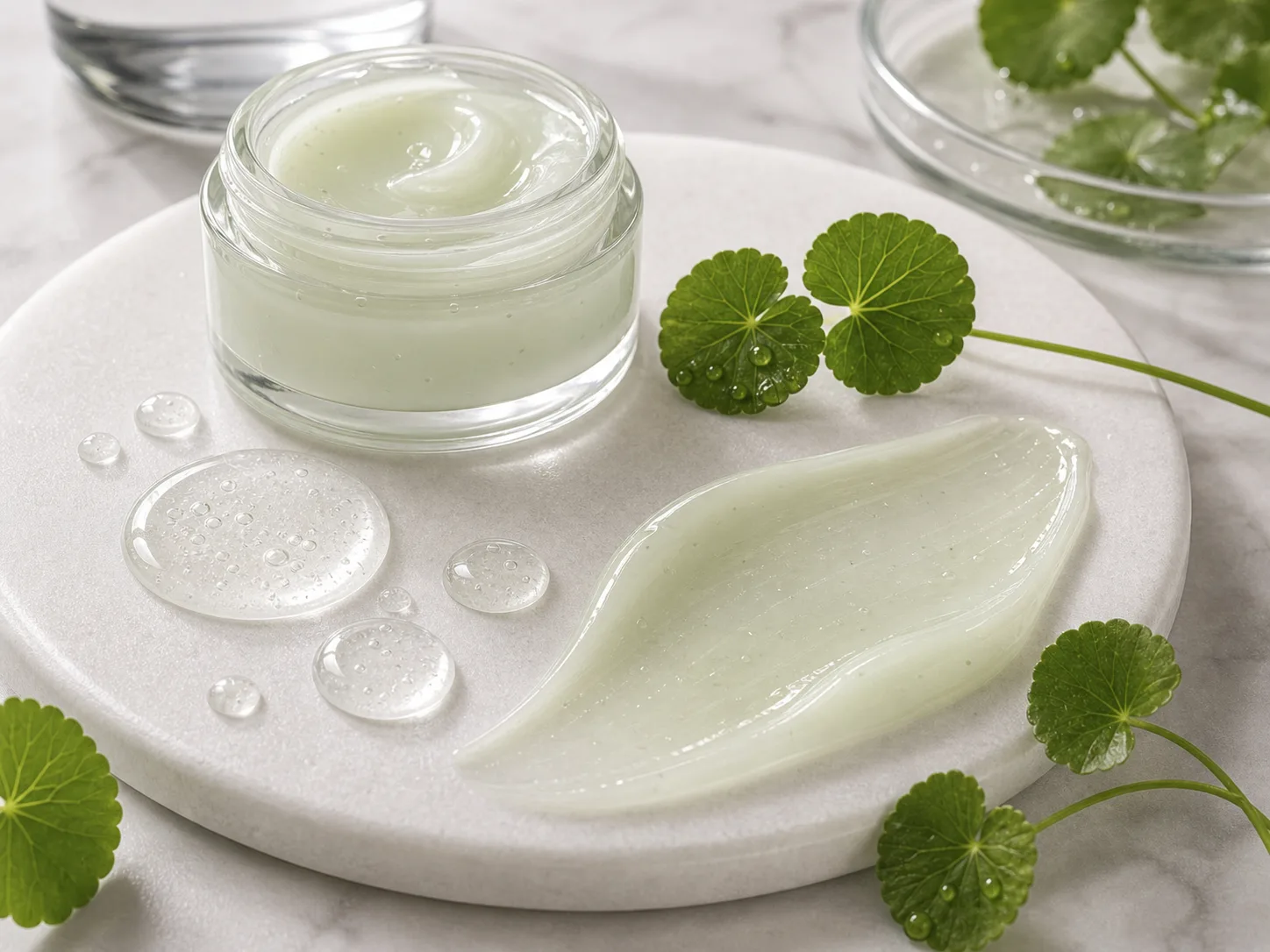
Using cica without overcomplicating the routine
Cica can be used morning and night and generally layers well with retinoids, vitamin C, and exfoliating acids. It cannot cancel out irritation from an overly aggressive routine, though. If skin burns when water touches it, pause the strong actives and use a bland cleanser and one cica moisturizer until comfort returns.
Botanical extracts can still cause allergy. Stop using the product if itching, swelling, or a persistent rash appears. Fragrance and essential oils are common reasons a product marketed as calming may not feel calming on reactive skin.
How the four main Centella triterpenes differ
Madecassoside and asiaticoside are glycosylated triterpene saponins; asiatic acid and madecassic acid are aglycone relatives. Their studied activities overlap across inflammatory signaling, oxidative stress, fibroblast behavior, and collagen processes, while whole extract can contain variable ratios. Standardization tells you more about the amounts present than the plant’s origin alone.
TECA and TTFCA describe titrated Centella fractions. Centella leaf water may form most of a toner without guaranteeing a high triterpene level. Comparing 80% leaf water directly with 0.1% isolated madecassoside treats unlike raw materials as equivalent.
A bland cica moisturizer can suit temporary redness after dryness or friction. Brown post-acne marks need sunscreen and often more direct pigment ingredients such as niacinamide or azelaic acid. Track post-cleansing sting, afternoon tightness, and redness duration for two to four weeks. Instant cooling may come from alcohol or cooling agents and should not be confused with a sustained calming effect.
Sources used
- Cleveland Clinic: Centella asiatica for skinDermatology-led consumer questions about Centella benefits and use
- COSMILE Europe: Centella Asiatica ExtractINCI identity and skin-conditioning, soothing, and smoothing functions of Centella extract
- Cosmetic Ingredient Review: Centella asiatica-derived ingredientsDefinitions and cosmetic safety assessment for distinct Centella-derived INCI materials
- Centella asiatica in cosmetologyKey triterpenes such as asiaticoside and madecassoside in cosmetic context
- Moisturizing and anti-inflammatory cosmetic formulations with CentellaHydration, TEWL, and redness outcomes from 2.5% and 5% formulas in 25 volunteers
- Centella asiatica and facial wrinkles: systematic reviewRandomized-trial synthesis involving 172 participants and standardization limits
- Topical Centella: mechanisms and clinical efficacy reviewCentella triterpene mechanisms and differences created by delivery format
- Controlled release of madecassoside and asiaticosideFormula evidence showing different release across creams, emulsions, and gels