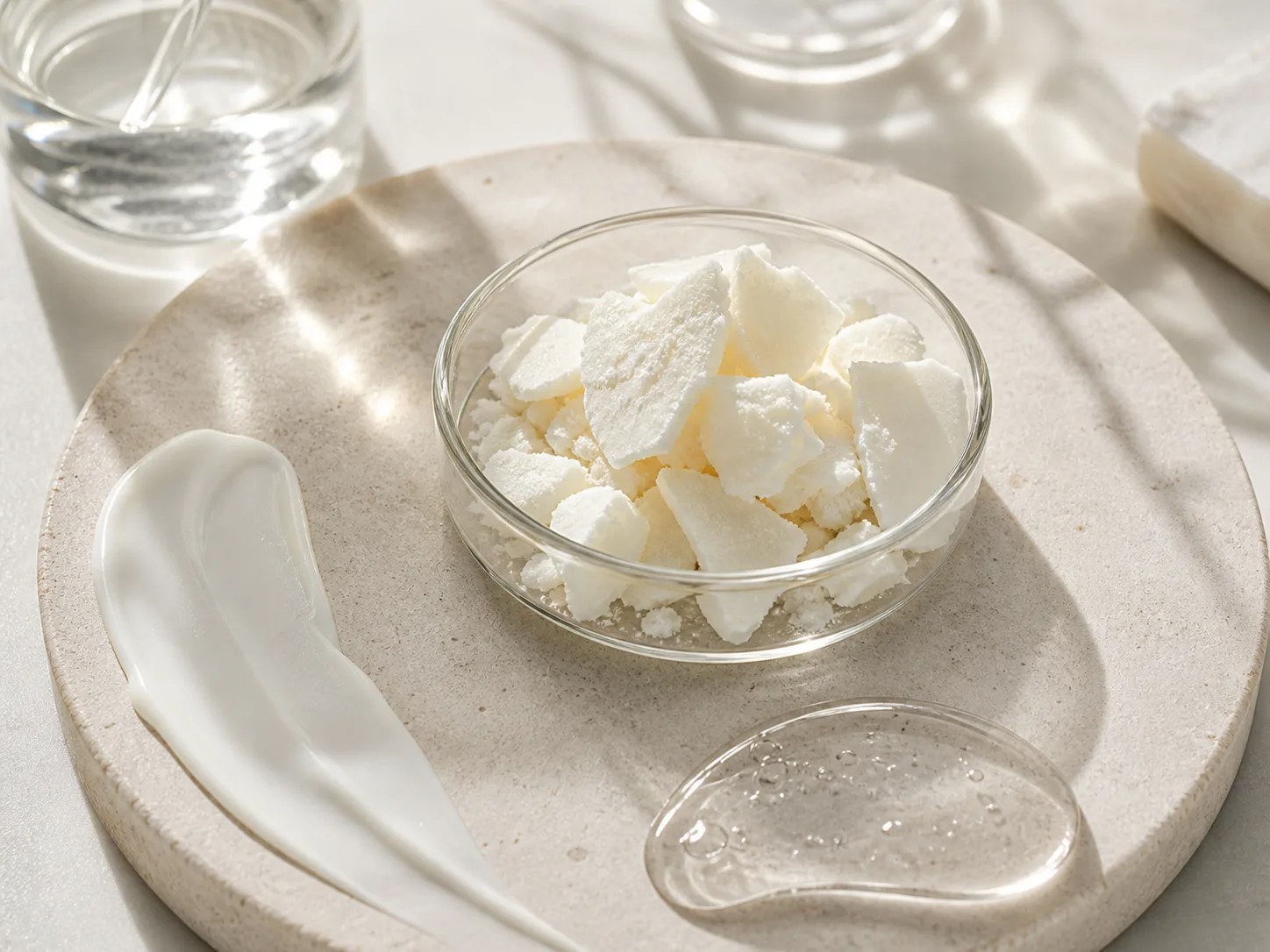
What cosmetic cholesterol means
Cholesterol on a cosmetic ingredient list is not a reference to blood cholesterol levels. It is a sterol used in the context of skin-surface lipids and richer moisturizing formulas. The stratum corneum contains ceramides, cholesterol, and fatty acids together, and some creams use that lipid pattern as a guide for supporting dry-skin comfort.
Its useful starting point is therefore moisturization and surface protection, not exfoliation or brightening. One ingredient cannot rebuild every barrier problem by itself. Ceramides, fatty acids, humectants, oils, and the proportions of the finished formula are what shape the result.
Its role in texture and skin feel
A cholesterol-containing cream may leave less post-cleansing tightness and make rough areas feel softer. In a formula with ceramides and fatty acids, it can contribute to the lipid side of moisturization: reducing the sense that water escapes quickly rather than attracting water like glycerin or urea.
The formula still decides whether that benefit feels elegant or heavy. Oils, waxes, fatty alcohols, silicones, and fragrance can change the finish. A protective cream may suit dry cheeks but feel too rich around the forehead or nose.
Structure and finished-product use
Cholesterol is a single molecule with molecular formula C27H46O. It has a four-ring sterol structure, a hydrocarbon tail, and a hydroxyl group. Unlike a botanical extract, it can be described as one defined molecule, and its lipid character helps explain why it belongs in the oil phase of a cream rather than behaving like a water-soluble humectant.
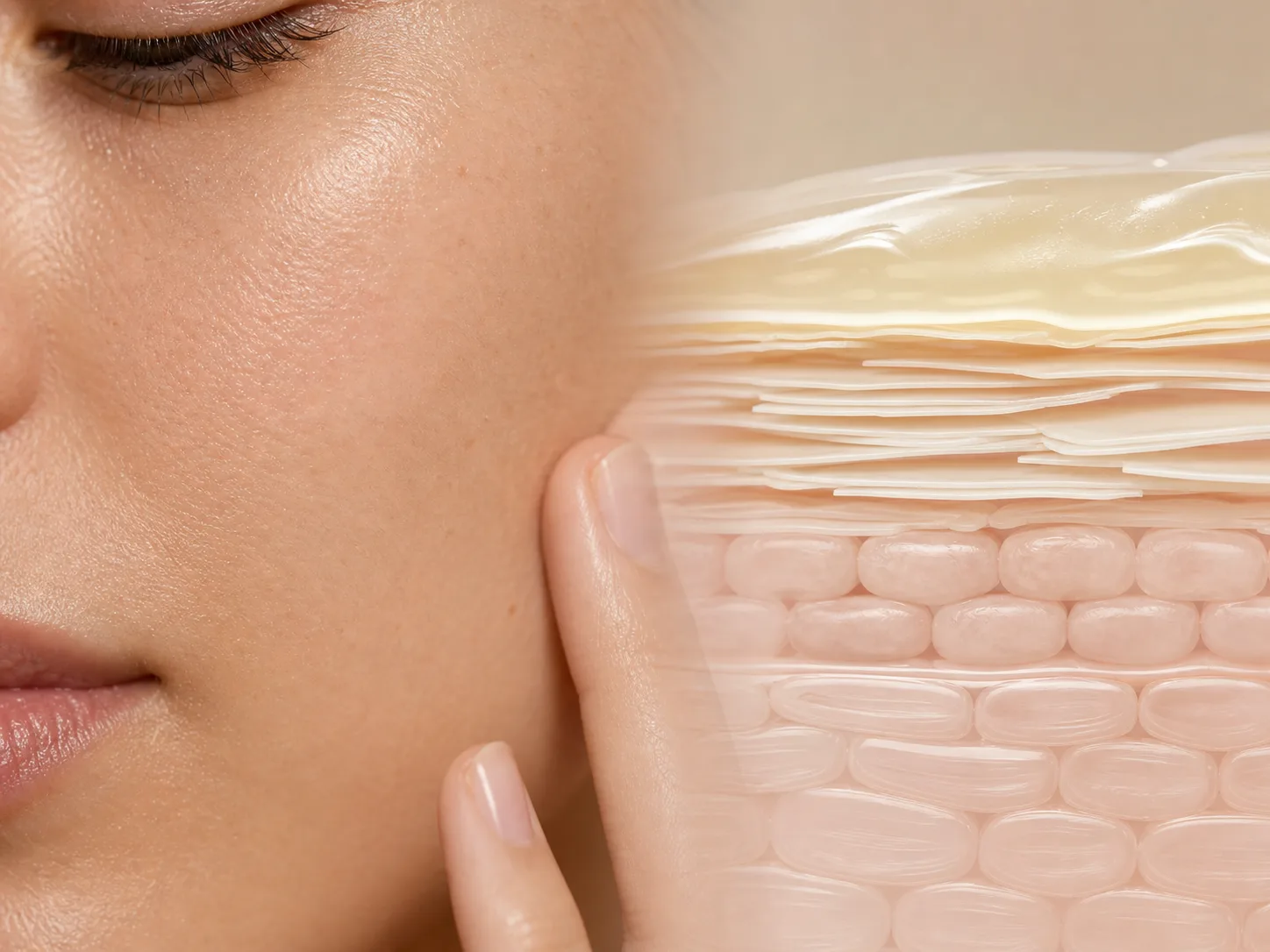
When it appears in an ingredient list, look at the neighboring lipids. Ceramides and fatty acids alongside a cream base suggest a barrier-lipid direction. In a watery essence, the humectants and emulsifying system may have a greater effect on what you feel than the small amount of cholesterol itself.
Where it fits
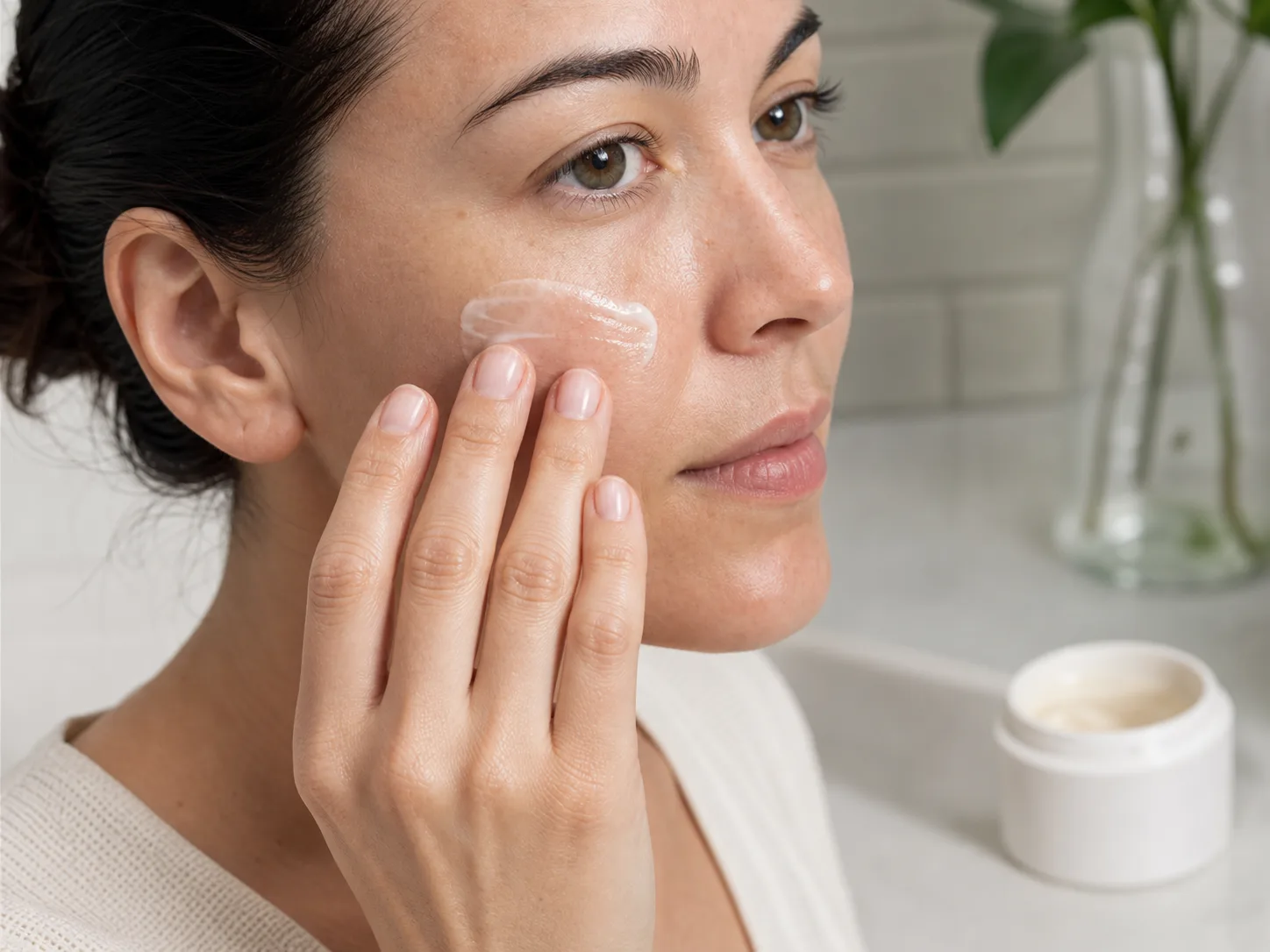
For dry skin and post-cleansing tightness, a cream containing cholesterol with ceramides, fatty acids, or squalane is worth comparing. A balm can be reserved for dry areas, while oily or combination skin may prefer a lighter lotion and a smaller amount.
In a cleanser, contact time is short. Surfactant strength, rinse feel, and fragrance may matter more than the cholesterol listing. A leave-on cream gives cholesterol time to remain in the surface lipid film; a rinse-off product mainly changes cleansing feel.
How much Cholesterol to use in each format
Apply a new cream to a small area near the jaw or cheek and check the finish the next day. If it feels heavy, use less or keep it on dry areas at night. Repeated redness or itching is a reason to review the whole formula, including fragrance, preservatives, and oils, rather than pushing through for the highlighted ingredient.
The connection between cholesterol and skin lipids is useful formulation context, not a promise to solve every skin condition. Persistent discomfort deserves attention to the skin itself and to the routine as a whole.
Questions that clarify Cholesterol
Is cosmetic cholesterol the same as blood cholesterol?
It is the same type of molecule, but the cosmetic use is as a skin-lipid and formula ingredient. It should not be understood as an oral product or a way to change a blood test.
Is it good for dry skin?
A formula that also contains ceramides, fatty acids, and humectants may improve dry-skin comfort. The actual weight and finish depend on the complete base.
Should oily skin avoid it?
Not automatically. A lighter lotion, a smaller amount, or use only on dry areas may be more comfortable than a rich balm.
Sources used
- PubChem CholesterolChemical identity and molecular formula
- Re-Review Summary of Cholesterol as Used in CosmeticsPublished evidence and study scope
- CIR Safety Assessment of CholesterolCosmetic use and safety assessment
- 쿠스 콜레스테롤 성분 카드Ingredient characteristics and cosmetic use
- SkinSort CholesterolIngredient characteristics and cosmetic use
- Cosmetics Info: CholesterolCosmeticsInfo.org is your source for information about cosmetics and personal care products