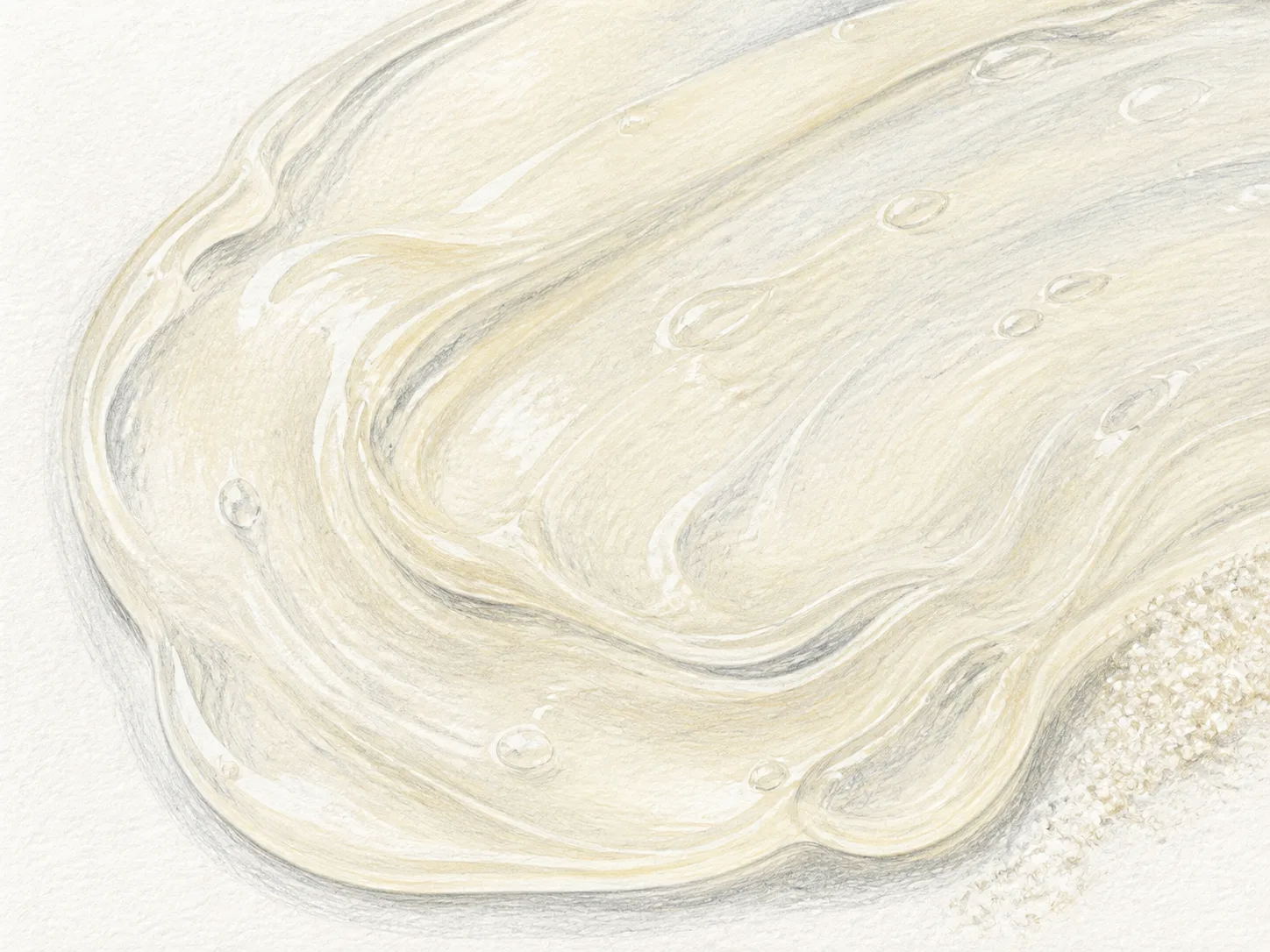
A complicated name with a straightforward job
Saccharide Isomerate is the INCI name for a carbohydrate complex produced by rearranging a mixture of sugars. Korean cosmetic references use a direct transliteration and classify it as a humectant. In practical terms, it is a water-soluble material used to attract and hold water in the outer skin layer.
It is not another name for hyaluronic acid, glycerin, or ceramides. These ingredients can share a moisturizer while doing different jobs. Supplier explanations often describe Saccharide Isomerate as interacting with keratin so it is not immediately rinsed away. How long that lasts depends on the tested formula and how it is used.
What the 30-person study found
A double-blind study divided 30 women into groups of 15. One group used a basic moisturizer; the other used a version with 5% added Saccharide Isomerate for two weeks. The added-ingredient formula produced a larger hydration change and reported retained hydration after use stopped. The comparison tested the added ingredient in a moisturizer rather than only in a laboratory assay.
Five percent was the concentration used in this two-week trial. It did not compare higher doses or different formulas, so it does not establish an optimum for every moisturizer.
How to read “72-hour hydration”
Specific time claims often come from a particular concentration, base formula, application amount, instrument, and measurement schedule. Seeing Saccharide Isomerate on an ingredient list does not reproduce those conditions. Unless the finished product publishes a relevant test, treat the number as raw-material context rather than a duration guaranteed for every product.
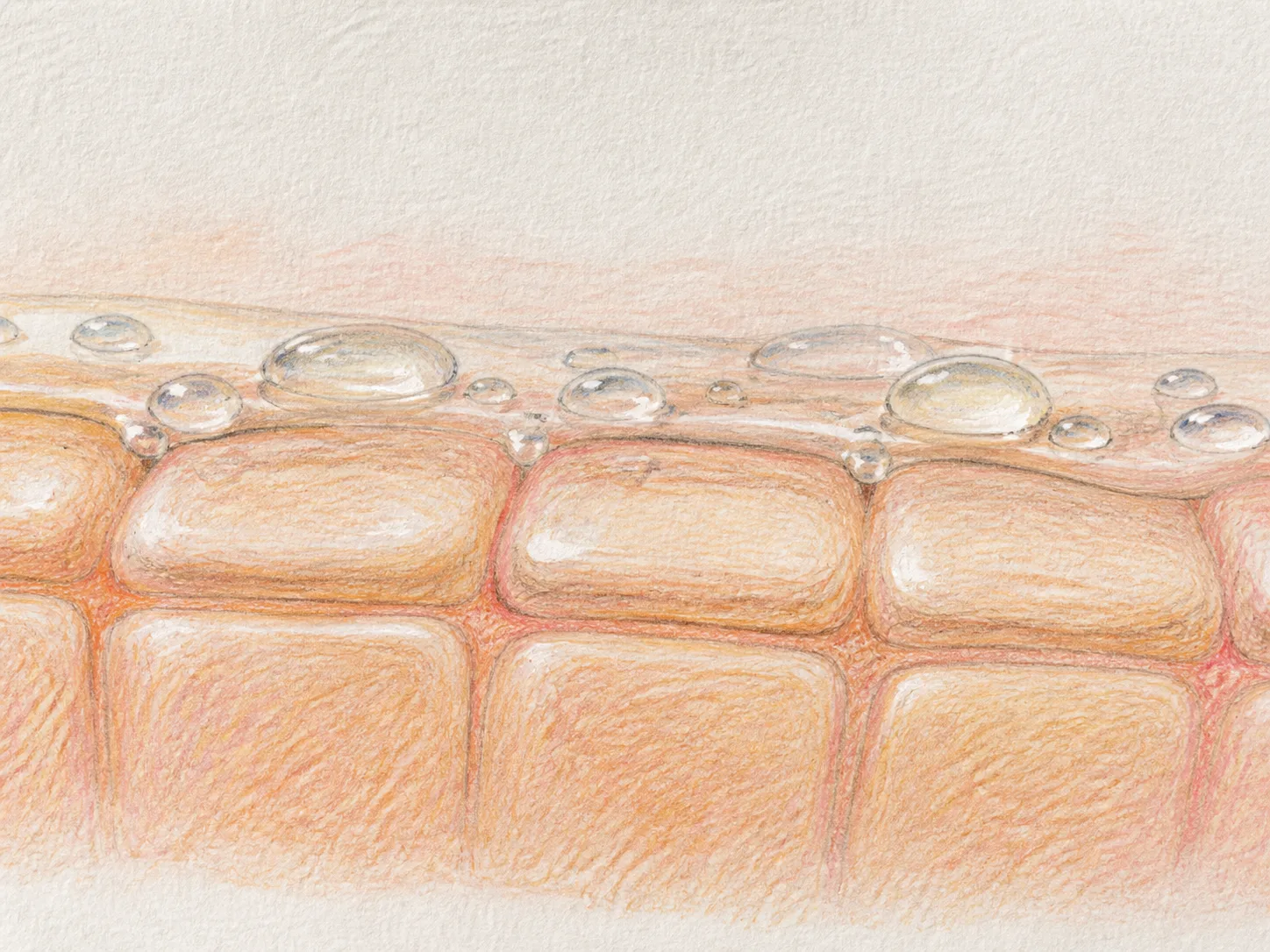
The language about binding to keratin also does not mean that the ingredient travels deep into living tissue. Cosmetic hydration is largely evaluated at the surface and stratum corneum. Diagrams showing deep penetration or language suggesting that one application locks in water for days go beyond the evidence.
Serum, cream, and cleanser are different tests
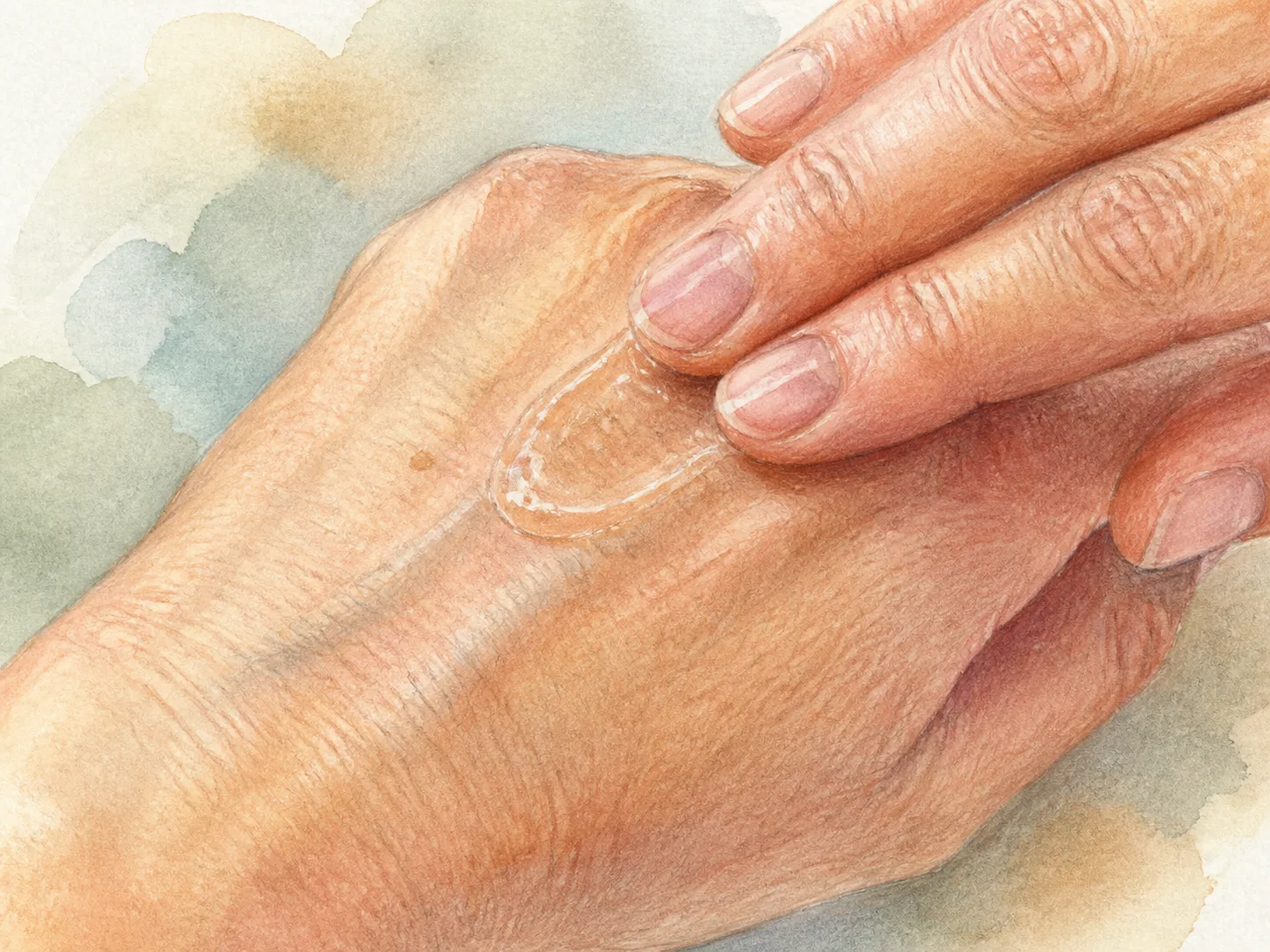
Korean ingredient and product pages show Saccharide Isomerate in ampoules, serums, lotions, and creams. Leave-on formats give a humectant time to remain on the surface. A cream can also provide emollients and occlusive components that slow water loss, so its result is not created by one humectant alone.
Supplier material also discusses rinse-off formats such as cleansers and shampoo. A reduction in immediate post-wash tightness may be useful, but short contact and rinsing make it unreasonable to assign the same persistence as a leave-on cream. Read the job and contact time of the product before focusing on the ingredient name.
Why a scalp study does not prove a facial benefit
A clinical study of a scalp formula containing Saccharide Isomerate reported changes in dandruff-related and microbiome measures. It provides human finished-product context, but the formula contained other active and supporting ingredients, and the test site was the scalp rather than the face.
The result cannot be used to claim that Saccharide Isomerate alone treats dandruff, inflammation, or facial conditions. A multi-ingredient study can show where formulators use an ingredient; it cannot isolate the contribution of every component.
Building a practical dry-skin routine
Apply a toner or serum containing the humectant before the water on your skin has completely evaporated, then finish with a moisturizer. If tightness persists after several light serum layers, the missing element may be an emollient or occlusive system rather than another humectant. Look for a balanced formula containing materials such as glycerin or panthenol plus ceramides, squalane, or other emollients.
Introduce one new product at a time and record morning and afternoon tightness, makeup flaking, and tack for one to two weeks. Ingredient order rarely reveals the exact percentage, and ingredients at 1% or below may be listed with more flexibility. Ingredient position alone is not enough to rank products by concentration.
Safety and reactions
The Cosmetic Ingredient Review assessed Saccharide Isomerate and related sugar materials as safe in current cosmetic uses and concentrations. That supports the ingredient’s ordinary safety context; it does not guarantee that every formula containing fragrance, preservatives, acids, and other materials will be non-irritating.
Sensitive skin can test a small amount along the jaw or below the ear for two days before broader use. Stop for persistent burning, swelling, hives, or itch. Continuing cracks, weeping, or severe itch calls for evaluating the cause rather than repeatedly switching humectants.
Sources used
- 대한화장품협회 성분사전 - 사카라이드아이소머레이트exact INCI, Korean standard name, identity and humectant role
- Effectiveness of 5% saccharide isomerate moisturizerdouble-blind two-week moisturizer comparison and post-use hydration
- CIR safety assessment of saccharide isomerate groupcosmetic safety conclusion and ingredient-group context
- Clinical and microbiome evaluation of a scalp formulationfinished-formula scalp evidence and multi-ingredient attribution limit
- PENTAVITIN rinse-off studiesrinse-off product format and supplier-study boundaries
- Saccharide Isomerate to Deeply Hydrate Skin and Scalpprofessional formulation and small human-study context