What coffee seed extract is good for
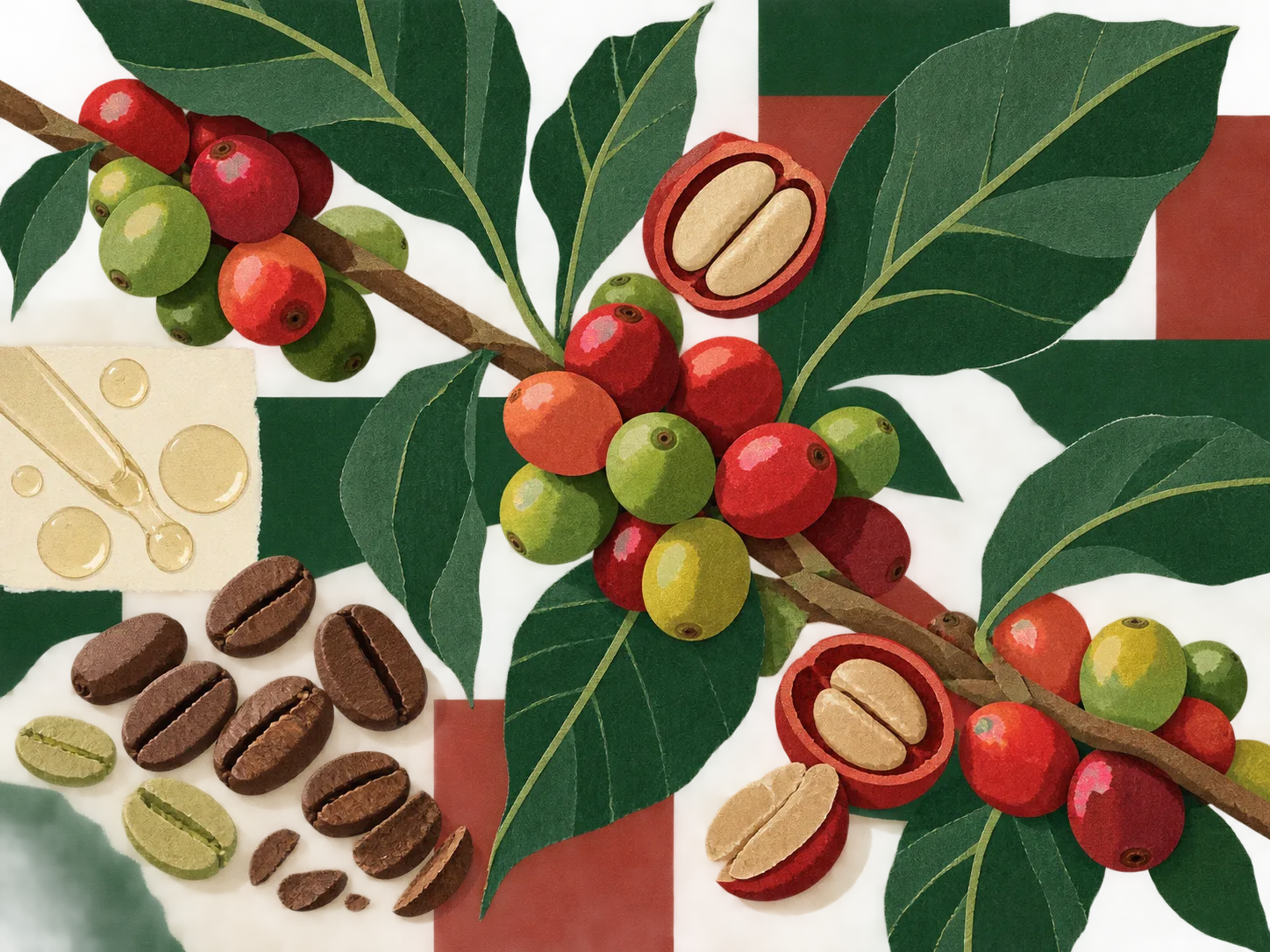
Coffea Arabica (Coffee) Seed Extract is most useful for dull, rough-looking skin that needs antioxidant support and protection from collagen-breakdown signals. Coffee seeds contain chlorogenic acid, other polyphenols, and caffeine. These compounds can buffer the reactive oxygen species produced after UV exposure and pollution, helping formulas target rough texture, a tired appearance, and early loss of bounce.
In a serum or moisturizer, the goal is a smoother, more vibrant-looking surface and an antioxidant route that reduces the pressure on collagen.
How antioxidants connect dullness to firmness
UV exposure increases reactive oxygen species, or ROS, in skin. If those unstable molecules keep oxidizing nearby lipids and proteins, they activate inflammatory pathways including NF-kB and COX-2. They also raise MMP-1, an enzyme that breaks down collagen. Repeated exposure can therefore link oxidative stress to roughness, dullness, and reduced firmness.
Chlorogenic acid and related coffee polyphenols can donate electrons and interrupt that chain reaction. UVB experiments with coffee-derived extract reported lower ROS, NF-kB, COX-2, and MMP-1 measurements along with less collagen-related damage. In everyday language, the extract first reduces the oxidative spark, then helps quiet the inflammatory and collagen-degrading signals that follow it.
What human formula studies add
A 56-day study evaluated a cream containing 2% Coffee Arabica seed extract plus 2% Myrothamnus extract and measured hydration, texture, and elasticity-related outcomes. It shows that Coffea Arabica (Coffee) Seed Extract can be incorporated into a practical face formula tested on people. Because both botanicals were present, the size of coffee’s individual contribution cannot be separated.
Another 12-week study in 40 people tested a broader antioxidant system that included coffeeberry among several components. Both studies tested blends, so neither tells us how much of the result came from coffee extract alone. They also show why the base matters: humectants and emollients can create immediate smoothness while the antioxidant blend addresses longer-term environmental stress.
Coffee seed extract is not isolated caffeine
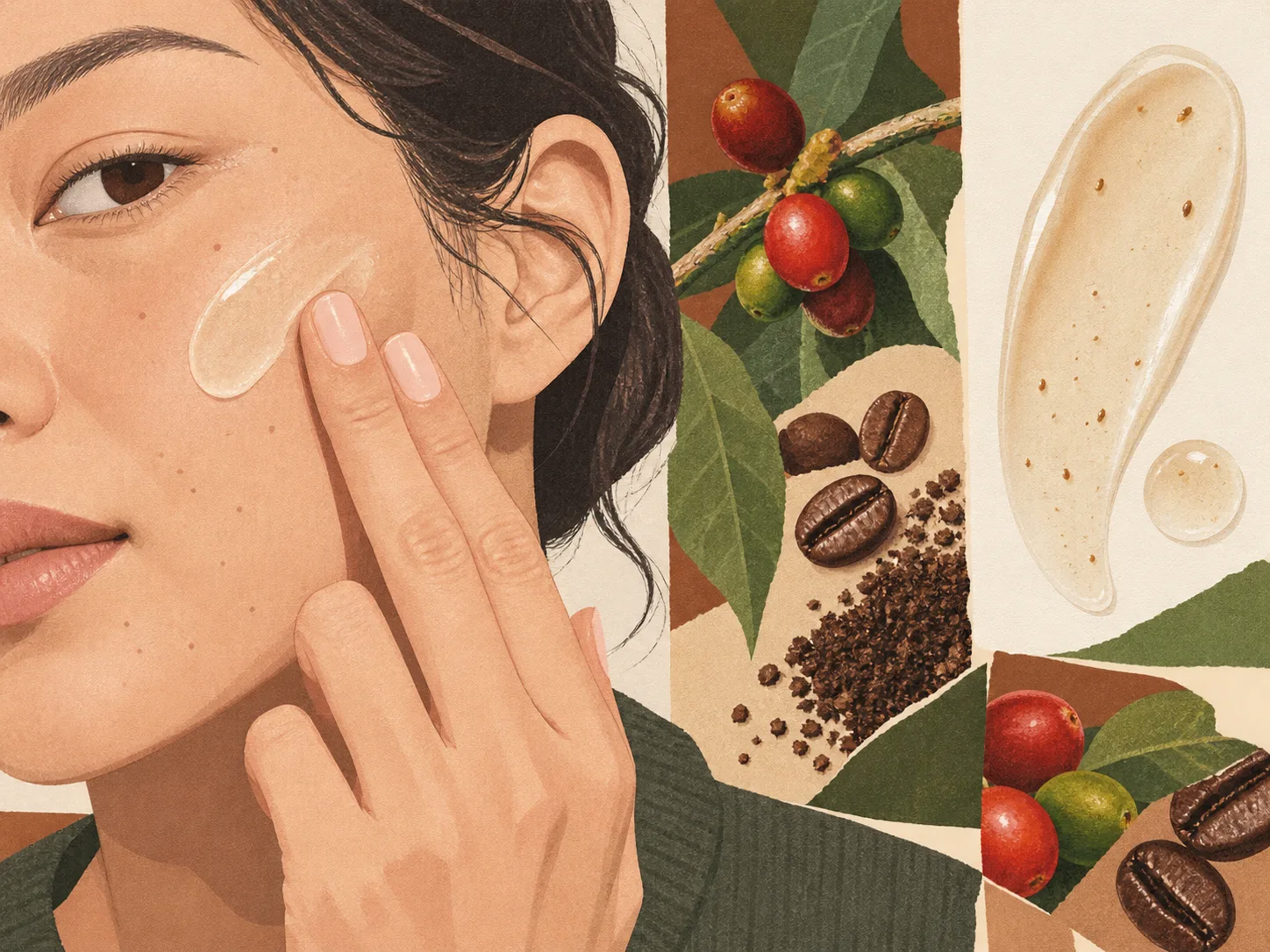
Caffeine appears on an INCI list simply as Caffeine and is one defined molecule. Around the eyes it is often chosen for temporary puffiness and some vascular-looking darkness. Coffee Seed Extract is a botanical mixture containing caffeine plus chlorogenic acid and other phenolics, so its antioxidant and firmness story should not be reduced to caffeine alone.
Coffea Arabica Seed Oil is also different. It is a lipid-rich material pressed or extracted for fatty acids and emollience. Coffee fruit, cascara, and silverskin come from other plant parts and have their own compositions. Check the exact INCI before transferring a study from one coffee material to another.
Choosing a useful product
For dullness plus dehydration, a daily serum or lotion with glycerin, panthenol, or betaine is an easy fit. The base creates immediate hydration and surface smoothness; Coffee Seed Extract contributes antioxidant support against ROS and MMP signaling.
For firmness and photoaging, broad-spectrum sunscreen remains the foundation. Coffee Seed Extract does not erase UV damage, but it can add another antioxidant route beside a vitamin C derivative, niacinamide, or peptides. A product does not need a coffee fragrance or dark color to contain a useful extract.
Where it fits in a daily routine
Use Coffee Seed Extract in a morning antioxidant serum, lotion, or light cream after cleansing. Follow with moisturizer if the formula is thin, then finish the daytime routine with broad-spectrum sunscreen. If you already use vitamin C, exfoliating acids, or a retinoid, add the coffee product on its own first so stinging or dryness has an obvious source.
Look for smoother texture, less noticeable dehydration lines, and a firmer feel rather than an immediate glow. Compare texture, dull appearance, dryness, and comfort under similar lighting over four to eight weeks.
Sensitivity to drinking coffee does not automatically predict a whole-body caffeine response from a small amount of topical botanical extract. Fragrance or another formula component can still irritate, so patch test if your skin is reactive and stop for persistent itch or rash.
Sources used
- Korea Cosmetic Association ingredient reference
- COSMILE Europe: Coffea Arabica Seed Extract
- Alleviation of UVB photodamage by Coffea arabica extract
- Myrothamnus and Coffea arabica seed phytocosmetic autophagy trial
- Randomized trial of a Coffea arabica multi-antioxidant skincare systemBenefit evidence, study conditions, and what the research actually shows.
- SpecialChem: Coffea Arabica Seed Extract
- Paula's Choice ingredient dictionary: Coffea Arabica Seed Extract