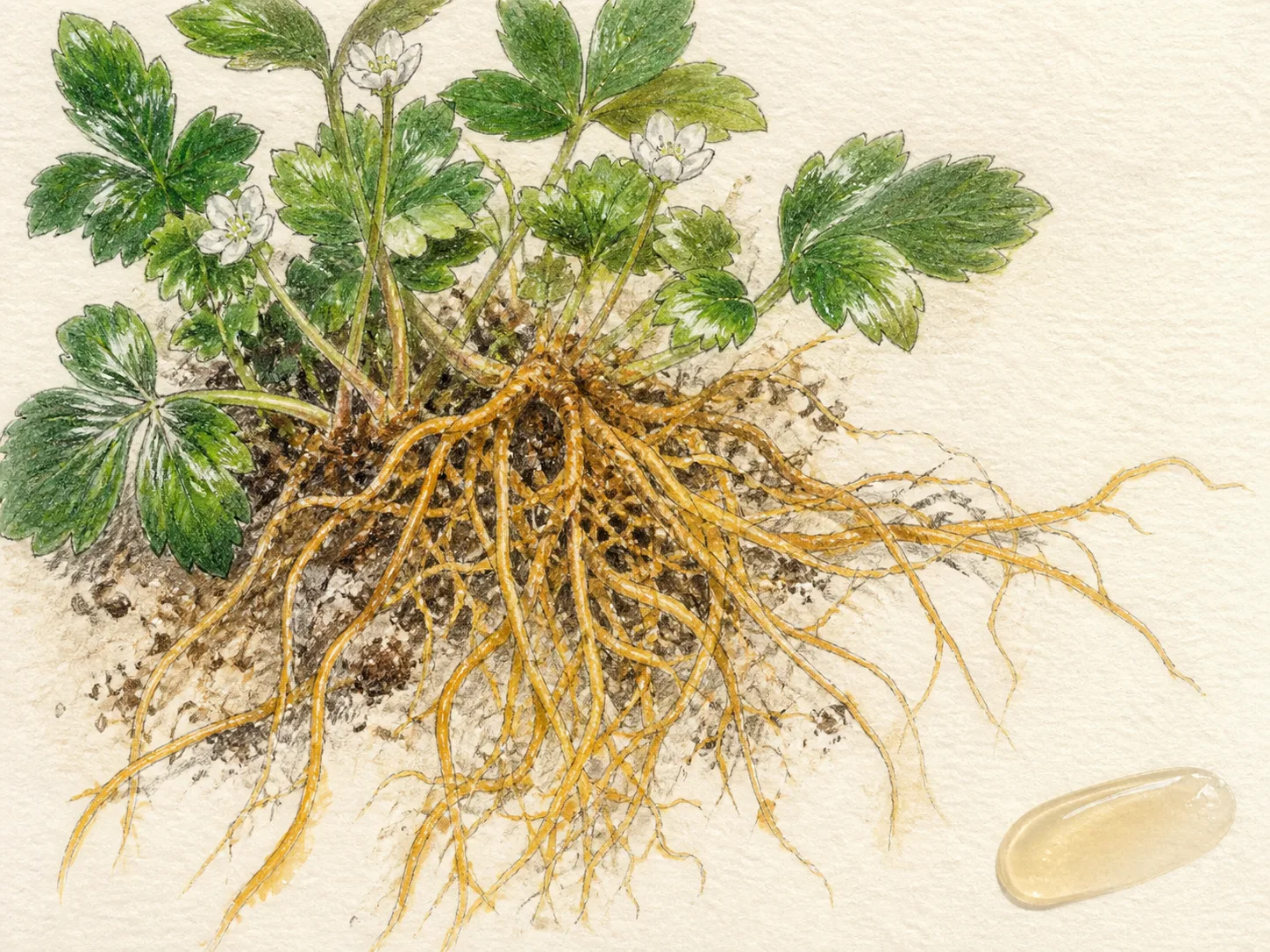
How coptis root extract helps irritated skin
Coptis Japonica Root Extract is used to calm skin that flushes easily, feels hot after irritation, or becomes uncomfortable around blemishes. The yellow root contains alkaloids including berberine, coptisine, and palmatine. These compounds have been studied for reducing inflammatory signaling.
In a cosmetic product, the intended benefit is calmer-looking redness and less reactive discomfort. The extract is not an acne drug, but its signaling profile explains why it appears in soothing gels and serums designed for oily or blemish-prone skin.
How berberine-related alkaloids calm signaling
When skin is irritated, a messenger such as TNF-alpha can activate NF-kB inside keratinocytes. NF-kB works like a switchboard: once active, it increases the production of several inflammatory mediators. If that response stays elevated, heat, redness, and stinging can linger.
Berberine-family alkaloids have been studied for reducing that excessive activation. Keratinocyte work with Coptis materials reported lower NF-kB activity and inflammatory output after TNF-alpha stimulation. This is the useful plain-language mechanism behind the word calming: the material interferes with a signal that keeps an irritated response switched on.
What that means for blemish-prone skin
Blemishes involve more than surface oil. Inflammation around a pore and a weakened barrier can make skin red, sore, and easily irritated. Coptis root extract is better understood as a calming partner than as an ingredient that aggressively dries sebum. In formulas with panthenol, allantoin, beta-glucan, or ceramides, it can support comfort while the base replaces water and lipids.
That does not turn a cosmetic into an antibiotic or prescription acne treatment. Persistent painful lesions or scarring require medical care. For routine skincare, the extract makes the most sense after friction, shaving, over-exfoliation, or a breakout has left the surface looking red and feeling unsettled.
Why species and plant part matter
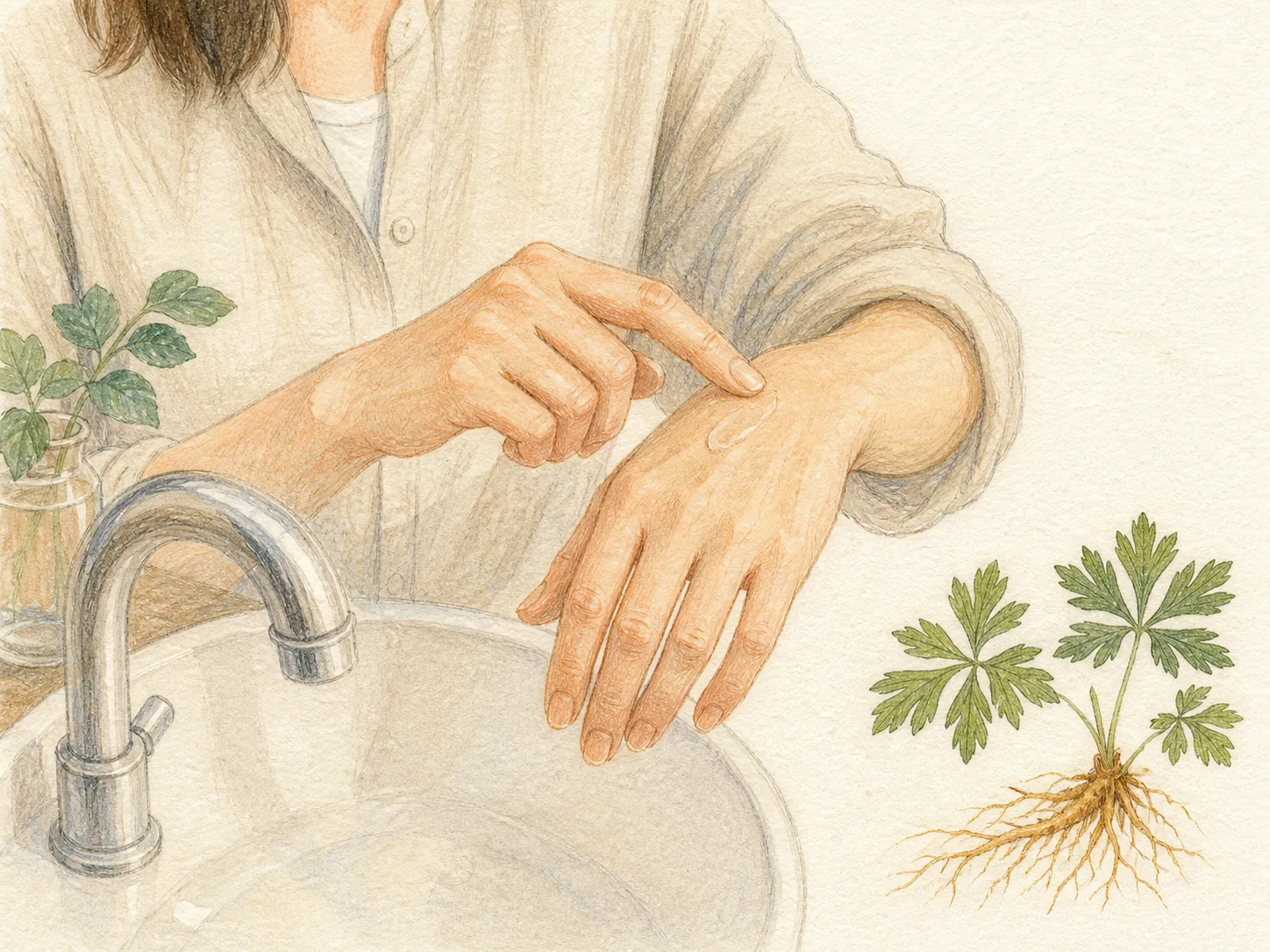
This INCI comes from the root of Coptis japonica. Traditional-medicine records and many experiments use the rhizome of Coptis chinensis, often called Rhizoma coptidis. Both contain berberine-related alkaloids, but species, plant part, extraction, and alkaloid ratios are not interchangeable.
Research on a related rhizome can explain how the shared alkaloid family affects inflammatory pathways. It cannot establish the exact size of the effect in every Coptis Japonica Root Extract face product.
What the human patch test measured
A Korean study placed a preparation containing 2% Coptis Japonica Root Extract on the backs of 32 adults and monitored skin reactions. The tested material did not produce a meaningful irritation response under those conditions. This supports tolerability at that concentration and contact design.
It was not a trial measuring how much facial redness or acne improved. Finished products also contain solvents, preservatives, fragrance, and other active ingredients that change comfort. Reactive skin should still patch test a new leave-on product.
Choosing a practical product
Look for the extract in light soothing serums, gels, or creams when redness and heat are the main concerns. A formula with dependable humectants and barrier lipids is more useful than a long list of botanical extracts with no moisturizing base. If salicylic acid, benzoyl peroxide, or retinoids already make your routine intense, a simple coptis-containing soothing product may fit on recovery days.
Sources used
- Korea Cosmetic Association ingredient reference
- NIBN medicinal plant database: Coptidis Rhizoma
- Coptis japonica Root Extract and berberine in human subcutaneous adipocytes
- Source from kci.go.kr
- Rhizoma coptidis and berberine on TNF-alpha induced NF-kappaB in human keratinocytesBenefit evidence, study conditions, and what the research actually shows.
- Topical botanicals with anti-acne activity review