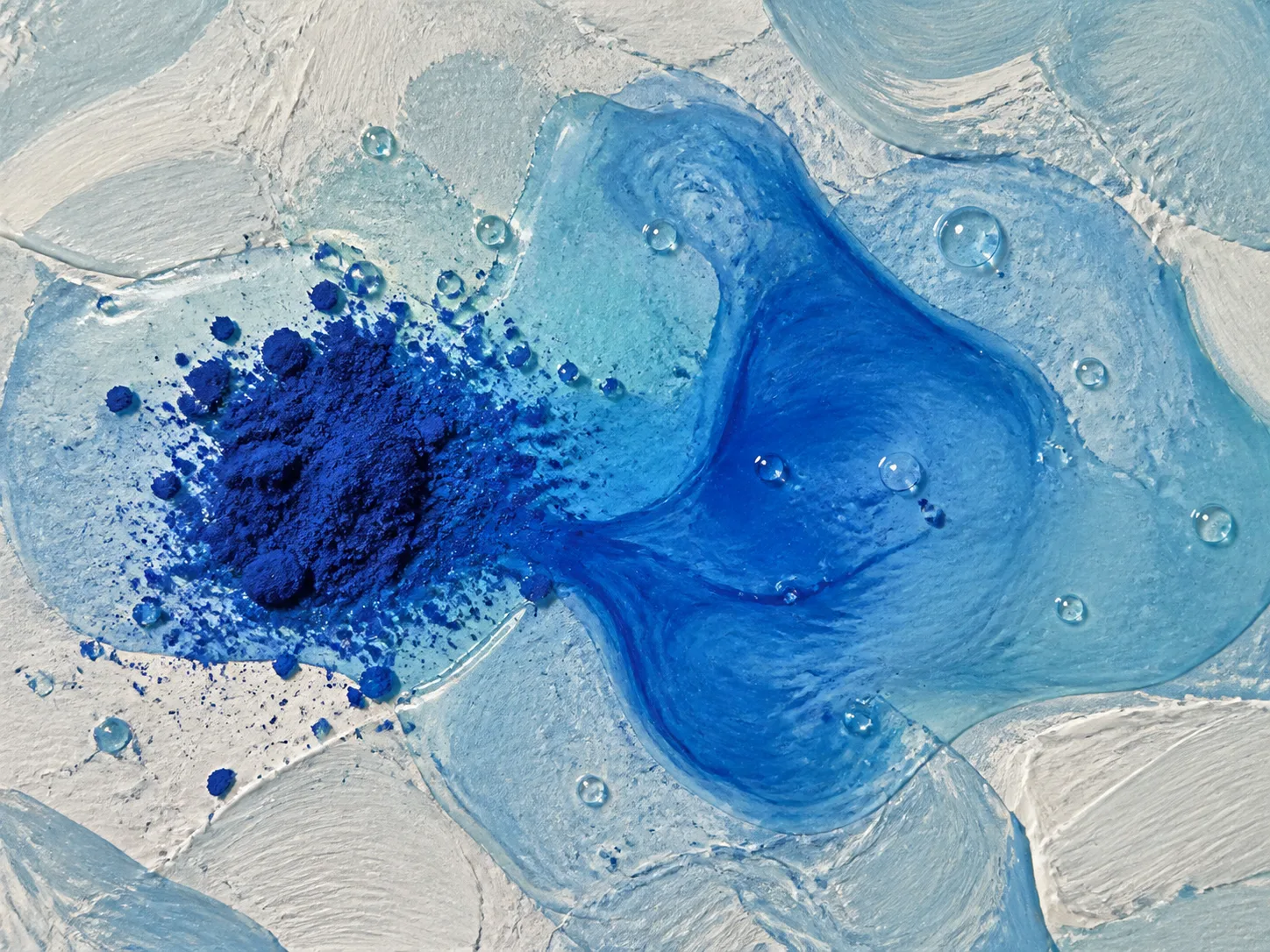
What this blue ingredient is good for
Sodium Guaiazulene Sulfonate is used to calm skin that flushes easily or feels hot, stinging, or unsettled after irritation. It is a deep-blue guaiazulene derivative modified with a sodium sulfonate group, which makes it much easier to use in water-based toners, serums, gels, and moisturizers.
The cooling feel of a gel can come from its watery base, but this ingredient has a more specific reason for appearing in calming formulas. Research on the exact sodium salt shows effects on nitric oxide and inflammatory messengers including IL-6 and IL-8. Those signals are relevant after friction, shaving, UV exposure, or an overly aggressive routine has left skin looking red and feeling reactive.
How the calming mechanism works
Irritated skin cells release messengers that recruit and sustain an inflammatory response. Nitric oxide, IL-6, and IL-8 are part of that communication. When the response stays elevated, warmth, visible flushing, and sensitivity can last longer than the original trigger.
Experimental comparisons found that Sodium Guaiazulene Sulfonate reduced several of these markers. In plain language, it is not simply blue pigment covering redness: it helps turn down the cellular messages that keep an irritated response active. Antioxidant activity was also observed, giving it another route for limiting the chain reactions that follow oxidative stress.
These experiments explain a mechanism rather than promising one fixed clinical result. The visible performance of a moisturizer still depends on dose, the finished formula, and partners such as panthenol, allantoin, beta-glucan, glycerin, and ceramides.
It is not the same as guaiazulene
Guaiazulene is a blue, oil-soluble ingredient. Sodium Guaiazulene Sulfonate is a separately named, water-compatible INCI also known as Sodium Gualenate. They share an azulene framework and color, but their solubility, formulation behavior, and evidence should not be exchanged.
Chamomile extract and chamazulene are different again. Chamomile extract is a botanical mixture, while chamazulene is a blue compound that can form during distillation. A front label that says “azulene” does not identify which material is present. The full ingredient list does.

Choosing a formula that makes sense
For redness plus dehydration, look for a low-fragrance calming serum or gel cream with dependable humectants. Glycerin, betaine, or hyaluronic acid supplies the immediate water-binding effect, while Sodium Guaiazulene Sulfonate helps calm irritation. Dry skin usually needs ceramides, squalane, or another lipid-rich cream over a light gel.
After shaving or mask friction, a short ingredient list with little fragrance and drying alcohol is often more comfortable. If acids or a retinoid have made skin sting, simplify the routine instead of layering several more active products. After-sun gels can soothe heat and dryness, but sunscreen still has to prevent the next UV exposure.
Blue intensity does not measure strength
The material is strongly colored, so a small amount may tint a formula. A darker product does not prove a higher concentration or stronger calming effect. Other colorants, opaque emulsions, packaging, and lighting all change the shade. Compare exact INCI names and the moisturizing base instead of treating blue color as a dose indicator.
Choose a regulated finished product rather than adding raw powder to skincare. Accurate concentration, dissolution, preservation, and contamination control all matter for a leave-on formula.
Where it fits in a redness routine
If skin is already stinging, pause acids, scrubs, and retinoids before adding more calming products. Then apply a thin layer of a Sodium Guaiazulene Sulfonate toner or serum after cleansing and seal it with moisturizer if the skin feels dry. One well-formulated calming product is easier to judge than three layered blue products.
Judge it by the pattern over time: less post-cleansing tightness, less afternoon warmth, and a red area that settles faster under the same lighting. Two to four weeks is a more useful check than the first cool feeling from a watery gel. Patch test a new leave-on formula and stop for persistent burning, itch, swelling, or rash.
Sources used
- Korea Cosmetic Association ingredient reference
- FDA GSRS: Sodium Gualenate
- COSMILE Europe: Sodium Guaiazulene Sulfonate
- AKTIN Sodium Guaiazulene Sulfonate technical page
- Design, Synthesis and Bioactivity Evaluation of Guaiazulene Derivatives
- In vitro activities of azulene, guaiazulene and sodium guaiazulene sulfonate