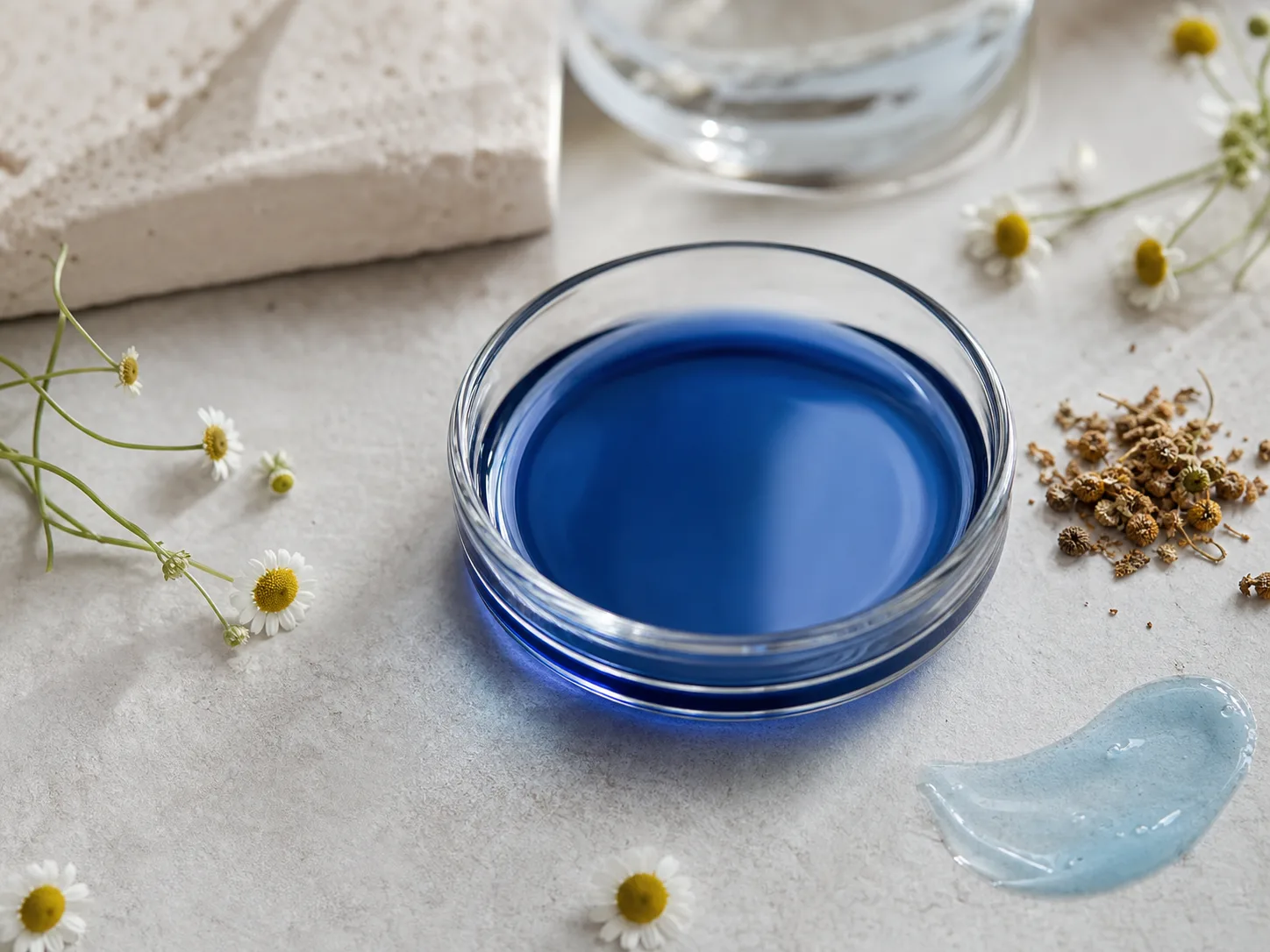
Guaiazulene is a blue azulene derivative
Guaiazulene is a deep-blue, oil-soluble derivative of the azulene chemical family. Cosmetic references list it for coloring, perfuming, and skin-conditioning functions. It appears in blue creams, gels, masks, and after-sun products positioned for skin that looks flushed or feels uncomfortable. Its molecular formula is C15H18.
The chamomile connection can be confusing. Azulene describes the core chemical family. Chamazulene is a blue compound formed during processing of chamomile material. Guaiazulene is a differently substituted azulene derivative, while Sodium Guaiazulene Sulfonate is a separate, more water-compatible ingredient. Chamomile extract can contain many plant constituents and should not be treated as the same INCI.
Blue color is not a strength meter
Guaiazulene is intensely colored, so a small amount can influence the appearance of a formula. A darker blue does not prove a higher concentration or stronger soothing action. Other colorants may be present, packaging can change the visual impression, and a product containing guaiazulene may look pale blue, grey, or nearly white.
When a front label says azulene, check the ingredient list for Guaiazulene or a named derivative. Some products build an azulene story around chamomile flower extract without using guaiazulene itself. The exact INCI is more useful than color when comparing products.
What a calming formula may actually do
Guaiazulene often appears in hydrating gels, moisturizers, masks, and after-sun formulas. A compatible finished product may feel cooling, reduce tightness, and make dryness-driven roughness or redness look less prominent. Most of that immediate comfort is built by glycerin, panthenol, beta-glucan, allantoin, emollients, and the water-rich base.
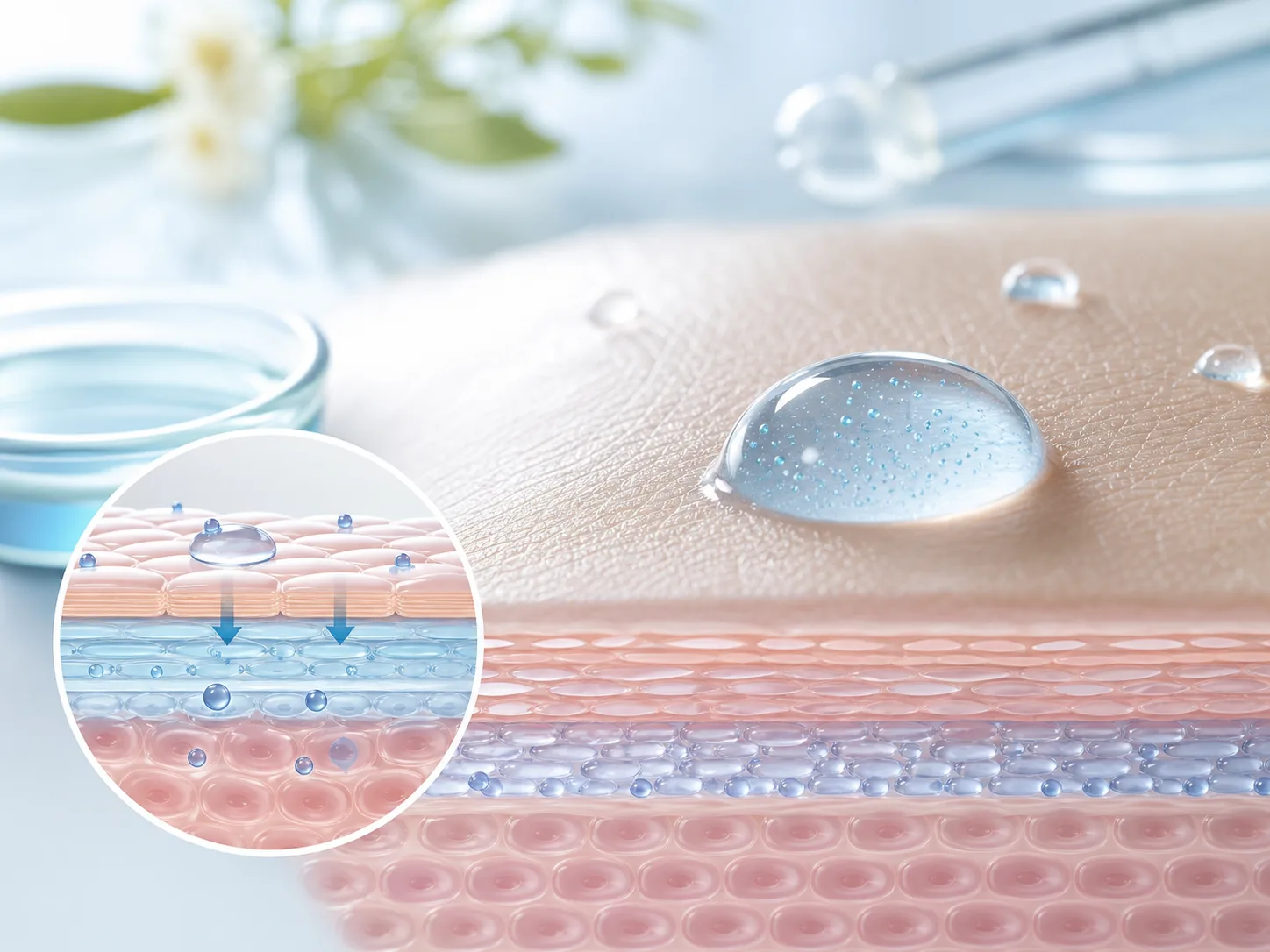
The ingredient should not be promoted as a treatment for dermatitis or burns, and blue color cannot establish efficacy. Coloring and skin-conditioning functions can coexist, but the size of a visible calming effect depends on dose, formulation, and preferably finished-product testing.
Choosing gel, cream, or mask
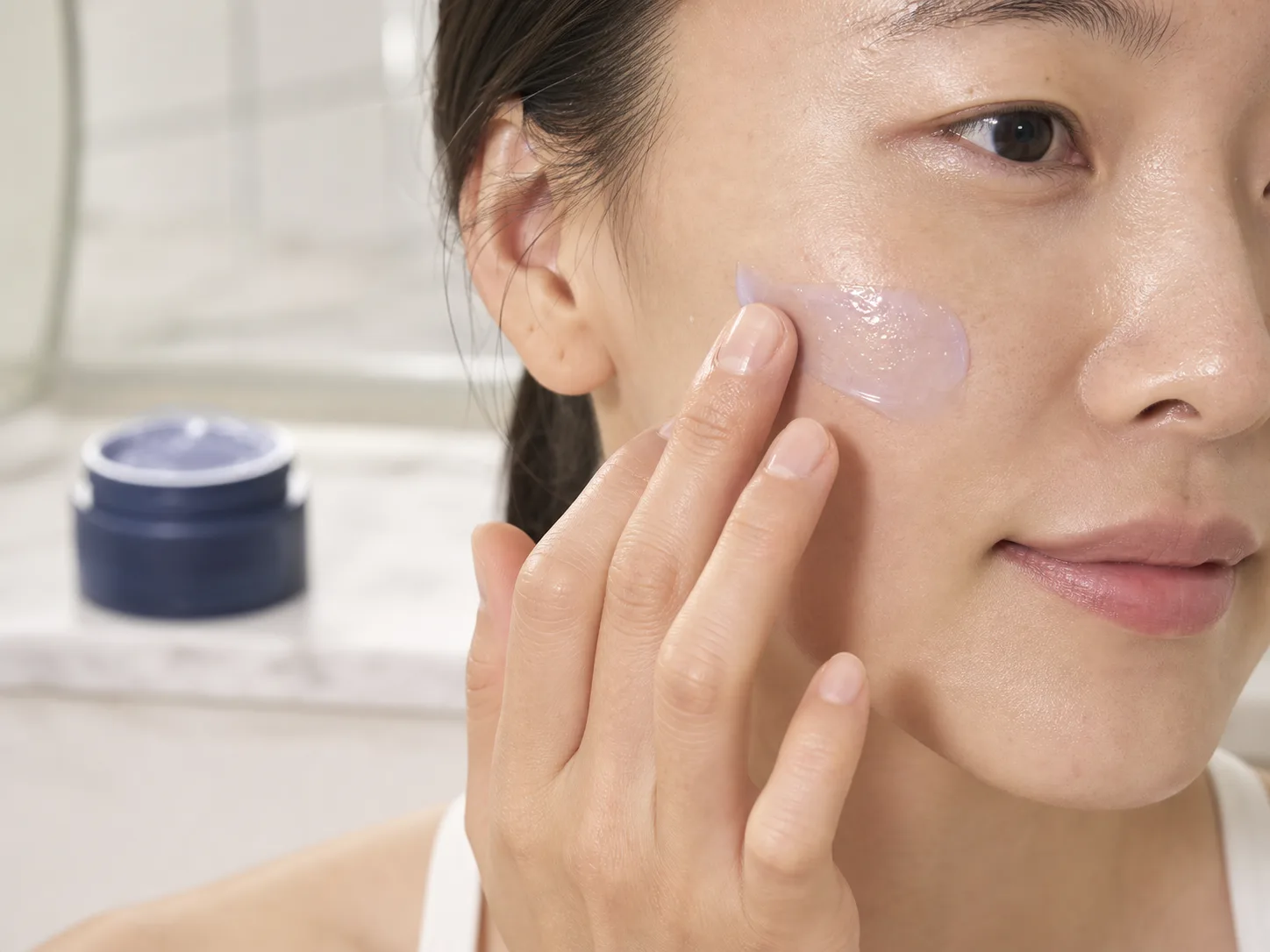
Oily skin may enjoy a low-residue gel or essence. Dry skin can feel tight again after a water gel evaporates, so look for ceramides, squalane, fatty alcohols, or a cream layer that slows moisture loss. The moisturizing structure will usually influence all-day comfort more than the shade of blue.
Masks can temporarily make the surface look plumper by holding a water-rich serum against it. Check fragrance, preservatives, and recommended wear time. An after-sun product is also a comfort product, not a way to reverse ultraviolet damage; prevention still belongs to a separate broad-spectrum sunscreen.
How to interpret the sunlight research
An in-vitro study exposed azulene and guaiazulene to photoirradiation and reported a photomutagenicity signal in a bacterial test system. This bacterial experiment does not establish that normal use of a regulated face cream causes the same outcome in human skin. The cream’s concentration, base, and light exposure differ from the bacterial test conditions.
Health Canada has also evaluated consumer exposure from cosmetics and certain hair-perm or straightening products and considered risk-management measures. Follow the directions for the finished product rather than mixing concentrated raw material into a routine. During daytime use, maintain ordinary sunscreen habits and observe how a new leave-on product behaves on your skin. Stop for persistent burning, itching, swelling, or rash.
Sources used
- Korea Cosmetic Association ingredient dictionaryIngredient name, molecular formula, and cosmetic functions
- Health Canada Guaiazulene assessmentCosmetic use, consumer exposure, and management context
- Photoirradiation study of azulene and guaiazuleneLaboratory photoirradiation findings and evidence boundaries
- German Chemical Society chamomile data sheetDistinctions among chamomile, chamazulene, and guaiazulene claims
- incidecoder.comIngredient characteristics and cosmetic use