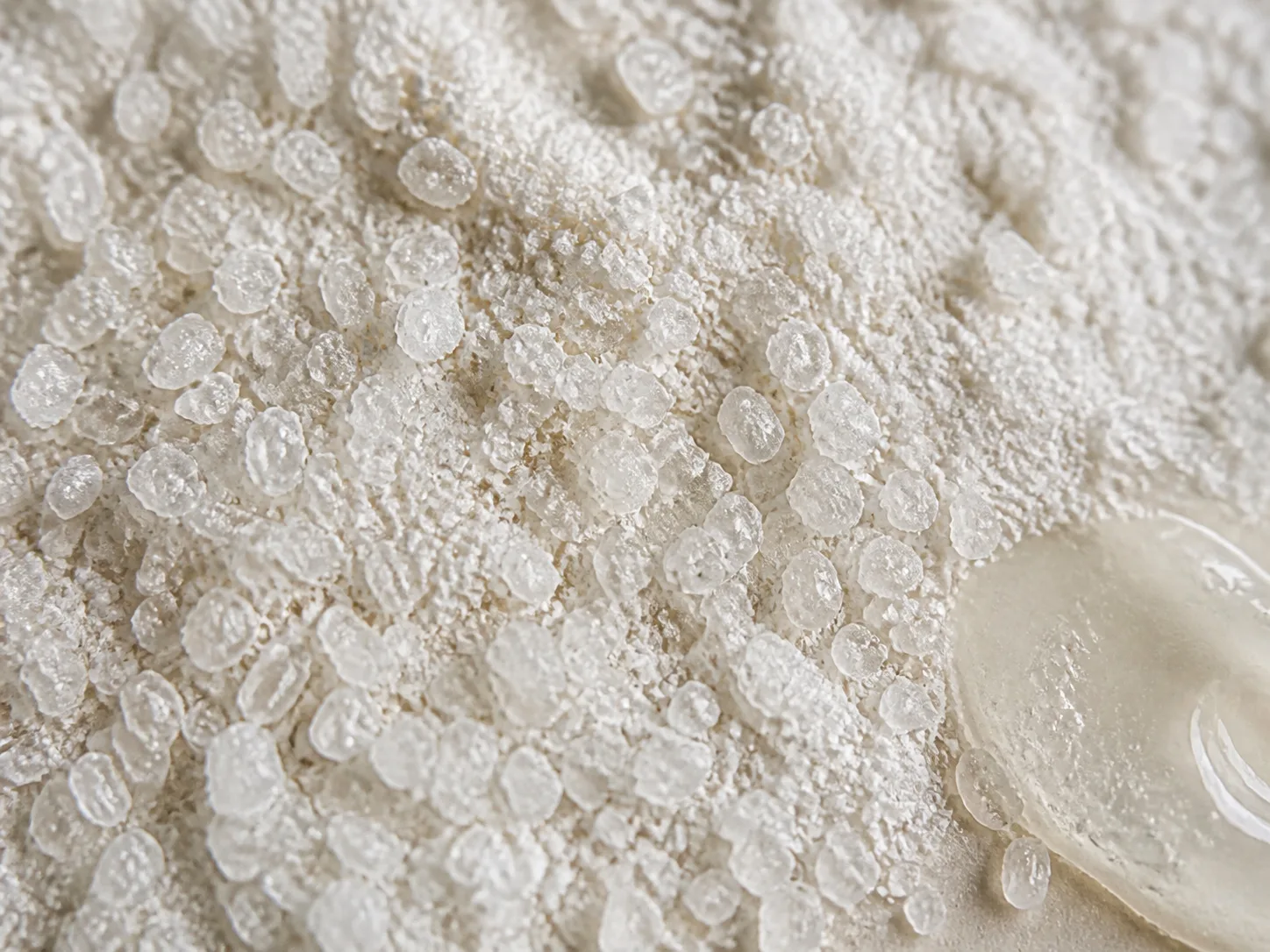
Glutamic Acid is not every ingredient with “glutamate” in its name
Glutamic Acid is an amino acid that helps skin hold water. It is one of the free amino acids associated with natural moisturizing factor (NMF), the water-binding mixture inside the outermost skin cells. In skincare, it helps keep this layer soft rather than acting as an exfoliating acid.
Polyglutamic Acid consists of many glutamic-acid units joined into a larger molecule. It forms a film at the skin surface, whereas free Glutamic Acid is a small, water-soluble amino acid. Sodium Polyglutamate is a salt of the polymer.
Another mix-up appears in cleansers. Sodium Cocoyl Glutamate and Disodium Cocoyl Glutamate are glutamic-acid-derived surfactants used to build cleansing and foam systems. They are not the same INCI and do not play the same role as free Glutamic Acid in a serum or lotion.
How it helps skin retain moisture
Glutamic Acid has two carboxyl groups and one amino group. These water-attracting parts of the molecule can carry electrical charge and form hydrogen bonds with water. This helps retain water around the amino acid and keeps the outer skin layer more flexible. In a serum, it usually works alongside glycerin, betaine, sodium PCA, and other humectants; a cream can then slow the evaporation of that water.
Keep the food-MSG discussion separate from an INCI list
Glutamic acid is familiar from food and flavor discussions, so monosodium glutamate, or MSG, is sometimes pulled into a cosmetic conversation. Ingestion of a food additive and application of a finished topical formula are different exposure routes and different products. Seeing Glutamic Acid on a cosmetic label is not a reason to import a food-MSG debate as a safety conclusion.
Reading it in a toner, serum, cleanser, or hair product
In a toner or essence, see whether Glutamic Acid sits among other NMF-related humectants. A watery layer can reduce the feeling of tightness, but dry skin may still prefer a cream afterward. Notice both the immediate slip and whether your skin feels dry again several hours later.
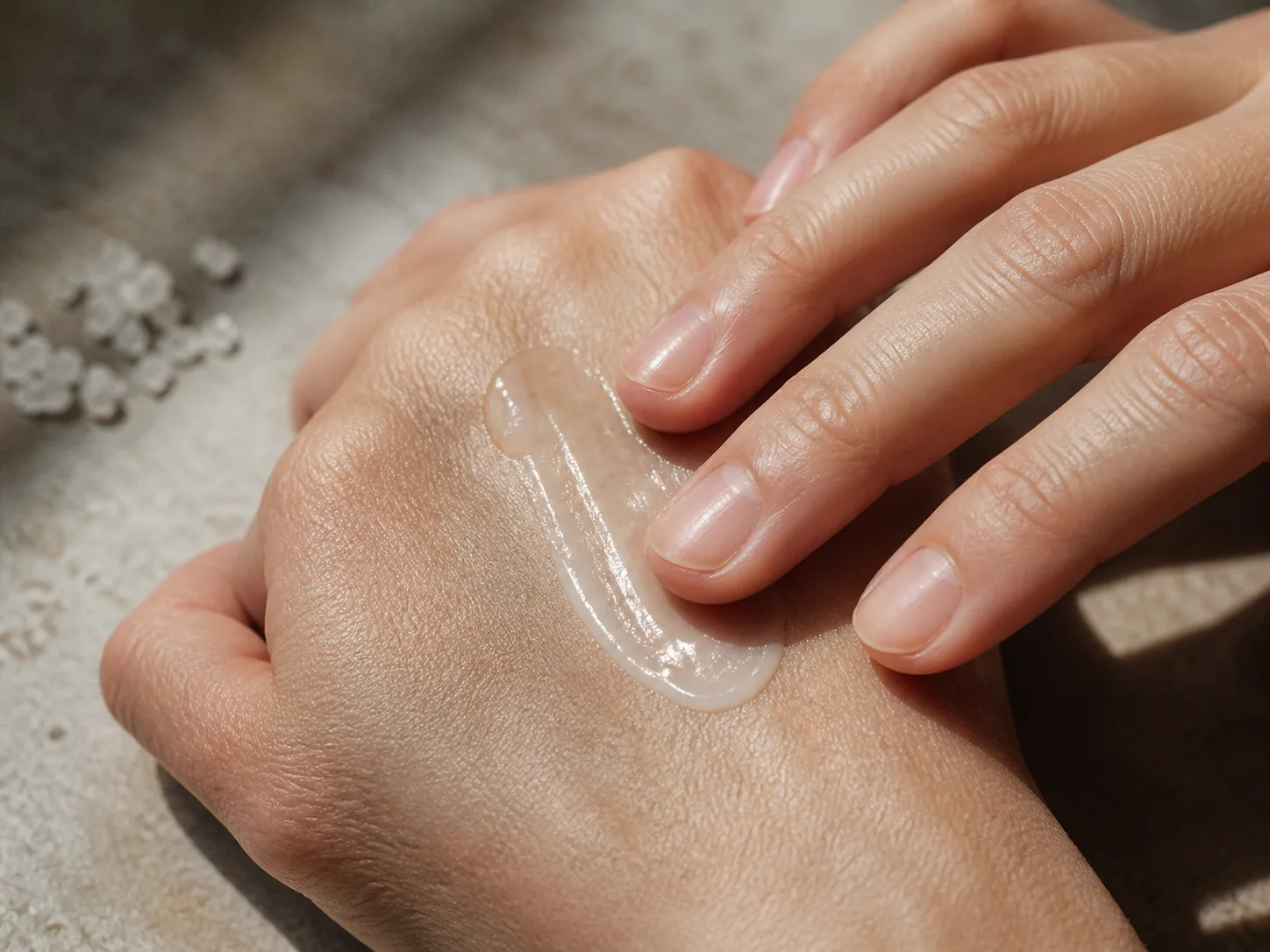
In a serum, pH and companion actives can be more useful than the amino-acid story. Glutamic Acid is not automatically an exfoliating acid. If the formula also contains AHAs, BHAs, or a retinoid, follow the directions and caution for those ingredients instead of assuming the amino acid offsets them. Starting several strong products on the same night makes discomfort difficult to trace.
In a cleanser, a cocoyl-glutamate name usually points to the cleansing system rather than to the moisturizing role of free Glutamic Acid. In hair care, detangling, static, and finish also depend on cationic conditioners, silicones, oils, and the total formula.
Trying a new product
Use a new formula on a small area before applying it widely, then observe the skin for a day. Stop if itching, persistent stinging, redness, or swelling develops. A home check can screen for obvious discomfort; it is not a dermatologist’s diagnostic patch test.
If your skin is already reactive, simplify the routine instead of layering several new, ingredient-rich serums. A low-fragrance moisturizer with a short list may make it easier to identify the cause of a problem. Severe pain, oozing, or a spreading rash deserves medical advice rather than continued cosmetic testing.
Sources used
- Korea Cosmetic Association ingredient reference
- EU CosIng - GLUTAMIC ACID
- PubChem - L-Glutamic AcidIngredient identity, molecular formula, and structure reference.
- SpecialChem - GLUTAMIC ACID
- INCIDecoder - Glutamic Acid
- Paula's Choice - Glutamic Acid
- CIR Expert Panel - Amino Acids
- Source from chemielove.krict.re.kr
- EWG Skin Deep - Glutamic Acid
- Cosmetics Info: Glutamic AcidCosmeticsInfo.org is your source for information about cosmetics and personal care products