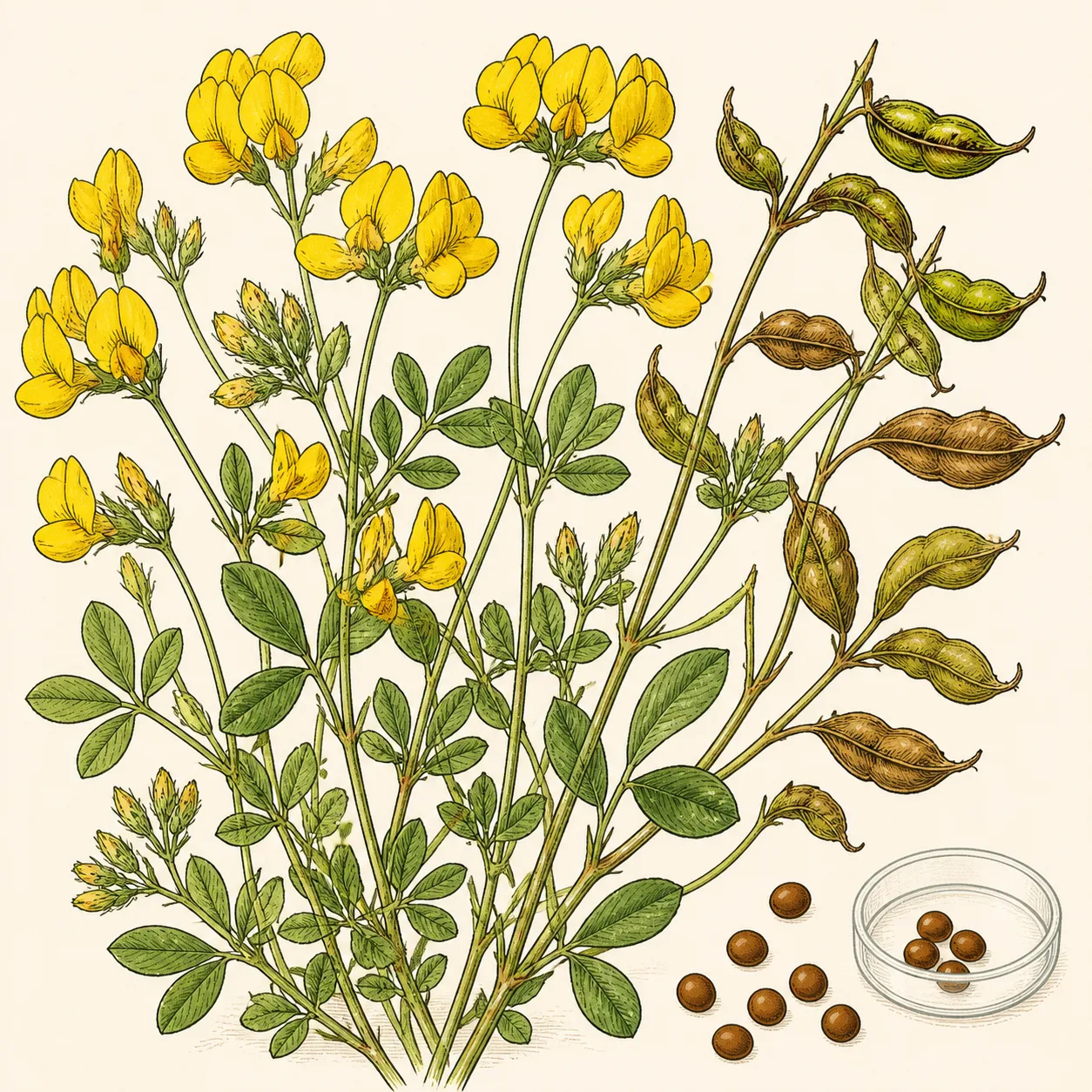
This seed extract targets oil and shine
Lotus Corniculatus Seed Extract is used in formulas for oily skin that becomes visibly shiny through the day. A 2023 study tested a specified bird’s-foot-trefoil seed extract in laboratory work and with people who had oily skin. The human portion measured lower surface oil and shine, giving the ingredient a clearer target than general moisturization.
The seed-extract study found reduced lipid production in sebocytes stimulated with linoleic acid and DHT. This targets oil production rather than simply wiping away surface grease. In the human trial, 30 participants with oily skin used a serum containing 5% of the tested extract; sebum content and the area covered by oil fell after four weeks. Other extracts or concentrations may perform differently.
The seed is the relevant plant part
The INCI refers to an extract of bird’s-foot-trefoil seeds. Leaf, flower, and whole-herb extracts are different materials, as are unrelated ingredients that happen to include the word lotus. Plant part, solvent, and standardization can change the finished extract.
When a brand cites the oily-skin study, check whether its raw material matches the studied seed extract and whether it discloses concentration and test duration. Those details make the product claim more informative than the botanical name alone.
Less shine does not mean smaller pores
Reducing surface oil can make skin reflect less light, so pores may look less obvious for a while. The extract does not physically shrink pore structure, and it is not an acne treatment. Painful, scarring, or persistent inflammatory acne needs care beyond a cosmetic oil-control ingredient.
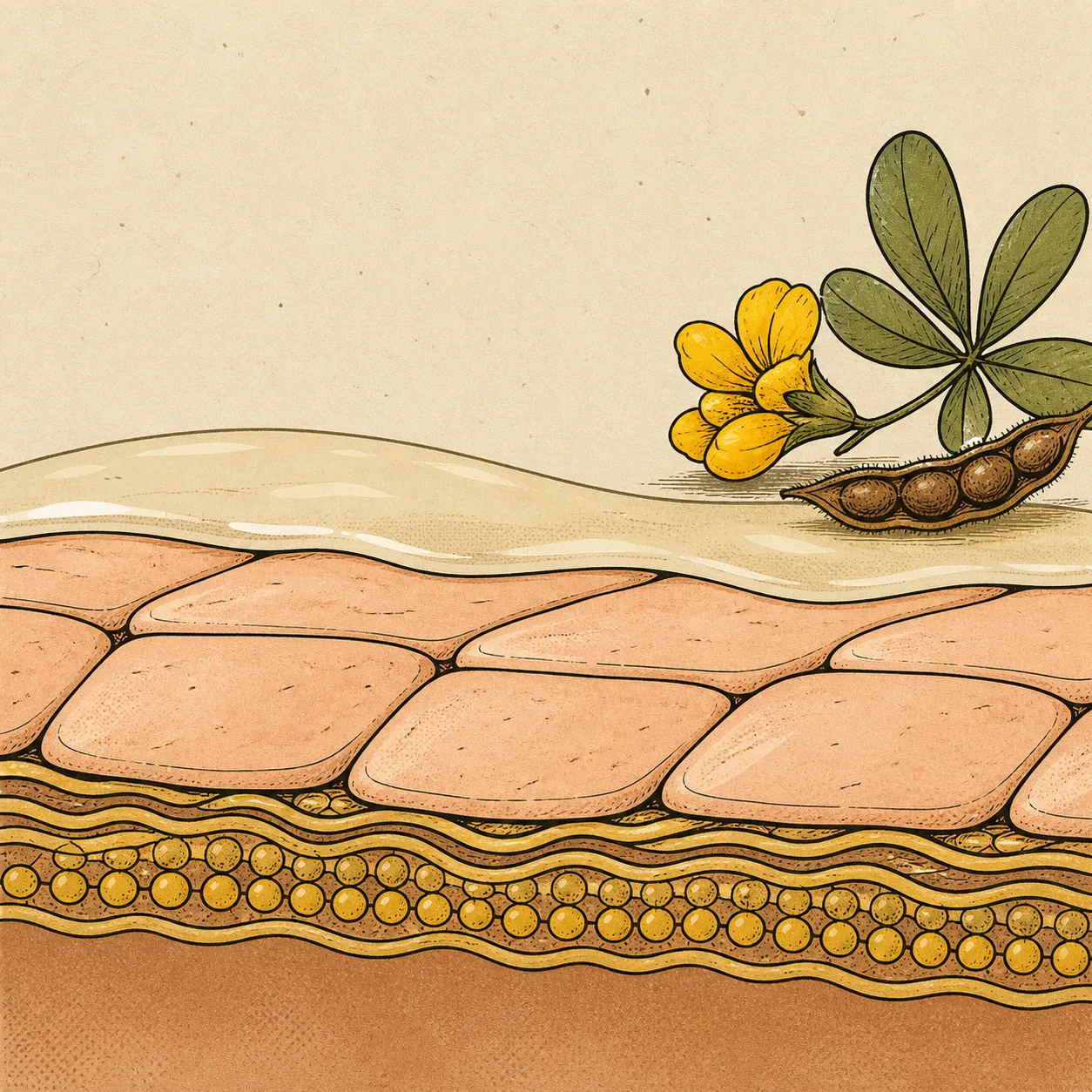
Judge the product several hours after cleansing rather than only by its instant matte finish. Over two to four weeks, note afternoon forehead and nose shine, how often you blot, and whether makeup separates. Those changes are more useful than expecting every trace of sebum to disappear.
Sebum also slows water loss and reduces friction at the surface, so removing as much as possible is not a useful goal. Alcohol-heavy products may look matte at first and then leave skin tight or reactive. This seed extract makes more sense in a light, hydrating formula designed to moderate visible shine instead of stripping the surface.
Choosing a toner, pad, or serum
A toner or serum with glycerin, betaine, and panthenol can reduce the tight feeling that often follows aggressive oil removal. Oily skin still needs water and a comfortable surface film; stripping it repeatedly can make a routine harder to tolerate.
With toner pads, fabric, rubbing, alcohol, and exfoliating acids may matter more than the featured extract. Press the liquid in with your hands or start with one gentle pass. Repeated scrubbing can create stinging and dryness even when the product initially looks matte.
A formula that also contains niacinamide or Zinc PCA may approach oiliness through several pathways. If the routine already includes salicylic acid, glycolic acid, and a retinoid, however, reducing accumulated irritation may improve the skin faster than adding another oil-control step. Less shine accompanied by more tightness and redness is not a successful result.
Patch-test a new botanical formula and stop if persistent itching, redness, swelling, or burning develops. Its oil-control research is relevant when afternoon shine is the problem. Check that the product also leaves your skin comfortable rather than tight.
Sources used
- Korea Cosmetic Association ingredient reference
- EU CosIng - LOTUS CORNICULATUS SEED EXTRACT
- INCIDecoder - Lotus Corniculatus Seed Extract
- International Journal of Cosmetic Science - Lotus corniculatus seed extract
- PMC - bioconverted Lotus corniculatus seed product
- Skintique ingredient glossary
- Personal Care Global formulation report
- Lotus corniculatus seed extract lipogenesis and 30-person studySpecific study material and mechanism; linked in body