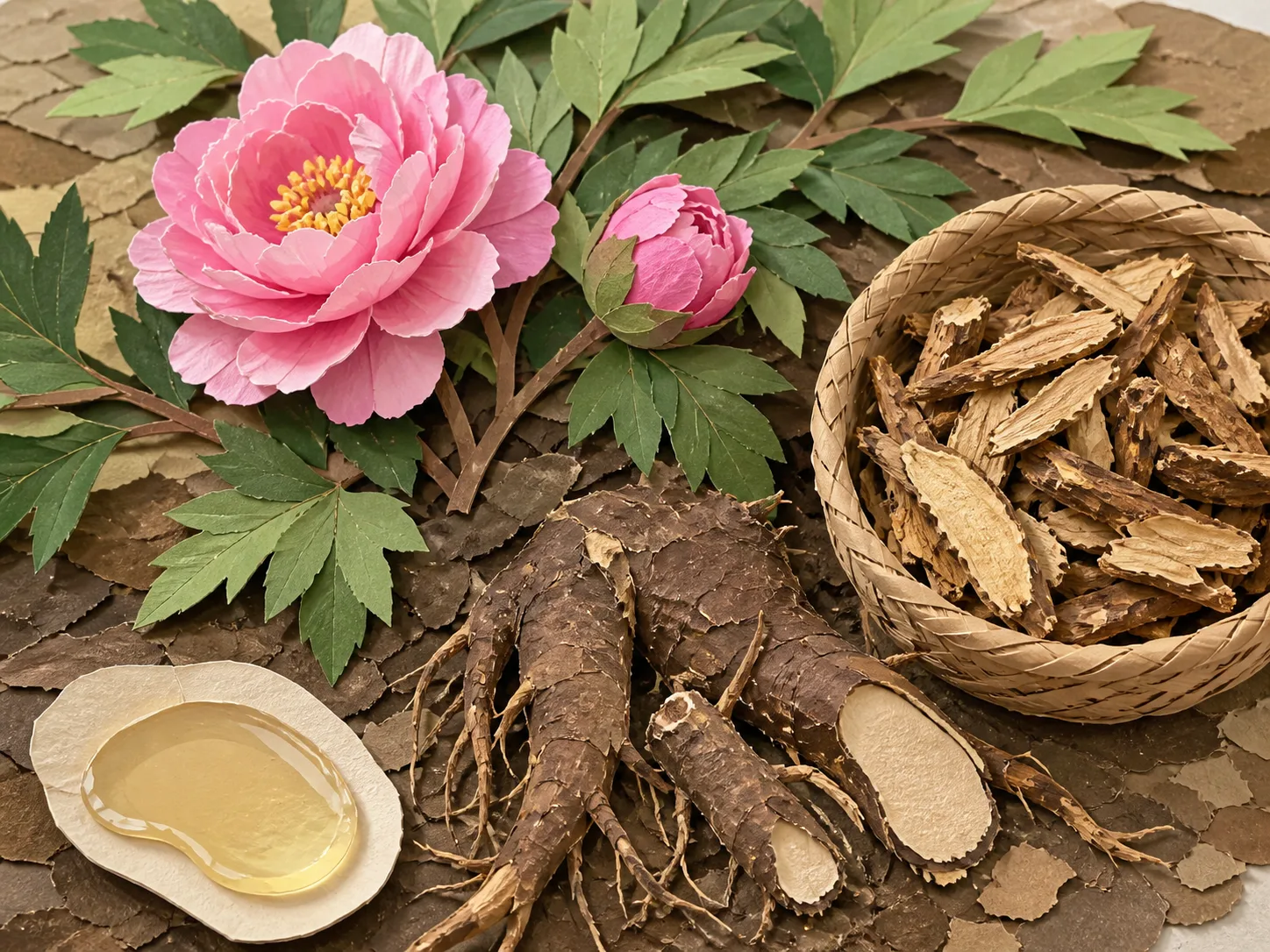
What Peony Root Extract may do for skin
Paeonia Suffruticosa Root Extract is a skin-conditioning extract from tree-peony root. The most interesting evidence concerns the chain of events that follows UV exposure: reactive oxygen species rise, inflammatory and senescence signals increase, and enzymes that break down collagen and other matrix components become more active.
If roughness and dullness are the concern, compare the same area in the same light after several weeks; any useful change should be gradual, not an overnight shine from the cream base. It is not a sunscreen, and it does not have the established wrinkle evidence of a retinoid. It is used as an antioxidant ingredient to help skin respond to environmental stress.
From UV exposure to collagen breakdown
UV exposure increases reactive oxygen species, or ROS. Excess ROS can oxidize lipids and proteins, damage DNA, and amplify inflammatory signaling. It also helps activate pathways that raise collagenases and matrix metalloproteinases, accelerating breakdown of the extracellular matrix that gives dermis much of its structure.
Specific standardized peony root extracts scavenge several radical species in laboratory assays. In UV-stressed keratinocytes, fibroblasts, and reconstructed skin, researchers also observed lower ROS, less senescence-associated activity, and lower collagenase and hyaluronidase activity. These findings suggest that reducing oxidative stress may also help slow the signals that lead to collagen breakdown.
How IRS1, PI3K, and FOXO fit the mechanism
Cells use an IRS1-to-PI3K-to-AKT-to-mTOR signaling route to respond to growth and nutrient cues. Excessive activation during UV stress can contribute to an imbalanced, senescence-prone state. FOXO transcription factors participate in stress adaptation, antioxidant-enzyme expression, and damage control.
In a 2025 study, a standardized Paeonia suffruticosa root extract reduced UV-driven overexpression of IRS1 and downstream PI3K, AKT, and mTOR signals while modulating FOXO-related defense. The extract lowered an overactive growth signal while preserving more of the cell’s stress-response activity. Lower ROS, senescence markers, and collagen degradation were observed alongside those changes.
Related paeonol work points to two additional routes. Suppression of MAPK/AP-1 may reduce the signal that raises matrix-degrading enzymes. Activation of Nrf2/ARE may increase production of endogenous antioxidant defenses. Together, these pathways describe a two-sided response: less instruction to dismantle collagen and more capacity to handle oxidative stress.
What the human measurements add
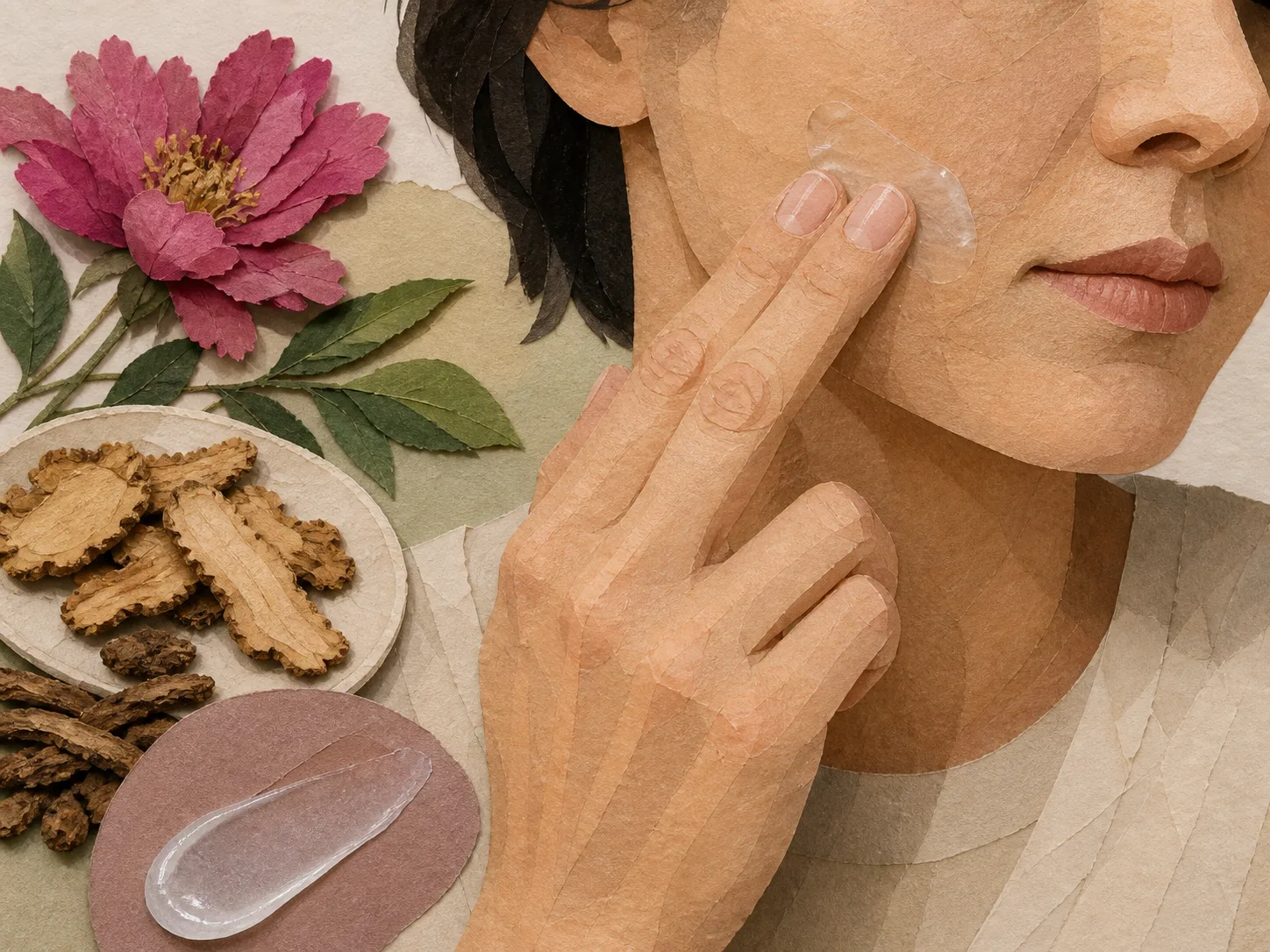
The standardized-extract study went beyond isolated cells and reconstructed skin by including human measurements such as transepidermal water loss, hydration, roughness, and elasticity. Improvements in those endpoints make the evidence more relevant than a test-tube antioxidant assay alone.
Before choosing a serum, look for the extract concentration or standardization and a finished-product test; polyphenol content, vehicle, participant count, and study duration can all change the result. The word “peony” on a label cannot tell you that the finished product reproduces the same extract or effect size.
Do not confuse root, bark, callus, and white peony
Paeonia Suffruticosa Root Extract is not automatically interchangeable with peony bark extract, callus extract, flower extract, or Paeonia lactiflora root extract. Plant part and species affect paeonol, paeoniflorin, and polyphenol composition. Evidence should be assigned to the exact INCI whenever possible.
In a photoaging routine, sunscreen protects against further UV exposure, while peony root extract adds antioxidant activity. Niacinamide, vitamin C derivatives, or retinoids may account for much of a finished product’s visible effect when present. Glycerin and ceramides can explain immediate smoothness through hydration rather than long-term matrix change.
How to use it without overloading a routine
Introduce one leave-on product at a time, once daily on a small area. Expanding slowly makes it easier to identify irritation from fragrance, preservatives, acids, or the botanical mixture. Avoid starting a new acid and retinoid on the same day and then attributing every reaction to peony.
Sources used
- Korea Cosmetic Association ingredient reference
- Korea Cosmetic Association ingredient reference
- Paeonia suffruticosa Andrews root extract ameliorates photoaging via regulating IRS1/PI3K/FOXO pathwayBenefit evidence, study conditions, and what the research actually shows.
- Paeonia x suffruticosa: Chemical Composition, Use in Medicine and Position in Cosmetics
- Medicinal Plant Extracts Targeting UV-Induced Skin Damage: Molecular Mechanisms
- Peony Root Extract in K-Beauty Products
- PEONY ROOT EXTRACT (B)-BG