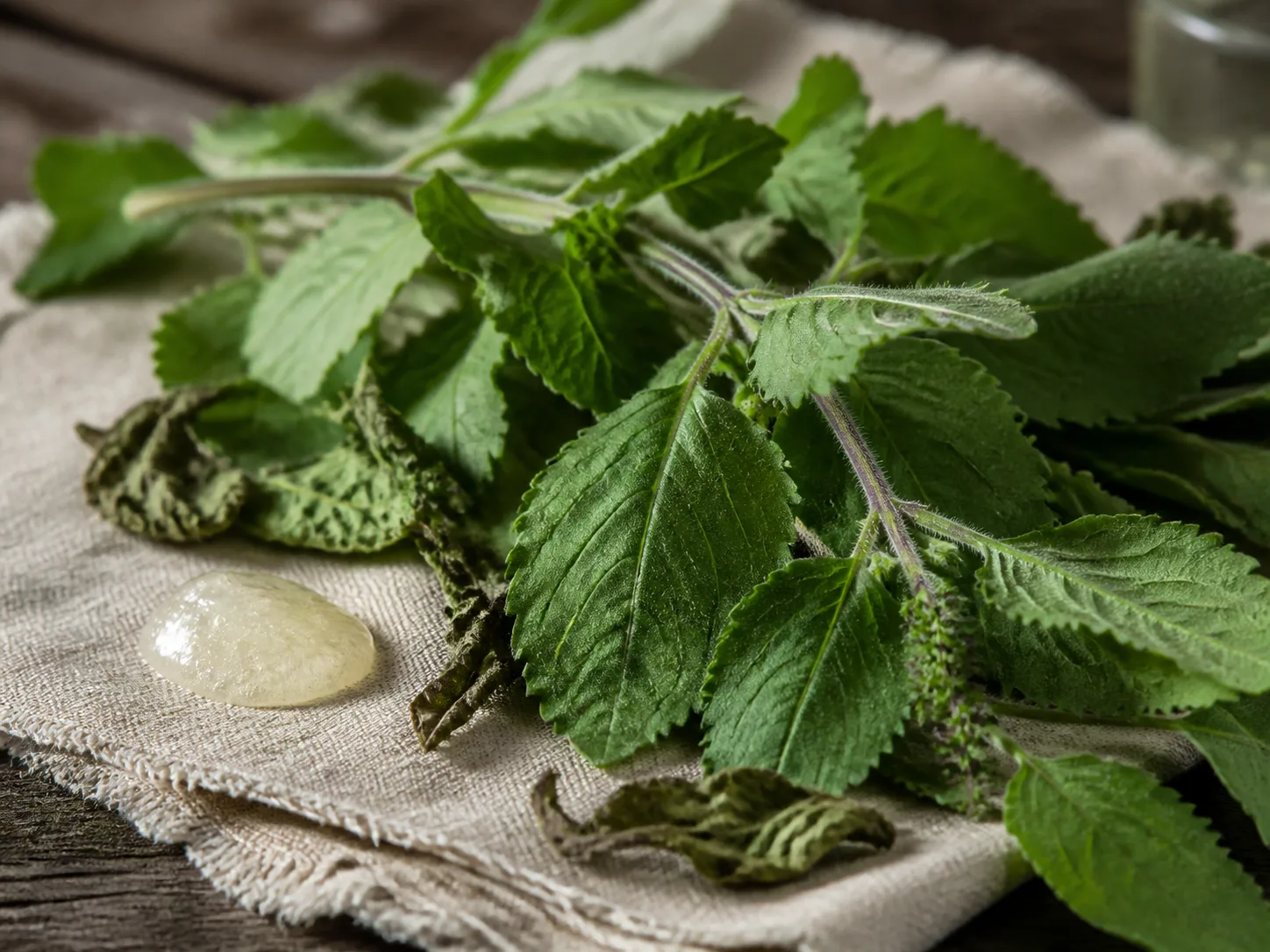
Holy basil leaf extract is a specific label name
Ocimum Sanctum Leaf Extract, commonly called holy basil leaf extract, is obtained from the leaves of holy basil. On an ingredient list, the useful detail is the plant part: this is a leaf extract, not a general statement about every holy-basil material. Korean cosmetic naming records also show that older local label names can point to this same INCI.
That does not make every ingredient containing the word basil interchangeable. A basil oil, another basil species, a tea, a food supplement, and a leaf extract can differ in plant material, processing, exposure, and formula. Information about traditional herbal use or drinking holy basil tea does not establish the result of a leave-on cosmetic containing this exact INCI.
How it is used in skincare
An ethanol extract of holy basil was tested for NF-κB expression and IL-6 release. Both fell under the study conditions. NF-κB helps turn on inflammatory genes, while IL-6 carries inflammatory messages between cells; reducing these signals explains why the extract is investigated for soothing formulas. These measurements came from the tested extract, not a facial trial of every holy-basil toner.
Holy basil leaf extract is also used in antioxidant formulas. Phenolic compounds can donate electrons or hydrogen to stabilize reactive radicals. The antioxidant and inflammation experiments concern prepared extracts; they do not measure acne clearance or sebum reduction in people.
What to check in a toner or serum
Holy basil leaf extract can appear with many other botanicals in water-based skincare. If your skin feels tight after cleansing, test whether one light layer followed by a familiar moisturizer stays comfortable over several uses. The hydration you feel may come largely from humectants, emollients, and the finish of the formula rather than from a single plant extract.
If you become shiny easily, a lighter layer may suit you better than a heavy cream, but it helps to observe shine and tightness together. Also scan the formula for fragrance, scented oils, denatured alcohol, exfoliating acids, or other ingredients that have already been difficult for your skin. Adding only one new product at a time makes a reaction easier to interpret.
Fragrance and concentrated plant materials
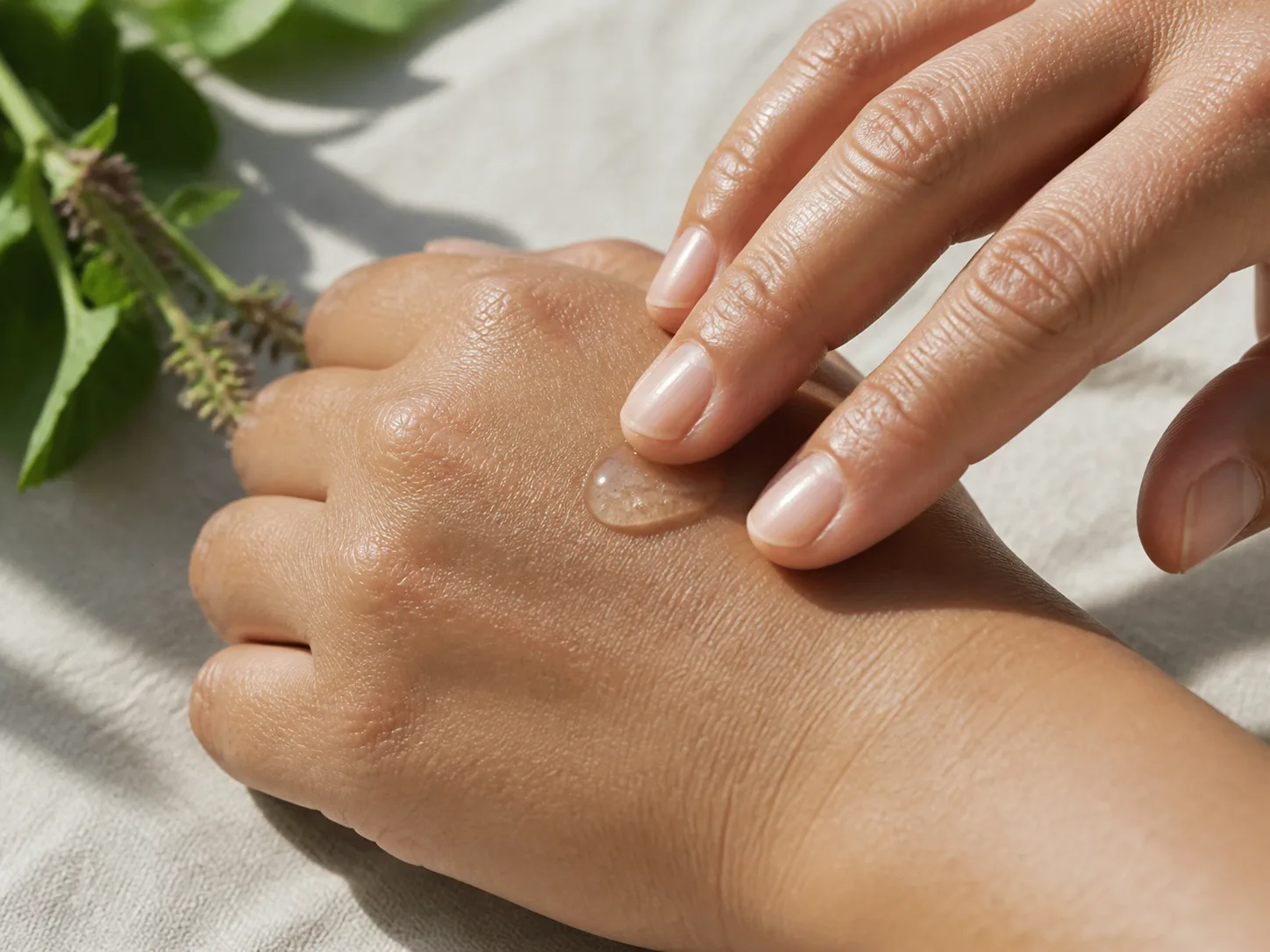
Plant-derived does not mean reaction-free. For a new leave-on product, start with a small amount on a limited area and pause use if burning, itchiness, persistent redness, or swelling develops. A small-area trial can reveal obvious discomfort, but it is not an allergy diagnosis.
If your skin reacts, look at the entire formula and your other recent changes before blaming the holy basil extract alone. Fragrance, preservatives, acids, retinoids, and multiple botanical extracts can all be relevant. Painful or ongoing swelling deserves more than repeated product testing.
Sources used
- Korea Cosmetic Association ingredient referencecurrent Korean standard name, exact INCI, source part and cosmetic function
- CosIng Checker - Ocimum Sanctum Leaf ExtractCosIng inventory reference and identity cross-check; inventory listing is not an efficacy approval
- SpecialChem - Ocimum Sanctum Leaf Extractprofessional formulation context and INCI identifiers
- Source from nbbio.co.krKorean supplier's finished-formulation and use-level context; supplier efficacy claims are not generalized
- Phytochemical and antioxidant profiling of Ocimum sanctumleaf-extract phytochemical and in-vitro antioxidant context, with no finished-cosmetic clinical attribution
- Holy basil extracts and skin-related enzyme and inflammatory assaysEthanol extract, NF-kB expression and IL-6 release.