What is Malachite Extract?
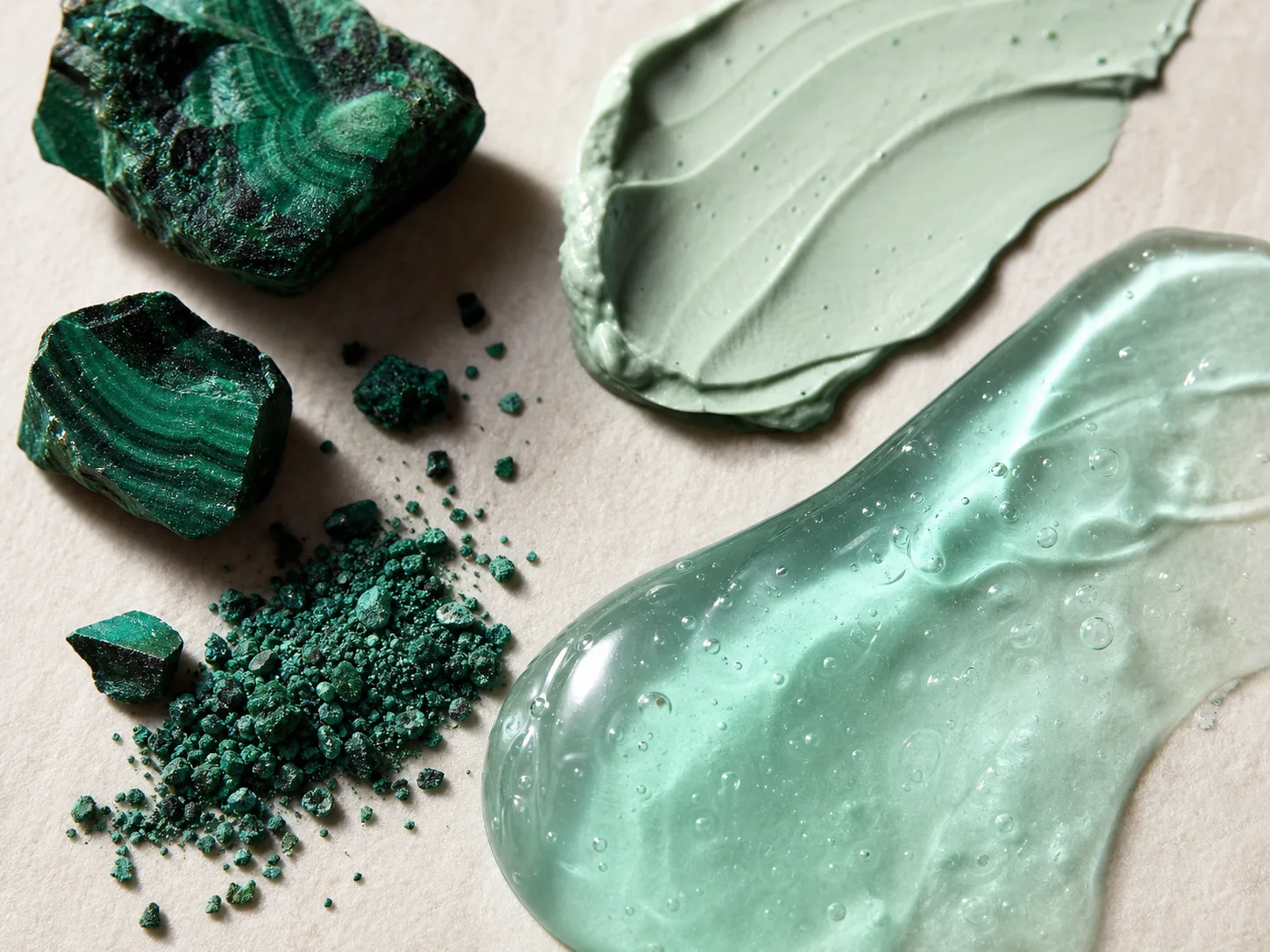
Malachite Extract is a cosmetic extract made from malachite, a green mineral that contains copper. The ingredient is not the raw stone placed directly on the skin. It is processed into an extract, and the final composition can vary with the source material and extraction method.
That distinction matters for structure data. Malachite Extract is not one pure molecule like adenosine. It is an extract containing a mixture of substances, so assigning one molecular formula or drawing one definitive structure would give a false sense of precision. COSMILE Europe lists antioxidant as the verified cosmetic function.
What does the antioxidant claim mean?
Skin is exposed to ultraviolet light, pollution, heat, and dry air. These conditions can contribute to oxidative stress at the skin surface. An antioxidant ingredient is used to help limit oxidation-related reactions or to support a formula positioned around environmental protection. Malachite Extract is used in this context because it comes from a copper-containing mineral.
The result a reader can actually notice will usually depend more on the complete formula than on the extract alone. Glycerin, oils, silicones, ceramides, and film-forming ingredients may determine whether a malachite serum feels watery, silky, or protective. A smoother-looking finish after use is more likely to reflect the combined formula and hydration than an instant reversal of skin damage.
Why is it linked to collagen?
Cosmetic descriptions often connect malachite with collagen because copper is involved in enzymes related to connective-tissue biology. That background helps explain the language, but it does not mean that every malachite product directly increases collagen in the skin. Evidence about copper biology, a specific copper material, and a finished product containing Malachite Extract cannot be treated as the same evidence.
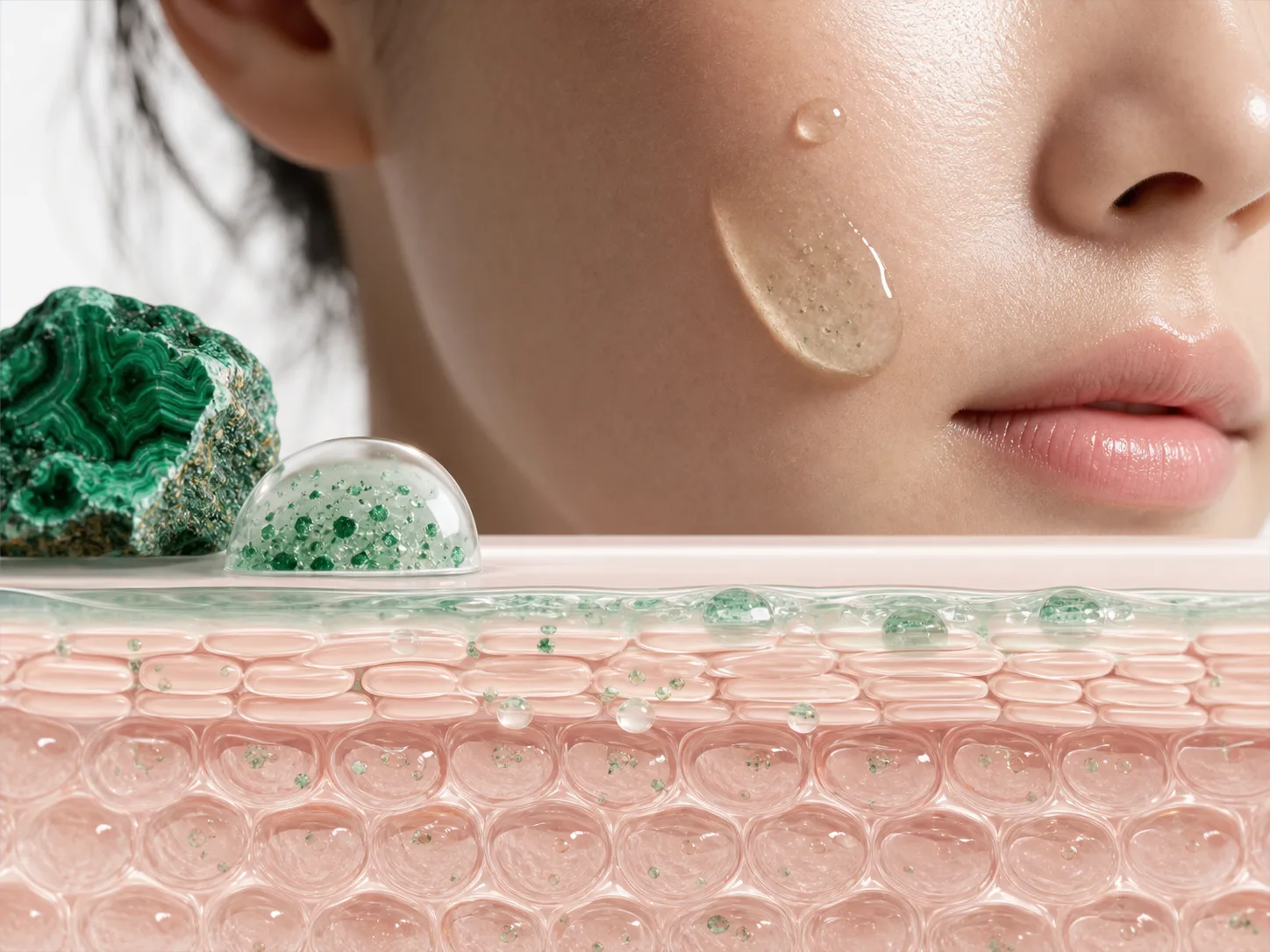
When a product makes a firmness or collagen claim, read the rest of the ingredient list. Peptides, retinoids, moisturizers, and the product’s own testing may contribute more to the claimed result than the mineral extract. The useful question is not whether the word collagen appears, but what the complete product was tested to do and over what period.
What does detox mean here?
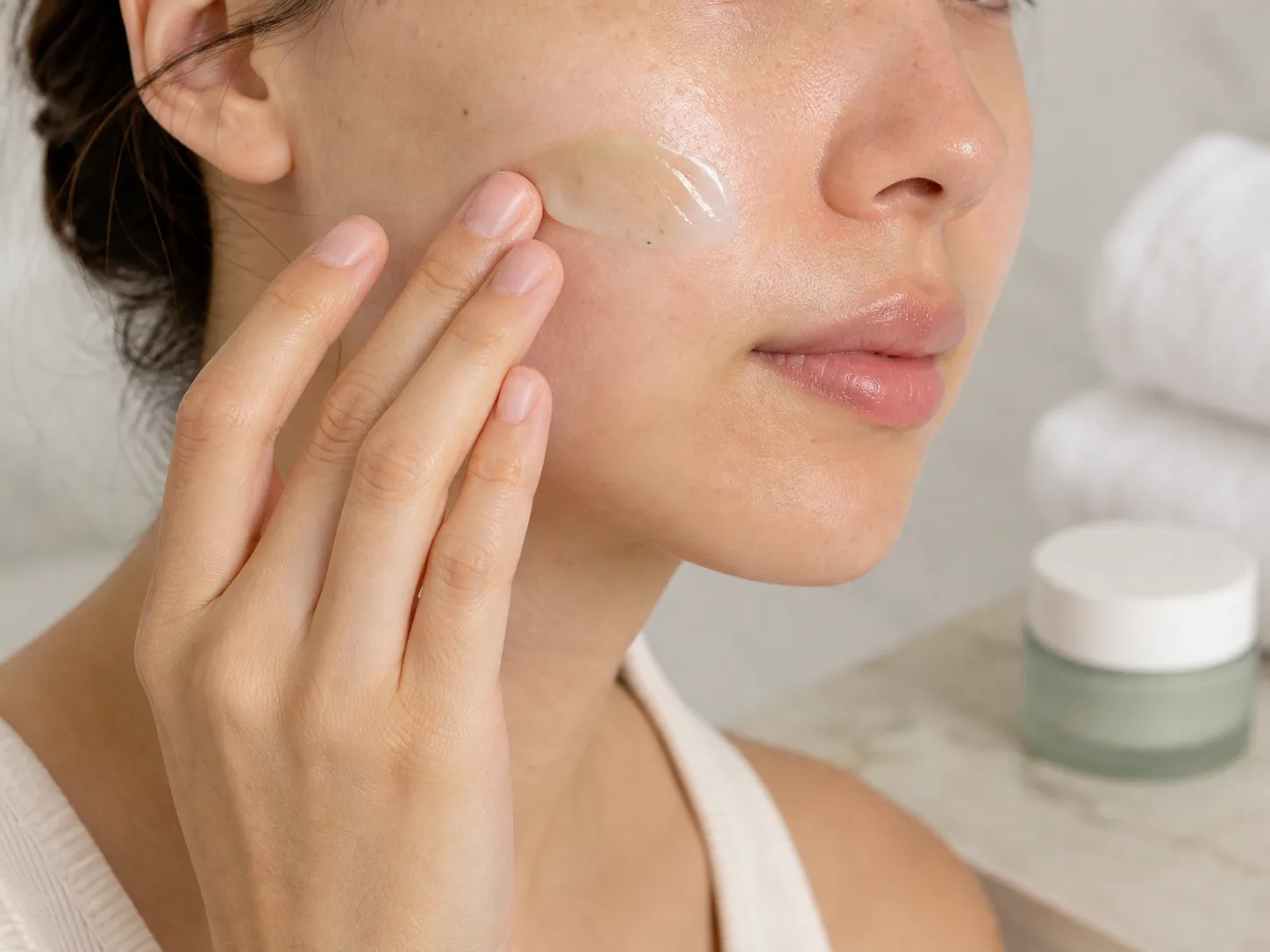
In skincare marketing, detox usually refers to protection from pollution, oxidative stress, or a clean-feeling mask experience. It is not a medical claim that the ingredient removes toxins from the body or pulls waste out of living skin. Malachite Extract is better understood through antioxidant and skin-protection language than through literal detoxification.
Cleansing and antioxidant protection are also different jobs. A cleanser can remove surface oil and particles through surfactants. An antioxidant ingredient can be part of a leave-on formula designed to support the skin’s response to environmental stress. Keeping those two meanings separate makes the product description easier to judge.
Where is it used?
Malachite Extract is most likely to appear in leave-on products such as serums, creams, and masks. In a serum, the finish may be light if the rest of the formula is water-based. In a cream, oils and emollients may make the same ingredient feel richer and more protective. In a mask, the mineral origin and antioxidant claims may be more prominent than any distinct sensory effect from the extract itself.
Ingredient order can provide some context, but it cannot tell you the exact concentration when the manufacturer does not disclose it. If dryness is your main concern, look for barrier-supporting lipids and humectants alongside the extract. If you dislike heaviness, check the oil, wax, and silicone balance before focusing on the mineral name.
How to introduce Malachite Extract
Malachite Extract is not generally treated like a retinoid or exfoliating acid that requires a gradual schedule. Follow the product directions and apply a serum or cream after cleansing. Patch testing on a small area is sensible when the formula also contains fragrance, essential oils, acids, or other active ingredients.
People who are sensitive to copper-containing materials should watch for repeated stinging, redness, or itching. Stop if these symptoms appear. If you use prescription skin treatments, ask your clinician whether the product fits your routine.
Malachite Extract is not malachite green
Malachite Extract and malachite green are different substances. Malachite green is a dye, while Malachite Extract is a cosmetic extract from the mineral. Similar search terms can make them look connected, so the exact INCI name on the ingredient list is worth checking.
Sources used
- COSMILE Europeingredient identity and verified antioxidant function
- Tony Moly ingredient guideKorean naming, mineral origin, and environmental-stress context
- The Skin Formularyconsumer-facing formula and tolerance context
- Marie Claire UKcurrent editorial use of collagen, detox, and pollution language
- PubChem Malachitesource mineral identity