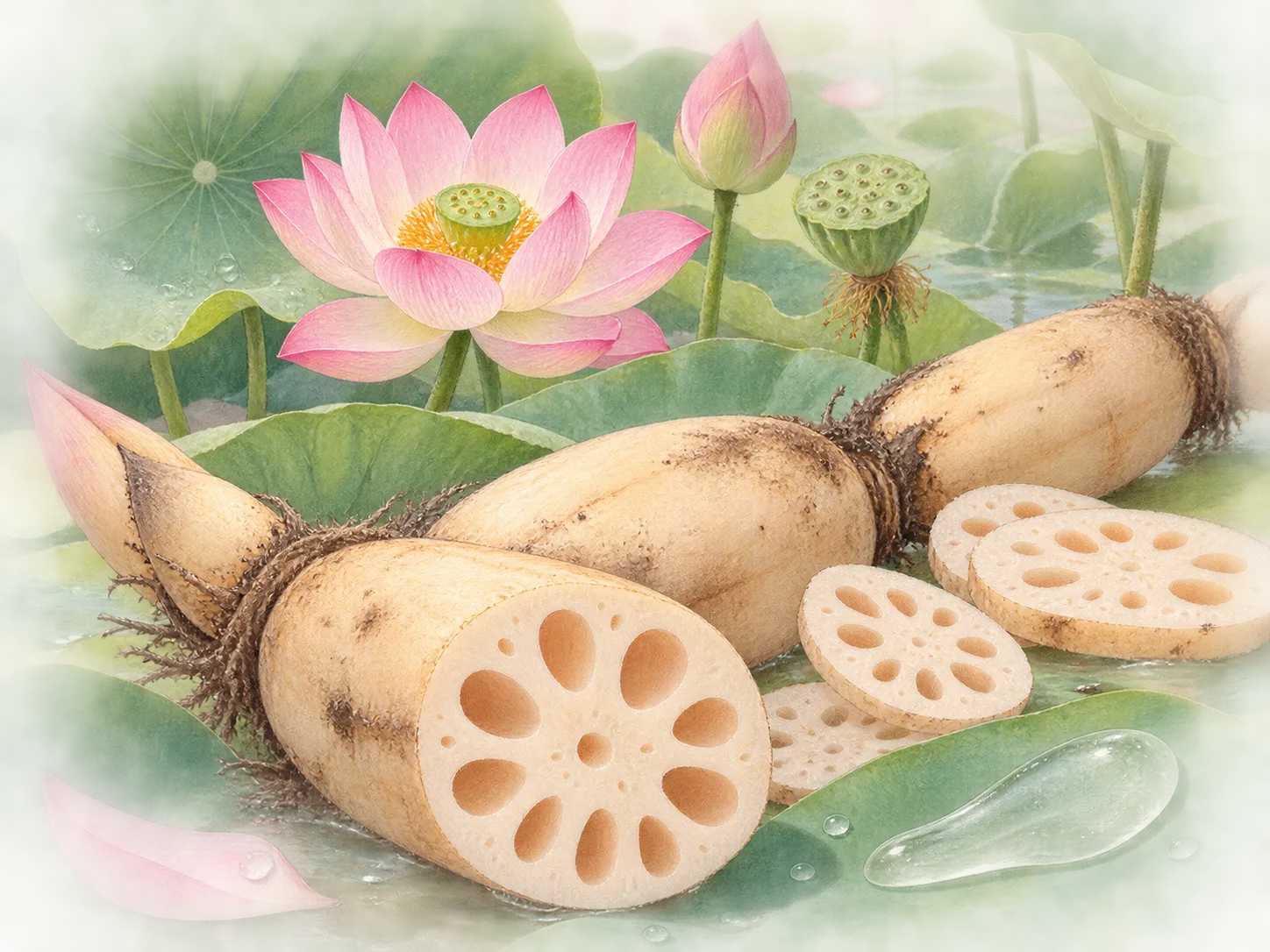
Lotus Root Extract mainly supports surface softness
The main cosmetic benefit of Lotus Root Extract is a softer, more comfortable feel on dry, rough skin. It sits inside moisturizing toners and creams as a conditioning botanical. Raw-material work has also examined antioxidant activity and elastase, the enzyme that breaks down elastic fibers, but the everyday formula role is surface conditioning rather than an instant firming effect.
Nelumbo Nucifera Root Extract is a cosmetic ingredient obtained from lotus root. It is not the same INCI as lotus leaf extract, lotus flower extract, lotus seed extract, or lotus flower water. Those materials come from different parts or preparations, so a claim about one should not be copied onto another just because the label says lotus.
What research can support
A Korean study found 40–50% elastase inhibition when an ethanolic lotus-root extract was tested at 100 μg/mL. Elastase breaks down elastic fibers, which help skin return to shape after stretching. Reducing that enzyme’s activity explains the interest in the extract for firmness. The researchers also measured radical-scavenging activity in a DPPH assay. These were enzyme and chemical tests, not a 40–50% reduction in human wrinkles. Lotus-root extract study
Let the format guide your expectations
With a toner or essence, try one layer on a day when the rest of the routine is familiar. Follow with a moisturizer you already tolerate and notice how the skin feels a few hours later. Fragrance, denatured alcohol, and strong exfoliating ingredients can still sting regardless of the featured botanical.
In a cream or mask, oils, waxes, silicones, and thickeners often decide whether the formula feels light, rich, or congesting. If you become shiny or uncomfortable easily, start with a thin layer and observe both heaviness and returning dryness. If dryness is the bigger concern, a light hydrating layer underneath a cream is another option to try.
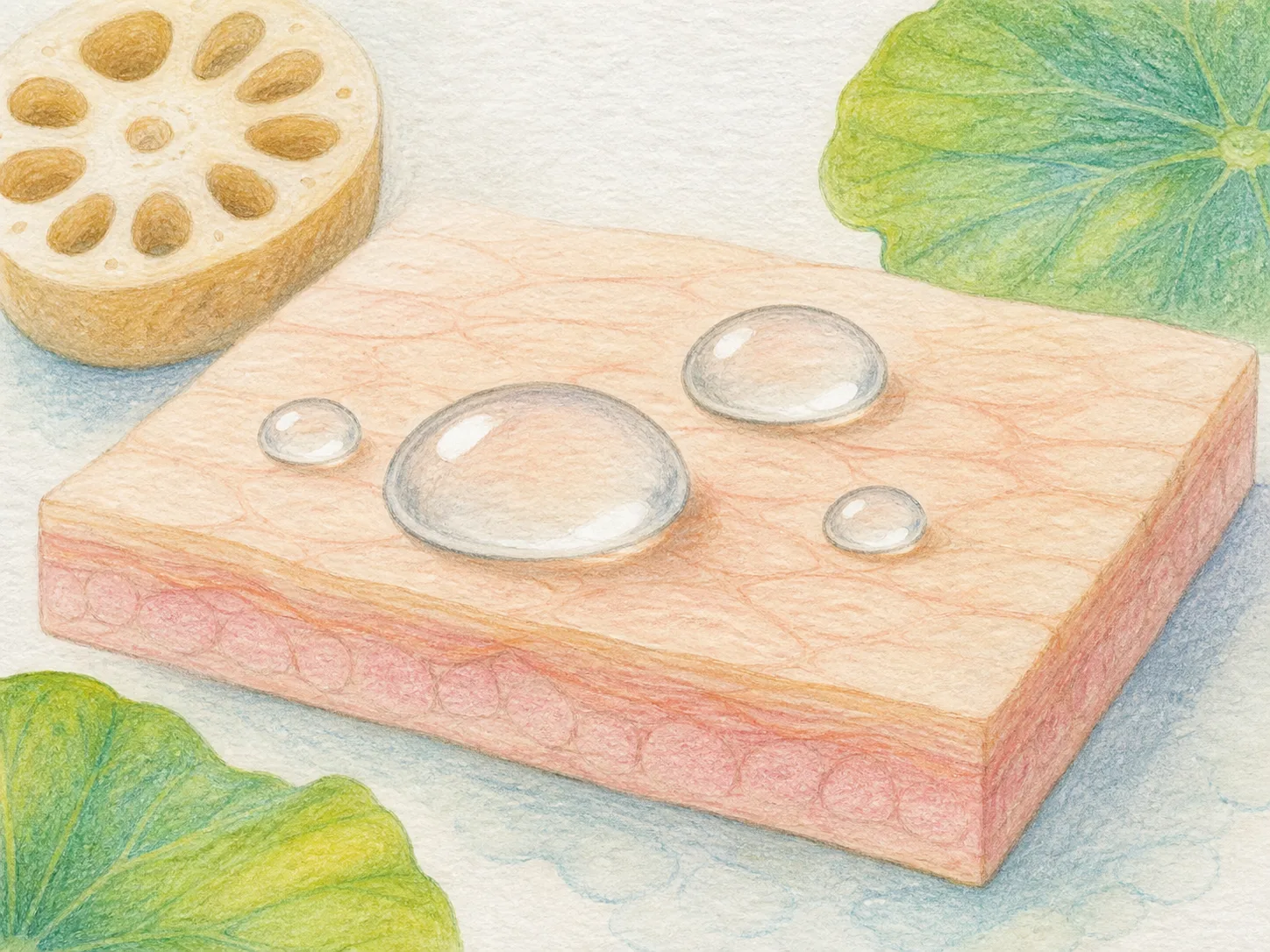
Introduce it simply
Plant-derived does not mean universally non-irritating. Add one unfamiliar leave-on product at a time and use a small area first. If irritation repeats, look at fragrance, essential oils, acids, and how often you use the product alongside the lotus-root extract.
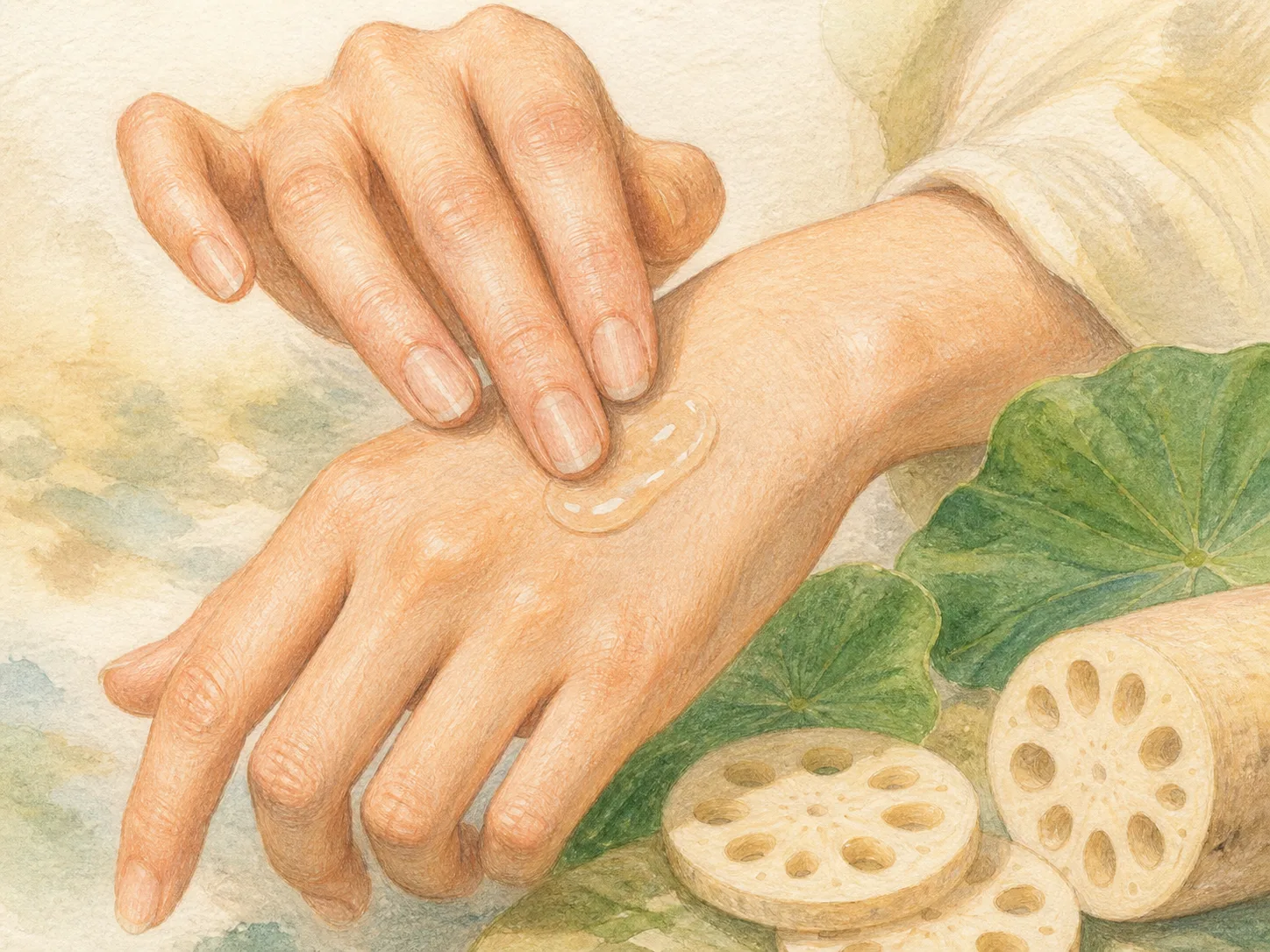
Stop use if burning, persistent itch, swelling, or a rash develops. This is cosmetic ingredient guidance, not medical diagnosis or treatment advice.
Sources used
- Korea Cosmetic Association ingredient referenceKorean standardized name, root identity, and skin-conditioning function
- Source from kci.go.krKorean laboratory cosmetic-material evidence and limits
- Safety Assessment of Nelumbo nucifera-Derived IngredientsIngredient family safety assessment and exact root-extract inclusion
- NELUMBO NUCIFERA ROOT EXTRACT – COSMILE EuropeInternational cosmetic ingredient identity and function context