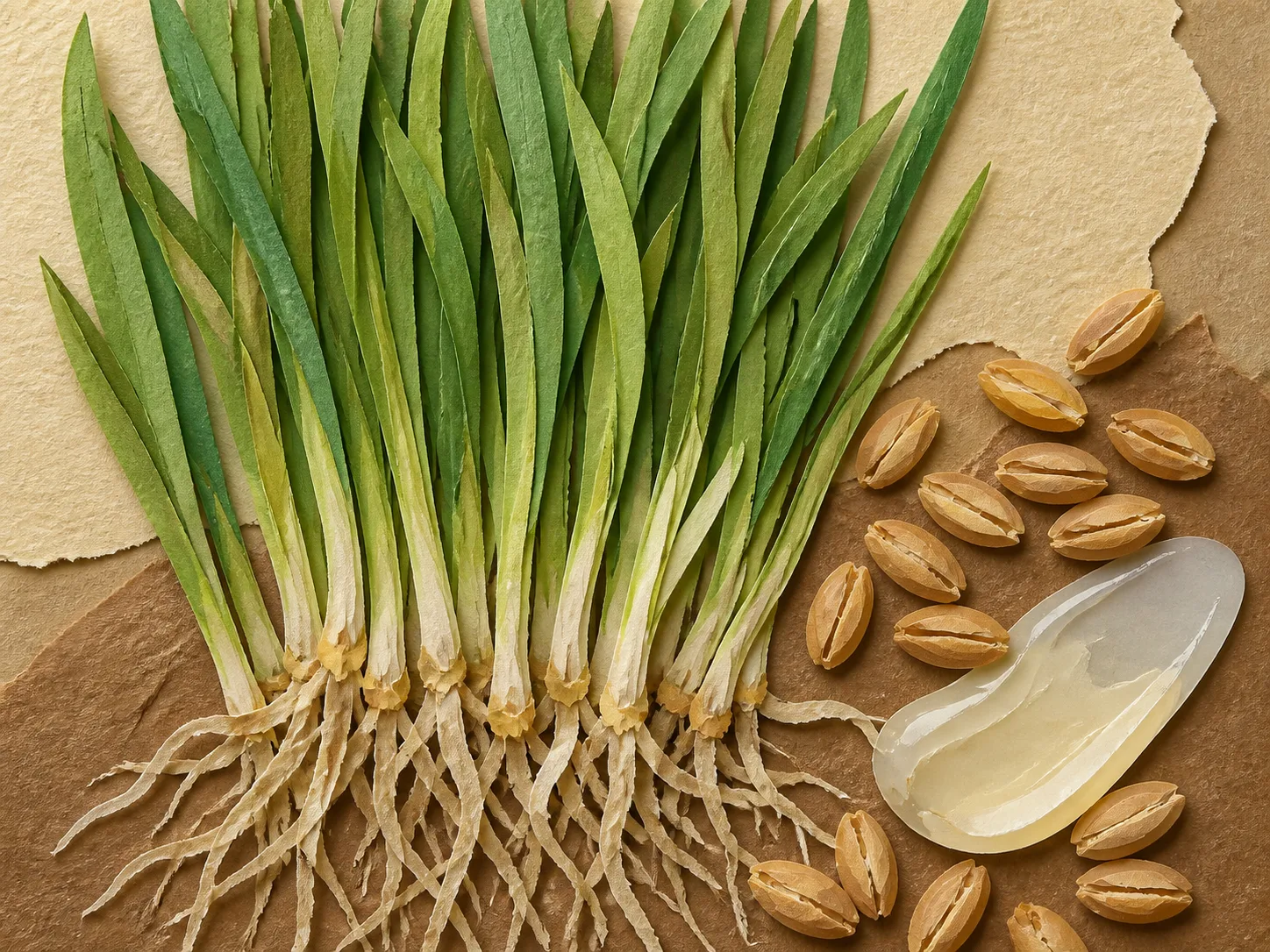
How Wheat Sprout Extract helps soften skin
Wheat Sprout Extract is used to soften dry, rough skin in moisturizing products.
Triticum Vulgare (Wheat) Sprout Extract comes from young wheat shoots and is used to soften dry, rough skin. Korean ingredient records classify it as a skin conditioner.
That does not make it the same ingredient as wheat bran extract, wheat germ extract, wheat protein, wheat seed oil, or a powdered wheatgrass supplement. The plant part, processing route, and exposure are different. Food nutrition claims for wheatgrass are therefore not evidence that a leave-on cosmetic containing this INCI will produce the same effect.
What mechanism evidence actually belongs to wheat sprout extract
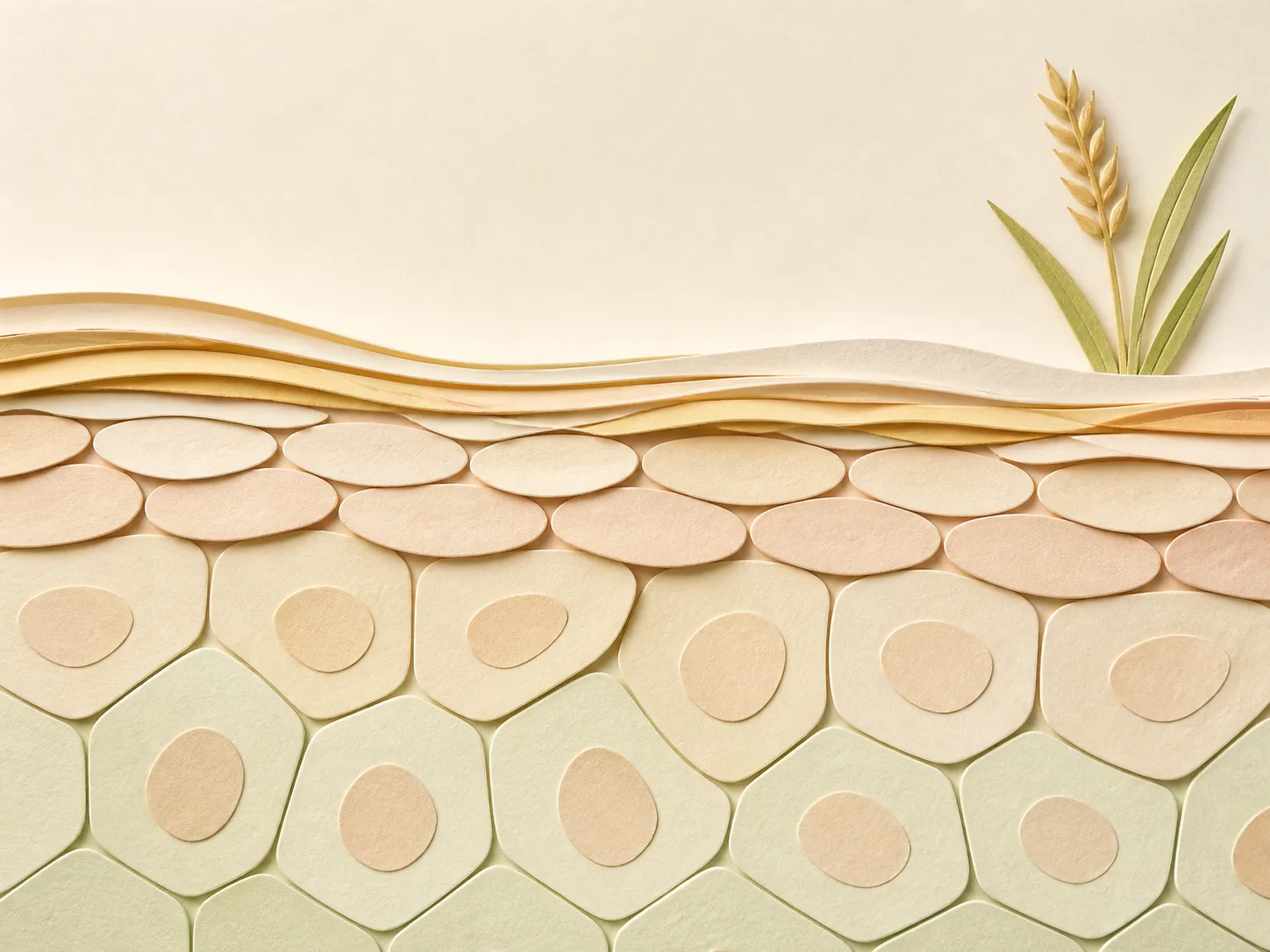
The exact cosmetic INCI is a young-shoot extract, but its composition, concentration, and human efficacy data are sparse. A specific pharmaceutical-grade aqueous Triticum vulgare extract has altered radical scavenging, keratinocyte migration, MMP-2 and MMP-9, collagen I, elastin, integrins, and aquaporin-3 in laboratory models. AQP3 transports water and glycerol across keratinocyte membranes, while MMPs participate in extracellular-matrix turnover.
That material was not established as the same young-sprout cosmetic extract. Human hydration data for wheat polar lipids or wheat extract oil also belong to seed/oil preparations. Those mechanisms provide research context, not evidence that every Wheat Sprout Extract serum activates AQP3 or changes collagen.
Pads, serums, and moisturizers behave differently
In a pad, fabric, wiping pressure, alcohol, acids, and contact time can affect comfort more than the highlighted botanical. Repeated swiping can make a reactive surface feel tighter. On sensitive days, press a product in gently or use it only as directed rather than adding more passes.
In a watery serum or essence, humectants and texture polymers create much of the immediate slip. Dry skin may benefit from moisturizer over a light layer, while oily skin may prefer a breathable hydration step over a stripping routine. Introduce one unfamiliar formula at a time so a new acid or retinoid does not obscure the source of irritation.
What the safety assessment covered
A recent cosmetic safety assessment of wheat-derived ingredients distinguishes the exact Triticum Vulgare (Wheat) Sprout Extract from related wheat materials. The panel could not complete a cosmetic-use safety assessment because the submitted wheat-sprout data did not identify composition and exposure clearly enough. This is not a finding that every product is harmful, and it is not a promise that every product is suitable. It is a limit on the evidence available for this precise INCI.
“Plant-derived” and “food familiar” are not guarantees of tolerance. Try a small amount on a limited area before broad use and stop if persistent itching, stinging, redness, or swelling develops. A home check can reveal obvious discomfort but does not diagnose a specific allergy. Fragrance, preservatives, acids, other botanicals, and friction may also contribute to a reaction.
Sources used
- Korea Cosmetic Association ingredient reference
- CIR Safety Assessment of Wheat-Derived Ingredients
- CIR wheat-derived ingredients final report
- EWG Skin Deep product types for Wheat Sprout Extract
- Seoul Sister Wheat Sprout Extract guide
- Skincare Lab Wheat Sprout Extract guide
- Cosmetic-Info Japan ingredient entry
- Pharmaceutical Triticum vulgare mechanism studyAQP3, MMP, collagen, elastin, migration context and transfer limit