What the INCI name actually identifies
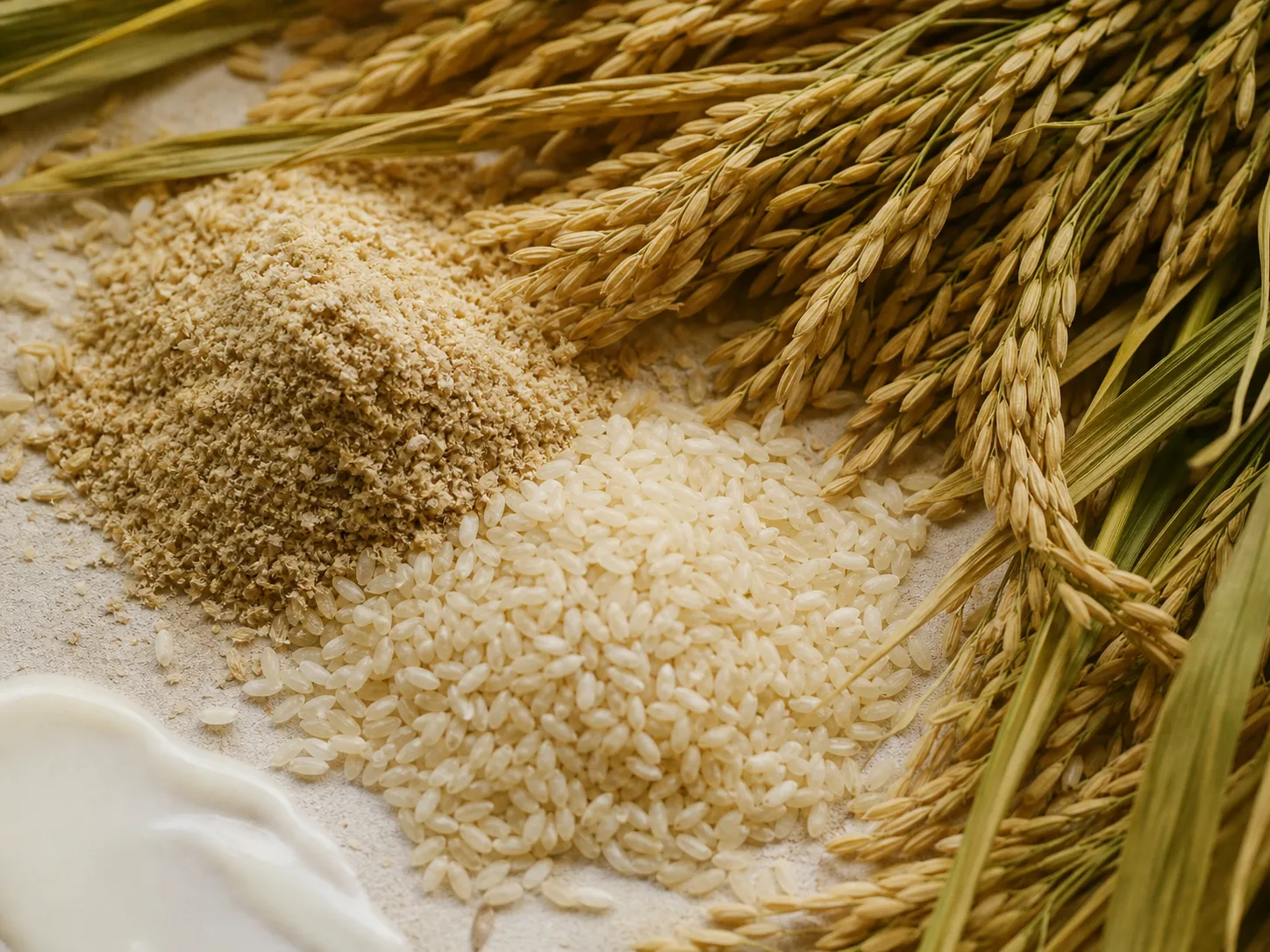
Oryza Sativa (Rice) Extract is a cosmetic material obtained from the seed of the rice plant. Korean and Canadian ingredient records classify it as a skin conditioner; it is used to help dry skin feel softer. The Korean dictionary also lists hair conditioning. That definition is more specific than the everyday phrase “rice skincare.” It does not mean cooked rice, freshly made rice water, or any ingredient that happens to come from the same crop.
Rice bran extract comes from the outer bran layer. Rice bran oil emphasizes oil-soluble material. Fermented rice ingredients have gone through a microbial process, while rice flour retains solid particles that can create friction. Black, purple, or red rice extracts may also have a different profile of pigments and phenolic compounds. These materials are related, but they are not interchangeable INCI names and their studies should not be pooled as if they were one standardized substance.
How rice extract helps dry skin
Rice extract is used to make dry skin feel softer and smoother, with antioxidant and tone-related activity depending on the extract and finished formula. Rice-derived materials can contain amino acids and phenolic compounds, but the exact composition depends on plant variety, seed part, extraction solvent, and supplier specification. An ingredient list does not reveal the amount of extract or whether the commercial raw material is a powder, a liquid, or a diluted blend.
How to read brightening and antioxidant claims
Dermatology reviews of rice-derived ingredients discuss antioxidant, inflammatory, photoprotective, and pigment-related findings. Laboratory studies of particular rice bran, husk, byproduct, or colored-rice extracts have reported antioxidant activity and changes in tyrosinase or melanin-related models. Those experiments used specific plant parts and varieties; they were not trials of a general Rice Extract toner on facial pigmentation.
Skin can look brighter when hydration smooths a rough surface and light reflects more evenly. A formula may also contain a regulated or well-studied brightening active such as niacinamide or arbutin. Separate that active’s job from Rice Extract’s conditioning role. During the day, use a real broad-spectrum sunscreen; rice-derived ingredients do not provide a labeled SPF and should never replace sun protection.
Toner, serum, cream, and wash-off products
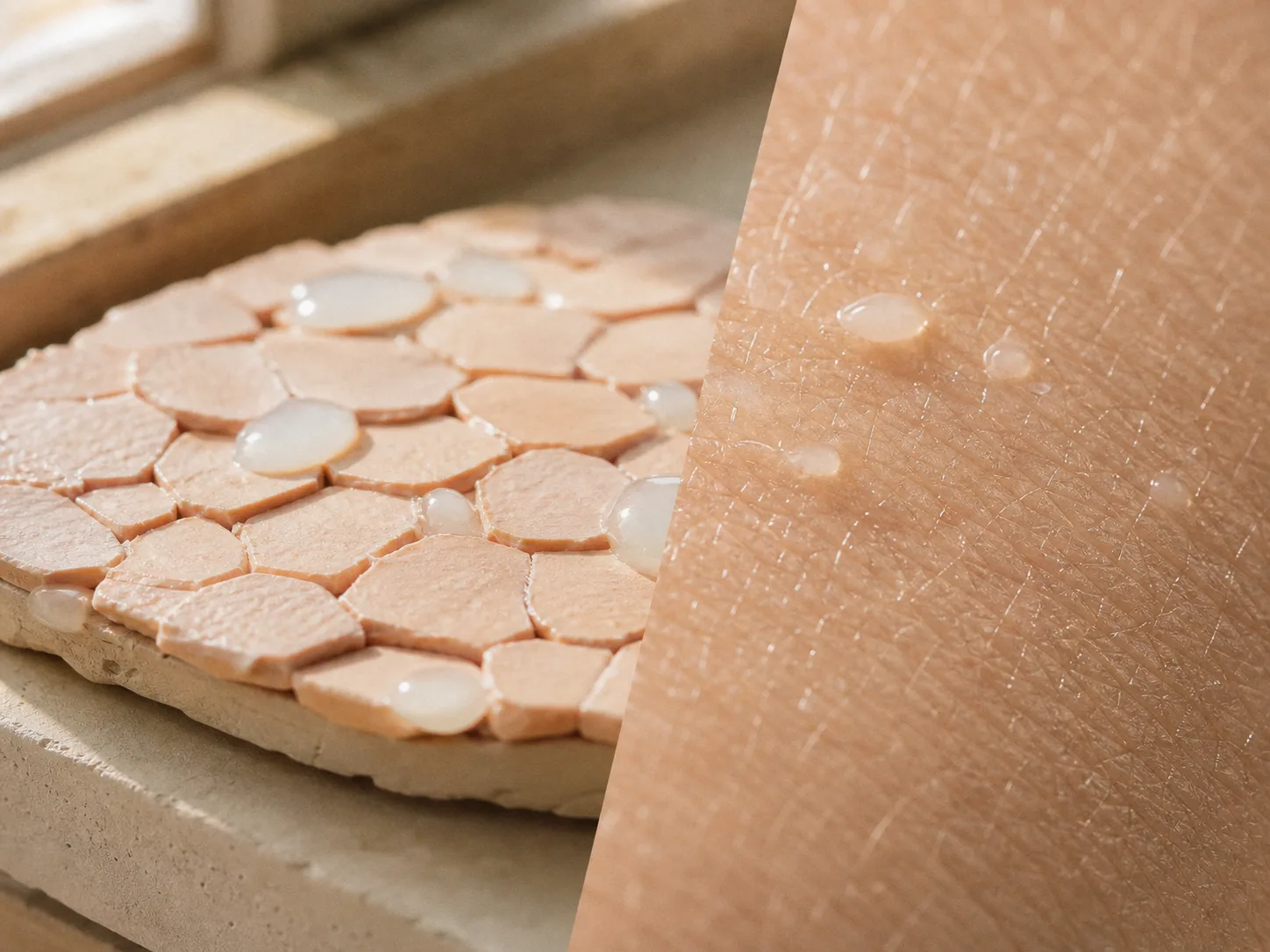
A toner or essence makes sense when you want a light layer that is easy to combine with the rest of a routine. Check whether fragrance or a high-alcohol finish makes repeated application uncomfortable. A serum can pair Rice Extract with humectants, antioxidants, or a dedicated tone-care active, but a longer ingredient list can also make the source of irritation harder to identify.
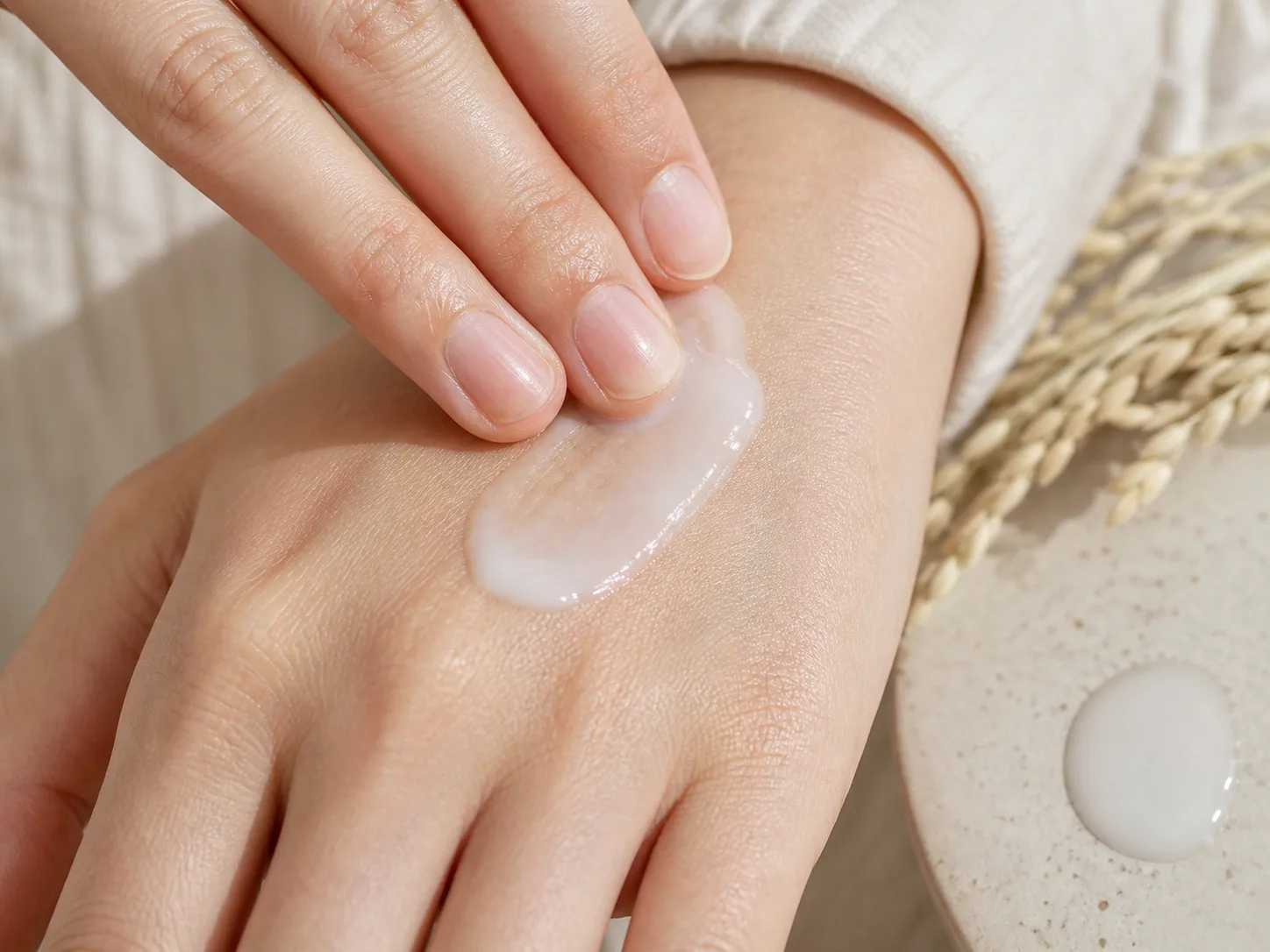
Creams are mainly differentiated by their lipid system. Dry skin may prefer a formula with ceramides and squalane, while skin that becomes greasy easily may be happier with a lotion. In a cleanser or wash-off mask, contact time is short. Surfactant strength, abrasive particles, rinse feel, and post-wash tightness deserve more attention than the highlighted botanical name.
Why homemade rice water is a different experiment
Homemade rice water has no fixed extraction strength, preservation system, microbial specification, or shelf life. Rice flour can also irritate when particle size and rubbing turn a mask into a physical scrub. A commercial cosmetic is evaluated as a combination of pH, preservative, packaging, stability, and directions. Traditional use is useful cultural context, but it is not a safety test for a jar prepared in the kitchen.
Storing or deliberately fermenting homemade rice water is especially difficult to recommend because microbial growth cannot be judged reliably by appearance or smell. If you want to explore a rice-derived ingredient, a labeled finished product makes it easier to control dose, storage, and the rest of the formula. It also makes it possible to stop one variable at a time if the skin reacts.
A sensible way to introduce it
Apply a small amount of the new product near the jaw or inner arm and wait before using it across the face. Stop if persistent stinging, itching, swelling, or redness develops. Being able to eat rice does not guarantee tolerance to fragrance, preservatives, solvents, or the other botanical ingredients in a cosmetic product.
In the morning, follow a light Rice Extract product with the moisturizer you need and broad-spectrum sunscreen. At night, avoid starting several new actives on the same day. Watch comfort, roughness, clogged-feeling bumps, and redness over a week instead of looking for an overnight transformation. Persistent inflammation or a pigment disorder belongs in medical care, rather than repeated homemade treatments.
Sources used
- 대한화장품협회 성분사전: 쌀추출물authoritative identity, Korean naming, conditioning function
- Defined Organism Substance - Oryza sativa (Rice) Extractinternational identity, seed source, extract formats and topical conditioning context
- Dermatological uses of rice products: Trend or true?efficacy review, professional context and what the research actually shows across rice derivatives
- Rice Water: A Traditional Ingredient with Anti-Aging Efficacyformulation study, usage context and what the research actually shows
- Antioxidant, Anti-Inflammation, and Melanogenesis Inhibition of Sang 5 CMU Rice Byproduct for Cosmetic Applicationsin vitro efficacy signals and limits of extrapolating rice byproduct extracts
- Red Rice Extractcommercial raw-material and product-format context