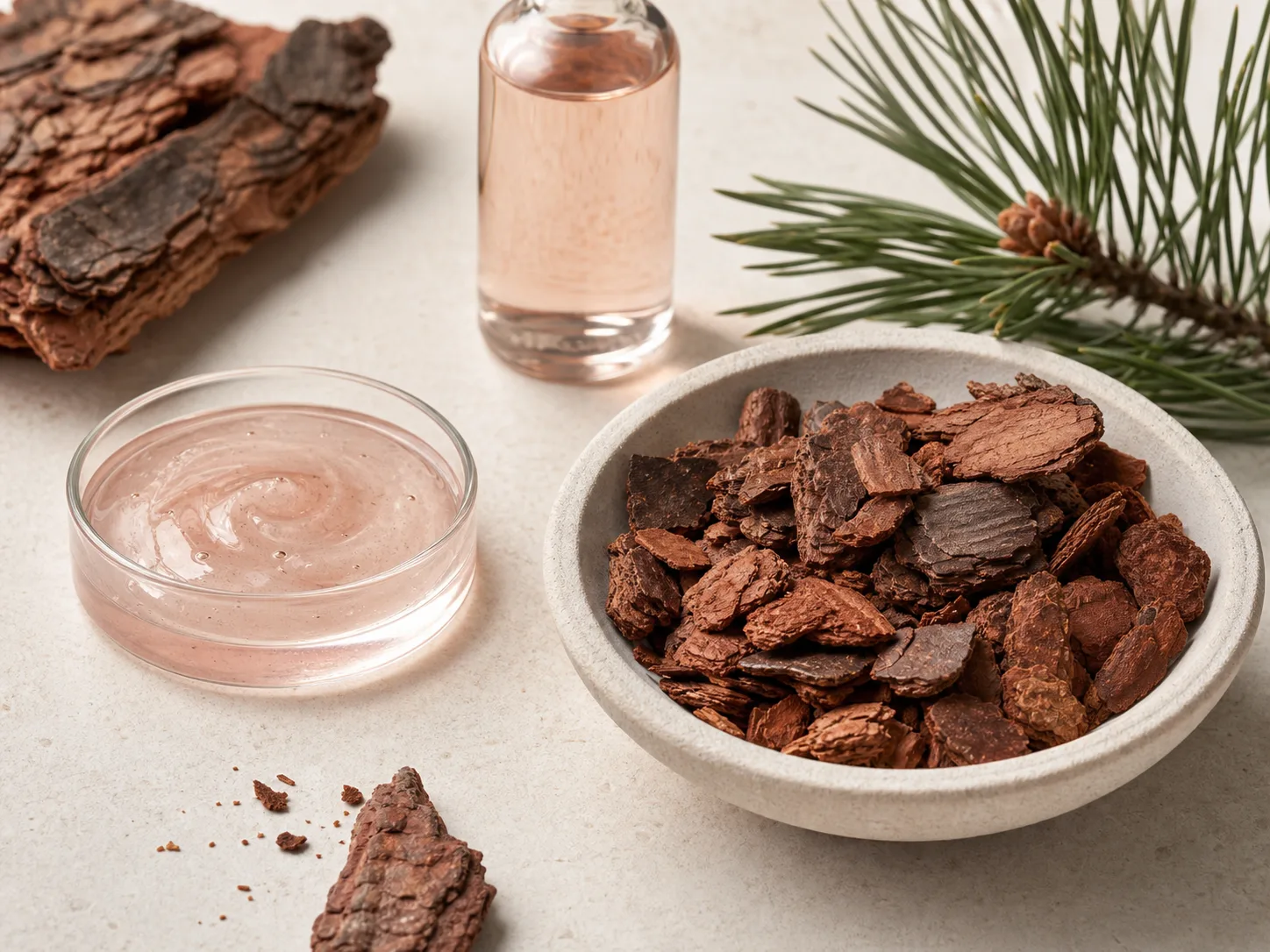
What French maritime pine bark extract is
French Maritime Pine Bark Extract comes from Pinus pinaster, a pine native to the western Mediterranean. A cosmetic list may show Pinus Pinaster Bark Extract, while Korean references also recognize a bark-and-bud material. The same plant name does not establish the same plant part, solvent, concentration, or standardized composition.
The bark is known for polyphenols including procyanidins, catechin-related compounds, taxifolin, and phenolic acids. This composition explains its use in antioxidant and skin-conditioning formulas aimed at dull, dry, environmentally stressed-looking skin.
Generic extract is not automatically Pycnogenol
Pycnogenol is a trademarked, standardized French maritime pine bark extract with a controlled procyanidin range. A generic cosmetic INCI does not prove that a manufacturer used that specific raw material or dose. The connection becomes more meaningful only when the product identifies the supplier material, standardization, and finished-product testing.
Oral supplements and topical products expose the body to these compounds in different ways. Digested and absorbed compounds do not create the same exposure as a small amount of extract spread across the skin surface. Findings from capsules cannot be borrowed to promise that an unrelated toner fades pigmentation, rebuilds collagen, or changes circulation.
What a topical formula may deliver
In a well-designed serum or cream, hydration can make rough, tired-looking skin appear smoother and more luminous. Pine polyphenols act as antioxidant ingredients in that formula, but glycerin, betaine, and hyaluronic acid create much of the immediate water-binding effect. Ceramides, squalane, fatty alcohols, and oils determine whether comfort lasts.
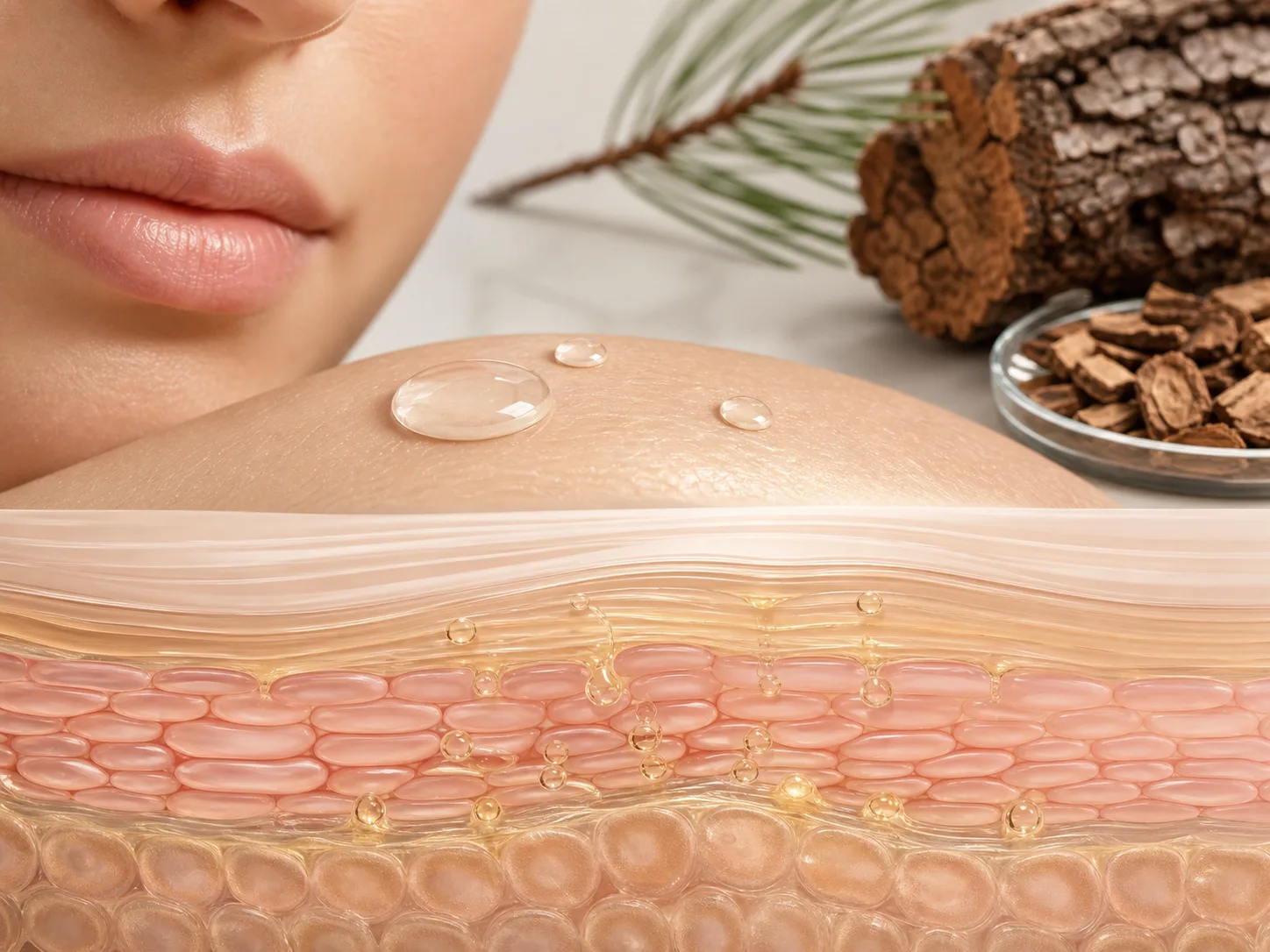
Visible brightening or wrinkle claims require evidence from the finished product rather than the raw ingredient story. The extract is best understood as one antioxidant component within a larger system, not a substitute for sunscreen or a proven pigment-correcting active.
Choosing the format
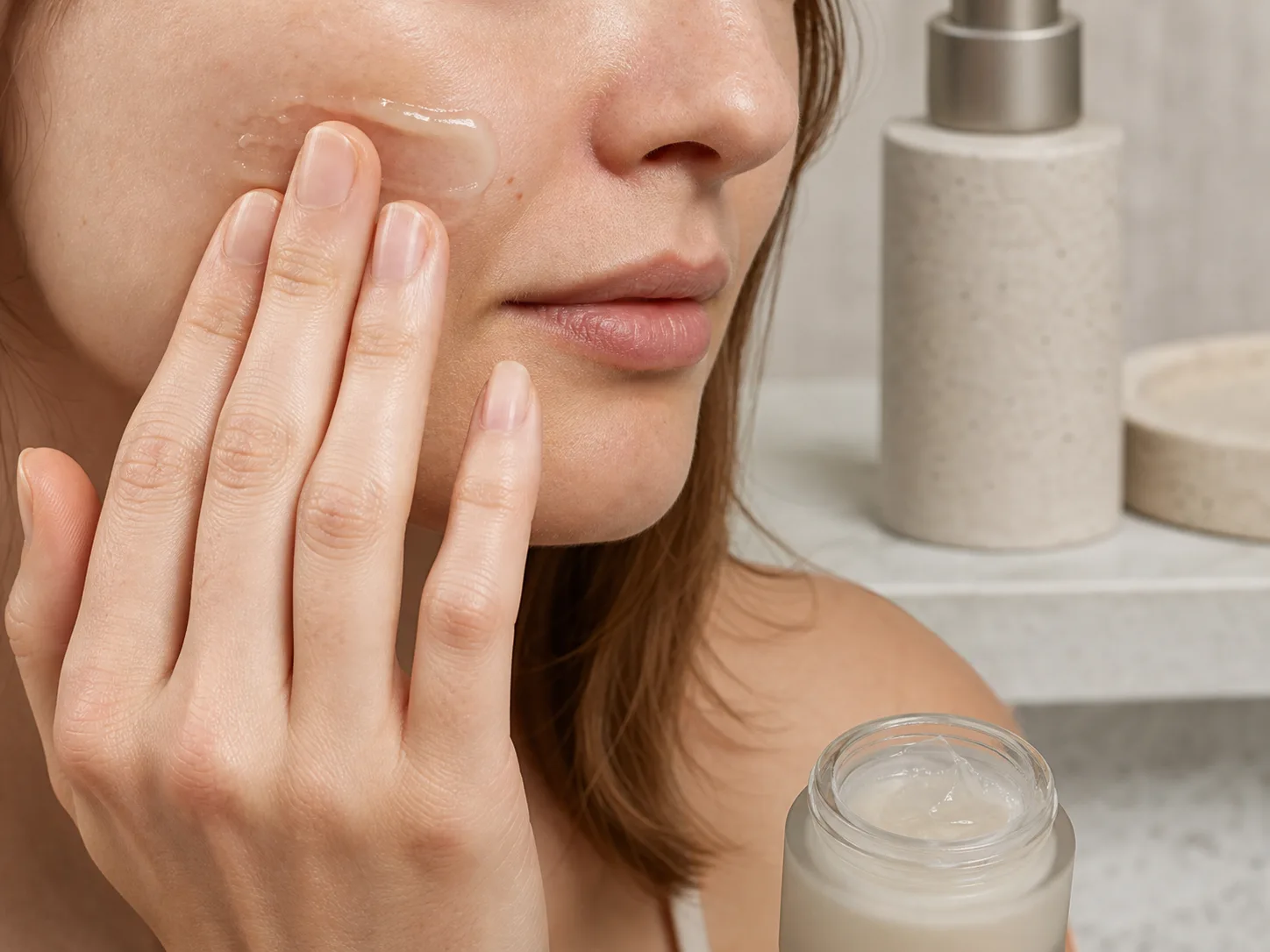
Toners and pads can provide a light layer, but check alcohol and rubbing. Pressing the liquid onto reactive skin is gentler than repeated wiping. A long list of botanicals is not automatically better if fragrance and essential oils add more variables.
For dry skin, look for a cream supported by glycerin, ceramides, or squalane. Oily skin may prefer a gel cream with fewer waxes and heavy oils. If uneven tone is the main goal, a product that also uses a clearly formulated ingredient such as niacinamide or a vitamin C derivative may offer a more direct reason to choose it.
Sensitivity and what to check before use
Botanical does not mean reaction-proof. Test a small area if pine, resinous fragrance, or plant-heavy formulas have caused problems before. Stop for persistent itching, swelling, burning, or rash.
Sources used
- Korea Cosmetic Association ingredient dictionaryIngredient name, plant parts, and cosmetic functions
- Review of Pinus pinaster bark extract compositionProcyanidins, catechin, taxifolin, and phenolic-acid composition
- Health Canada Pinus Pinaster Bark/Bud ExtractBark-and-bud ingredient identity and topical context
- SkinSort Pinus Pinaster Bark ExtractConsumer antioxidant context and the scope of topical findings