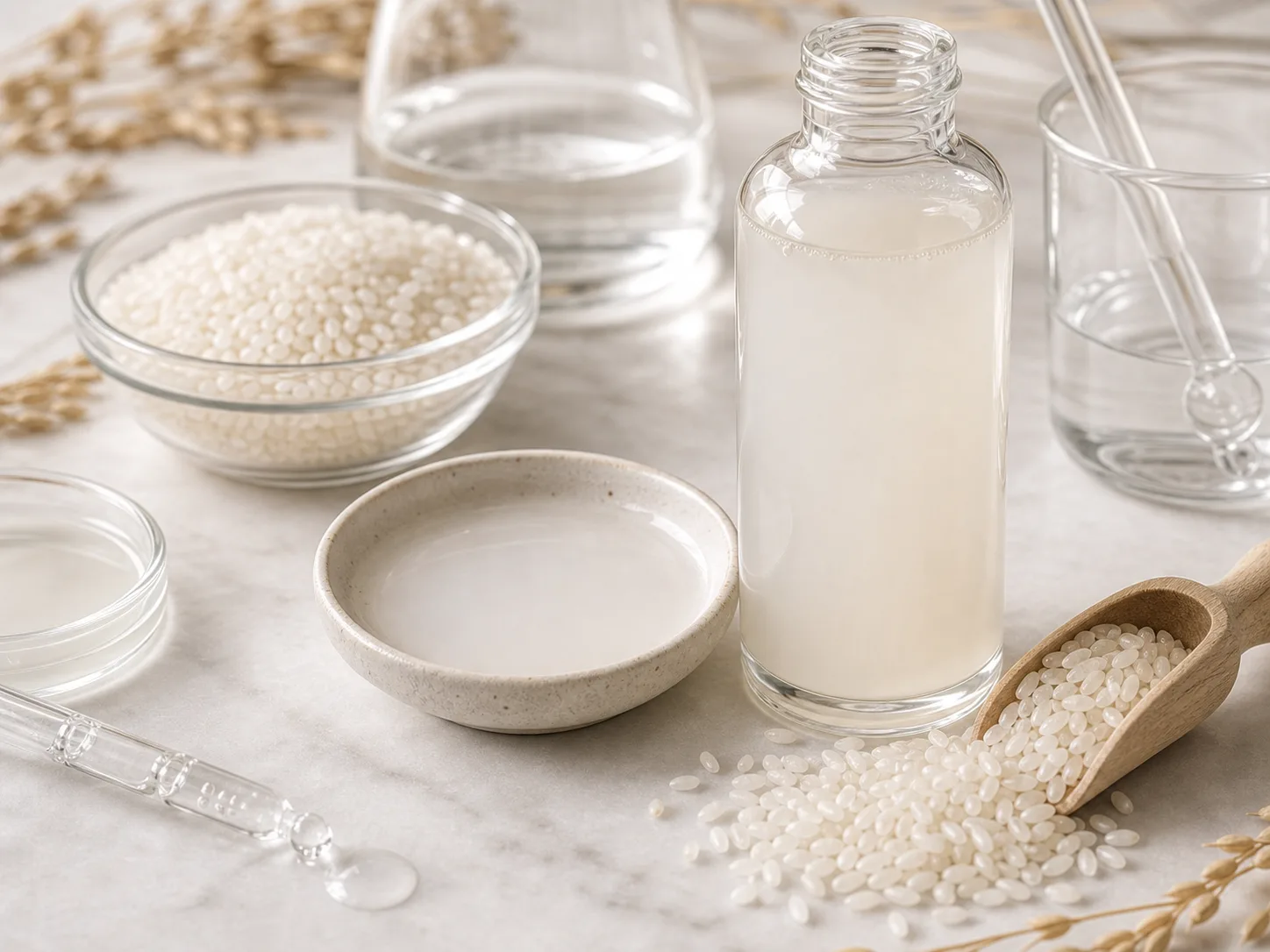
Hydration creates the first brightening effect
Rice toner relieves post-cleansing tightness and flattens dry flakes, allowing light to reflect more evenly. That can make skin look clearer and dewier, but it is not instant pigment removal.
Read the supporting formula
Glycerin, propanediol, betaine, and hyaluronic acid provide much of the hydration. Rice bran oil or squalane makes a milky toner more sealing but potentially heavier. For a dedicated brightening goal, look for niacinamide, licorice, alpha-arbutin, or vitamin C derivatives.
Dry skin may prefer a milky formula; oily skin often needs one watery layer. If sunscreen pills, reduce repeated layers and let the toner settle. Avoid ingredients or products that have caused an allergic reaction; seek medical advice if your grain allergy makes the product’s suitability unclear.
Press one layer onto clean skin and follow with moisturizer. Repeated cotton-pad wiping adds friction. Judge it by less tightness, fewer flakes, better makeup wear, and a more even glow over several weeks.
Rice extract, bran, oil, and ferment are not interchangeable
A water- or glycol-based rice extract can contain soluble sugars, amino acids, and some phenolic compounds. Rice bran comes from the nutrient-dense outer layer and is often discussed for compounds such as gamma-oryzanol and ferulic acid. Rice bran oil emphasizes lipid-soluble material and behaves more clearly as an emollient. A ferment filtrate has been transformed by microorganisms, which can alter composition and sensory feel, but fermentation alone does not prove better penetration or brightening.
A label claiming “77% rice extract” may describe the amount of a mostly water-based raw-material solution, not 77% isolated active solids. Unless the supplier’s dry matter and specification are disclosed, percentages from different brands cannot be compared cleanly.
Separate glow from pigment change
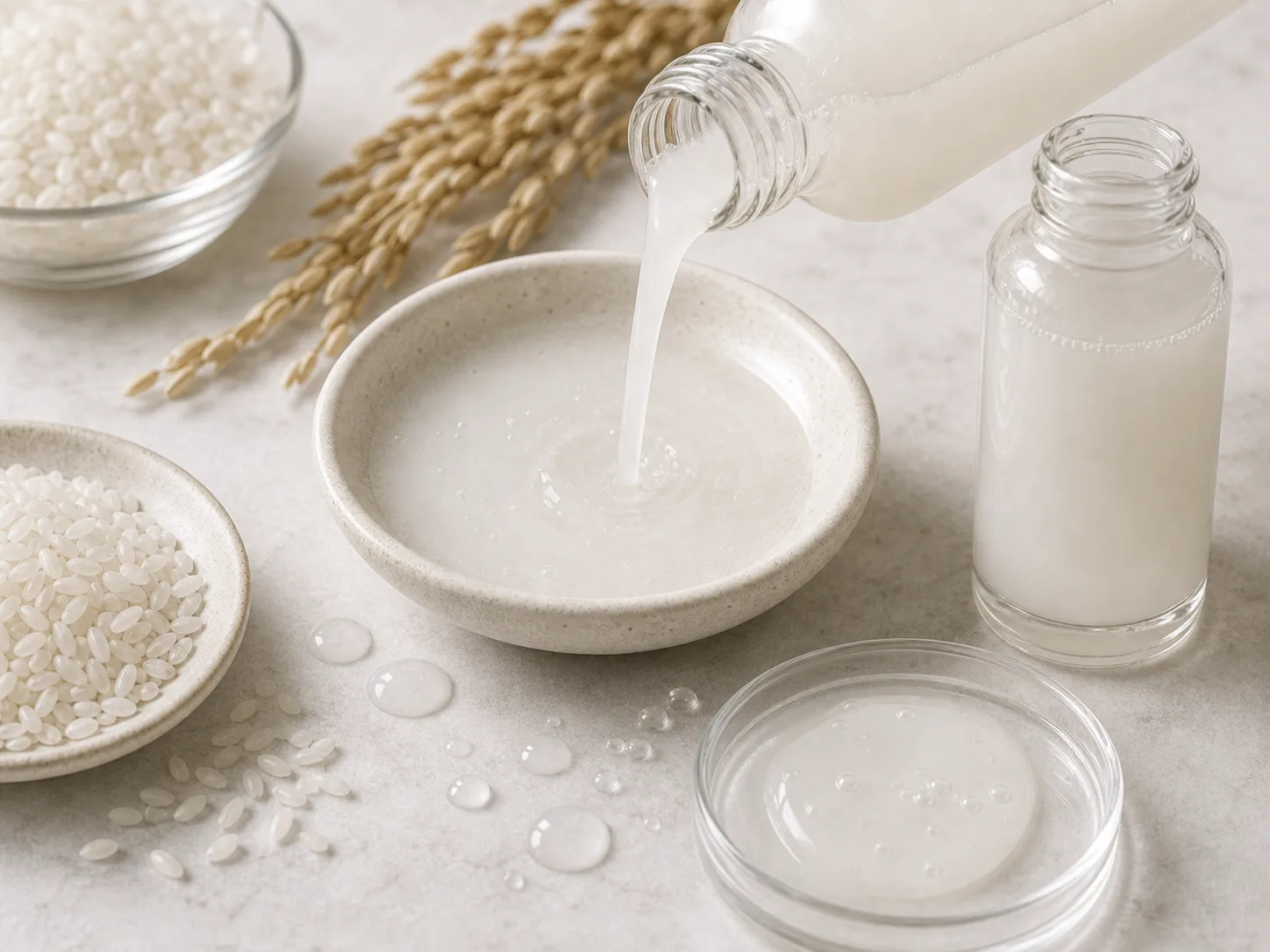
Immediate radiance comes mainly from water and a smoother optical surface. A longer-term change in uneven pigmentation needs ingredients with a relevant melanin pathway. Niacinamide can reduce melanosome transfer; alpha-arbutin and licorice-derived materials address other points in pigment formation. A rice toner containing one of these is a different proposition from a simple hydrating rice water.
Antioxidant compounds in rice-derived materials may help supplement a formula’s defense against oxidative stress, but they do not replace sunscreen. Without consistent UV protection, freckles and post-inflammatory marks can continue to darken while the toner is being used.
Texture reveals the product’s job
A clear watery toner mostly adds a quick humectant layer. A viscous essence toner uses polymers and humectants to create a longer-lasting cushion. A shake-to-mix milky toner contains an oil phase and can behave like a very light emulsion. Dry skin may appreciate that extra sealing; oily skin may find that it duplicates moisturizer and contributes to pilling.
Apply watery toner in two small portions rather than splashing on a large amount. One layer is often enough for viscous formulas. Shake biphasic products thoroughly, then observe whether sunscreen still forms an even film. If it rolls, reduce the toner before changing sunscreen.
What the rest of the ingredient list tells you
Humectants near the top explain hydration better than a trace botanical near the bottom. Glycerin is effective but can feel tacky at high levels; betaine and propanediol can soften that feel. Alcohol can create fast evaporation and a crisp finish but may increase tightness in dry skin. Fragrance is not necessary for rice-derived benefits.
Preservatives matter in water-rich botanical products. “Clean” or preservative-free marketing is not inherently safer, since contaminated toner is a greater risk than a properly preserved one. Use the product within its stated period after opening and avoid touching the bottle opening.
When to stop or change the product
If closed comedones appear, consider the oil phase, esters, polymers, and any other new products before blaming fermentation alone. Persistent stinging or redness calls for stopping, not adding more layers to “soothe” it. Extraction and purification change the source material, but do not make home testing a reliable way to rule out a known grain allergy.
Sources used
- Rice products dermatology reviewrice-derived ingredient evidence
- CosIngOryza ingredient identities
- Renewing the potential of rice crop residues in cosmeticscosmetic functions and compositional differences among rice bran, starch, protein, and residue-derived materials
- Conventional and Scientific Uses of Rice-Washed Water: Systematic Reviewtraditional uses of rice-washed water and the limits of direct scientific validation