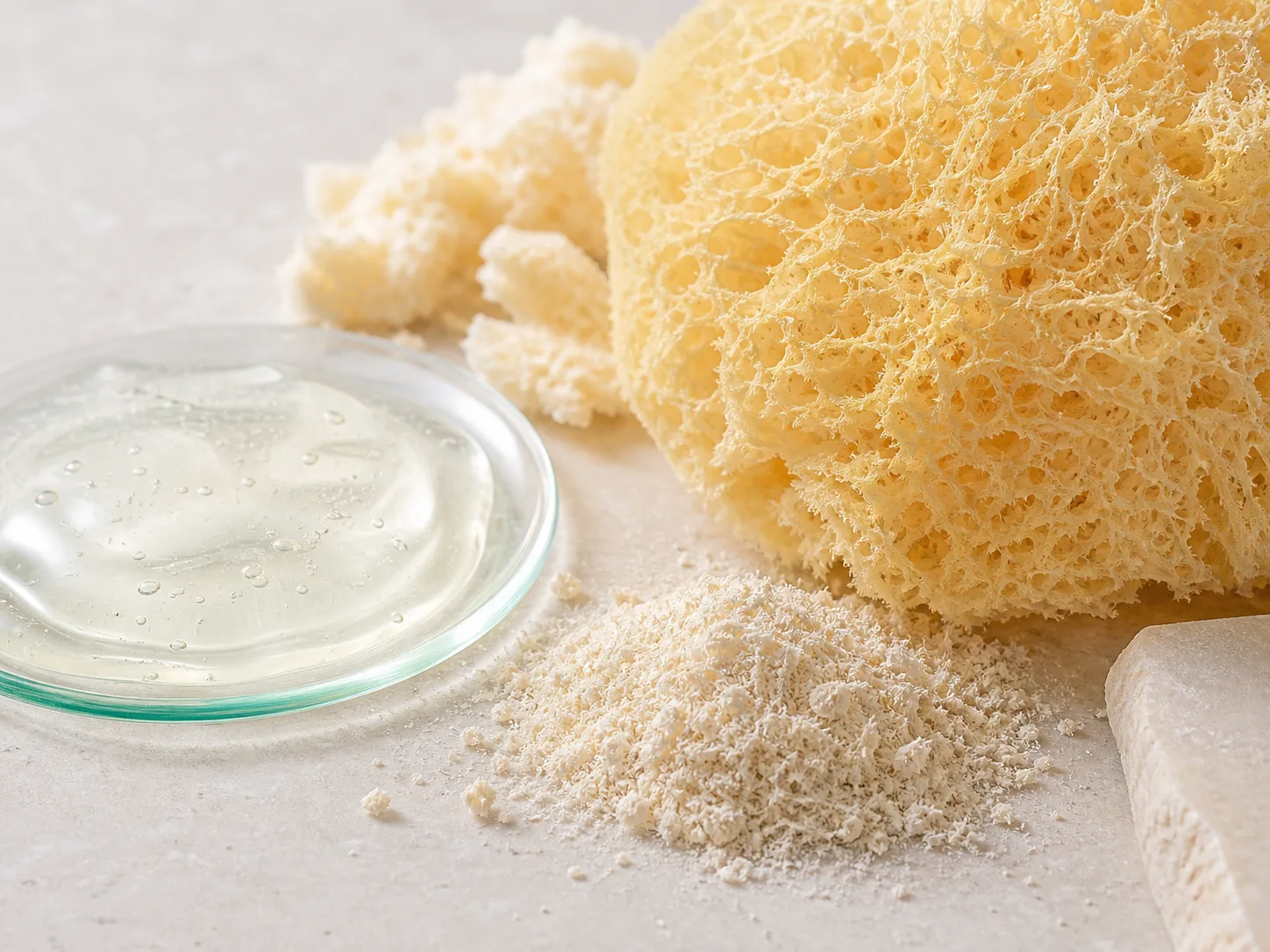
What spicules actually are
Spicules are tiny needle-shaped structures associated with sponge-derived cosmetic ingredients. On an ingredient list, the name you may see is Hydrolyzed Sponge. Korea’s cosmetic ingredient dictionary describes it as a hydrolysate obtained from sponge material and lists skin conditioning as its cosmetic function.
That distinctive prickly feeling is physical. The microscopic particles touch the surface of the stratum corneum, and rubbing makes the sensation more noticeable. Particle size, amount, and the rest of the formula determine whether a serum feels mildly tingly or genuinely uncomfortable.
What the delivery experiment actually measured
One published delivery study did more than record a prickly sensation. Researchers isolated natural siliceous spicules averaging about 250 micrometers long and 12 micrometers wide, loaded a model compound called pectolinarin into lecithin liposomes inside the spicules, and tested the system on porcine skin. Fluorescent imaging and Franz diffusion cells were used to follow where the material went.
For that engineered carrier, the reported dermal absorption was 73.4%, while passage all the way through the skin was 2.2%. Release followed a diffusion pattern described by Fick’s law and the Higuchi model. Those numbers belong to a specific loaded spicule, liposome, active, dose, and porcine-skin setup. They are not an absorption percentage for a retail Hydrolyzed Sponge serum, PDRN, niacinamide, or every molecule placed beside spicules.
The study supports a real delivery mechanism: rigid silica structures can physically disturb the outer barrier and carry a loaded ingredient closer to or into the skin before it diffuses out. It does not show that stronger tingling means more delivery. Particle dimensions, loading method, formula contact, and the molecule being carried all matter.
How skin texture may change
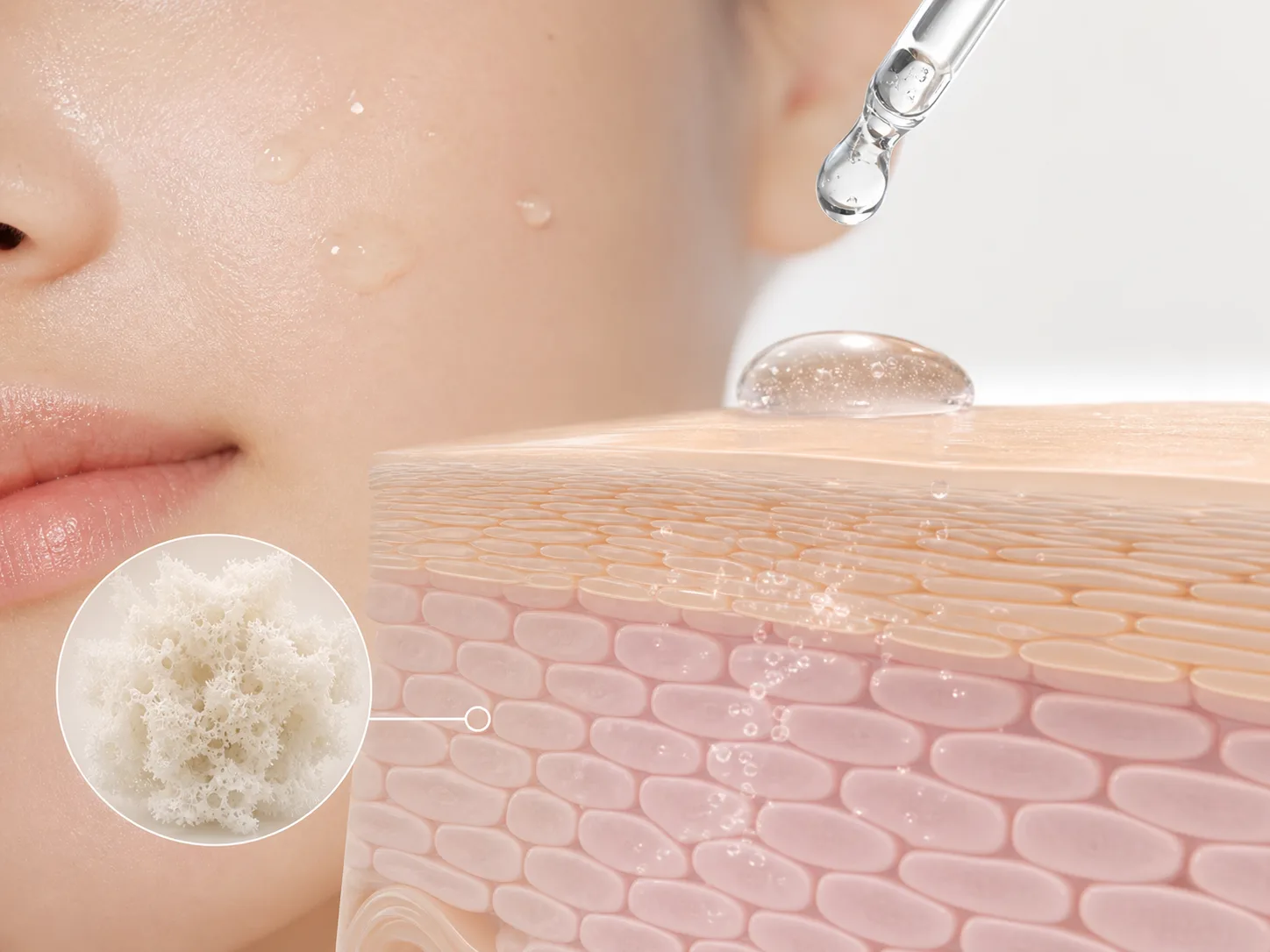
A spicule serum can leave skin feeling smoother because the formula brings a mild physical stimulus together with humectants, soothing ingredients, or established actives. A more even-looking surface around the nose and chin, makeup that catches less on dry texture, and a temporary glow are useful things to observe.
There are published delivery-system studies using natural spicules and a small Korean four-week cosmetic-use study. They do not show that every spicule serum shrinks pores, removes scars, or changes wrinkles. Results from a finished product depend heavily on the ingredients it carries, the moisturizing base, and how often it is used.
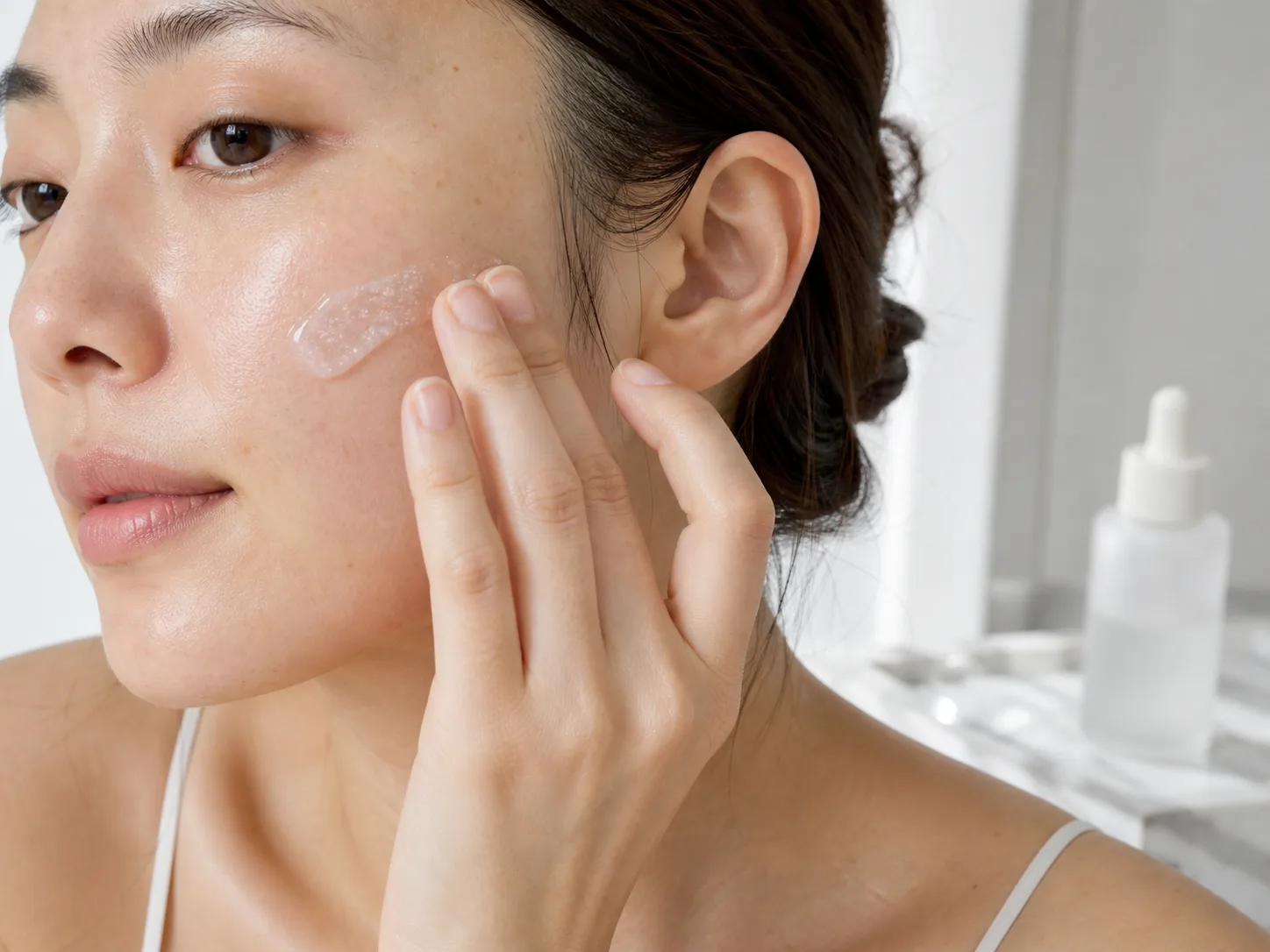
Choose the rest of the formula for your goal. For dullness, look for a clearly identified tone-evening active such as niacinamide or a vitamin C derivative. For dryness, glycerin, hyaluronic acid, panthenol, beta-glucan, or ceramides matter more than the prickly sensation.
How to start without overdoing it
Start with a lower-intensity product once or twice weekly at night. Apply a thin layer after cleansing, then follow with a simple moisturizer. Check the next morning for lingering heat, redness, rough patches, or a tight, flaky feel before increasing frequency.
A brief tingle can happen. Persistent burning, itch, swelling, or red patches are not a reason to push through. Stop using the product rather than trying to build tolerance by applying it more often.
What not to layer on the same night
When you are new to spicules, keep retinoids, AHA/BHA/PHA exfoliants, high-strength vitamin C, and benzoyl peroxide on separate nights. Even if you normally tolerate these products, separating them for the first two weeks makes irritation easier to identify.
Skip a new spicule serum when your skin is already reactive, during a flare of eczema or rosacea, or just after a peel or laser procedure. Topical spicules are not an equivalent substitute for in-office microneedling and should not be used as a scar treatment.
Choosing a spicule serum
Look for Hydrolyzed Sponge or a clear spicule explanation in the ingredient information, then follow the brand’s frequency guidance. A bigger ppm number is not automatically better: particle form, the formula, companion ingredients, and your skin’s tolerance all matter.
Dry or easily flushed skin may prefer a formula buffered with centella, allantoin, panthenol, or beta-glucan. Oily skin can start with a small amount of a lighter serum and see whether sunscreen or makeup pills over it. A texture-focused formula used at a comfortable pace is more useful than the strongest possible tingle.
Sources used
- Korea Cosmetic Association Ingredient Dictionaryingredient identity and cosmetic function
- Natural spicule dermal-delivery studySpicule dimensions, loaded pectolinarin model, porcine-skin diffusion measurements, and transfer limits
- NBC Select dermatologist guideusage and cautions
- British Vogue expert explainerdifference from in-office microneedling and why outcomes depend on product design and use
- kci.go.krPublished evidence and study scope