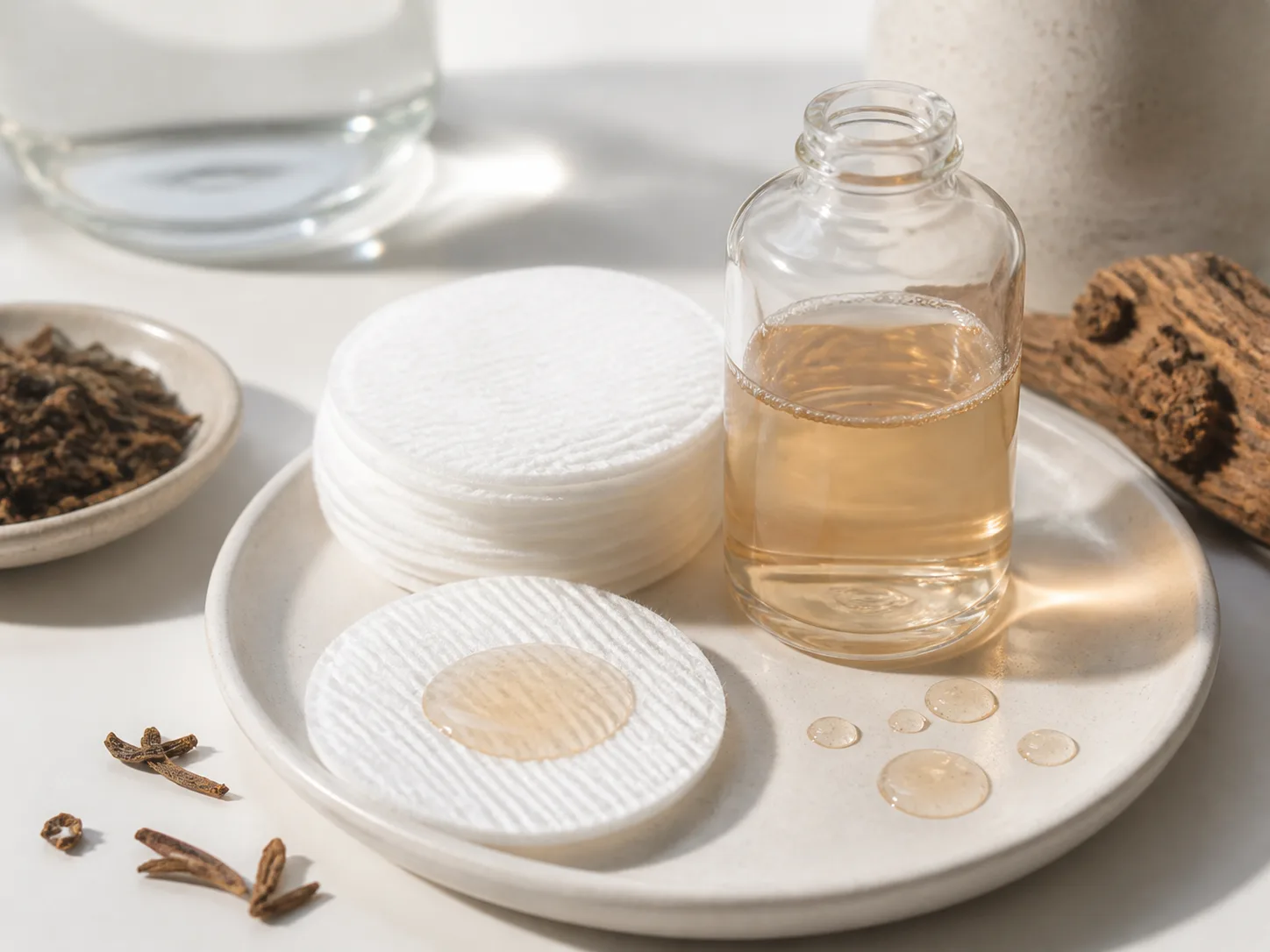
The benefit you can actually see
Tannic acid toner is most useful when the center of your face becomes shiny soon after cleansing. A thin layer can leave the forehead, nose, and chin looking more matte, and that reduction in reflected light can make the edges of pores less obvious. Skin may also feel temporarily firmer or drier to the touch. For someone whose sunscreen or makeup slips on an oily T-zone, this short-term surface change can be genuinely helpful.
The effect comes from astringency. Tannic acid belongs to a family of plant polyphenols with many chemical sites that interact with proteins. Similar interactions create the puckering, dry sensation of strong tea or underripe fruit. On skin, they alter the feel of surface proteins and reduce some surface oil. This is why the finish can look refined without the ingredient physically closing a pore. Once sebum returns, the visual effect may fade.
Why it is not the same as an acid toner
The word acid is misleading here. Tannic acid is not an alpha hydroxy acid such as glycolic acid, and it is not a beta hydroxy acid such as salicylic acid. It is usually described as a large hydrolyzable tannin with a glucose center and multiple galloyl groups; its commonly cited molecular formula is C76H52O46. It does not primarily loosen the bonds between dead skin cells, so there is no reason to scrub with it or treat tingling as proof of exfoliation.
If clogged pores and blackheads are the main concern, salicylic acid has a more direct role because it is used to exfoliate within oily pores. Tannic acid is better understood as a finish ingredient: it changes shine and tactile oiliness at the surface. A formula may contain both, but that combination can be drying. Start it a few nights per week rather than assuming a stronger sensation means faster results.
What to look for in the formula
A tannic acid toner can be relatively balanced or aggressively stripping depending on the base. Denatured alcohol, witch hazel, menthol, and a high fragrance load can amplify the cool, tight sensation. That may feel satisfying for a few minutes, but skin that becomes stiff when you smile or stings under moisturizer has been pushed too far. People who react to fragrance or essential oils should prioritize a simpler formula over a dramatic cooling effect.
Humectants make a substantial difference. Glycerin, betaine, panthenol, sodium PCA, and hyaluronic acid help hold water in the outer layer of skin, softening the dry edge of an astringent. Oily skin still needs this water support. When the surface becomes dehydrated, flakes and rough pore edges can become more visible even though the face is less shiny. A light gel moisturizer after toner does not cancel the mattifying benefit; it often makes the finish look smoother.
How oily and combination skin can use it
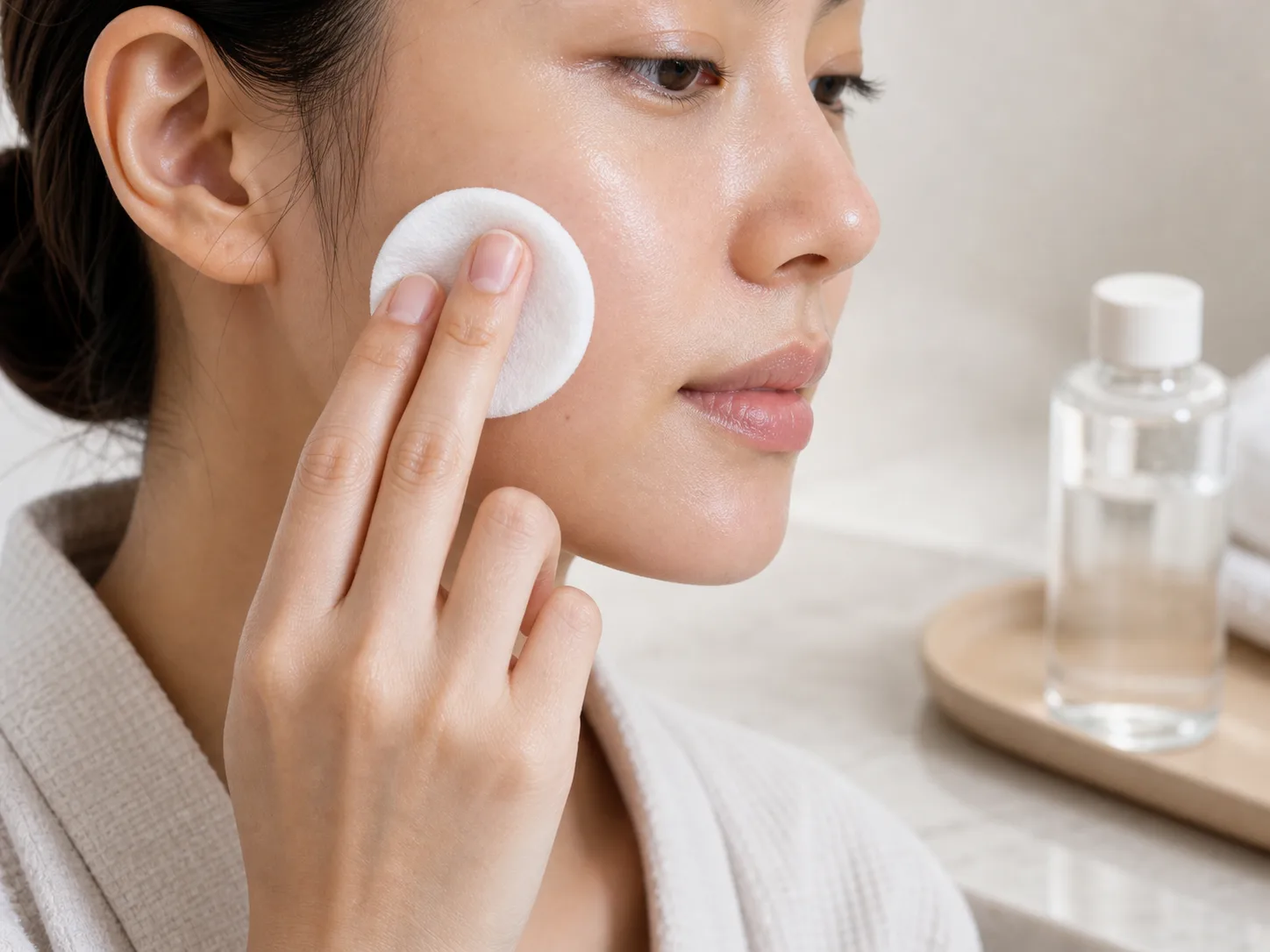
After cleansing, place a small amount in your palm and press it once over the forehead, nose, and chin. Repeated cotton-pad passes add friction to an ingredient that is already drying. Let it settle, then apply a light moisturizer and sunscreen in the morning. If makeup pills, use less toner rather than skipping moisturizer.
Combination skin rarely needs the same treatment everywhere. Apply the astringent only to the oily center of the face and use a hydrating toner or serum on dry cheeks. This targeted approach can keep the T-zone neat without making the mouth and eye area tight. If you also use salicylic acid, a retinoid, or benzoyl peroxide, alternate days at first. Stacking every oil-control step in one routine makes it difficult to know which product caused irritation.
Dry, eczema-prone, or very reactive skin is unlikely to gain much from an astringent toner. If you still want to try it, patch test beside the jaw, choose an alcohol-free formula with humectants, and use it only where oil is actually a problem. Stop if redness, itching, swelling, or persistent burning appears.
A realistic way to judge results
Check your skin two or three hours after application, not only in the mirror immediately afterward. A useful toner should delay greasy shine without creating tightness, flaky patches, or a rebound urge to apply heavy cream. Pores may look cleaner and less shadowed while the surface is matte, but their anatomical size has not changed. Long-term pore appearance still depends on sun protection, congestion control, and keeping the surrounding skin smooth.
Sources used
- Healthline - Astringent vs TonerPractical differences between hydrating toners and stronger astringents
- Medical News Today - AstringentConsumer-facing explanation of temporary tightening and oil removal
- Colloidal stability of tanninsProtein-tannin interactions behind astringency