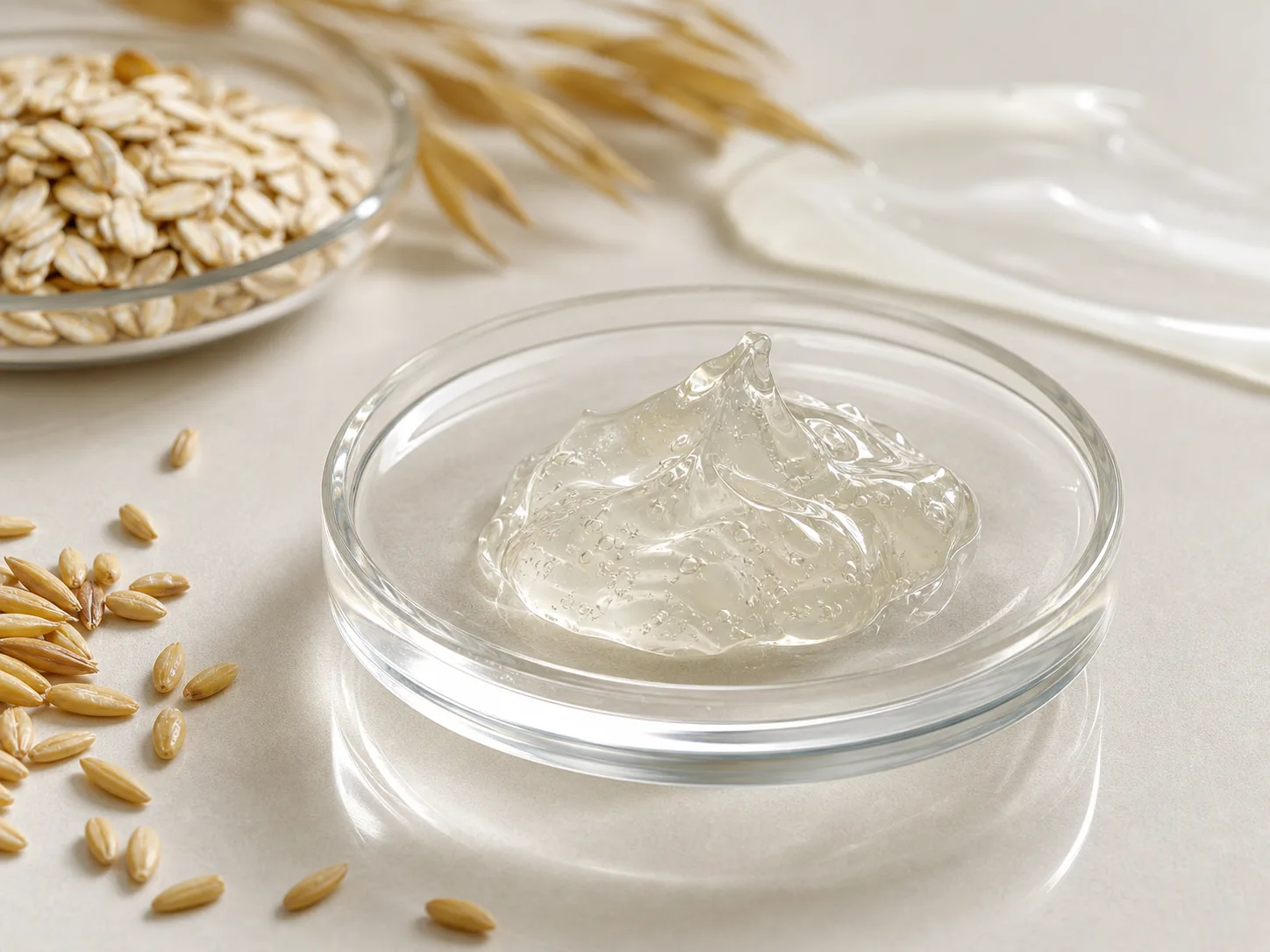
What makes beta-glucan cream useful?
Beta-glucan cream can leave a light, flexible moisturizing film that eases the tight feeling of dry skin and helps a stressed complexion feel more comfortable. As hydration returns, rough texture can look smoother and fine lines made more obvious by dryness may appear softer.
Beta-glucan can help moisturize skin that feels dry or easily irritated. It fits routines using retinoids or exfoliating acids, skin exposed to drying heating or air conditioning, and anyone who finds a watery gel insufficient but dislikes a heavy greasy cream.
Beta-glucan binds water and forms a soft film
Beta-glucan is a polysaccharide built from linked glucose units. It can come from oats and barley, yeast, mushrooms, and other sources. The source changes its linkage pattern and molecular size, but in cosmetics it is commonly used to bind moisture, condition the skin surface, and add a soft film-forming feel.
It is often compared with hyaluronic acid. Hyaluronic acid formulas frequently emphasize an immediate watery, bouncy feel, while beta-glucan often appears in products designed to combine hydration with a softer, more comforting finish. Neither is automatically better. The choice depends on dehydration, stickiness, climate, and how much richness the rest of the cream provides.
What dry or sensitive-feeling skin may notice
A chitin-glucan study reported improved water retention in a six-week trial of 13 people with sensitive skin, and improvements in texture and firmness in a 16-week trial of 20 men. The tested material joined chitin with beta-glucan; it was not pure beta-glucan. Check the ingredient identity before applying these results to a different cream.
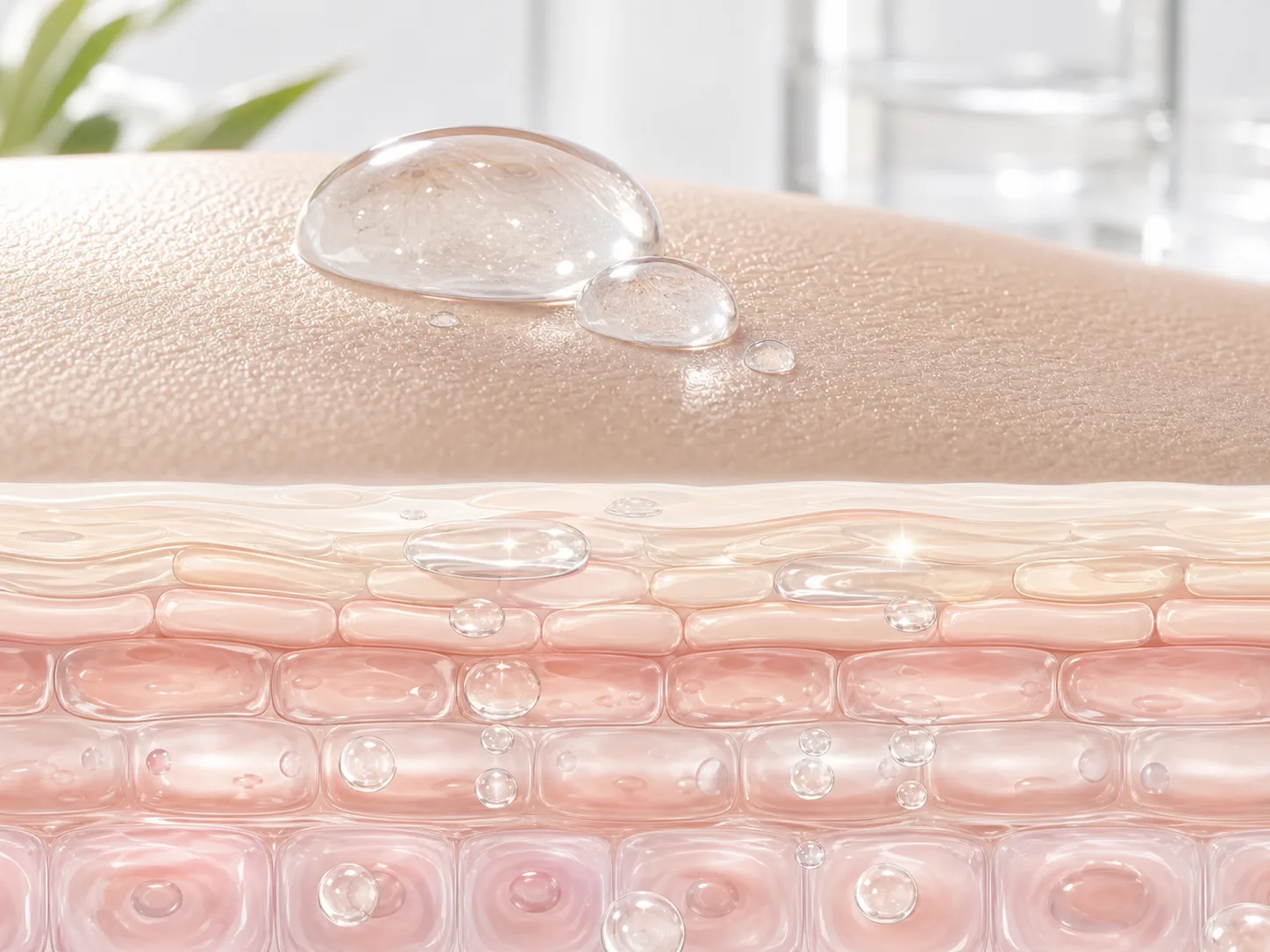
Should you choose a gel cream or a richer moisturizer?
Oily and combination skin may prefer a translucent gel cream. It can deliver hydration and a smooth finish without a thick oil layer, and it is easier to wear under sunscreen. Use a modest amount if the formula contains many film-forming polymers, since over-application can cause pilling.
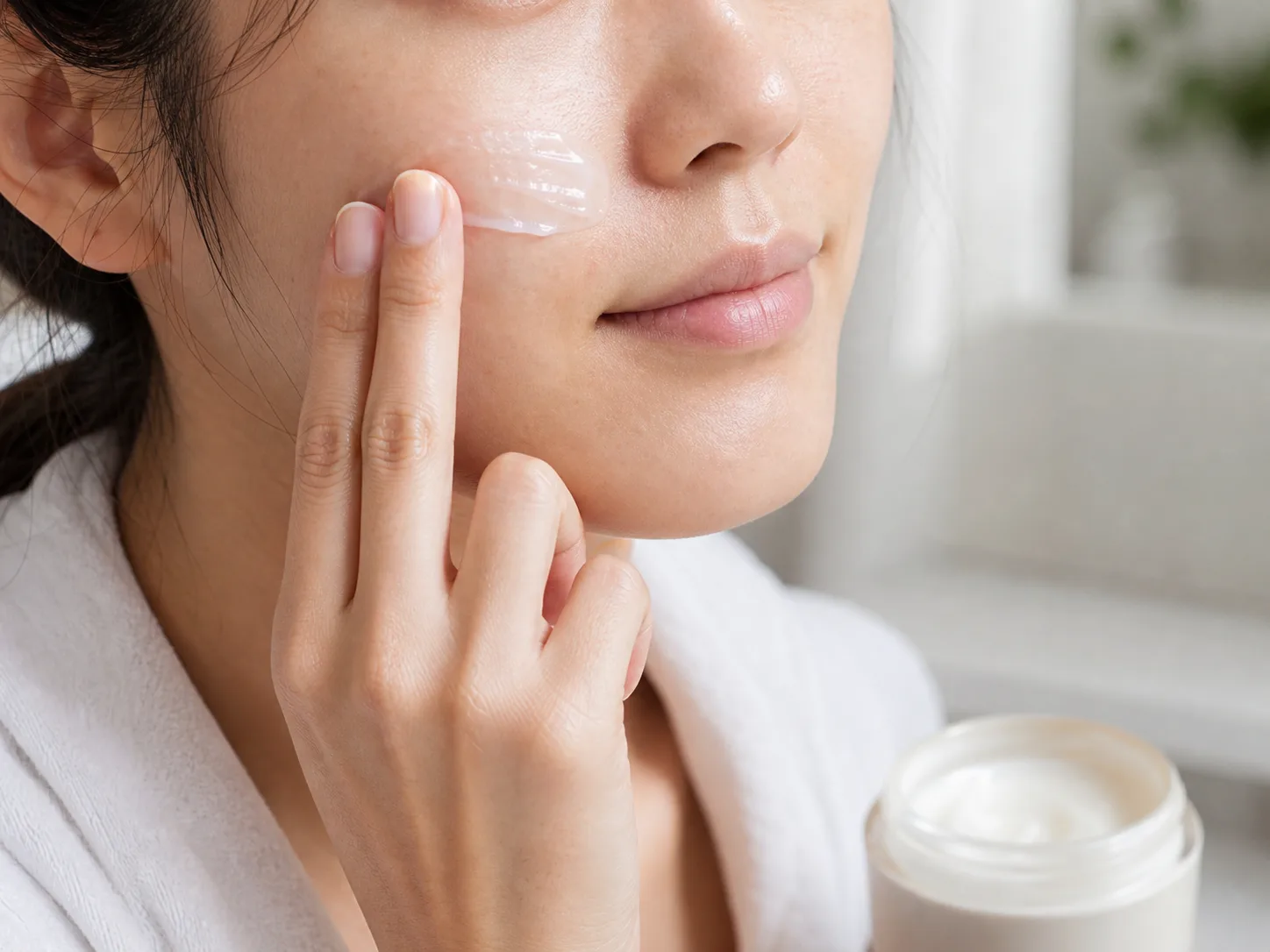
Dry skin usually benefits from a cream that combines beta-glucan and glycerin with ceramides, squalane, fatty acids, shea butter, or other emollients. Beta-glucan and humectants hold water, while lipids and emollients help slow the dry-down. That combination is more likely to feel comfortable through the night.
Fragrance and essential oils can still sting sensitive skin even when a soothing ingredient is present. Check the complete formula, especially when choosing a cream for a reactive routine.
Using it with retinoids and exfoliants
Beta-glucan can be used alongside retinoids, AHA, BHA, or vitamin C as a moisturizer. It works well as the moisturizing step after those products when skin feels tight or dry.
At night, apply it after a serum and add a second thin layer only to the driest areas. In the morning, use a smaller amount, allow it to settle, and then apply sunscreen to reduce pilling. When skin feels hot, flaky, or overworked, pause the extra actives and keep the routine focused on beta-glucan cream and simple moisturization.
Sources
- Vogue beta-glucan ingredient article: https://www.vogue.com/article/beta-glucan
- SkinSort beta-glucan guide: https://skinsort.com/ingredients/beta-glucan
- Clinical study of chitin-glucan moisturization and skin texture: https://pubmed.ncbi.nlm.nih.gov/19099547/
- Review of beta-glucan in skincare: https://pmc.ncbi.nlm.nih.gov/articles/PMC12023766/
Sources used
- COSMILE Europe: Beta-GlucanINCI identity, glucose-polysaccharide description, and skin-conditioning function
- PubChem: Beta-GlucanChemical identity and plant, fungal, and bacterial source context
- COSMILE Europe: Yeast Beta-GlucanYeast beta-glucan film-forming and skin-conditioning functions, distinct from general beta-glucan
- Natural beta-glucan and skin health reviewMoisturizing and antioxidant research across cereal, yeast, and mushroom beta-glucans
- Chitin-glucan for skin moisturizationHuman finished-formula data for hydration, TEWL, and roughness with chitin-glucan
- Beta-glucan extracts as multifunctional skin ingredientsProfessional review of how source, structure, and extraction change function
- Beta-Glucan in Skin Care and Dermatological TherapyRecent review of barrier hydration, comfort, and source-dependent evidence
- Korea Cosmetic Association: Beta-GlucanKorean label name, glucose-polysaccharide identity, and listed cosmetic functions of beta-glucan.
- CIR: Safety Assessment of Microbial Polysaccharide Gums as Used in CosmeticsStructures, cosmetic uses, and safety assessment of beta-glucan and related derivatives, separate from moisturization efficacy trials.
- PubMed Central research articleTopical beta-glucan hydration and soothing context