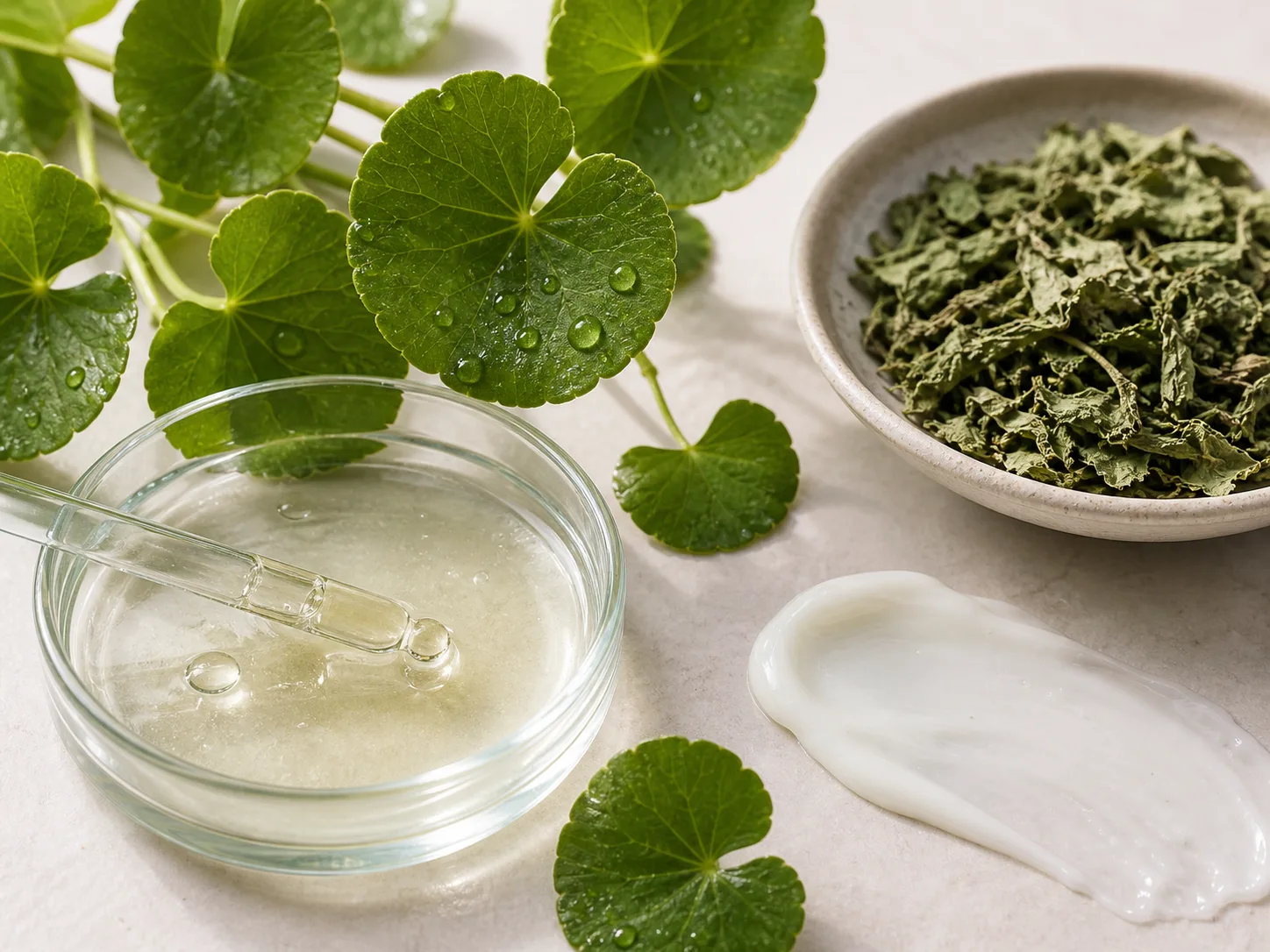
What a good centella cream should change
A centella cream can help when skin feels hot, tight, or easily flushed after cleansing, cold weather, mask friction, or an ambitious active routine. The most noticeable benefit is usually comfort: the surface feels less dry, rough patches soften, and temporary redness caused by dryness or friction may look quieter. A cream format is useful because it keeps the ingredient on the skin while also supplying water, emollients, and a layer that slows moisture loss.
Centella is not a replacement for acne medication or treatment for eczema, rosacea, or an open wound. It is a cosmetic ingredient that can support a calmer-feeling environment. A moisturizer that lets you use sunscreen without stinging, sleep without tight cheeks, or recover comfortably between retinoid nights is doing meaningful work.
Centella, cica, and madecassoside are related but not identical
Centella asiatica is the botanical name for the plant often called gotu kola. In beauty products, cica is a broad marketing name for the centella family rather than one standardized ingredient. One cream may use centella leaf water and whole-plant extract; another may contain a purified compound such as madecassoside. Products carrying the same cica label can therefore be chemically and texturally very different.
Four triterpenes appear often in discussions of centella: madecassoside, asiaticoside, madecassic acid, and asiatic acid. Laboratory and clinical literature has explored their relationship to inflammatory signaling, antioxidant activity, collagen pathways, and wound repair. A regular face cream usually contains a much more modest cosmetic system than a medical study. Centella contributes soothing compounds, while the moisturizer base supplies much of the hydration and barrier protection.
What does an 80% Centella label mean?
A label such as 80% centella sounds easy to compare, but the number may refer to leaf water, a diluted liquid extract, or a concentrated standardized material. Those inputs do not contain equal amounts of triterpenes. A product with a smaller amount of standardized extract plus a disclosed level of madecassoside may be more targeted than one built around a large quantity of mostly watery botanical material.
Look for the actual INCI names and any useful explanation from the manufacturer. Centella Asiatica Extract, Centella Asiatica Leaf Water, Madecassoside, Asiaticoside, Asiatic Acid, and Madecassic Acid tell you which part of the ingredient family is present. If percentages are published, check whether they refer to the finished formula or to a premixed raw-material blend. When that information is absent, treat the percentage as one clue rather than a verdict.
Other ingredients contribute to the cream’s moisturizing effect
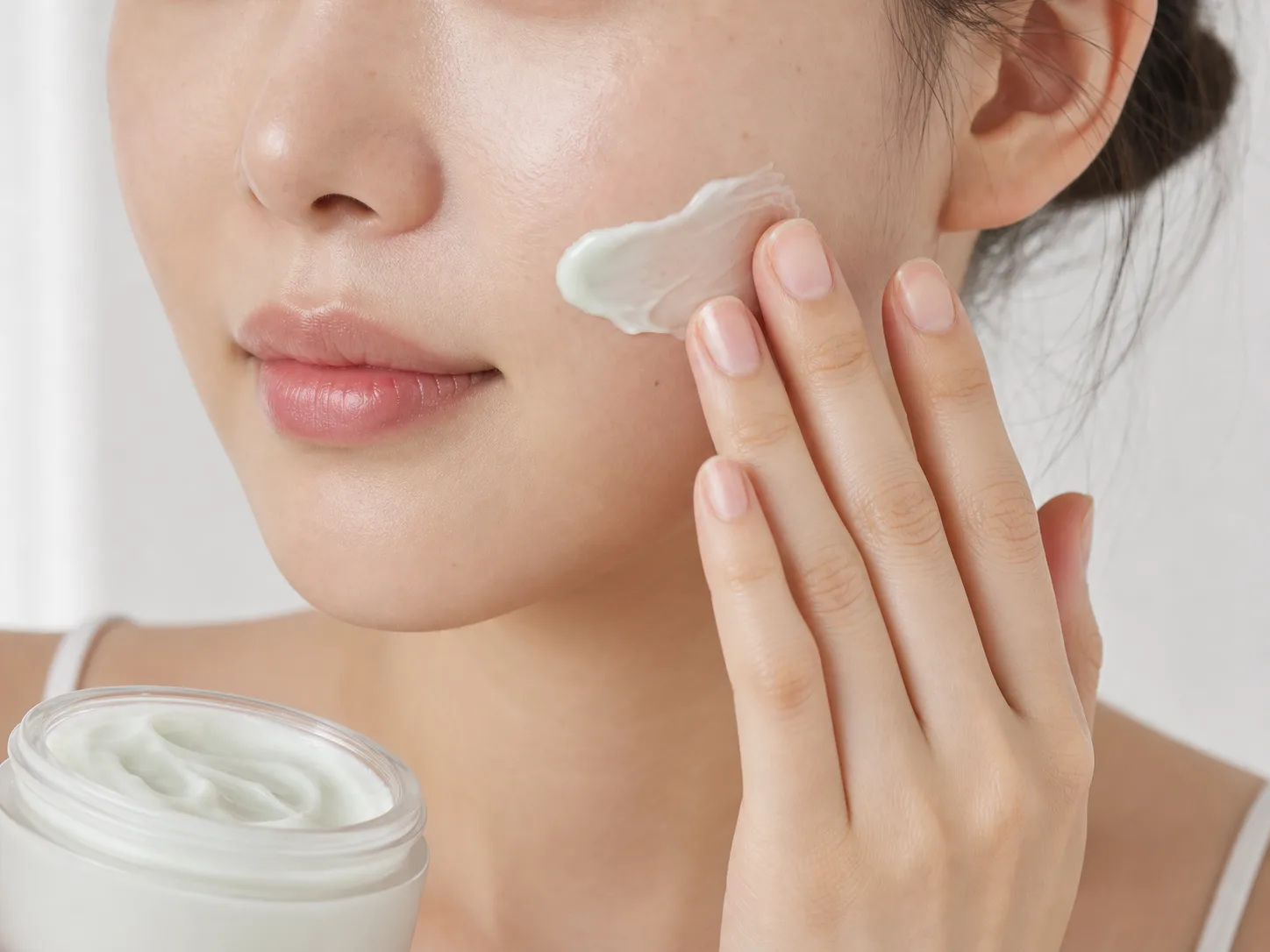
The calming sensation you notice immediately comes from the whole cream. Glycerin, betaine, hyaluronic acid, and panthenol draw water into the outer skin. Ceramides, cholesterol, and fatty acids support the lipid barrier. Squalane, silicones, shea butter, and plant oils soften rough texture and reduce evaporation. Centella can complement these ingredients, but it cannot make a drying alcohol-heavy or heavily fragranced base universally gentle.
For oily or acne-prone skin, choose a light lotion or gel cream that settles without a thick waxy film. A centella label does not make a rich butter base non-comedogenic for every person. For dry skin, look for a denser cream with humectants plus ceramides, squalane, dimethicone, or shea butter. If your skin is highly reactive, fragrance-free matters more than collecting the longest list of botanical extracts.
How to use centella cream around active ingredients
Apply it after watery serums, while the skin still holds a little moisture. In the morning, use a thin layer and follow with sunscreen. At night, use enough to remove the tight feeling but not so much that the cream sits as a slippery mask. Dry cheeks can take a second layer while an oily forehead may need only one.
Centella cream pairs easily with retinoids and exfoliating acids because it is not itself a strong exfoliant. If those actives are causing dryness, use the cream before and after a retinoid as a buffering sandwich or reserve active nights for every other day. The moisturizer can reduce discomfort, but it cannot compensate for a schedule that repeatedly leaves the skin burning or peeling. In that case, reduce the active first.
Patch testing is still worthwhile. Plant extracts contain multiple components, and a product can also include fragrance or preservatives that trigger a reaction. Test beside the jaw for several days. Stop if itching, swelling, hives, or persistent burning develops.
Whole extract or isolated madecassoside?
A standardized whole extract offers a mixture of triterpenes and other plant compounds. A madecassoside-focused cream makes it easier to know which highlighted centella component is being used and may suit someone who wants a formula focused on this compound. Neither approach is automatically superior. Formula stability, concentration, texture, and your skin’s tolerance decide whether the product succeeds.
Sources used
- Cleveland Clinic: Centella asiatica for skinDermatology-led consumer questions about Centella benefits and use
- COSMILE Europe: Centella Asiatica ExtractINCI identity and skin-conditioning, soothing, and smoothing functions of Centella extract
- Cosmetic Ingredient Review: Centella asiatica-derived ingredientsDefinitions and cosmetic safety assessment for distinct Centella-derived INCI materials
- Centella asiatica in cosmetologyKey triterpenes such as asiaticoside and madecassoside in cosmetic context
- Moisturizing and anti-inflammatory cosmetic formulations with CentellaHydration, TEWL, and redness outcomes from 2.5% and 5% formulas in 25 volunteers
- Centella asiatica and facial wrinkles: systematic reviewRandomized-trial synthesis involving 172 participants and standardization limits
- Topical Centella: mechanisms and clinical efficacy reviewCentella triterpene mechanisms and differences created by delivery format
- Controlled release of madecassoside and asiaticosideFormula evidence showing different release across creams, emulsions, and gels