Why a soothing cream might mention TRPV1
Albatrellus Confluens Extract turns up in products for reactive skin because of research on TRPV1. The ion channel responds to heat, acidic conditions, and capsaicin in sensory neurons and skin cells. Once activated, it can participate in burning, stinging, and inflammatory signaling.
Grifolin and neogrifolin, prenylated phenols associated with Albatrellus mushrooms, have reduced TRPV1 responses in receptor and cell experiments. This does not describe a numbing effect. The experiments measured how strongly a trigger-sensitive channel opened under defined conditions.
The effect in a skincare product also depends on how much of those compounds the extract contains. The INCI name gives no grifolin concentration, and extraction and standardization can change the answer.
The mushroom name only tells part of the story
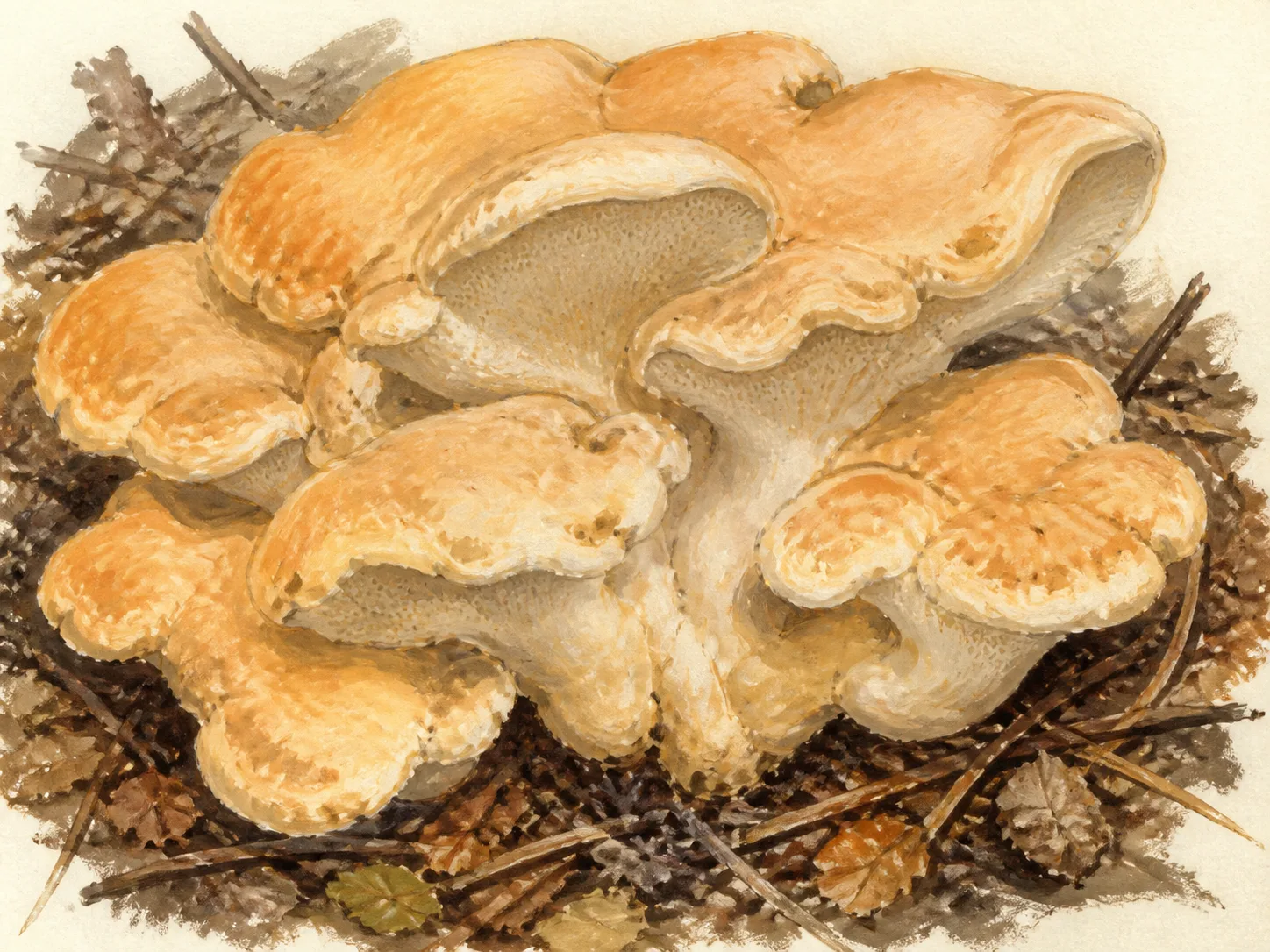
Albatrellus Confluens (Mushroom) Extract comes from Albatrellus confluens, a polypore with irregular cream, apricot, and orange-tinged fruiting bodies that grow in clusters. The Korean Cosmetic Association lists skin conditioning and moisturization as its cosmetic functions. COSMILE Europe classifies it as a humectant and skin-conditioning ingredient.
A bottle contains a processed extract, not an intact mushroom. Solvent choice and standardization determine which compounds remain. Nutritional findings about edible mushrooms and medicinal studies of related species cannot fill in missing efficacy data for this INCI. Its registered humectant function and the TRPV1 experiments are also separate pieces of evidence.
The 33-person study used much more than one extract
A randomized split-face study in 33 healthy women paired microneedling with either a multi-active ampoule or a hyaluronic-acid serum. The ampoule contained omega-3 lipids, beta-glucans, Bacillus ferment, Albatrellus confluens, niacinamide, and other components. Erythema, luminosity, and tactile texture improved more on that side.
Because the ampoule contained several active ingredients, the study could not isolate the mushroom extract’s contribution. The authors discuss omega-3-mediated inflammation resolution, niacinamide, and interactions among the ingredients. Skin immediately after 1 to 1.5 mm microneedling is not the same setting as an untouched face using a daily moisturizer.

A post-laser neurocosmetic cream study raises the same issue. The product combined Albatrellus extract with yeast extract, prickly-pear callus extract, and barrier lipids. These studies explain why formulators place the ingredient in professional postprocedure products. They do not isolate the generic INCI.
How to judge an everyday moisturizer
In a daily moisturizer, the extract is used to help soothe heat and stinging. Relating a product to the TRPV1 experiments requires knowing its grifolin content; the ingredient name alone does not predict how much relief someone will notice.
Check for fragrance, essential oils, denatured alcohol, and strong exfoliating acids if your skin reacts easily. For sensitivity accompanied by tightness, glycerin, panthenol, or beta-glucan plus ceramides and fatty acids provides a more predictable moisturizing base.
Actively burning or peeling skin is a reason to simplify, not to add several unfamiliar actives. Use a plain moisturizer and sunscreen while looking for the trigger. After laser or needling procedures, follow the clinician’s aftercare instructions rather than substituting a retail cream for the professional product used in a study.
A note for mushroom-sensitive skin
A food allergy to mushrooms does not perfectly predict a reaction to a cosmetic extract. If mushroom-derived skincare has caused a reaction before, avoid that product and ask a clinician about the cause, and stop if persistent itching, swelling, or hives appears.
Ongoing heat or stinging needs a cause, not another soothing ingredient. Allergy, dermatitis, infection, and over-exfoliation can all produce that sensation. Albatrellus Confluens Extract does not diagnose or treat those conditions.
Sources used
- Korea Cosmetic Association ingredient reference
- COSMILE Europe: Albatrellus Confluens Extract
- Grifolin derivatives from Albatrellus as TRPV1 receptor blockers for cosmetic applications
- Microneedling with a novel n-3-PUFA-rich formulation
- A Novel Neurocosmetic Postprocedure Cream for Optimal Recovery and Tolerability
- Health Canada ingredient record: Albatrellus Confluens Extract
- RAHN cosmetic actives technical overview