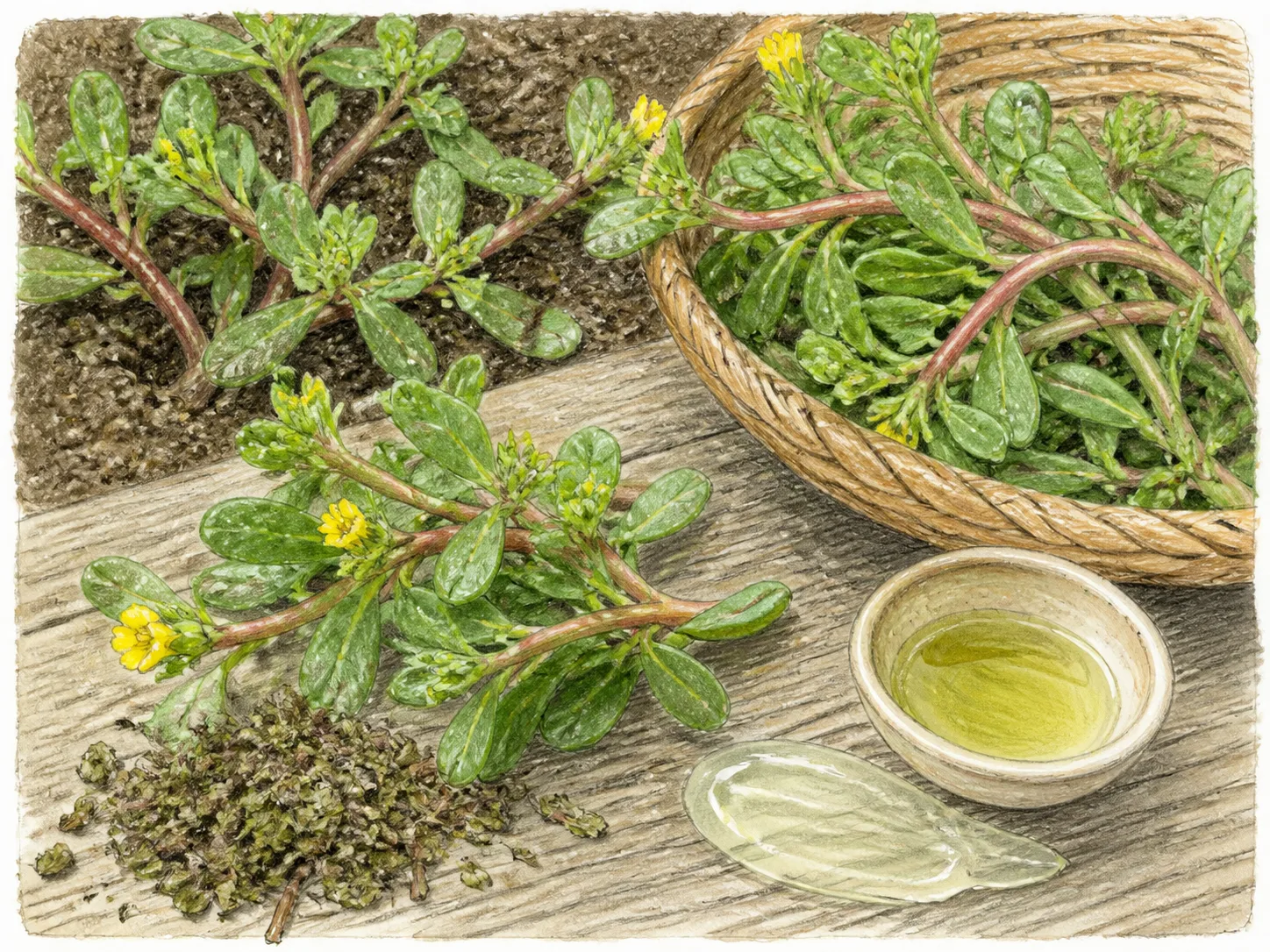
What purslane extract does for skin
Portulaca Oleracea Extract is a whole-plant purslane extract used as a moisturizing skin conditioner. It can help by holding water at the surface and smoothing rough skin. Other compounds in the extract have been studied for moderating inflammatory signals and providing antioxidant activity.
Its moisturizing and softening roles follow from its composition. Barrier-protein and inflammatory-pathway findings come mainly from keratinocyte and animal models.
How polysaccharides support surface hydration
The CIR assessment describes purslane extract as a complex mixture that may contain polysaccharides, amino acids, fatty acids, flavonoids, phenolic acids, alkaloids, terpenes, and coumarins. Polysaccharides carry many hydrophilic groups that can form hydrogen bonds with water. In a serum, they can help hold water in the vehicle and leave a thin hydrated film across the stratum corneum.
That film reduces friction around lifted corneocyte edges, so dry skin can feel less papery and makeup may catch less on flakes. Glycerin or betaine can strengthen water binding, while ceramides, squalane, and fatty alcohols slow water loss. The extract is supporting this system rather than acting as an occlusive barrier by itself.
Filaggrin and KLK7 explain the barrier hypothesis
Filaggrin helps organize keratin inside differentiating corneocytes. Its breakdown products also contribute to natural moisturizing factor, which supports water retention and the mildly acidic environment of the stratum corneum. Lower filaggrin can therefore mean weaker cohesion and less capacity to retain water.
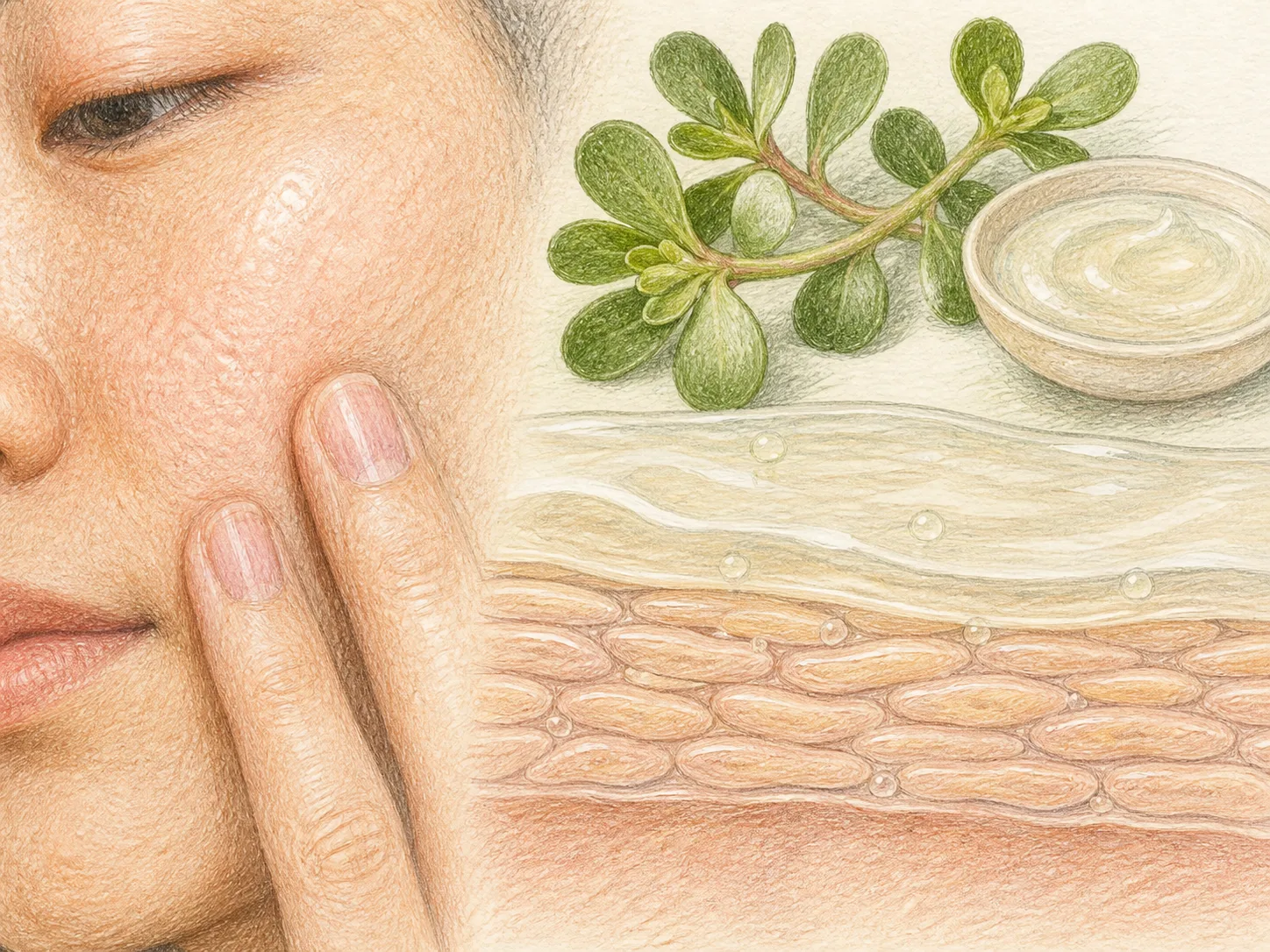
KLK7 is a protease that cuts adhesion proteins between old corneocytes so they can shed. Too much KLK7 activity can loosen those connections too quickly. In keratinocytes exposed to glycolic acid plus UVB, researchers observed lower filaggrin, higher KLK7, and increases in IL-1 beta and IL-8. A specific Portulaca extract moderated those changes.
Together, these changes suggest that the extract helped cells retain filaggrin, reduced excessive shedding signals, and lowered inflammatory cytokine production. It is still a cell experiment, so it cannot tell us how many days an ordinary serum needs to improve a human barrier.
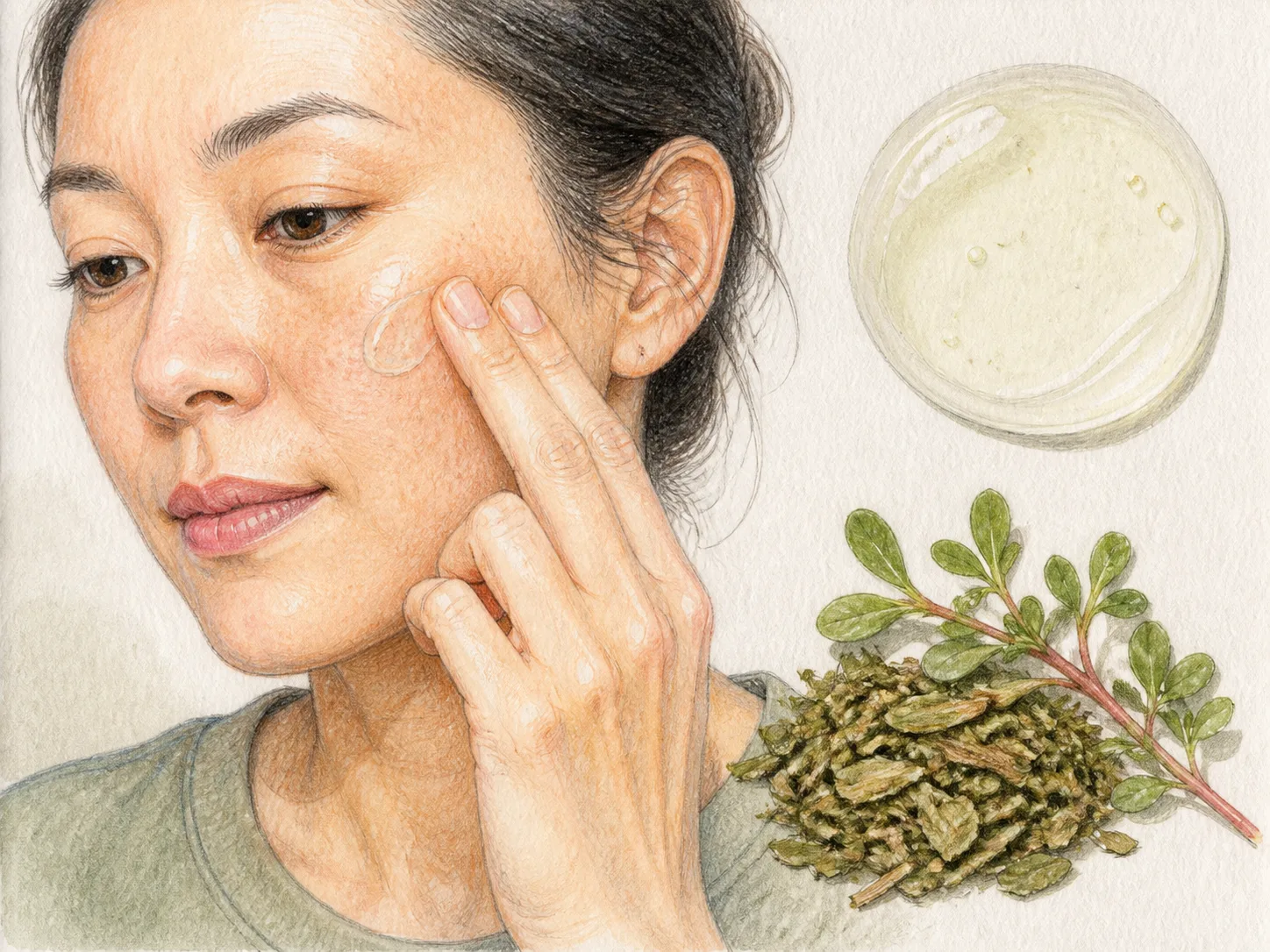
How it may calm inflammatory signaling
IL-1 beta and IL-8 are signaling molecules released when cells detect injury or stress. Higher levels recruit and amplify inflammatory activity, which can show up as heat, redness, and discomfort. Lowering their rise in a stressed-cell model is one reason purslane is studied for soothing formulas.
A newer mouse and keratinocyte study identified aurantiamide acetate in a purslane preparation and reported inhibition of JAK1 with downstream STAT3 and STAT6 signaling. JAK-STAT carries an outside inflammatory message to the nucleus, where it changes gene expression. In that model, dampening the pathway coincided with lower inflammatory markers and recovery of filaggrin, involucrin, and loricrin, proteins involved in epidermal differentiation and barrier structure.
Those results came from dermatitis-like animals and stimulated cells. The researchers did not test whether an ordinary face cream produces the same changes in people.
What antioxidant activity means
Phenolic acids and flavonoids can donate electrons to stabilize reactive oxygen species. This may interrupt oxidation of membrane lipids and proteins and reduce the oxidative push that feeds inflammatory signaling. Purslane extracts show antioxidant activity in laboratory assays, which helps explain its use in products for skin exposed to environmental stress.
Extraction method matters enormously. Water, ethanol, methanol, plant part, harvest time, and processing change the phenolic and flavonoid content. A label that says Portulaca Oleracea Extract does not reveal antioxidant strength without standardization or finished-product data.
What a user might actually notice
In a hydrating serum, look for less roughness and slower return of cheek tightness over several hours. A formula with glycerin, hyaluronic acid, or panthenol mainly strengthens water binding. A cream with ceramides, squalane, or fatty alcohols adds stronger water-loss control.
On an irritated day, a useful outcome is less sting from an otherwise familiar moisturizer or a gradual fall in hot, tight discomfort. Fragrance and essential oils can work against that goal. In a cleanser, contact time is short, so low post-wash tightness matters more than a broad barrier claim.
Sources used
- Korea Cosmetic Association: Portulaca Oleracea ExtractIngredient identity and moisturizing skin-conditioning function
- CIR Safety Assessment of Portulaca-Derived IngredientsExtraction, composition, cosmetic use, and safety
- Portulaca extract after glycolic acid peelingKLK7, filaggrin, IL-1 beta, and IL-8 cell findings
- Purslane hydrogel and barrier signalingJAK1-STAT3/6 and barrier-protein findings in cell and animal models
- COSMILE Portulaca Oleracea ExtractInternational INCI and skin-conditioning function
- CIR Safety Assessment of Portulaca oleracea-Derived IngredientsCosmetic use and safety assessment
- Portulaca Oleracea Extract: Cosmetic Ingredient INCIIngredient characteristics and cosmetic use