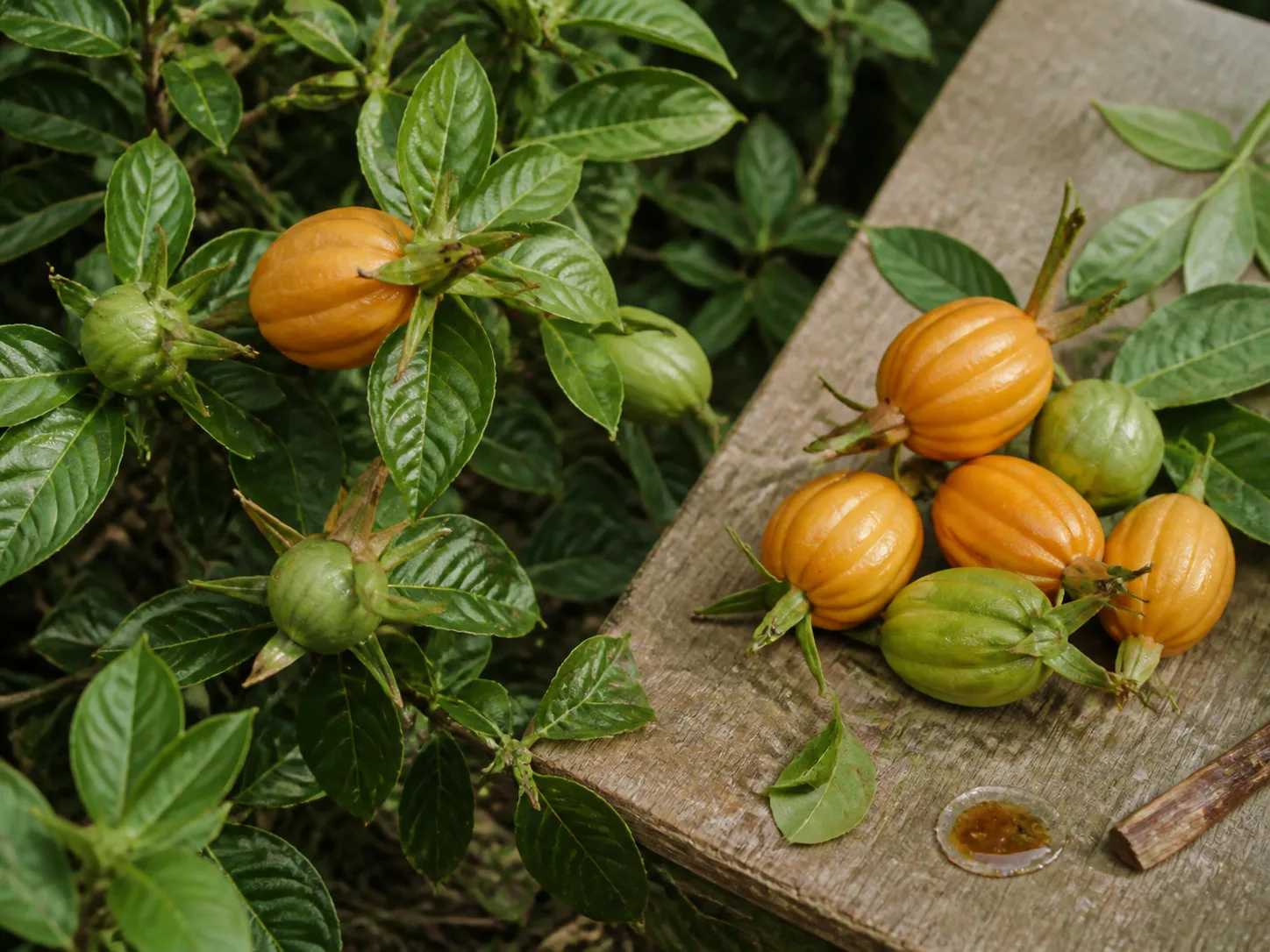
What gardenia fruit extract does in skincare
Gardenia Florida Fruit Extract is used in skincare to help soothe irritated skin and provide antioxidant support. Its crocin and geniposide-related compounds have been studied for reducing oxidative stress and inflammatory signaling in laboratory models. The extract comes from gardenia fruit pulp and is classified as a skin-conditioning ingredient. It is separate from Gardenia Florida Flower Extract and from hydrolyzed gardenia fruit ingredients. A floral scent does not come with the INCI name, and a fragranced gardenia product may not contain this fruit extract at all.
Color is not a dosage test either. Gardenia fruit can contain yellow crocin pigments, but purification, concentration, other colorants, and the base formula change what a product looks like. A clear toner can still list the extract, while a yellow cream may get most of its color elsewhere.
Why geniposide and crocin keep appearing in the research
Gardenia fruit is often studied for iridoid glycosides such as geniposide and carotenoid glycosides such as crocin. Their proportions are not fixed. Researchers have found differences across cultivars and stages of fruit maturity, along with changes in radical-scavenging measurements. Water and alcohol extracts also pull out different mixtures.
Crocin’s structure allows it to transfer electrons and stabilize some reactive molecules. This antioxidant activity has been measured in chemical assays; changes in visible photoaging would need to be measured separately on skin.
The barrier study focused on STAT6 and claudins
A recent study tested a particular Gardenia jasminoides fruit extract in keratinocytes, a 3D epidermis model, and mice. The researchers examined STAT6 signaling activated by IL-4 and IL-13. When that signaling remains elevated, mediators including IL-24, IL-33, and CCL26 can rise while normal epidermal differentiation and barrier protein balance are disrupted.
Under the experimental conditions, the extract reduced selected inflammatory signals and affected CLDN1 and CLDN4, tight-junction proteins that help seal spaces between epidermal cells. This is a cellular barrier mechanism. It is different from an occlusive ingredient that immediately forms a water-loss barrier on top of the stratum corneum.
The study did not include people using a face cream. It explains how the extract may affect inflammation and barrier proteins in experimental models, rather than measuring relief from facial redness or dryness.
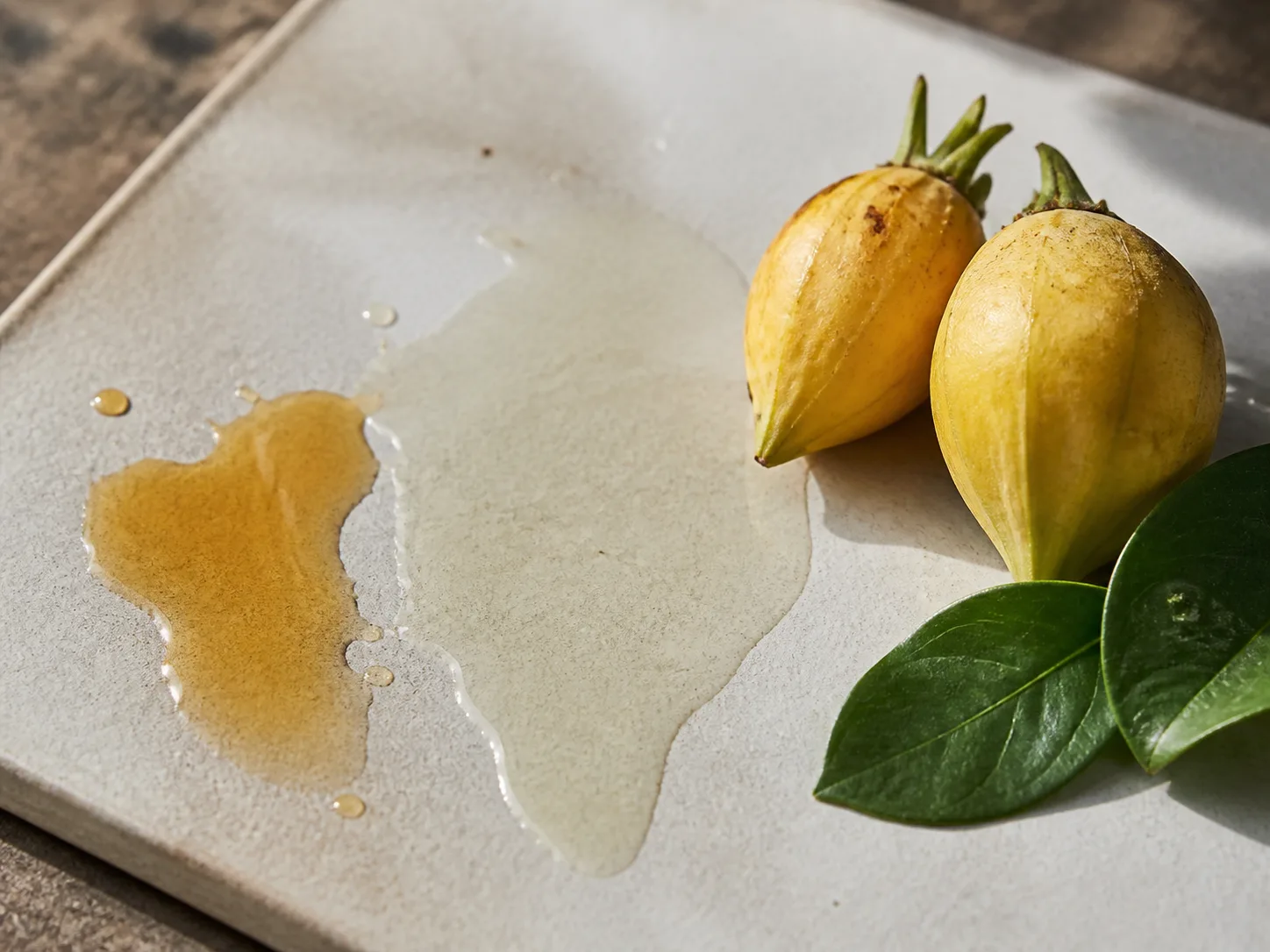
What has been studied for uneven skin tone
Researchers isolated glycosides from dried gardenia fruit and tested them in B16 melanoma cells. Some lowered a melanin-related measurement at concentrations of 30 to 50 micromolar. This is an early way to identify molecules that may interact with melanogenesis.
An isolated glycoside is not compositionally identical to Gardenia Florida Fruit Extract, and a B16 cell measurement is not a clinical pigmentation result. Human pigmentation depends on UV exposure, inflammation, hormones, melanosome transfer, and actual product use. The evidence does not support calling gardenia fruit extract a proven brightener or a treatment for melasma.
Where it appears in formulas
Gardenia extract appears in toners, sheet masks, and wash-off packs. Glycerin, glycols, and panthenol provide much of their immediate hydration, while a wet mask also temporarily slows evaporation.
Look for moisturizing ingredients alongside the extract. Dry skin benefits from a coherent humectant and lipid system. Sensitive skin should pay close attention to fragrance, essential oils, exfoliating acids, and preservatives rather than assuming a botanical name will make the entire product gentle.
A practical trial
Patch test a new leave-on or mask along the jaw or behind the ear for several days. Recurrent stinging, itch, or redness is a reason to stop. It is not a necessary adjustment phase.
Sources used
- Source from cosbot.helpcosmetic.or.kr
- COSMILE Europe: Gardenia Florida Fruit Extract
- Gardenia fruit extract, STAT6 and epidermal tight-junction studyBenefit evidence, study conditions, and what the research actually shows.
- Melanogenesis inhibitory glycosides from Gardeniae FructusBenefit evidence, study conditions, and what the research actually shows.
- Crocin and geniposide profiles and radical scavenging of gardenia fruitsBenefit evidence, study conditions, and what the research actually shows.
- Source from koreantk.com
- Gardenia Florida Fruit Extract skincare ingredient guide