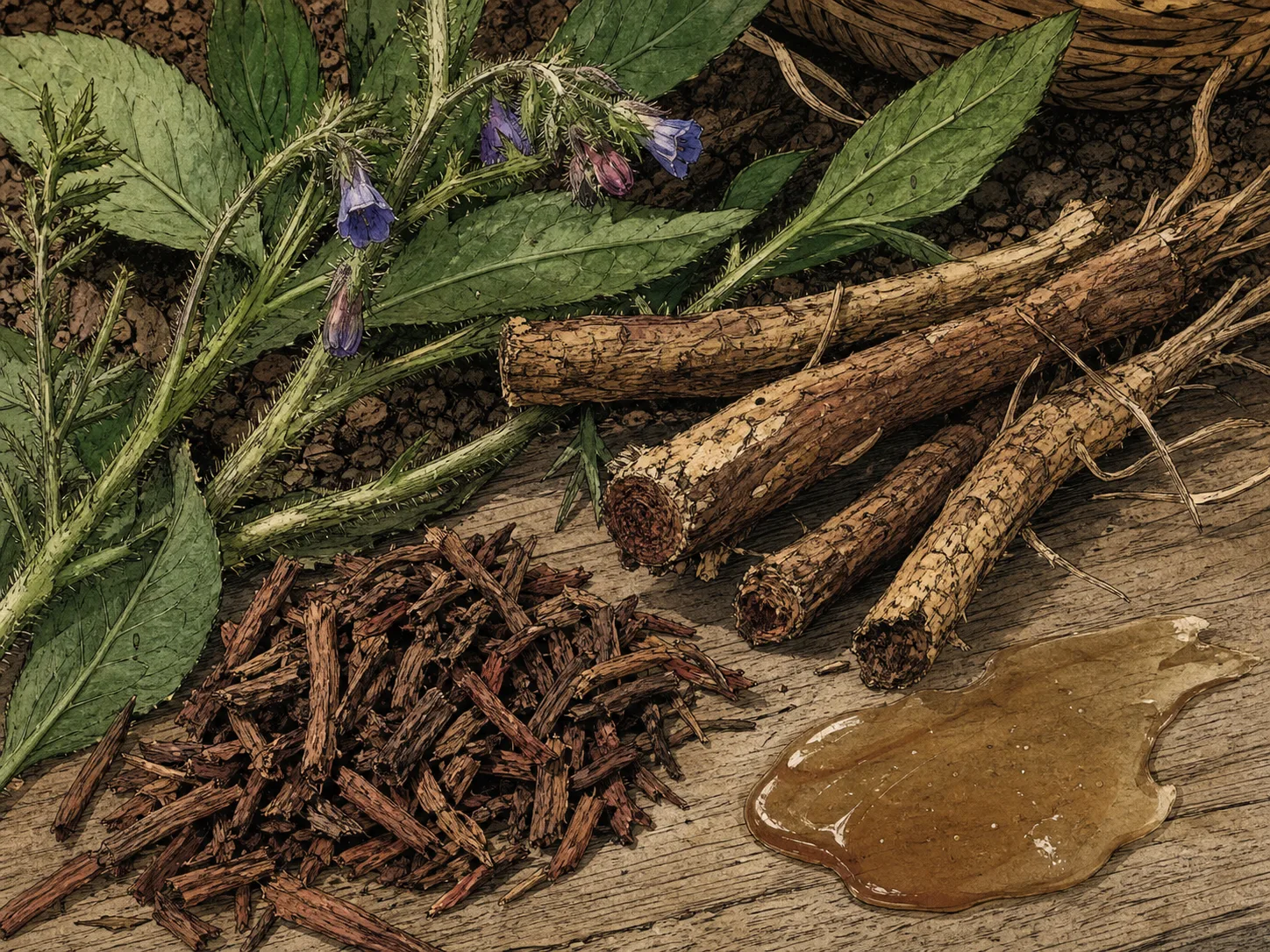
A root with a natural red pigment
Alkanna Tinctoria Root Extract comes from the root of Alkanna tinctoria, a Mediterranean plant often called dyer’s alkanet. The root bark contains red-purple naphthoquinone pigments, including alkannin-related compounds. That color history matters because it helps explain where the ingredient makes the most sense in a cosmetic formula.
It is not primarily a classic brightening or exfoliating ingredient. Instead, it can appear in botanical oils, balms, lip products, cleansing balms, and other formulas where a subtle warm tint or a plant-derived color story fits the product. A small amount near the end of an INCI list may be there as a supporting botanical or color-related component rather than the formula’s main active.
What the antioxidant research actually says
Laboratory work on alkannin, shikonin, and Alkanna root extracts has reported antioxidant activity. This is useful information: it gives the ingredient a plausible place in a formula built around botanical oils or oxidative stability. It does not mean that every cosmetic containing the INCI will fade spots, rebuild skin, or produce an anti-aging result on its own.
The gap matters because studies can use a concentrated extract, an isolated compound, or a particular solvent system, while a finished cosmetic has its own concentration, base, packaging, and use pattern. In an article or product description, the fair version of the claim is that the root has antioxidant research context, not that a single listed ingredient guarantees visible change.
Why oils and balms are its natural home
The red pigments associated with alkanet are oil-soluble, so the ingredient is especially easy to understand in oil-led formulas. In a lip oil or balm, the surrounding waxes and emollients determine grip, shine, and transfer. In a face oil, squalane, seed oils, and esters decide whether the finish feels featherlight or more protective. In a cleansing balm, the emulsifier determines whether it rinses cleanly when water is added.
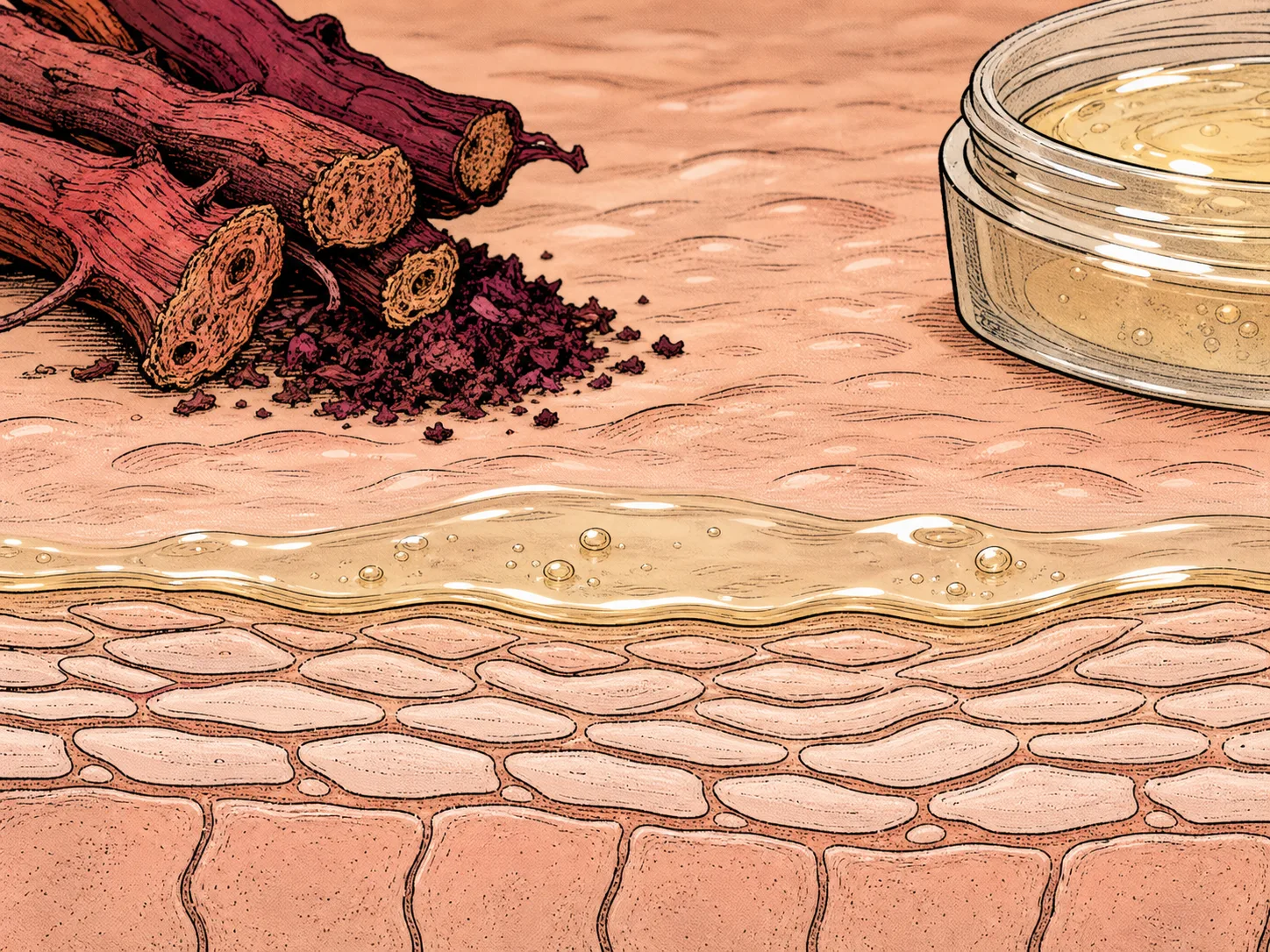
That is the practical way to read the label. Alkanna Root Extract can be an interesting part of the formula, but it is not what makes every balm moisturizing or every oil comfortable. The base does most of that work.
Choosing a product that makes sense
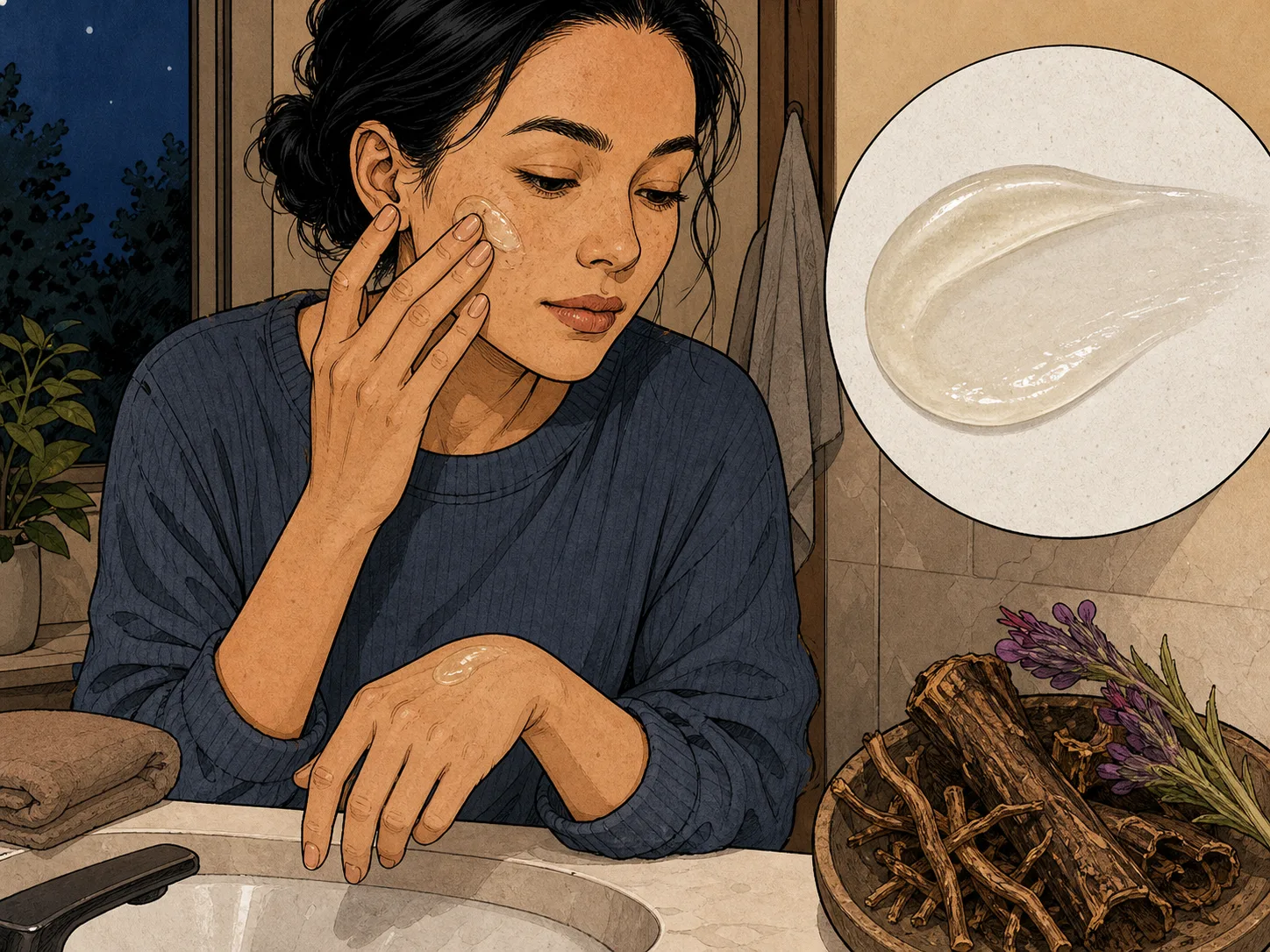
For dry skin, look for the sort of finish you actually want. A wax-and-butter balm may leave a longer cushion, while an ester or squalane-led oil can feel lighter. In colored lip products, judge the tint, transfer, and whether the formula feels drying over a few hours. These details are more useful than assuming a botanical pigment says anything about hydration by itself.
Fragrance also deserves attention. A plant-derived ingredient does not make a product fragrance-free or automatically gentle. Aromatic oils and perfume can be the more relevant variables for someone whose skin reacts easily.
Sensible use and limits
Try a new oil or balm on a small area first, especially when the formula contains fragrance or several aromatic plant oils. Traditional uses of alkanet root are not the same as evidence for a cosmetic product, and the ingredient should not be presented as a treatment for a skin condition. If redness, itching, or stinging repeats, stop using the product and assess the full formula.
Is it just a colorant?
Its red pigment history explains why it can appear in tinted formulas, but cosmetic ingredient references also place it in a skin-conditioning context. The finished product and its concentration determine which role is most relevant.
Does antioxidant research mean it will visibly change my skin?
No. It supports an antioxidant raw-material story, but visible results depend on the finished formula and are not established by the INCI name alone.
Sources used
- 대한화장품협회 성분사전 - 알칸나뿌리추출물Korean standardized name, INCI identity, and declared cosmetic function
- 알칸나뿌리추출물 : 화장품 원료 검색Korean raw-material identity and naming cross-check
- 천연 식물유래 색소 원료 소개Korean professional context for alkanna-containing natural color material
- Natural Plant-Derived Compounds in Food and Cosmetics: A Paradigm of Shikonin and Its DerivativesEvidence limits and laboratory antioxidant context for alkanna-derived alkannin and related compounds
- Alkanna Root Uses, Benefits & DosageHistorical color use and caution context, including the distinction between traditional use and clinical proof
- Alkanna Tinctoria Root Extract ingredient pageInternational INCI description and visible product-format examples