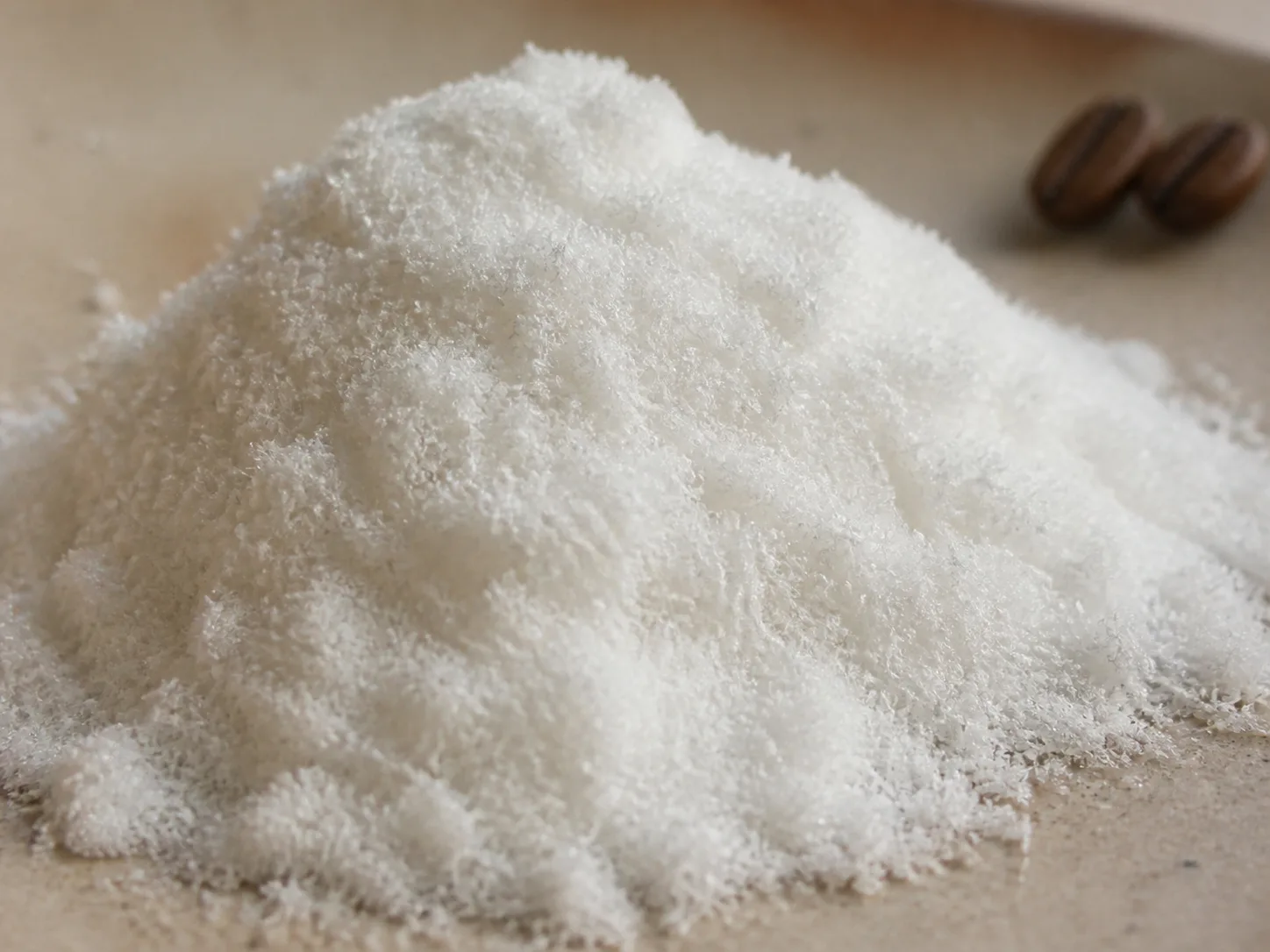
Cosmetic caffeine is not coffee extract
Caffeine appears on an ingredient list simply as Caffeine. PubChem identifies it as 1,3,7-trimethylxanthine, a defined molecule. Coffee seed extract is a botanical mixture that may contain caffeine plus many other compounds. Evidence and percentages for one should not be assigned automatically to the other.
Cosmetic caffeine appears in eye serums, creams, body products, scalp tonics, and facial pads. Drinking coffee and applying a small amount around the eyes are different exposure routes. An eye cream is not expected to create whole-body alertness, and a cup of coffee does not reproduce the local hydration, cooling, and film of a finished eye product.
Dark circles are not one condition
An under-eye area can look dark because of melanin, visible vessels and hemoglobin under thin skin, shadow from a tear trough, protruding fat, swelling, or a combination. The dominant cause changes what a topical product can plausibly improve. Lighting and head position can also turn a mild hollow into a dramatic “before” photograph.
Caffeine products are mainly used for temporary puffiness and some vascular-looking darkness. It cannot fill a deep hollow or permanently remove genetically thin skin. Pigment-dominant circles need consistent sun protection and appropriately chosen pigment care. Identifying the likely cause prevents one ingredient from being asked to solve several unrelated problems.
What the 30-year review found
A 2024 review searched three databases for 30 years of topical periorbital dyschromia research. Twenty-two studies met its criteria, including randomized and nonrandomized trials. Caffeine appeared among a broad list of acids, vitamins, botanical materials, and combination products that produced statistically significant changes in at least some outcomes.
That supports the possibility that topical care can improve selected under-eye concerns. It does not give one universal effect size for caffeine. Study populations, causes of darkness, measurements, and formulas varied. Many products contained several active ingredients, and the authors called for trials matched more carefully to the cause of the dark circle.
The 12-week eye-cream study tested a blend
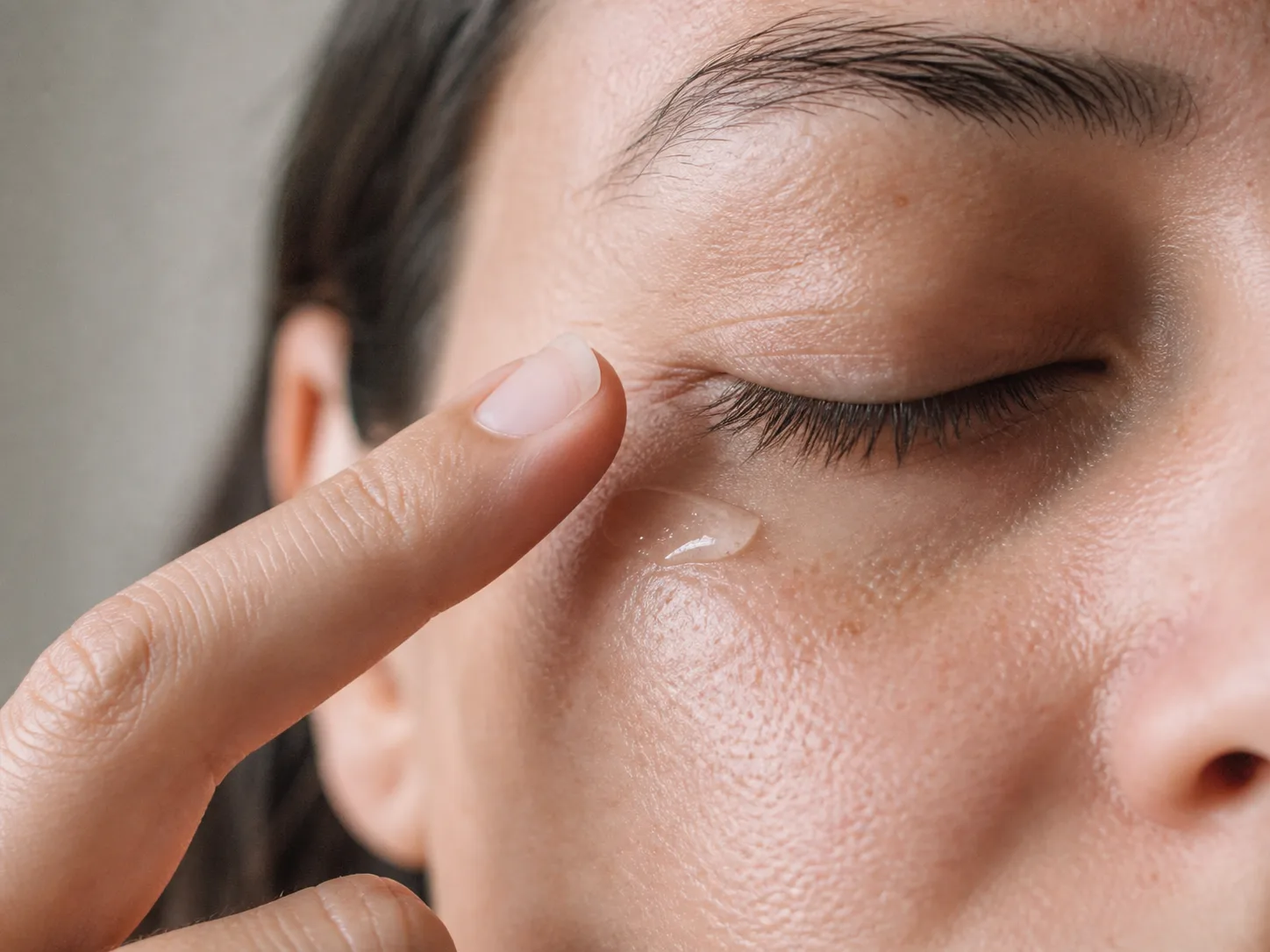
One open-label study enrolled 40 women with dark circles, puffiness, and fine lines; 37 completed 12 weeks. The cream contained a vitamin C derivative, peptides, prebiotic and botanical materials, chrysin, and caffeine. Imaging, color measurements, laser Doppler readings, clinical grading, and self-assessment indicated improvements in several dark-circle and puffiness measures.
The multiple instruments and time points are useful. There was no blinded control group, however, and the ingredient blend prevents attribution to caffeine alone. Better surface hydration could also soften fine lines and reduce shadow. The improvement was measured for this combination cream, not for caffeine alone.
Serum, cream, and cooling applicators change the result
A watery eye serum sits lightly under makeup but may feel tight on dry skin. A cream adds humectants, oils, silicones, or fatty alcohols that smooth the surface and make dehydration lines less visible. That immediate optical change is valuable, but it is not proof that caffeine changed circulation or pigment.
Metal rollers and refrigerated products add cooling and massage. Cool temperature can temporarily change how swollen the area feels, while pressure may move surface fluid. Those effects should not be credited entirely to caffeine. Use very light pressure; aggressive rolling can make thin eyelid skin red and irritated. Check the storage directions before refrigerating a product.
A practical morning application
Divide less than a rice-grain amount between both eyes and tap it along the orbital bone, not directly into the lash line or waterline. Let it settle before moisturizer and sunscreen. If concealer or sunscreen pills, reduce the amount rather than rubbing harder. You can also use it at night. Follow the product’s directions for amount and the area where it can be applied.
Compare results at the same time and in the same lighting. Track morning swelling, afternoon dryness, stinging, and makeup creasing separately. Sleep, salt intake, crying, allergies, and nasal congestion can change puffiness from day to day. Four to eight weeks of tolerable use tells you more than one unusually rested morning.
Irritation and signs that need assessment
Fragrance, drying alcohol, retinoids, or exfoliating acids in the formula may be more irritating than caffeine. Stop if burning, scaling, tearing, or persistent itch develops. Recurrent eyelid dermatitis deserves investigation rather than a sequence of new eye creams.
Sudden swelling on one side, pain, marked redness, discharge, or vision changes is not a cosmetic issue. Persistent darkness can also coexist with allergies, eczema, or structural hollows. Skincare can improve appearance and comfort, but it does not diagnose or replace care for an underlying problem.
Sources used
- 대한화장품협회 성분사전 - 카페인current Korean name, exact INCI and cosmetic functions
- COOS - 카페인Korean professional identity and product-format context
- PubChem - Caffeinechemical identity, synonyms, formula and xanthine classification
- Topical therapies for periorbital dyschromia: 30-year revieweye-area evidence landscape, multifactorial causes and combination-product limits
- Multicorrective topical treatment for dark circles and puffiness12-week 40-person multi-ingredient eye-cream study and attribution limits
- INCIDecoder - Caffeineconsumer-facing function and evidence context