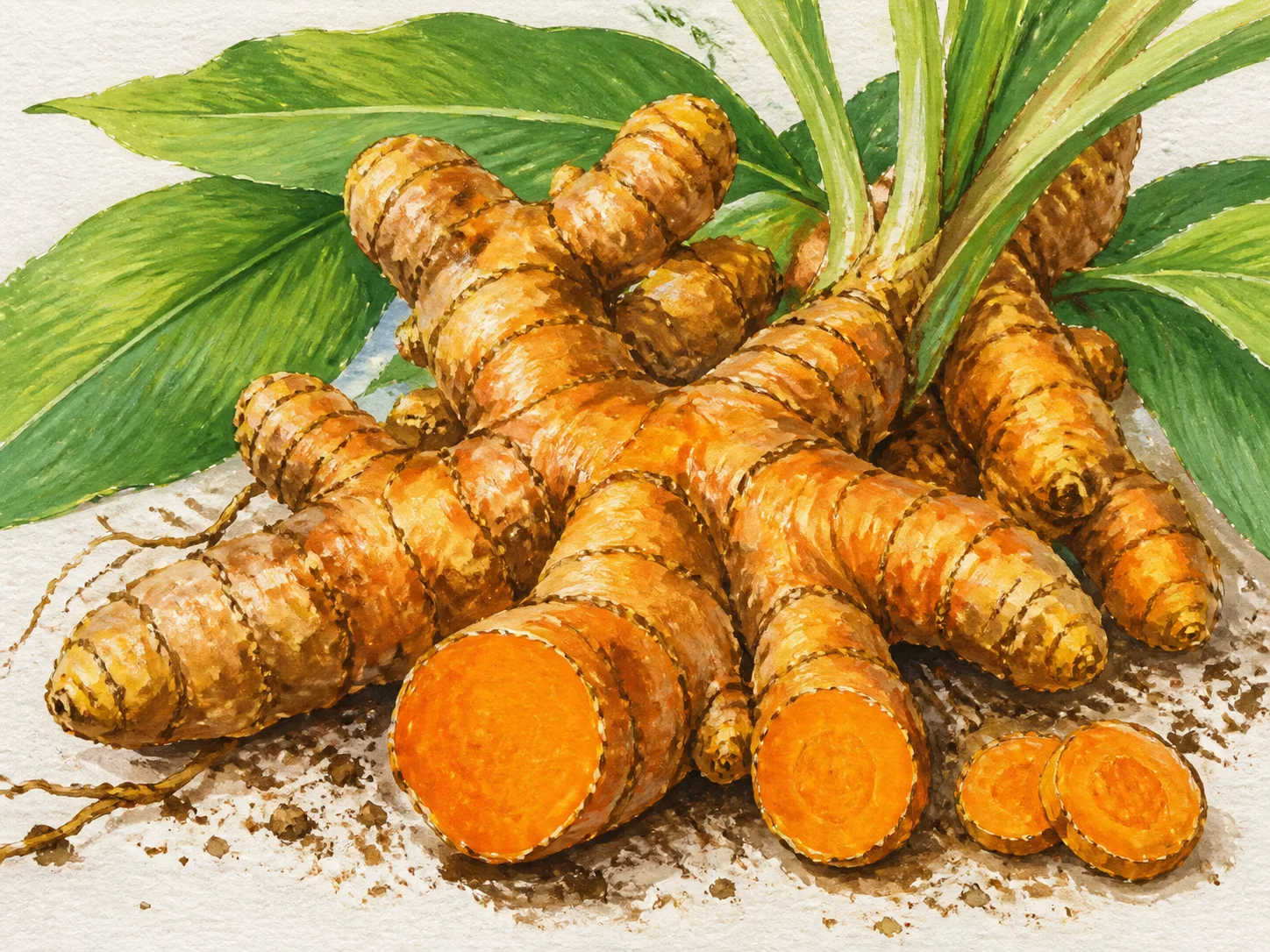
Turmeric Root Extract supports antioxidant and soothing care
Turmeric Root Extract is used to support antioxidant care and help stressed-looking skin feel calmer. Curcuminoids and other phenolic compounds are studied for their effects on oxidative and inflammatory signaling. A finished serum may use the extract as one part of a broader soothing or brightening formula rather than as a concentrated curcumin treatment.
Curcuma Longa (Turmeric) Root Extract is a cosmetic material obtained from turmeric root. Korean ingredient references use a standardized name for this exact root extract, with older Korean names connected to the same INCI. That identity matters because turmeric root water, root powder, root oil, and isolated curcumin are different materials.
The familiar food story around turmeric can make an ingredient list look more decisive than it is. Eating turmeric, taking a curcumin supplement, applying turmeric oil, and using a preserved facial serum containing a root extract are different exposures and formulas. They should not be used interchangeably as evidence.
For this exact ingredient, the Korean reference lists fragrance as its direct cosmetic purpose. A listed cosmetic function is separate from testing how a particular extract affects skin.
How curcumin helps cells respond to oxidative stress
Curcumin can quench reactive molecules and activate Nrf2, a pathway that helps cells produce antioxidant defenses. A 2017 study tested curcumin in a microemulsion using cultured skin cells and isolated human skin tissue. It increased antioxidant-pathway activity and reduced UVB-related cell injury. This explains interest in curcumin-containing skincare, but the tested delivery system was not an ordinary mixed turmeric-root extract serum.
Before converting a research headline into a skincare expectation, check whether it used the same root extract, whether the solvent and concentration were described, and whether people used a finished formula. An isolated-curcumin result does not establish brightening or acne treatment by a mixed root extract.

What to check in an ampoule or serum
Technical material sheets describe turmeric-root extracts in water-and-glycol or water-alcohol-glycerin bases. This makes them compatible with watery essences, ampoules, and lightweight serums. It does not reveal the amount used in a finished product or whether the final formula will feel gentle.

Look beyond the botanical name. Fragrance, essential oils, denatured alcohol, exfoliating acids, retinoids, humectants, and the texture system often have a larger effect on comfort. Dry skin may prefer moisturizer over a watery serum. Oily skin may find a thin hydration layer more comfortable than repeated stripping steps, but the best format is still the one that remains calm over repeated use.
Introduce one unfamiliar formula at a time. Starting a new acid, high-strength vitamin C, retinoid, and botanical serum together makes it difficult to tell what caused a reaction.
Caution with plant-derived formulas
Plant-derived is not a guarantee of compatibility. Try a small amount on a limited area before broad facial use and stop if persistent burning, itching, redness, or swelling develops. This is a practical screen for obvious discomfort, not a diagnostic allergy test.
If a reaction appears, consider the whole formula rather than blaming turmeric or curcumin immediately. Fragrance, preservatives, essential oils, acids, and other extracts can contribute. Simplifying a reactive routine is usually more useful than adding several new botanical products in search of a quick answer.
Sources used
- Korea Cosmetic Association ingredient reference
- Korea Cosmetic Association ingredient reference
- SpecialChem Curcuma Longa Root Extract INCI
- NOF TURMERIC EXTRACT BG leaflet
- Biolandes Curcuma Longa technical data sheet
- Active Concepts Turmeric Liposome certificate
- PMC review on Curcuma longa applications
- Source from coos.kr
- Curcumin microemulsion and Keap1-Nrf2 in cultured skinSpecific study material and mechanism; linked in body