
What you notice first
Rosmarinus Officinalis (Rosemary) Leaf Oil brings a crisp herbal scent and a fresh sensory finish to skincare and scalp formulas. Its volatile compounds also show antimicrobial and antioxidant activity in laboratory tests, which helps explain why the ingredient often appears in products aimed at oily or blemish-prone skin. It is not, by itself, an acne treatment.
A well-designed carrier formula may also leave skin less dry and more supple. One small human study measured better hydration and elasticity after a 3% rosemary essential-oil formula was applied to hand skin. The study used a specific delivery system; other rosemary products may behave differently.
Essential oil is not leaf extract
Rosemary Leaf Oil is collected by distilling volatile material from the leaves. Its composition commonly includes 1,8-cineole, camphor, and alpha-pinene, although climate, origin, and chemotype change the proportions. Rosemary Leaf Extract is made with a solvent and can emphasize nonvolatile compounds such as rosmarinic acid.
Aroma, oxidation of fragrance compounds, and essential-oil allergy relate directly to the oil. A polyphenol-rich extract study may not. When an article simply says rosemary, check the INCI and the material used in the experiment before transferring the conclusion.
Why it is discussed in oily-skin formulas
Small volatile molecules can interact with the lipid membranes of microorganisms, changing permeability and membrane stability. Some also influence oxidation reactions and inflammatory signaling in experimental systems. These mechanisms support the use of Rosemary Leaf Oil as a sensory and formula-support ingredient in cleansers, gels, and scalp products.
The concentration that slows microbial growth in a laboratory dish is not automatically comfortable or effective on a face. Increasing the dose can increase irritation and fragrance-allergy risk before it delivers a better cosmetic result. Finished formulas use the oil alongside emulsifiers, moisturizers, and a complete preservation system.
What the hydration study actually tested
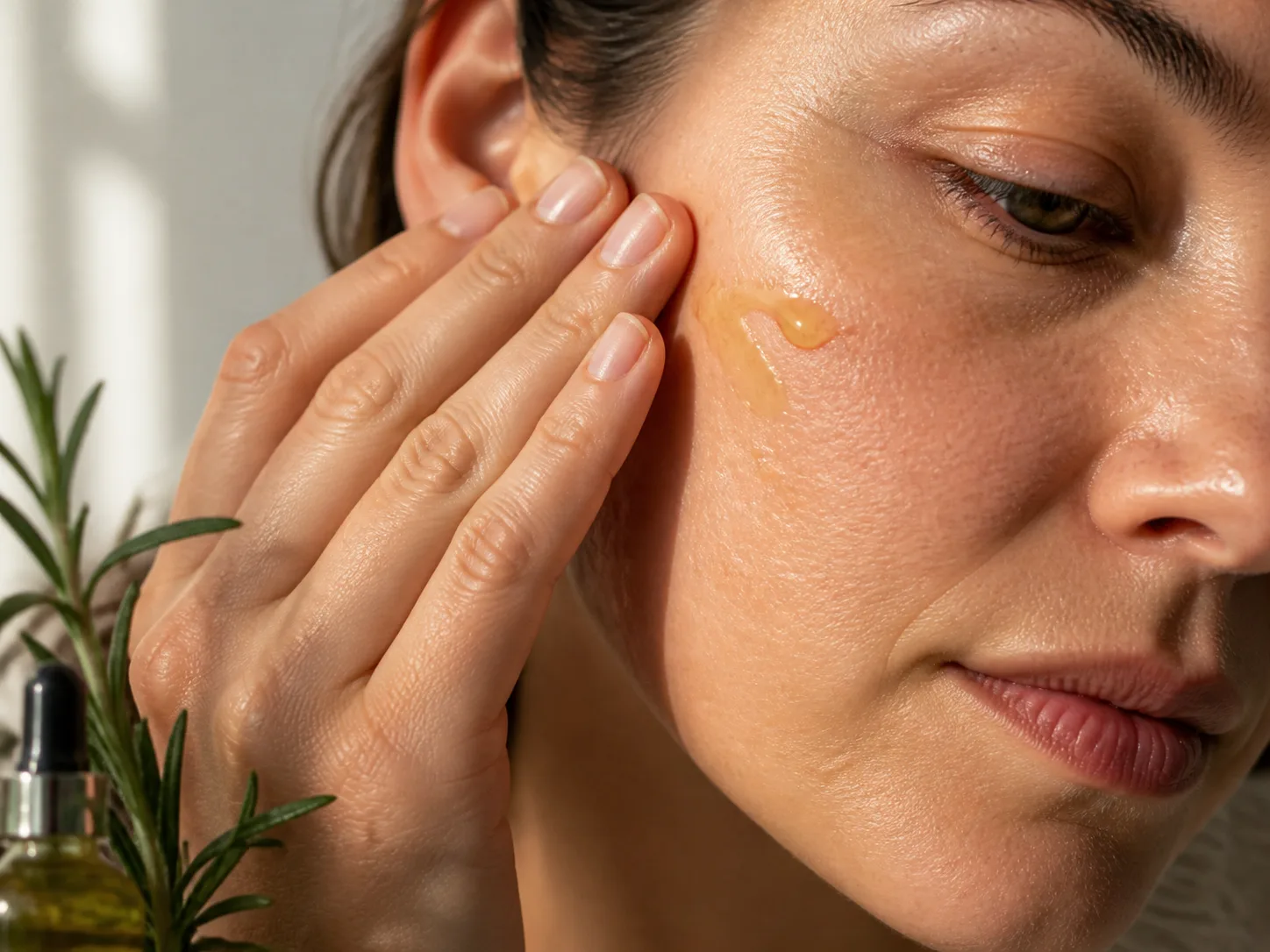
Researchers compared 3% rosemary essential oil loaded into nanostructured lipid carriers with the same concentration of free oil. Ten volunteers applied the formulas to hand skin twice a day for one week. The carrier formula produced better hydration and modest elasticity measurements than the free-oil version.
This finding is useful because it shows that release and retention can matter as much as the ingredient name. It does not show that a drop of neat oil increases facial elasticity. The group was small, the test lasted one week, and the formula used a specific lipid-delivery system.
Formats and practical expectations
Rosemary Leaf Oil can appear in water-rich soothing gels, toners, creams, cleansers, and scalp care. In a gel, solubilizers or an emulsion must distribute the volatile oil evenly. A strong aroma does not disclose the percentage, and ingredient order cannot establish an antimicrobial effect.
Oily skin may prefer a light gel or rinse-off format. Dry skin needs a stronger base of humectants and barrier lipids; the essential oil should be a small supporting part of that formula. Stinging is not evidence that the product is purifying the skin.
Sensitivity and storage
Essential oils change as they meet oxygen and light. Oxidized fragrance compounds can be more likely to trigger allergic contact dermatitis. Do not apply neat Rosemary Leaf Oil to the face or scalp. Choose a properly formulated product, avoid the eye area and broken skin, and avoid fragrance ingredients you know cause reactions.
Sources used
- Source from cosbot.helpcosmetic.or.kr
- COSMILE Europe: Rosmarinus Officinalis Leaf Oil
- EMA: Rosmarini aetheroleum
- EMA assessment report on rosemary oil and leaf
- Topical rosemary essential oil in lipid nanoparticles: human skin hydration and elasticityBenefit evidence, study conditions, and what the research actually shows.
- CIR safety assessment of Rosmarinus officinalis-derived ingredients
- DermNet: Allergic contact dermatitis to essential oils