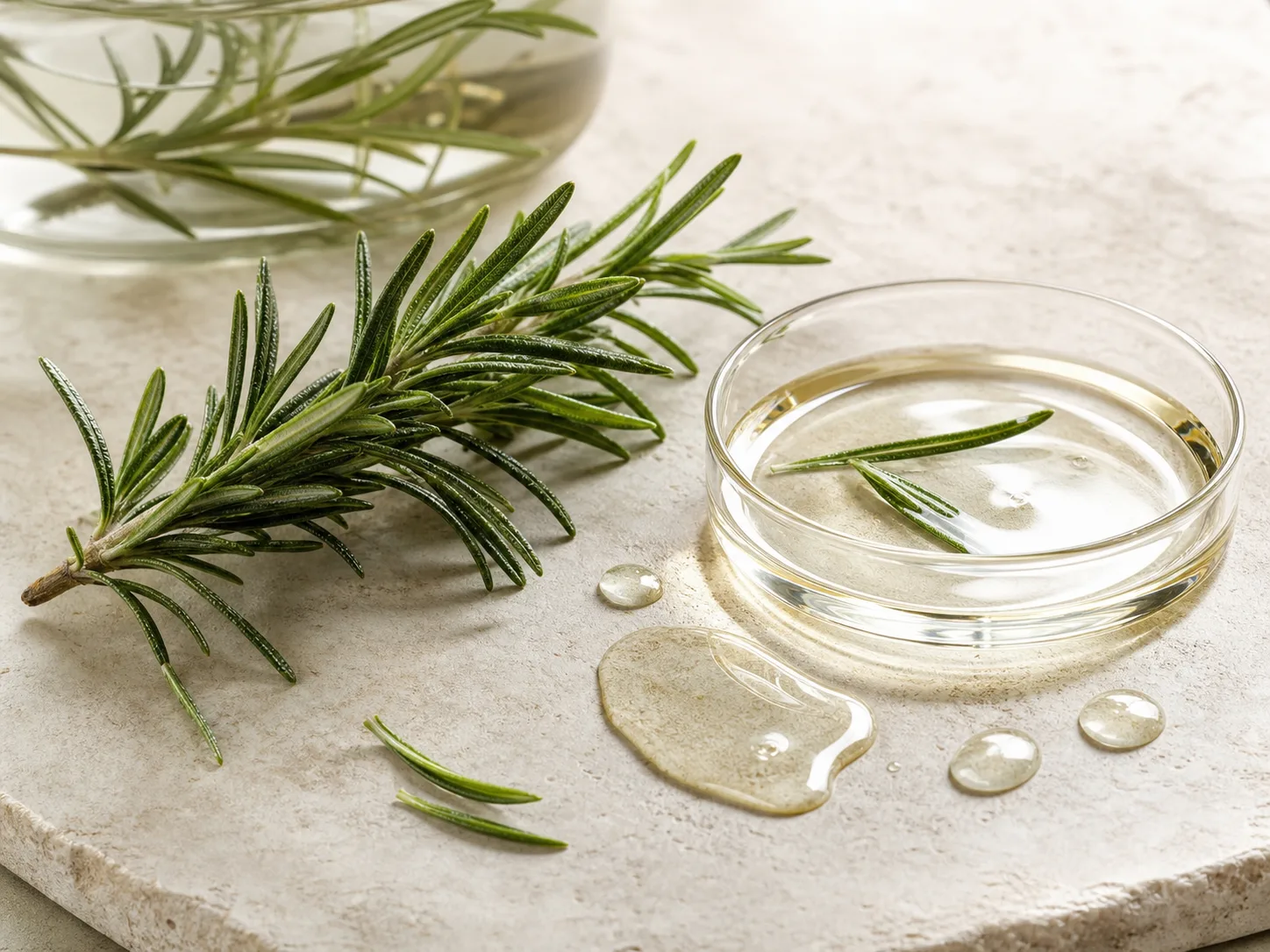
What rosemary leaf extract is
Rosmarinus Officinalis (Rosemary) Leaf Extract is a botanical extract made from rosemary leaves. It is a mixture, not one defined molecule, so the whole extract cannot be assigned one molecular formula. Compounds such as carnosic acid or carnosol can be discussed separately, but they are not the entire extract.
It supplies antioxidant compounds to skincare and haircare formulas and helps slow the oxidation of susceptible ingredients. Its role in keeping oils from oxidizing is different from the microbial protection provided by preservatives.
Leaf extract is not rosemary oil
Rosemary leaf extract and rosemary leaf oil come from the same plant but contain different material profiles and different amounts of aromatic compounds. Oil has a stronger fragrance profile and deserves more direct attention when skin is sensitive. Check whether the list says Leaf Extract or Leaf Oil.
Research on rosemary oil for hair growth does not describe the same material as rosemary leaf extract.
Where it fits in a formula
In a toner or essence, humectants such as glycerin, panthenol, and betaine usually create the immediate hydration feel; rosemary leaf extract is one botanical support ingredient. In a cream, oils, fatty alcohols, and ceramides shape the cushion. In a cleanser or shampoo, surfactants and fragrance determine much of the rinse and after-feel.
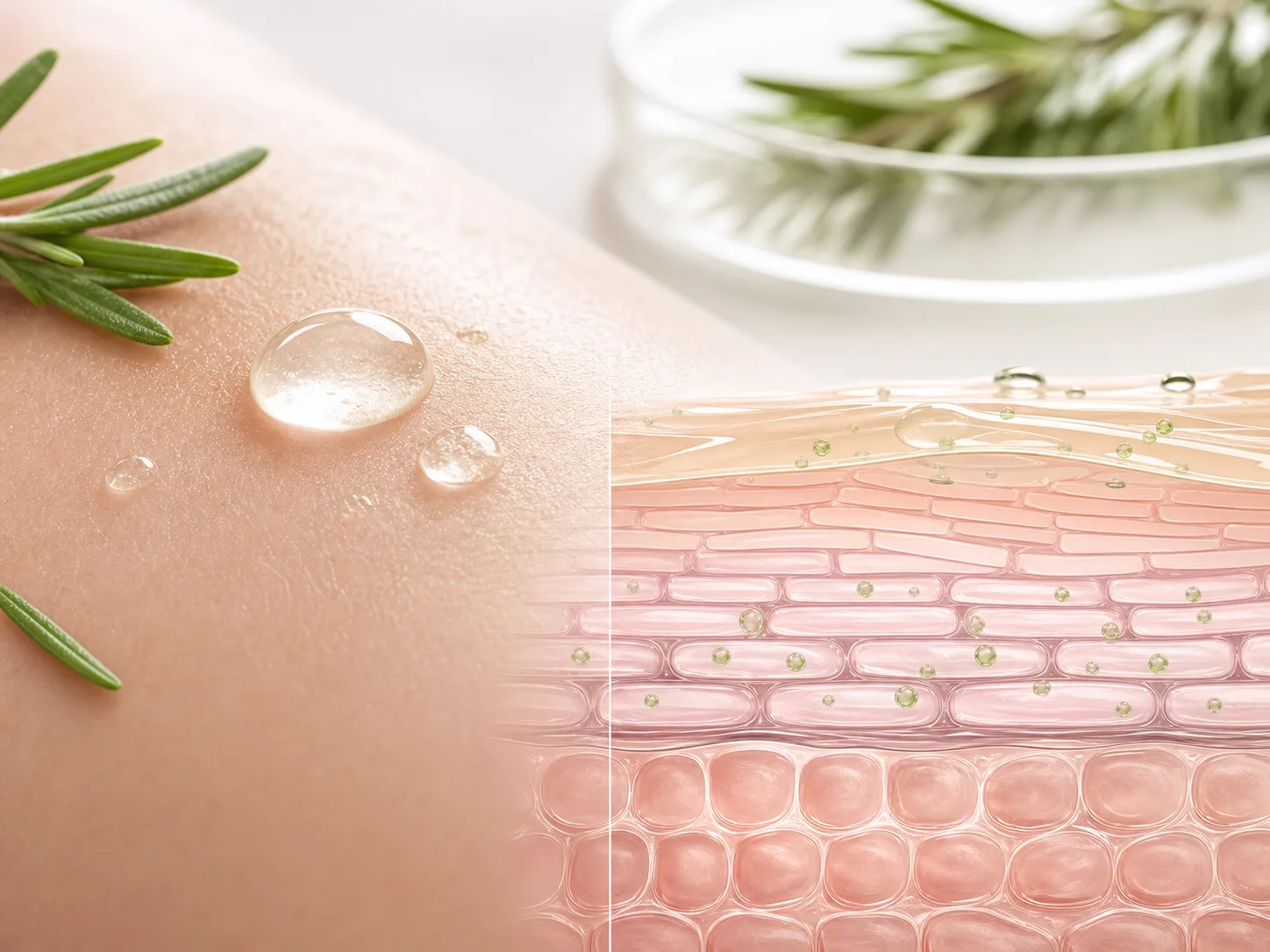
Read the fragrance, essential oils, alcohol, and ingredient position before deciding that a product is gentle or irritating from the extract name alone.
Check fragrance and other actives first
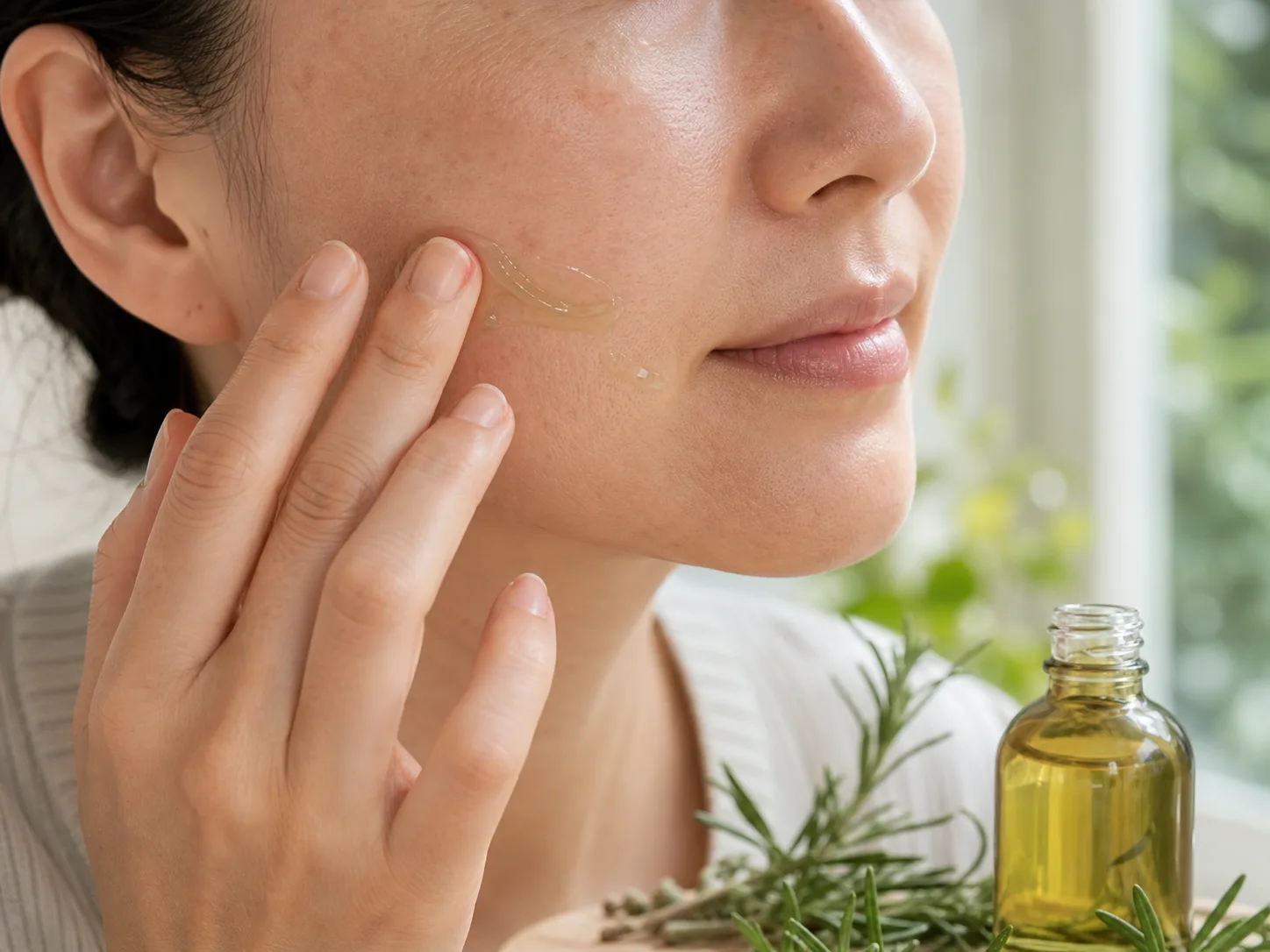
Try a new product on a small area near the jaw or inner arm. Repeated redness or itching is a reason to separate the possible roles of leaf extract, oil, fragrance, and preservatives. The CIR safety assessment applies to cosmetic use when the formulas are made to be nonsensitizing; it does not promise that every skin type will react the same way.
Antioxidant compounds differ from fragrance compounds
Carnosic acid, a rosemary constituent, reduced UV-induced MMP expression in a human skin-cell study. MMPs are enzymes that break down collagen and other supporting structures, providing one link between antioxidant care and firmness. The study tested carnosic acid rather than every commercial leaf extract, whose composition and concentration can vary.
In scalp products, distinguish leaf extract, leaf oil, and added fragrance. The fresh scent and a stronger sensory effect may come mainly from aromatic oil or perfume, while claims about hair growth require a different level of evidence. For facial skincare, a fragrance-free base with humectants and emollients may matter more to daily comfort than the rosemary name on the front of the package.
Sources used
- CIR Rosemary-derived ingredients safety assessmentPublished evidence and study scope
- SpecialChem Rosemary Leaf ExtractIngredient characteristics and cosmetic use
- COSMEDIQUE 로즈마리잎추출물Ingredient characteristics and cosmetic use
- EMA Rosemary leaf identityCosmetic use and safety assessment
- Cosmetics Info: Rosmarinus Officinalis (Rosemary) Leaf ExtractCosmeticsInfo.org is your source for information about cosmetics and personal care products
- Carnosic acid and UV-induced MMP expression in human skin cellsSpecific study material and mechanism; linked in body