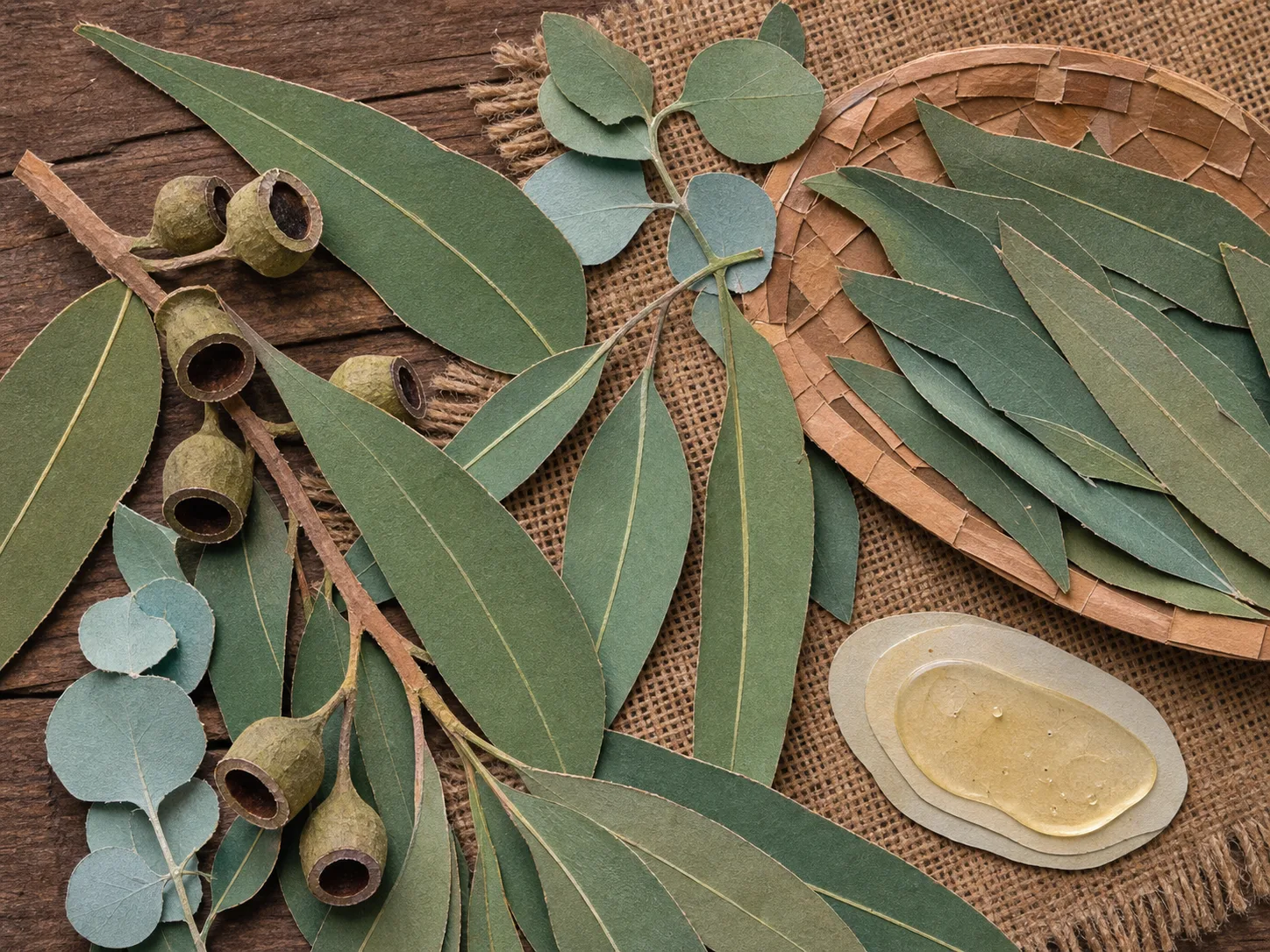
The name can hide an important distinction
Eucalyptus Globulus Leaf Extract is an extract made from the leaves of Eucalyptus globulus, often called blue gum. On an INCI list, that wording is not interchangeable with Eucalyptus Globulus Leaf Oil. The oil is a volatile aromatic material, while an extract can be made with water or other solvents and has a different composition.
This is more than a technical detail. Eucalyptus oil is commonly associated with a stronger camphor-like scent and a higher proportion of volatile aroma compounds. A leaf extract may have a very different profile, and supplier material can vary with the extraction method. Read the precise wording before assuming a product will feel strongly cooling, fragrant, or irritating.
What it does in a cosmetic formula
Cosmetic ingredient references list Eucalyptus Globulus Leaf Extract in a skin-conditioning context. It can appear in skincare, body care, and scalp care formulas that aim for a fresh botanical feel. In a face toner or serum, it is often one supporting plant ingredient among humectants, emollients, and other extracts. In a scalp product, its name may sit alongside menthol, fragrance, or cleansing agents that shape the sensory experience much more directly.
Research on eucalyptus leaf materials has reported antioxidant, anti-inflammatory-marker, and pigment-related findings in laboratory settings. The right conclusion is not that a cosmetic extract treats acne, pigmentation, or photoaging. It is that the plant has research context which helps explain why formulators may use it as part of a botanical formula.
Face products and scalp products are different cases
In a leave-on facial formula, immediate hydration usually comes from ingredients such as glycerin, betaine, and hyaluronic acid. The longer-lasting cushion is more likely to come from ceramides, oils, fatty alcohols, or silicones. Eucalyptus Leaf Extract can be part of the supporting botanical story without being the ingredient that determines whether the product actually feels hydrating.
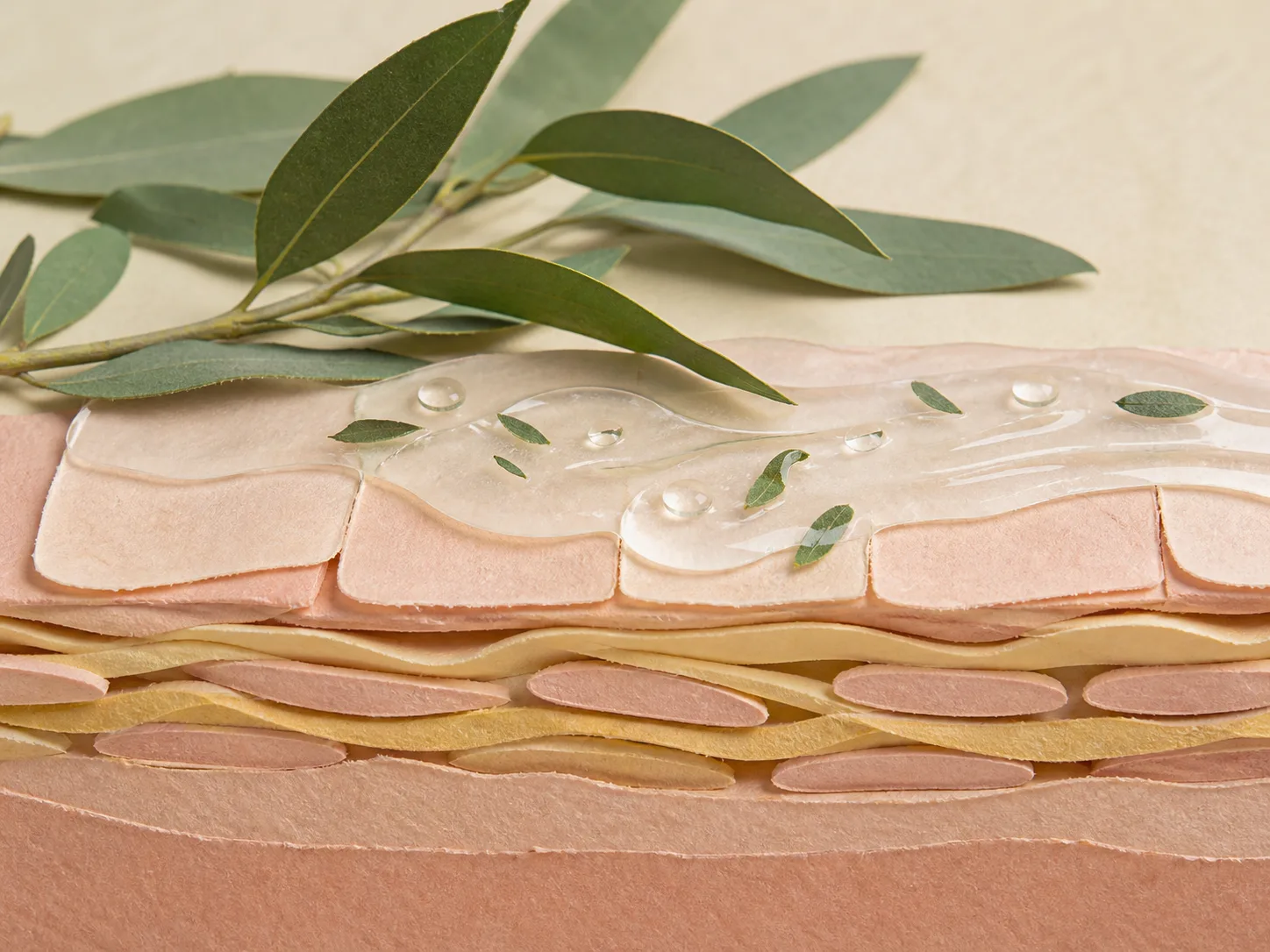
In scalp care, look at whether the product is rinsed out or left on. A shampoo has short contact time and is shaped by the surfactant system. A scalp tonic stays longer and makes fragrance, menthol, alcohol, and other active ingredients more relevant. A cooling sensation is a sensory effect, not proof that the scalp has been treated.
Choosing and trying a product
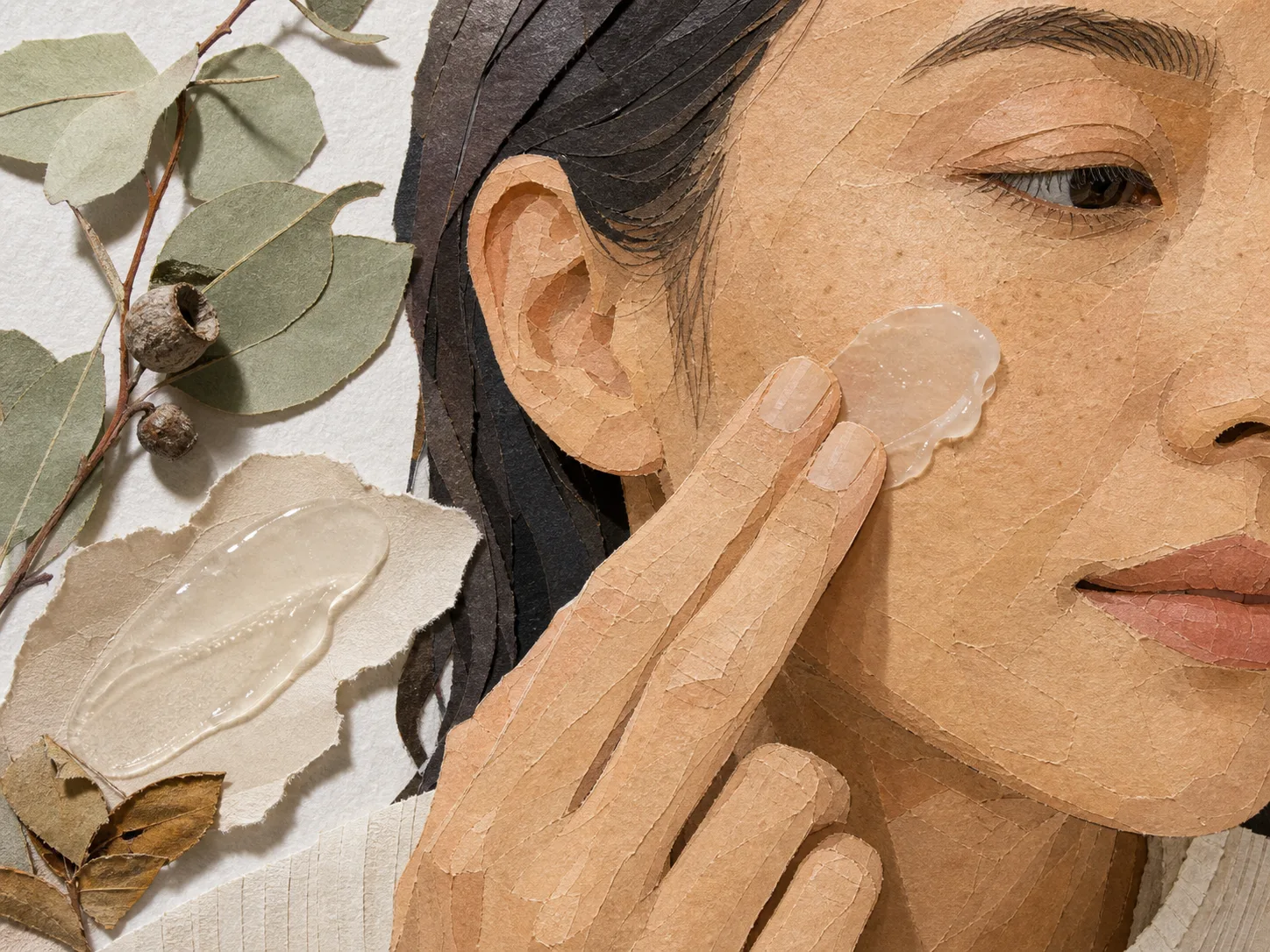
If your skin is reactive, check for fragrance, eucalyptus oil, limonene, linalool, and strong cooling ingredients alongside the extract. A formula can contain a small amount of leaf extract yet still be too aromatic for a particular person. For a fresh body or scalp product, judge the actual after-feel: tightness after rinsing, residue, stickiness, and whether the scent remains comfortable over time.
Introduce a new product on a small area and avoid changing several potentially irritating steps at once. Stop using it if stinging, itching, or redness persists. The useful habit is to distinguish the extract from the oil, then assess the whole formula rather than giving every eucalyptus-labelled product the same meaning.
Is leaf extract the same as eucalyptus oil?
No. They are distinct INCI materials with different manufacturing routes and aromatic profiles.
Does its antimicrobial research make it an acne treatment?
No. Laboratory research does not make a finished cosmetic a treatment. Formula type, concentration, other ingredients, and a person’s skin all matter.
Sources used
- 대한화장품협회 성분사전 - 유칼립투스잎추출물Korean standardized name, INCI identity, CAS number, and declared cosmetic functions
- 유칼립투스잎추출물 : 화장품 원료 검색Korean raw-material identity and Korean naming cross-check
- 유칼립투스잎추출물 (Eucalyptus Globulus Leaf Extract)Korean reader-facing ingredient context
- Safety Assessment of Eucalyptus globulus-Derived Ingredients as Used in CosmeticsINCI definition, extract versus oil distinction, composition variability, and safety limits
- Chemical Composition and Effect against Skin Alterations of Bioactive Extracts Obtained by the Hydrodistillation of Eucalyptus globulus LeavesIn-vitro efficacy context and evidence limitations
- Eucalyptus globulus extract protects against UVB-induced photoagingMechanistic study context, not human cosmetic efficacy proof