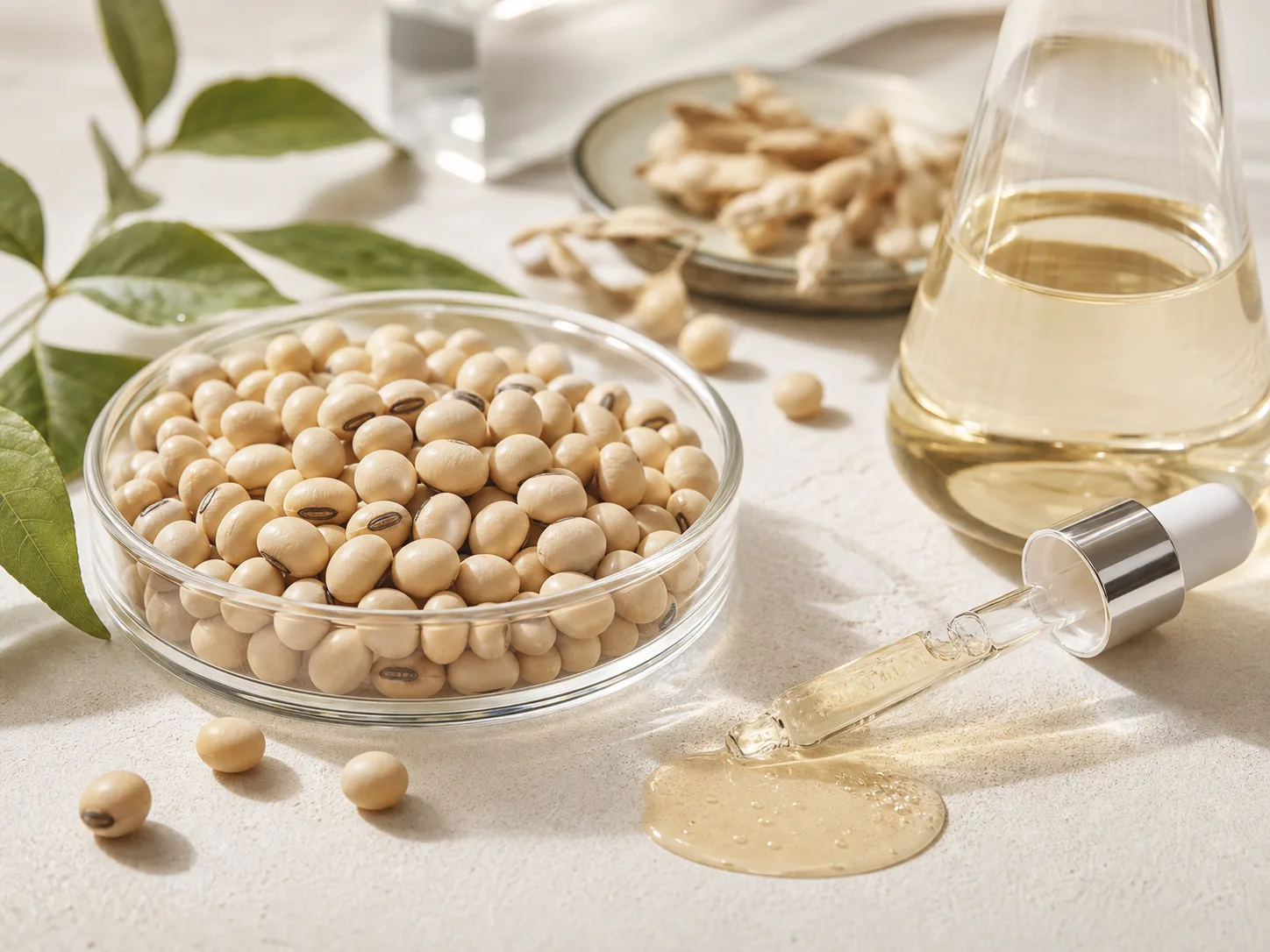
What soybean seed extract is
Glycine Soja (Soybean) Seed Extract is a plant-derived seed extract used in cosmetic ingredient lists. It is easy to confuse it with soybean oil or one isolated protein, but an extract can contain several groups of compounds, including isoflavones, phenolic materials, and proteins. That is why the raw-material context matters more than a single molecule label.
The ingredient is usually discussed in relation to antioxidant support and a more even-looking skin tone. Reviews of soybean components also discuss anti-inflammatory, pigment, and connective-tissue possibilities, while cosmetic explainers describe softening and soothing roles. Those findings cannot be copied directly onto every finished formula because the extraction method, concentration, and base can differ.
What the skin benefits mean in practice
Soybean phenolic compounds have been studied for antioxidant activity. Soybean compounds may help explain why an ingredient appears in formulas designed around oxidative stress, often alongside vitamin E or green tea. This does not make a soybean extract a sunscreen or a way to erase existing dark spots.
Soy pigmentation research includes a pigment-transfer mechanism. Melanocytes make pigment, which becomes visible as it moves into neighboring keratinocytes. In a soy study, the proteins STI and BBI inhibited activation of the PAR-2 receptor and reduced pigment uptake by keratinocytes. The work used soy materials containing these proteins, not soybean oil. Whether a cosmetic extract retains them depends on how it was prepared.
The feel comes mostly from the base around the extract. Glycerin, squalane, ceramides, silicones, and the rest of the base often determine immediate slip and later tightness more strongly than a small amount of seed extract. Two products with the same INCI can therefore feel very different.
Choosing a product format
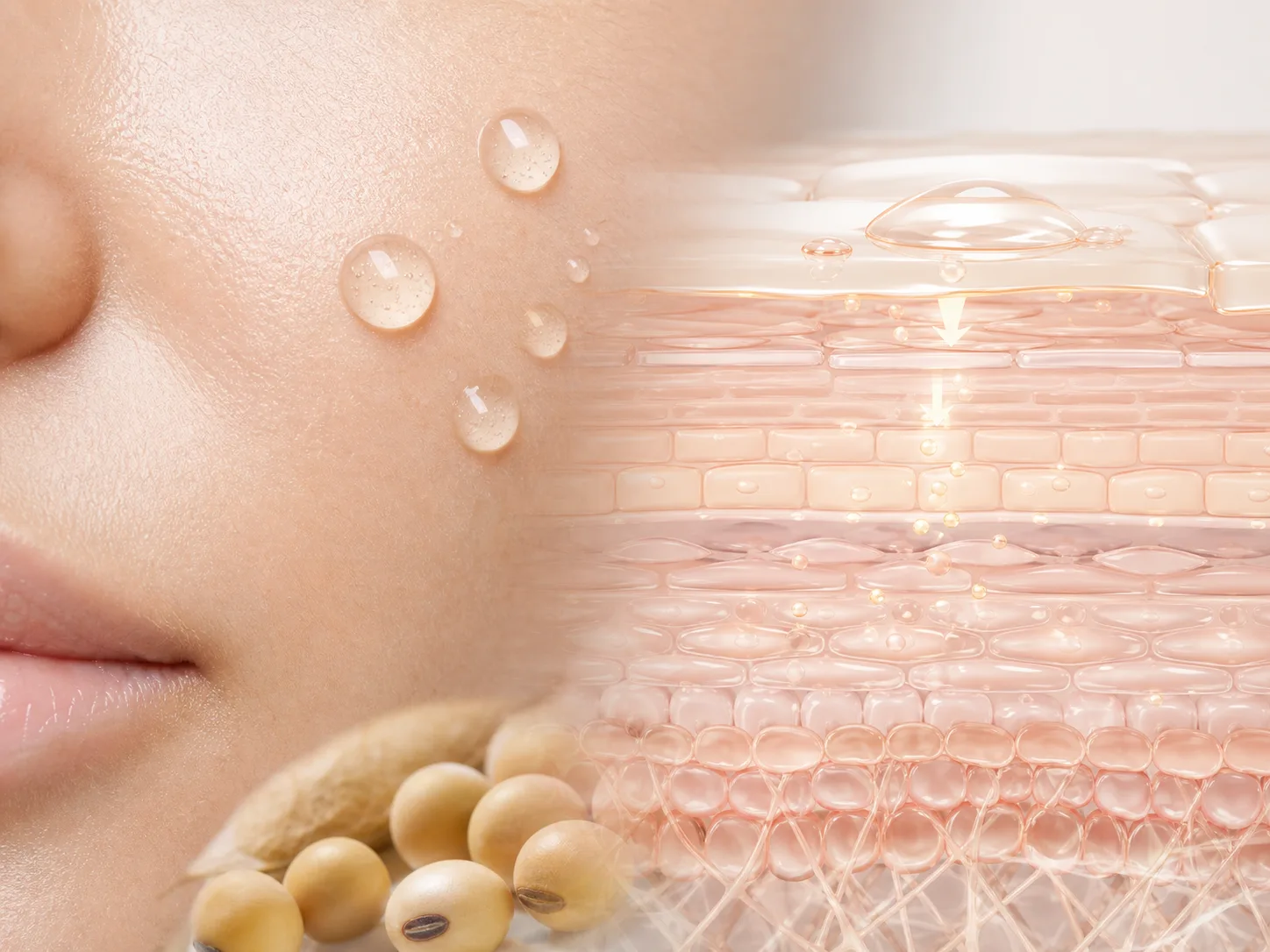
For antioxidant and tone care, check a leave-on serum or lotion for the type of soy extract used, its concentration, and any product testing. For hydration, look for glycerin, betaine, or hyaluronic acid nearby. For dry, rough-feeling skin, a cream with squalane, ceramides, or fatty acids may create a more lasting cushion.
In a cleanser, contact time is short. Cleansing strength, fragrance, alcohol, and the after-wash feel may matter more than the seed extract itself. Treat the extract as part of the formula, not as a guarantee that a wash-off product will deliver a leave-on effect.
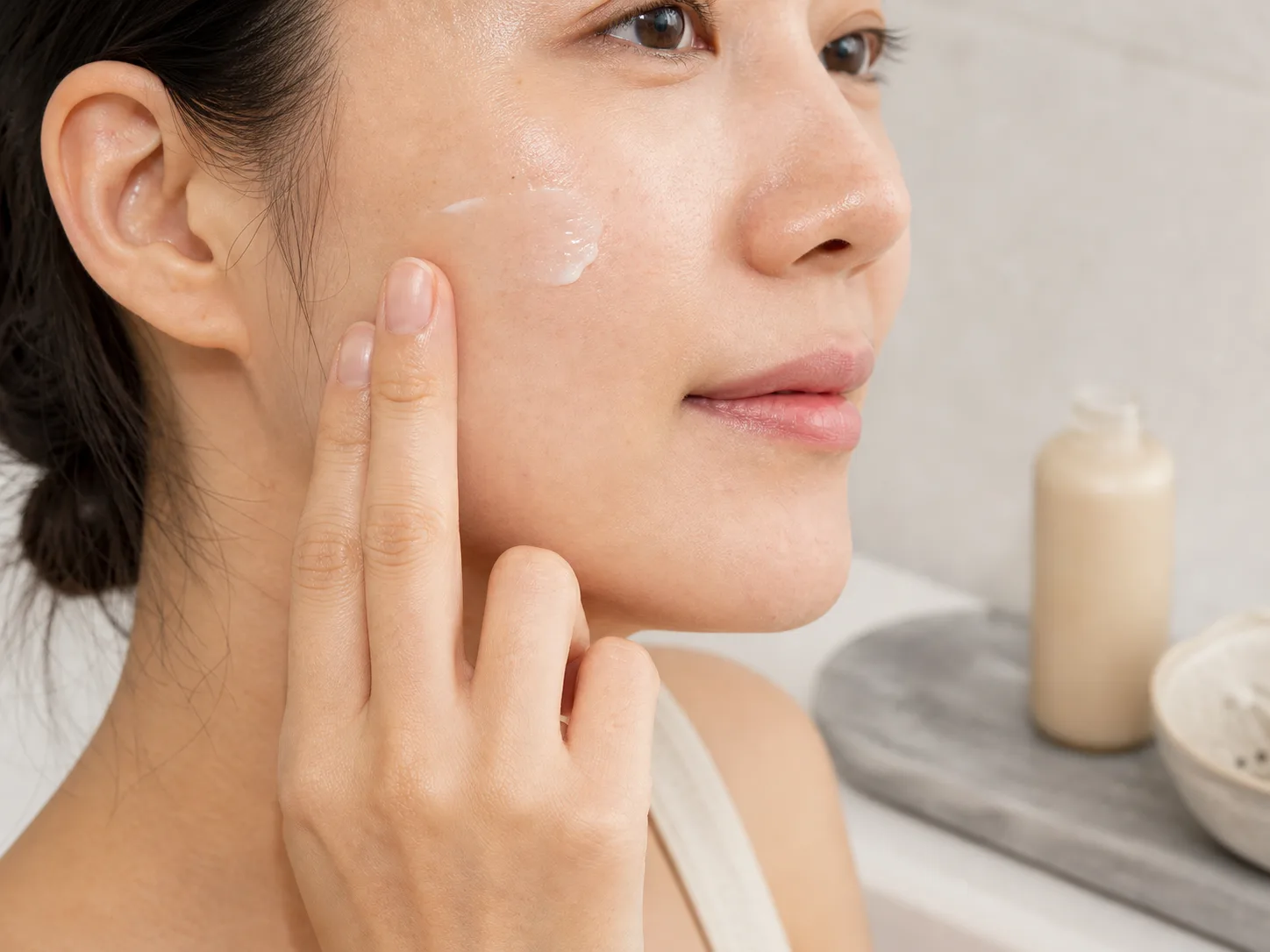
How to introduce Glycine Soja (Soybean) Seed Extract
Try a new serum or cream on a small area near the cheek or jaw first. Avoid introducing it on the same day as several acids, retinoids, or other new brightening products, since that makes irritation difficult to trace. In the morning, use sunscreen separately; at night, notice whether the formula leaves comfort or heaviness by the following day.
A cosmetic soybean extract is not equivalent to eating soy or taking an isoflavone supplement. Anyone with a relevant soy allergy or sensitivity to botanical extracts should check the finished product’s warnings and stop if repeated redness, itching, or swelling appears.
Sources used
- Peer-reviewed research sourcePublished evidence and study scope
- Peer-reviewed research sourcePublished evidence and study scope
- Reader context sourceIngredient characteristics and cosmetic use
- Professional cosmetic referenceIngredient characteristics and cosmetic use
- Professional cosmetic referenceIngredient characteristics and cosmetic use
- Soy protein inhibitors and melanosome transferSpecific study material and mechanism; linked in body