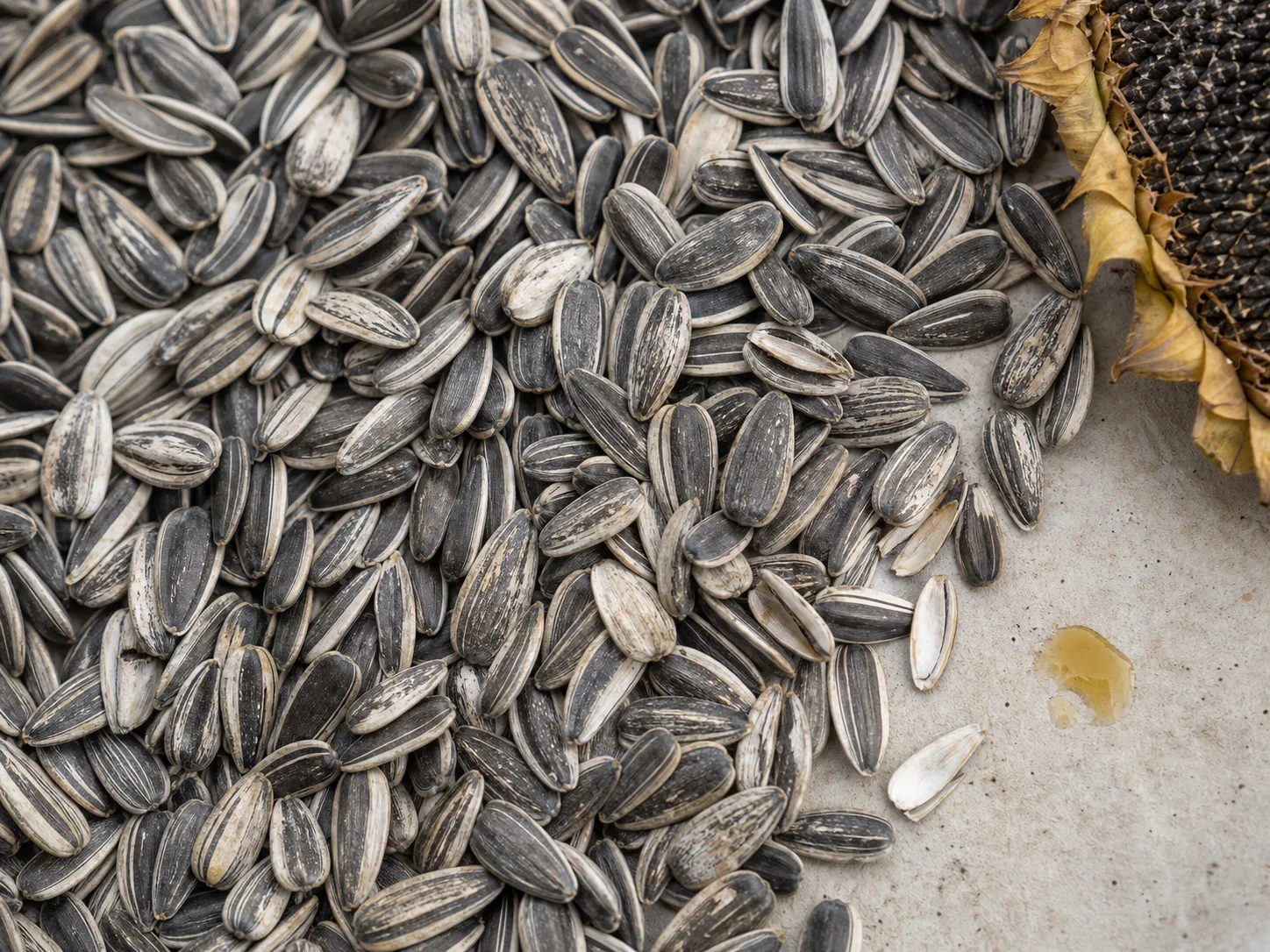
It comes from the seed, not the flower
Sunflower Seed Oil appears on an ingredient list as Helianthus Annuus (Sunflower) Seed Oil. Cosmetic references define it as the fixed oil obtained from sunflower seeds. It is not the same ingredient as an extract from another part of the plant or a sunflower wax used to structure a balm.
Cultivar, pressing, refining, and storage can change the fatty-acid profile and oxidative stability. Sunflower oil is often discussed as a linoleic-acid-rich plant oil, but high-oleic cultivars also exist. A kitchen oil therefore does not automatically match the raw material quality, preservation, sensory profile, or packaging of a facial cosmetic.
Moisturizing does not mean adding water
Sunflower Seed Oil functions mainly as an emollient. Unlike glycerin, it does not primarily attract water. It fills and softens the rough spaces between surface cells and contributes lipids to a formula that can slow moisture loss. That role explains why it appears in creams, balms, oil serums, and cleansers more often than in a water-light toner.
Oil alone can leave shine while tightness remains. On dry skin, a water-containing moisturizer with humectants such as glycerin or panthenol usually supplies the missing part of the routine. A cream containing sunflower oil, or one or two drops of an oil product applied afterward, can then help soften the finish.
The 19-person adult comparison
A frequently cited randomized study applied olive oil and Sunflower Seed Oil to the forearms of 19 adult volunteers. The sunflower-treated sites preserved stratum-corneum integrity, did not develop erythema, and showed improved hydration. Under the same study conditions, olive oil produced a less favorable barrier-integrity signal.
This direct comparison is useful because it challenges the idea that all plant oils behave alike. It is not a universal ranking. Nineteen participants, a forearm site, and a short study leave uncertainty about long-term facial use, different cultivars, and complex products. The results do not establish that sunflower oil repairs every damaged barrier or that olive oil irritates every person.
What the Korean finished-product study adds
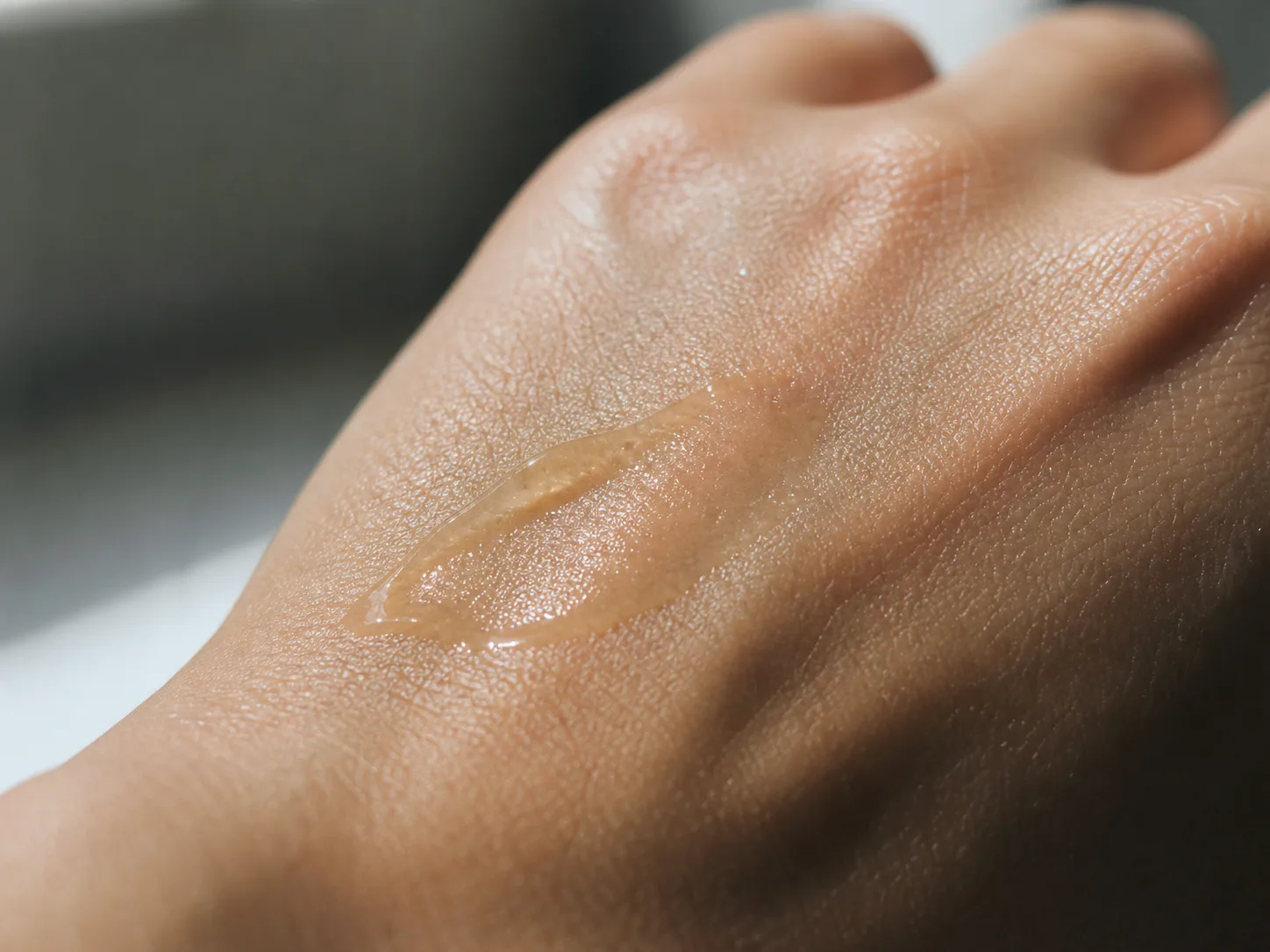
A four-week Korean study evaluated sensitive-skin cosmetics containing Sunflower Seed Oil and reported changes in hydration, sebum, barrier, redness, and blemish-related measures. It adds a Korean user population and a realistic finished-product context.
The product contained multiple moisturizers, emollients, and conditioning ingredients. Without otherwise identical formulas that differ only in sunflower oil, the outcome cannot be isolated to this ingredient. “A product containing it showed changes” is accurate; “the oil itself reduces redness” is a stronger claim that the design did not prove.
Why the amount of linoleic acid varies
Linoleic acid matters in discussions of surface lipids and barrier organization. A relatively linoleic-rich composition may help explain why sunflower and olive oils differed in the adult experiment. That possible explanation does not tell us how much a different finished product will improve skin.
The INCI does not state the cultivar or fatty-acid percentages. High-oleic sunflower oils can have a substantially different profile. Choose with the human evidence, the complete formula, and your response in mind rather than assuming that one fatty acid mentioned in marketing fixes the outcome.
Cream, facial oil, or cleanser
For tight, flaky skin, look for a cream that combines sunflower oil with humectants such as glycerin, betaine, or panthenol and barrier lipids such as ceramides or cholesterol. A lotion or emulsion may suit someone who dislikes a heavy finish. An oil serum can be useful on the driest areas, but applying more does not guarantee proportionally better hydration.
In a cleansing oil, sunflower oil mainly participates in the oil phase that dissolves sunscreen and makeup before rinsing. Rinse-off contact is very different from a cream left on for hours, so the same barrier expectation should not be assigned to both formats. Read the product’s job before focusing on the ingredient.
Oxidation and individual reactions
Plant oils can oxidize with air, light, and heat. Stop using a product if its odor shifts toward stale nuts or paint, or if color and texture change noticeably. Follow the period-after-opening mark and store it away from a bright, warm window. Packaging that limits repeated air and finger exposure can also help.
A seed-derived ingredient can still cause an individual contact reaction. Test a new leave-on product along the jaw or inner arm and check the site through the next day. Swelling, hives, continuing itch, or burning is not a barrier “adjustment” and warrants stopping the product.
What you may notice with regular use
Its main benefit is a softer surface and less of the tight, dry feeling that follows water loss. Use the same amount for one to two weeks and note afternoon tightness, flaking, and excess shine. Comfort the next morning is a more informative signal than the words natural or barrier oil.
Sources used
- 대한화장품협회 성분사전 - 해바라기씨오일exact INCI, Korean standard name and pressed-seed origin
- 민감 피부용 해바라기씨오일 함유 화장품의 피부 개선 효과four-week Korean finished-formula consumer and efficacy context
- Effect of olive and sunflower seed oil on the adult skin barrierrandomized adult forearm barrier, erythema and hydration observations
- Sunflower seed oil in dermatology: a narrative reviewcurrent professional synthesis and what the published studies actually tested
- Anti-Inflammatory and Skin Barrier Repair Effects of Topical Application of Some Plant Oilsplant-oil composition, barrier context and limits
- Safety Assessment of Plant-Derived Fatty Acid Oilscosmetic safety and sensitization context for sunflower and related oils