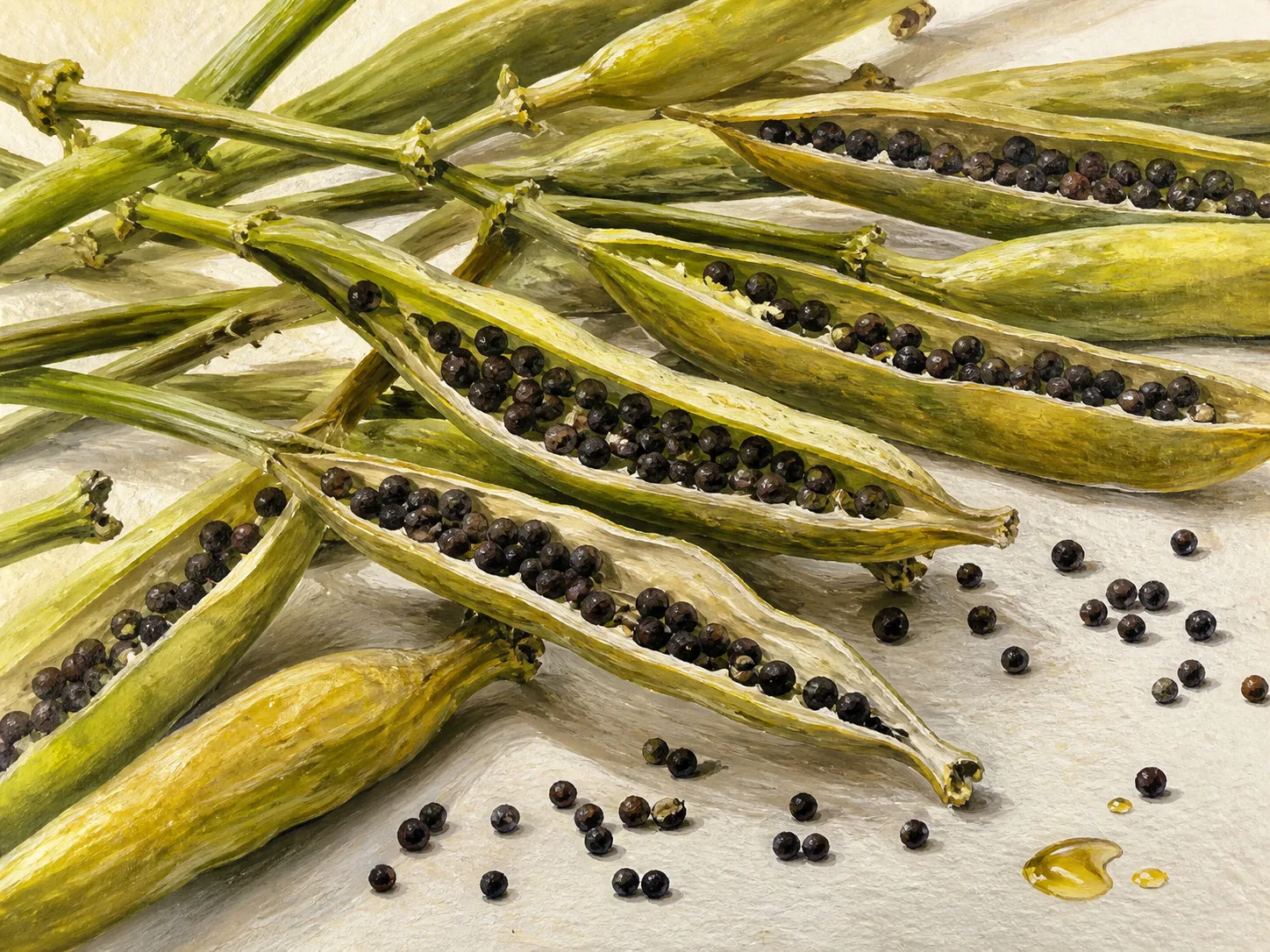
What Rapeseed Seed Oil is
Rapeseed Seed Oil appears on a cosmetic label as Brassica Campestris (Rapeseed) Seed Oil. Korean ingredient authorities define it as the oil extracted from the seed and now use a direct Korean name that translates to rapeseed seed oil. It is distinct from rapeseed extract, brassica sterols, and hydrogenated rapeseed oil, which have different processing and physical properties.
Its main cosmetic role is to soften rough skin and help reduce moisture loss. The oil fills some of the rough spaces between surface cells and contributes a thin lipid film, making dry skin feel softer and less brittle. It is not a water-attracting humectant like glycerin. If dehydration is the problem, a water-based lotion followed by a cream containing the oil is more logically balanced than applying oil to dry skin by itself.
Is it the same as cooking canola oil?
Canola is a food term for rapeseed varieties bred for low erucic acid. A cosmetic raw material and a cooking oil may share a botanical family, but they are not interchangeable products. Refining specifications, oxidation control, additives, packaging, preservation, and intended use can differ. A bottle from the kitchen does not reproduce a cosmetic formula or its safety assessment.
The reverse shortcut is equally unhelpful: dietary debates about seed oils do not automatically describe topical exposure. Digestion and metabolism are different questions from the behavior of an emollient at the skin surface. For skincare, the exact INCI, finished formula, freshness, fragrance, and other active ingredients are more informative than the broad phrase “seed oil.”
What the human barrier study found
One study irritated adult skin with sodium lauryl sulfate and then compared several topical lipids. Canola oil and its unsaponifiable fraction were left on the area for 17 hours. The investigators observed changes consistent with helping the disrupted barrier obtain lipids. A recent professional review includes this experiment when discussing natural materials and barrier recovery.

The oil was left on SLS-irritated skin for 17 hours. That differs from everyday cream use and was not a trial of eczema treatment. It suggests that the oil can help replenish surface lipids after this kind of barrier disruption.
Plant oils are not interchangeable

Fatty-acid profiles, refining, and oxidation stability vary substantially among botanical oils. Studies comparing olive and sunflower oils have even found different barrier responses. Evidence for one botanical oil should not be borrowed to sell another, and one unfavorable result should not condemn the entire category.
Numerical “comedogenic” charts are also a weak shortcut. Many combine old animal tests, raw-material observations, and inconsistent scoring systems. They do not model the concentration, droplet structure, preservatives, or other emollients in a modern cream. Acne-prone skin learns more from a controlled patch-style introduction than from treating a single number as a verdict.
Cream, balm, and facial oil are different experiences
In creams, Rapeseed Seed Oil can sit alongside water, humectants, emulsifiers, and other lipids. This lets a formulator provide water and surface softness in one product. It is often the more forgiving starting point for someone who feels dry but dislikes a shiny oil finish.
Balms and facial oils contain little or no water and leave a more obvious lipid film. They can be useful on dry cheeks or around the mouth in cold weather, but too much can interfere with sunscreen or makeup. Spread one or two drops across the palms and press them only over dry zones after moisturizer. If your cream is already rich, an additional oil step may add weight without adding comfort.
Trying one new product at a time
For the first week, use the product at night on the jawline or one side of the face. Do not start a new exfoliant or retinoid on the same day if you want to identify the source of irritation. Record next-morning tightness, redness, itch, small clogged bumps, and afternoon shine rather than judging only the immediate glow.
If skin still feels tight, check the water and humectant steps before adding more oil. If it feels heavy, halve the amount and look for overlap between a rich cream and the added oil. The response belongs to the entire formula—including fragrance, preservatives, and other botanical oils—not to one INCI in isolation.
Oxidation and allergy
Plant oils can change with repeated exposure to light, heat, and air. Note the opening date and store the product upright in a cool, dark place. Stop using it if the smell shifts toward stale nuts or paint, or if color and texture change markedly.
If you have a known allergy to rapeseed or mustard-family plants, ask a clinician about the product before trying it on your skin. Wash it off and stop for persistent burning, swelling, hives, or significant itch. Cracking, oozing, or an ongoing rash needs a proper assessment rather than a series of new oil experiments.
Sources used
- 대한화장품협회 성분사전 - 유채씨오일exact INCI, current Korean standard name and seed-oil origin
- Effect of topically applied lipids on surfactant-irritated skinshort human canola-oil barrier-disruption experiment and its limits
- Benefits of topical natural ingredients in epidermal permeability barrierprofessional synthesis of the canola-oil barrier experiment
- Brassica Campestris Seed Oil cosmetic INCI profileemollient function, identity and formulation context
- COSMILE ingredient profile - Brassica Campestris Seed Oilconsumer-facing cosmetic ingredient context
- Danish cosmetic ingredient survey and health assessmentreported cosmetic emollient function and use context