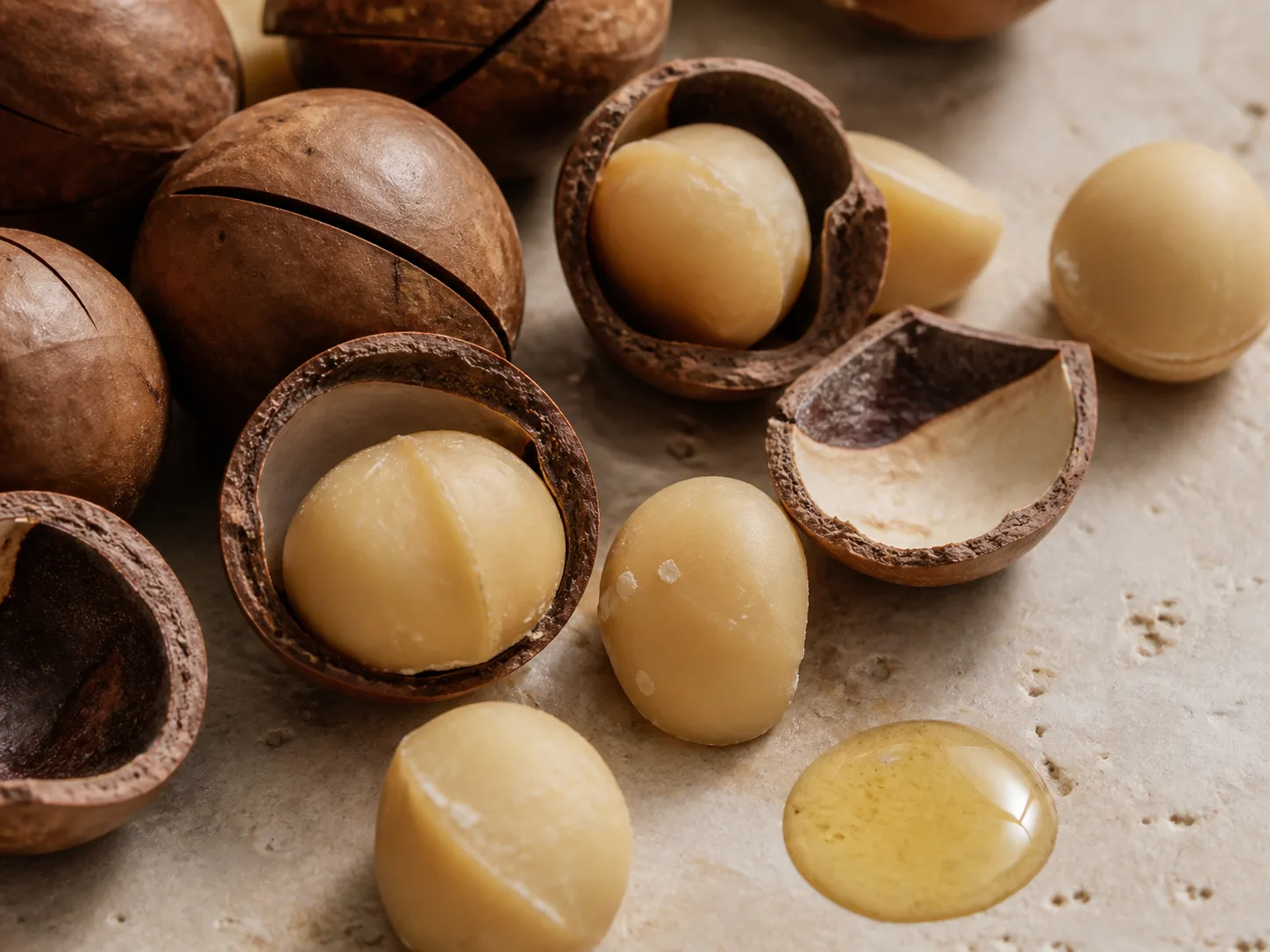
What Macadamia Integrifolia Seed Oil is
Macadamia Integrifolia Seed Oil is the lipid obtained from the seed of the macadamia tree. In a cosmetic formula, it behaves like a plant oil: it softens the skin surface, adds slip, and helps a cream or balm leave a less exposed, less tight finish. It is not a watery extract and it does not act like a water-binding humectant.
Another label, Macadamia Ternifolia Seed Oil, may appear under a different Korean standard name. Older references sometimes group the two names together, so the clearest approach is to follow the exact botanical INCI printed on the finished product.
Its moisture benefit is an oil-film benefit
Macadamia oil works mainly as an emollient. Glycerin and hyaluronic acid attract or hold water in the aqueous part of a formula. Macadamia oil instead contributes lipids that spread across the surface, soften rough-feeling areas, and help reduce moisture loss after cleansing. That is why it often makes more sense in the last moisturizing step than as a stand-alone replacement for a hydrating serum.
Analyses of macadamia cultivars find a high proportion of unsaturated fatty acids, especially oleic and palmitoleic acids. One comparison of 15 cultivars reported more than 83% total unsaturated fatty acids, with meaningful variation between samples. The profile helps explain the fluid, cushioning texture of the oil. It does not prove that the oil is identical to human sebum or that it rebuilds the skin barrier by itself.
How creams, balms, and face oils feel different
In a lotion or cream, the oil is dispersed with water, emulsifiers, humectants, and other emollients. The result can feel light even when Macadamia Integrifolia Seed Oil appears on the ingredient list. In a balm or face oil, a larger oil-and-wax phase can leave more shine and a longer film.
Dry skin may prefer the oil inside a balanced cream after a water-based serum. Very dry areas around the mouth or cheeks may benefit from pressing one drop of oil over moisturizer. Combination skin can use the richer step only on dry zones. If you are oily or prone to clogged pores, judge the finished texture rather than assigning a universal pore-clogging rating to one INCI. Look at shine two or three hours later, makeup pilling, and whether closed bumps repeatedly appear while keeping other products unchanged.
What the clinical study actually tells us
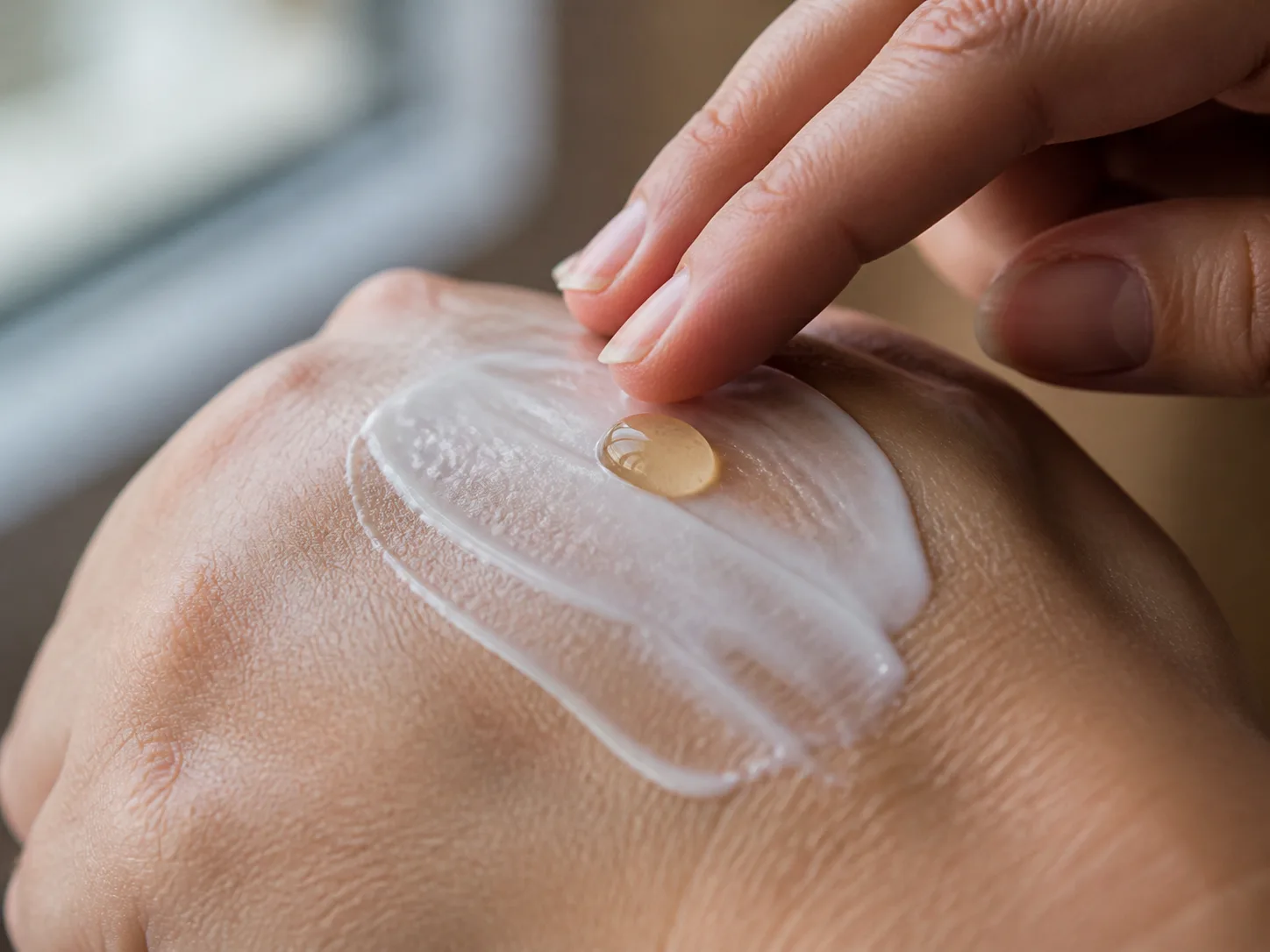
A 2024 study developed conventional emulsions and nanoemulsions containing 15% Macadamia integrifolia oil and evaluated hydration and wrinkle-related measurements. The results provide evidence that a specifically designed macadamia-oil formula can perform as a moisturizer under its test conditions.
How to add it to a routine
After cleansing, apply a hydrating toner or serum if you use one, then a cream containing the oil. If the finish is still too dry, press a very small amount of oil over the driest area. More oil is not automatically more hydration: without enough water and humectants underneath, the result may simply feel greasy.
Test a new product along the jaw or behind the ear before spreading it over the full face. Keep the rest of the routine stable for several days so that redness, itching, or new congestion is easier to interpret. Fragrance, essential oils, preservatives, and the overall oil phase may be more relevant than Macadamia Integrifolia Seed Oil alone.
What if you have a nut allergy?
A food allergy does not guarantee a reaction to every refined cosmetic oil, because processing can reduce protein residues. However, the ingredient list rarely tells a shopper the degree of refining or residual protein level. People with a history of severe tree-nut reactions should not treat an unsupervised facial test as proof of safety. Ask an appropriate clinician about the specific product and choose a simpler alternative when uncertainty is unacceptable.
Stop using the product if hives, swelling, continuing burning, or spreading redness occurs. Cosmetic patch testing at home is only a cautious introduction method; it is not an allergy diagnosis.
Sources used
- 대한화장품협회 성분사전 - 퀸즈랜드넛오일Ingredient identity, cosmetic function, and safety context.
- 코슬로우 화장품 성분사전 - 퀸즈랜드넛오일Ingredient identity, cosmetic use, and evidence context.
- Cosmetic Ingredient Review - Macadamia Integrifolia Seed OilIngredient identity, cosmetic use, and evidence context.
- Clinical Efficacy in Skin Hydration and Reducing Wrinkles of Nanoemulsions Containing Macadamia integrifolia Seed OilBenefit evidence, study conditions, and what the research actually shows.
- Comparative Study of Chemical Compositions and Antioxidant Capacities of Macadamia OilsIngredient identity, cosmetic use, and evidence context.
- SpecialChem - Macadamia Integrifolia Seed OilIngredient identity, cosmetic use, and evidence context.